
Pag
About this place
Pag stands apart from other Adriatic islands through an unusual combination of bare limestone, sheep pastures, salt pans and a carefully planned Renaissance town. The present town centre was built between 1443 and 1474, with straight streets leading towards Petar Krešimir IV Square and the Collegiate Church of the Assumption. Across the water, the geometric pools of Solana Pag continue a salt-making tradition that shaped the island’s economy for centuries. Pag sheep graze herbs exposed to sea spray; their milk produces the island’s celebrated cheese, commonly paired with lamb and the local Žutica wine. The Benedictine convent and town collections preserve the craft of Pag lace, recognisable by its disciplined geometric patterns. Prosika offers swimming within an easy walk of the historic centre, while Vlašići, Šimuni, Metajna and other island settlements provide beaches with very different settings and surfaces. Pag Bridge gives the southern end a road connection to the mainland, while the Žigljen–Prizna ferry serves the north. The bora can be severe around Pag Gate and the Velebit Channel, so forecasts matter before driving, sailing or visiting exposed coves.
Pag’s character is easiest to understand through stone, salt and sheep farming. The town did not develop at random: New Pag was laid out between 1443 and 1474 according to a deliberate street plan, while Skrivanat Tower is the only complete survivor of its nine defensive towers. South of the centre, salt ponds occupy the shallow head of Pag Bay; beyond them, limestone grazing land sustained the island’s traditions of sheep’s cheese and lamb. Pag lace evolved from drawn-thread work used on women’s shirts and head coverings, and its geometry echoes the island’s stone-carving heritage. These elements are not simply exhibits from the past: salt, cheese and lace remain the products most closely associated with both Pag town and the wider island.
Top places
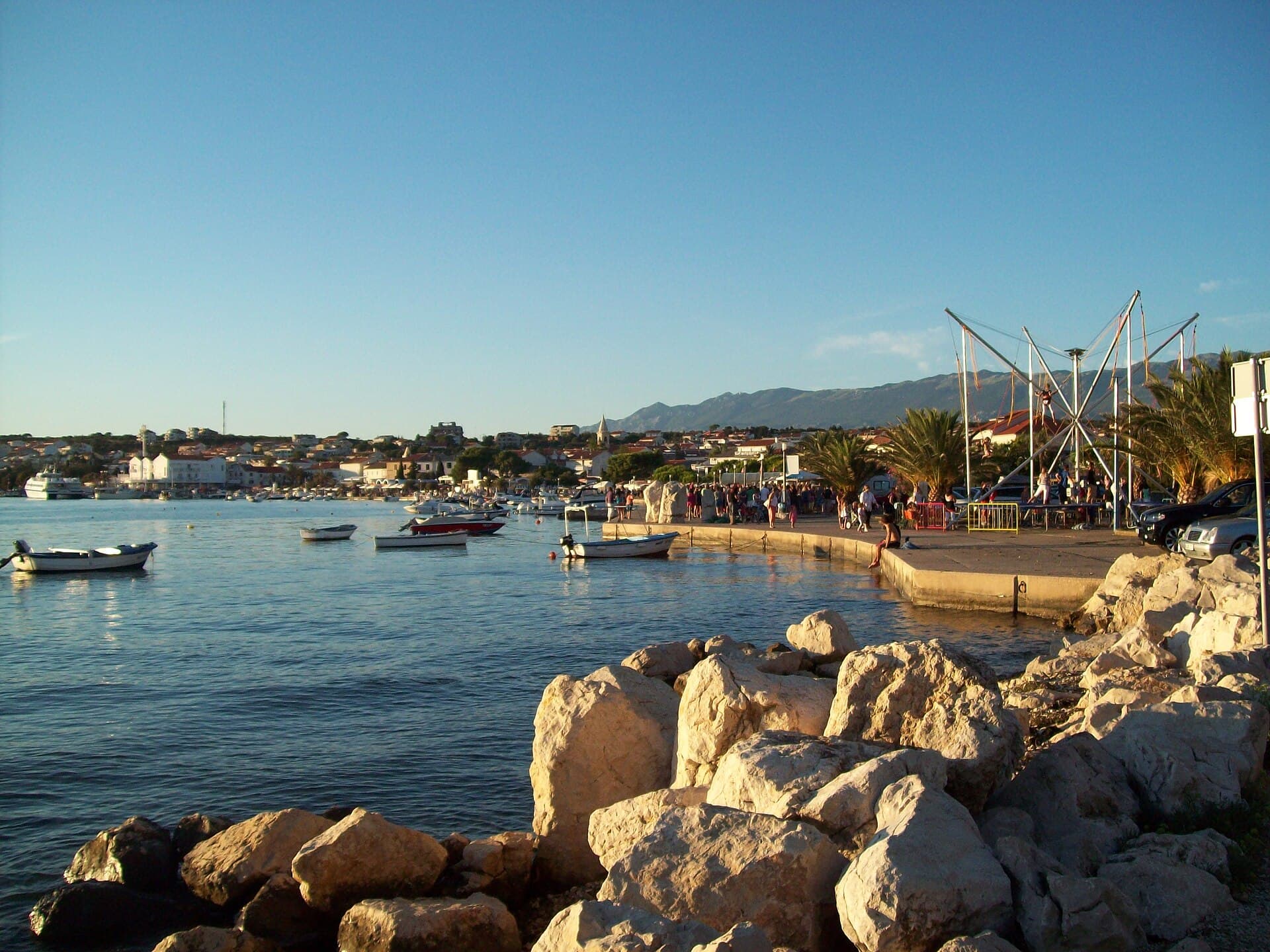
Novalja
Town · Pag

Lun
Village · Pag

Stara Novalja
Village · Pag

Metajna
Village · Pag

Zubovići, Novalja
Village · Pag

Gajac
Village · Pag
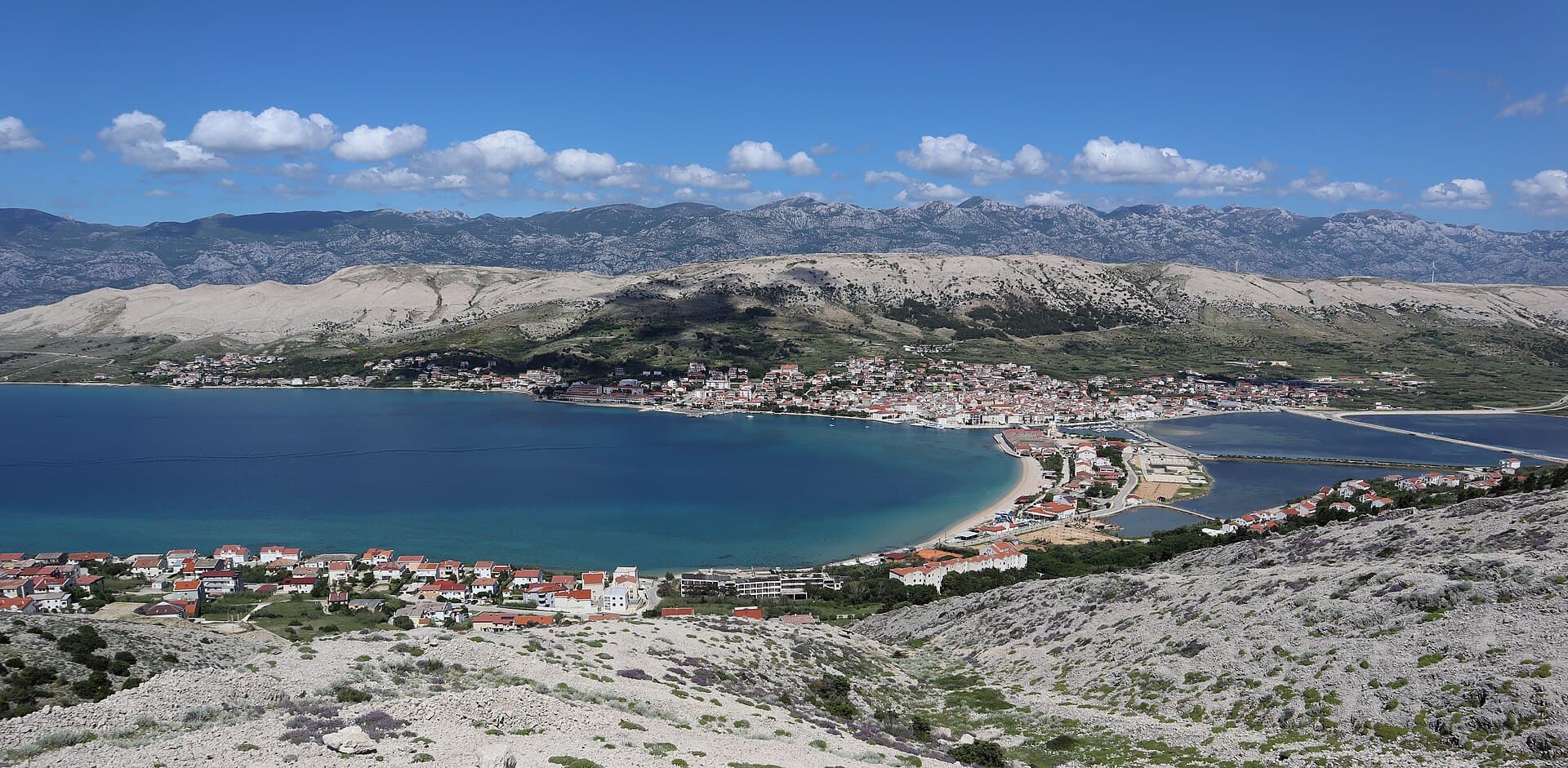
Pag
Town · Pag
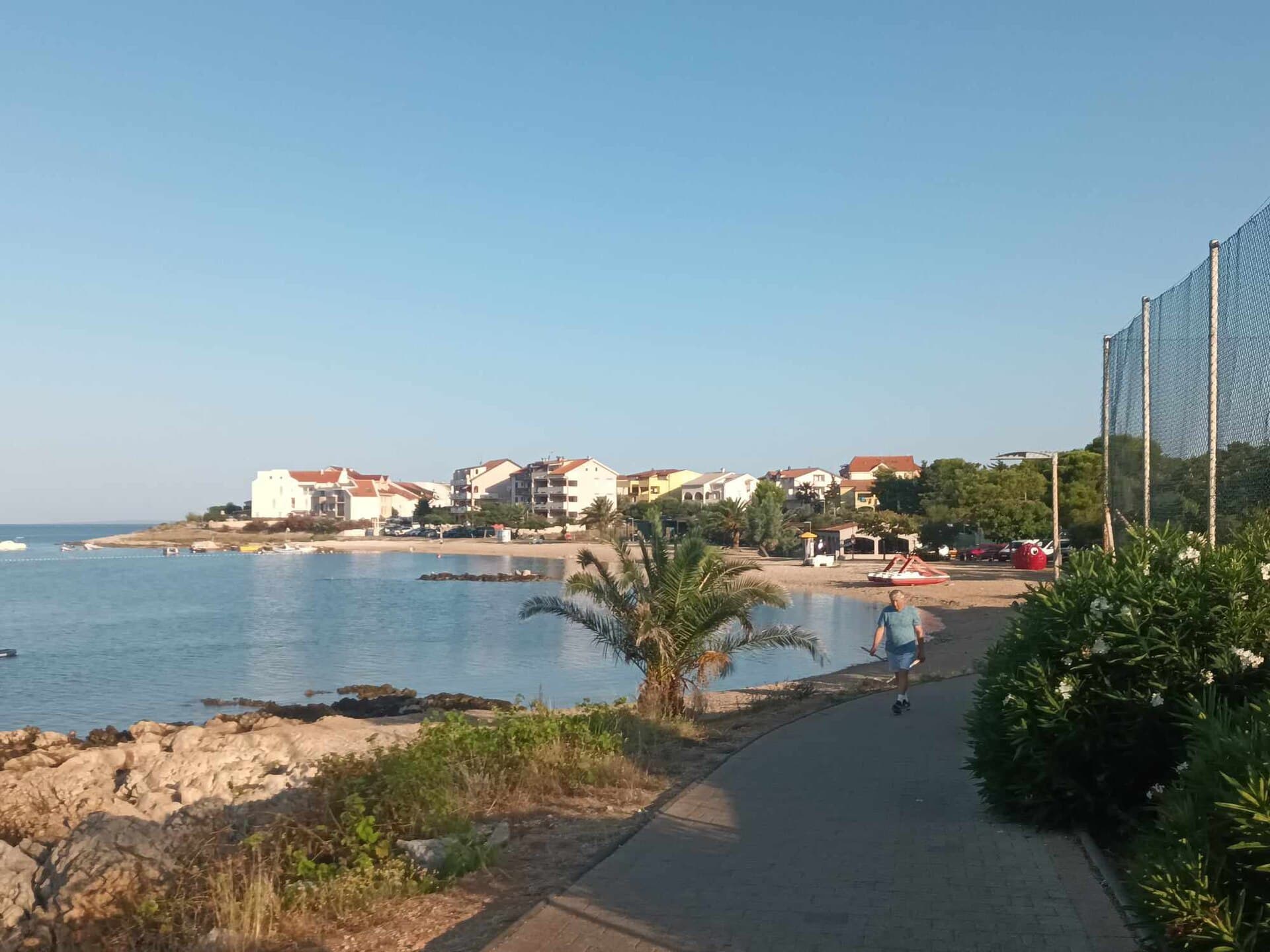
Povljana
Village · Pag

Mandre
Village · Pag
Things to see
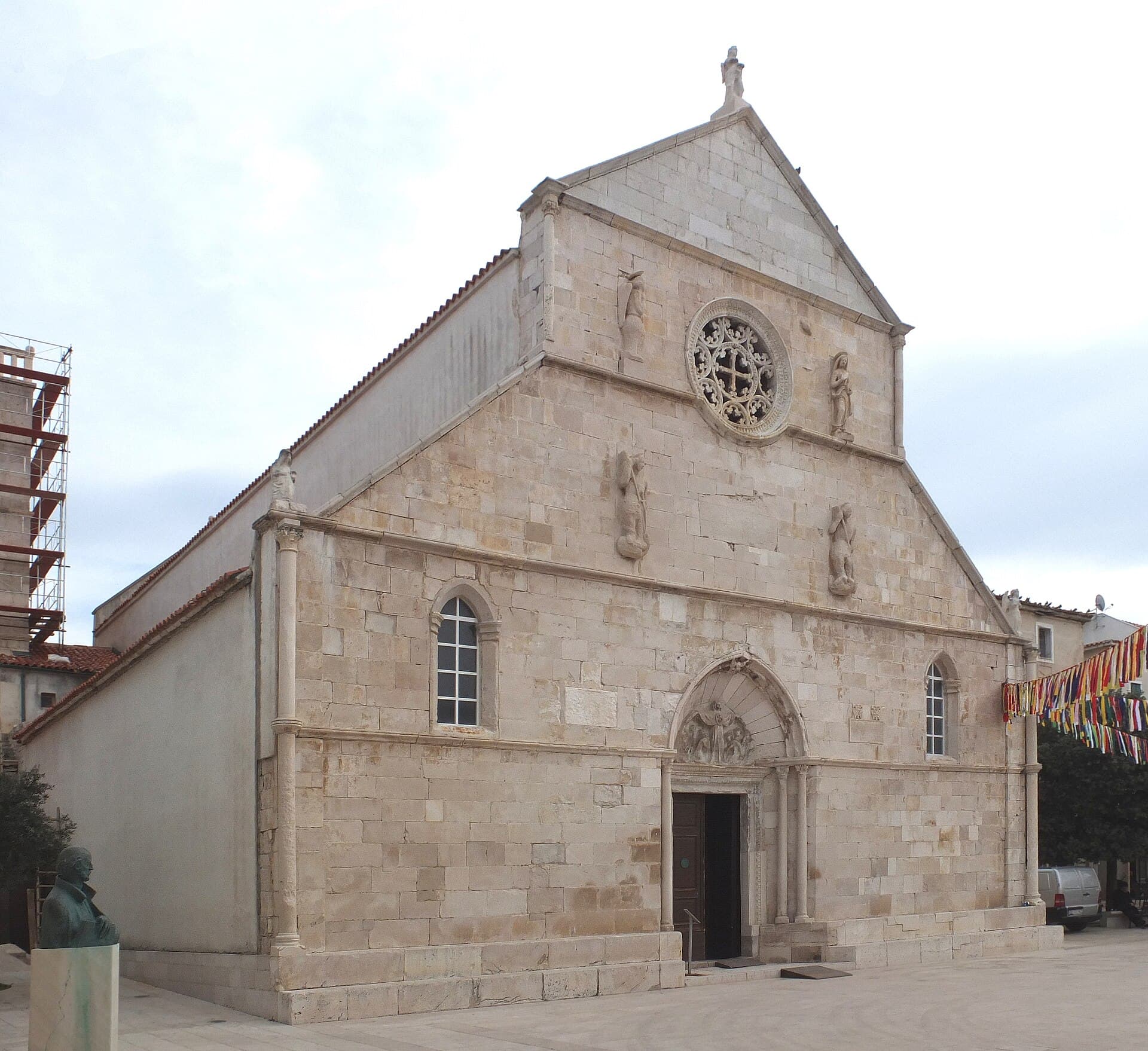
The Collegiate Church of the Assumption dominates Pag’s main square with its Gothic-Renaissance façade and a bell tower dating from 1562. Fifteenth-century Skrivanat Tower is the only one of the former defensive system’s nine towers to survive intact. Across the inlet stand the salt warehouses: the first three were built in the 17th century and another six during the second Austrian administration. Old Pag, south of the present centre, preserves the Romanesque Church of St Mary and traces of a Franciscan monastery. About five kilometres from town, along an unpaved road, a stone marker identifies the 15th meridian east, recalling Pag’s local history of measuring solar time.
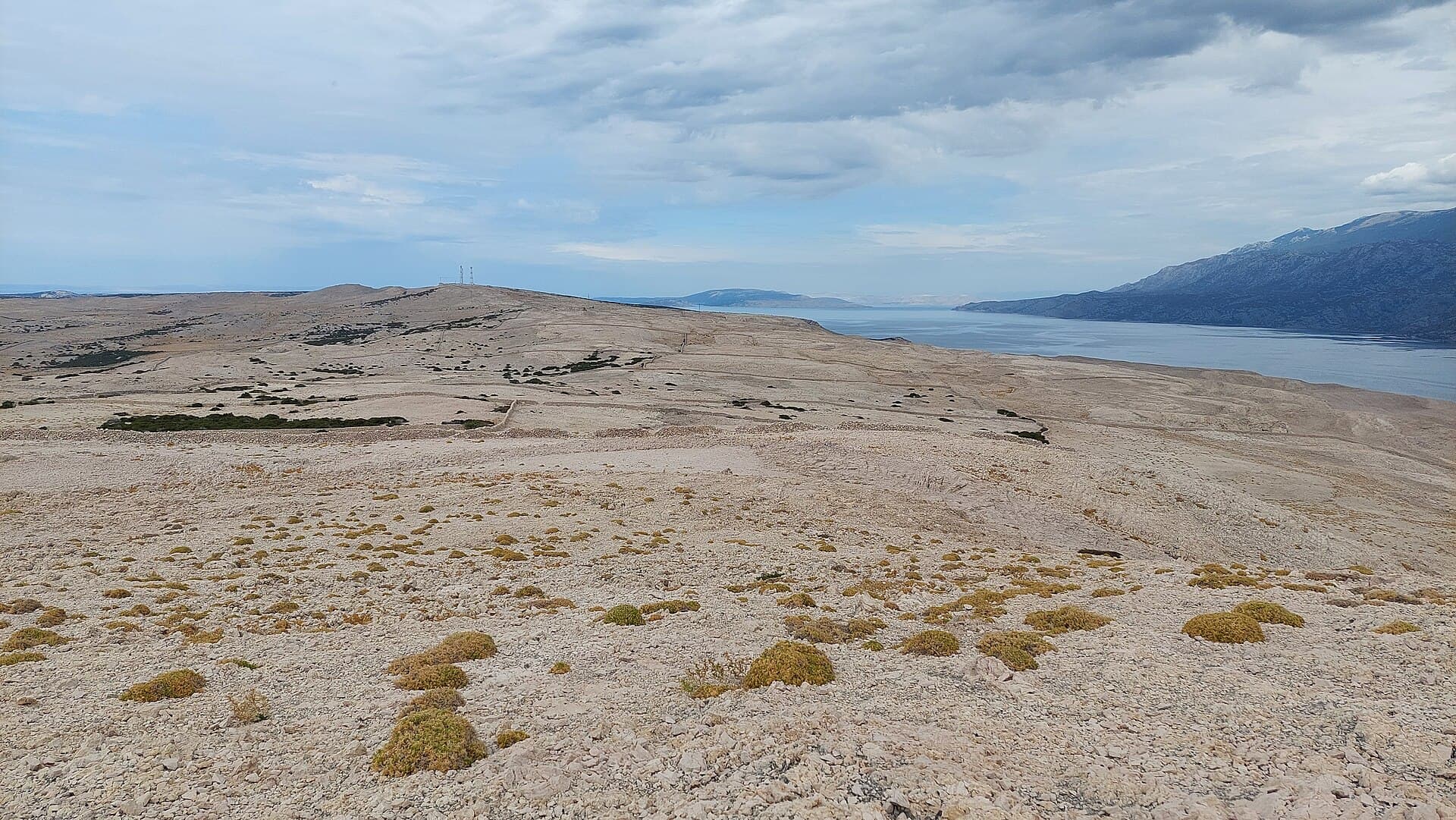 Natural monument
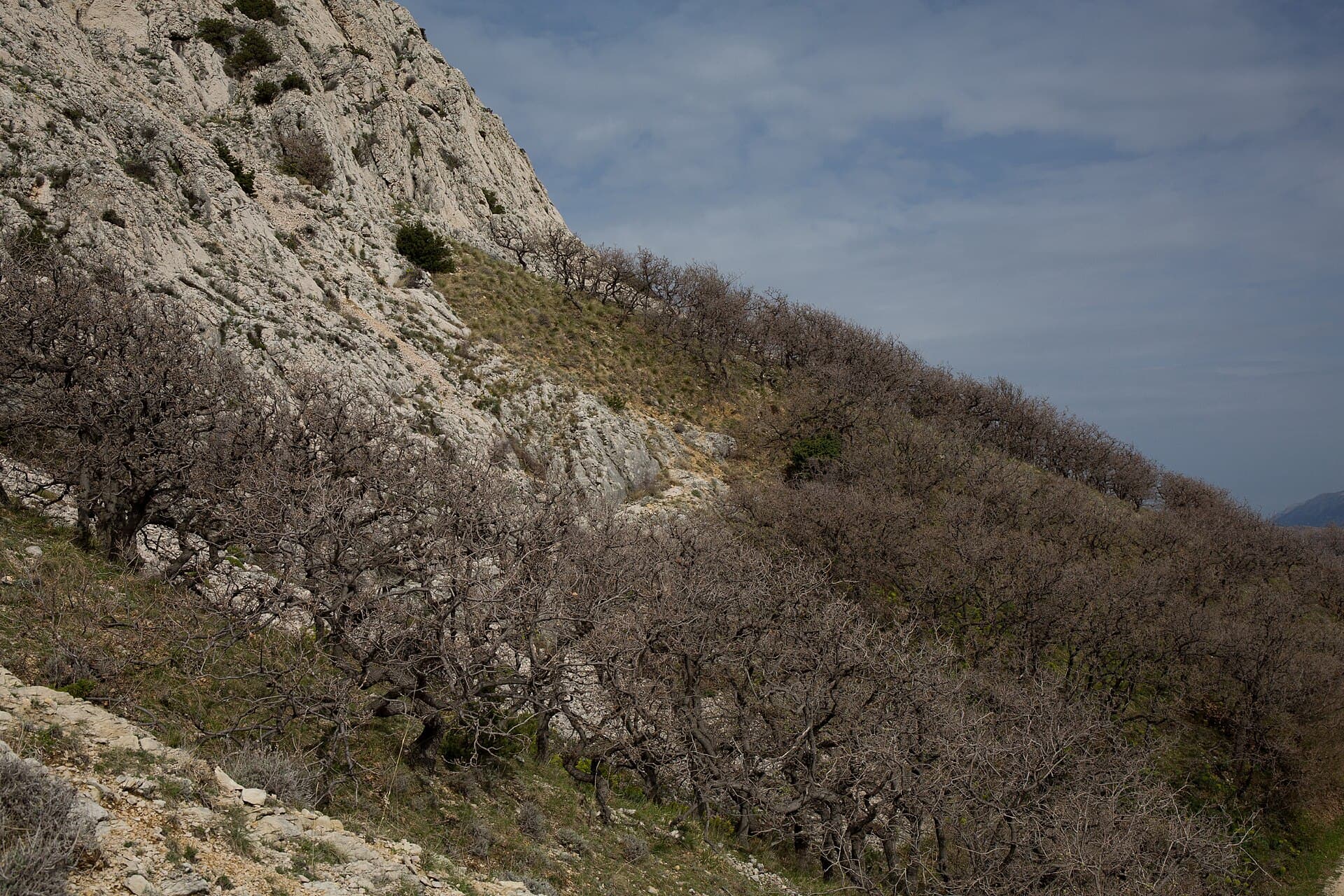
Pag Triangle
Nature · Kustići
pareidolia and land formation in the shape of an irregular quadrilateral near the village Caska on the island Pag in Croatia
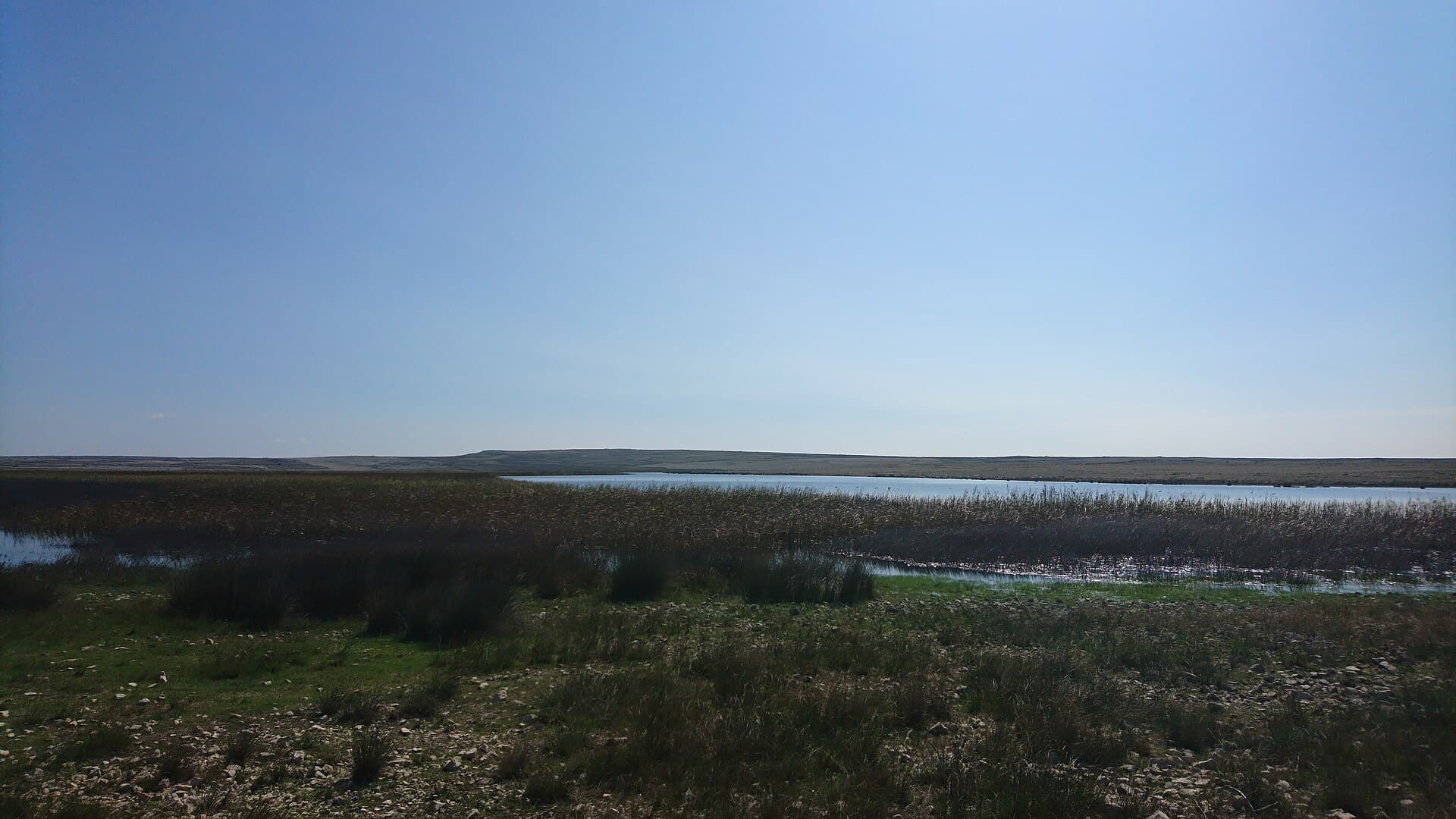
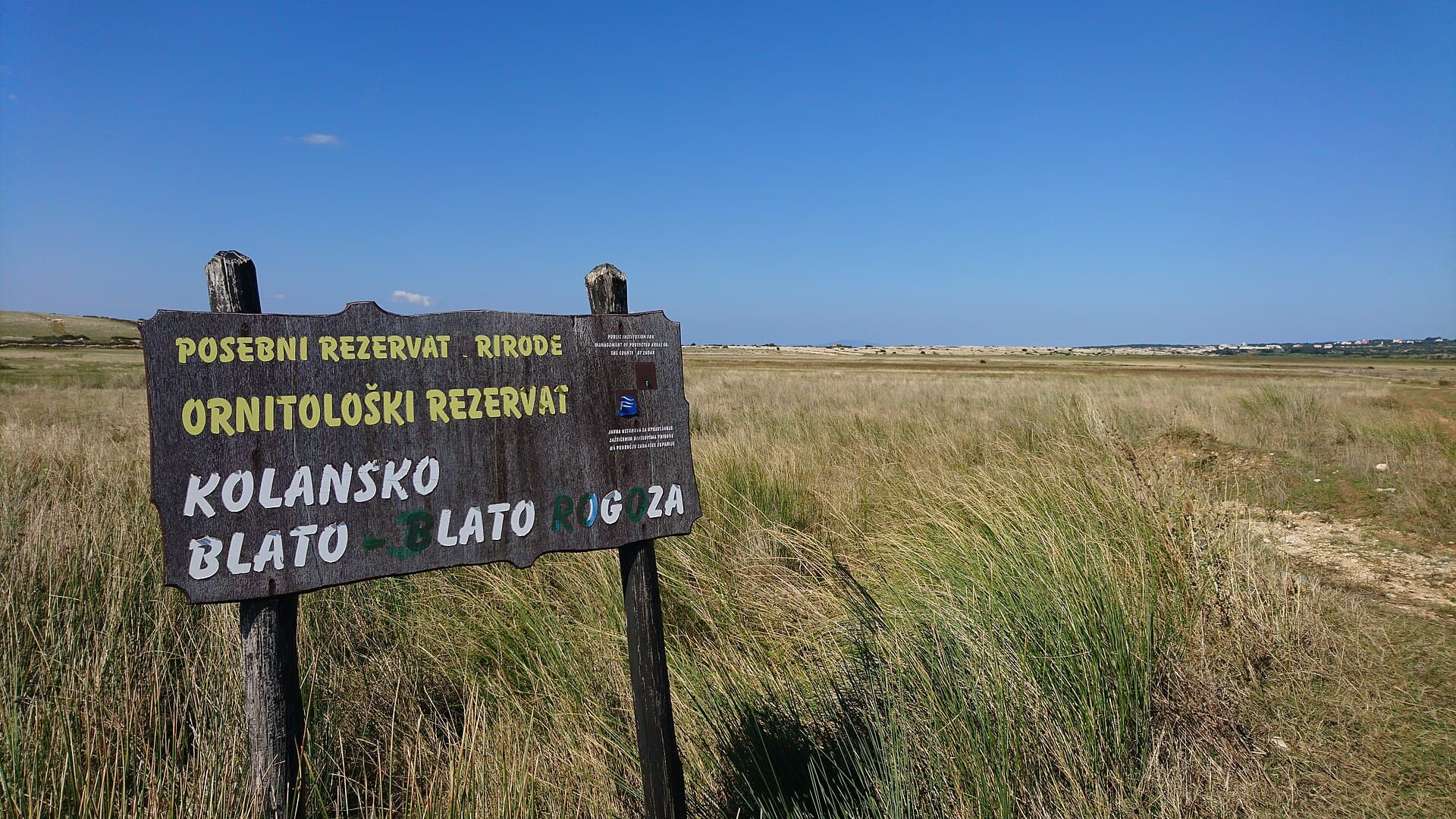
Beaches
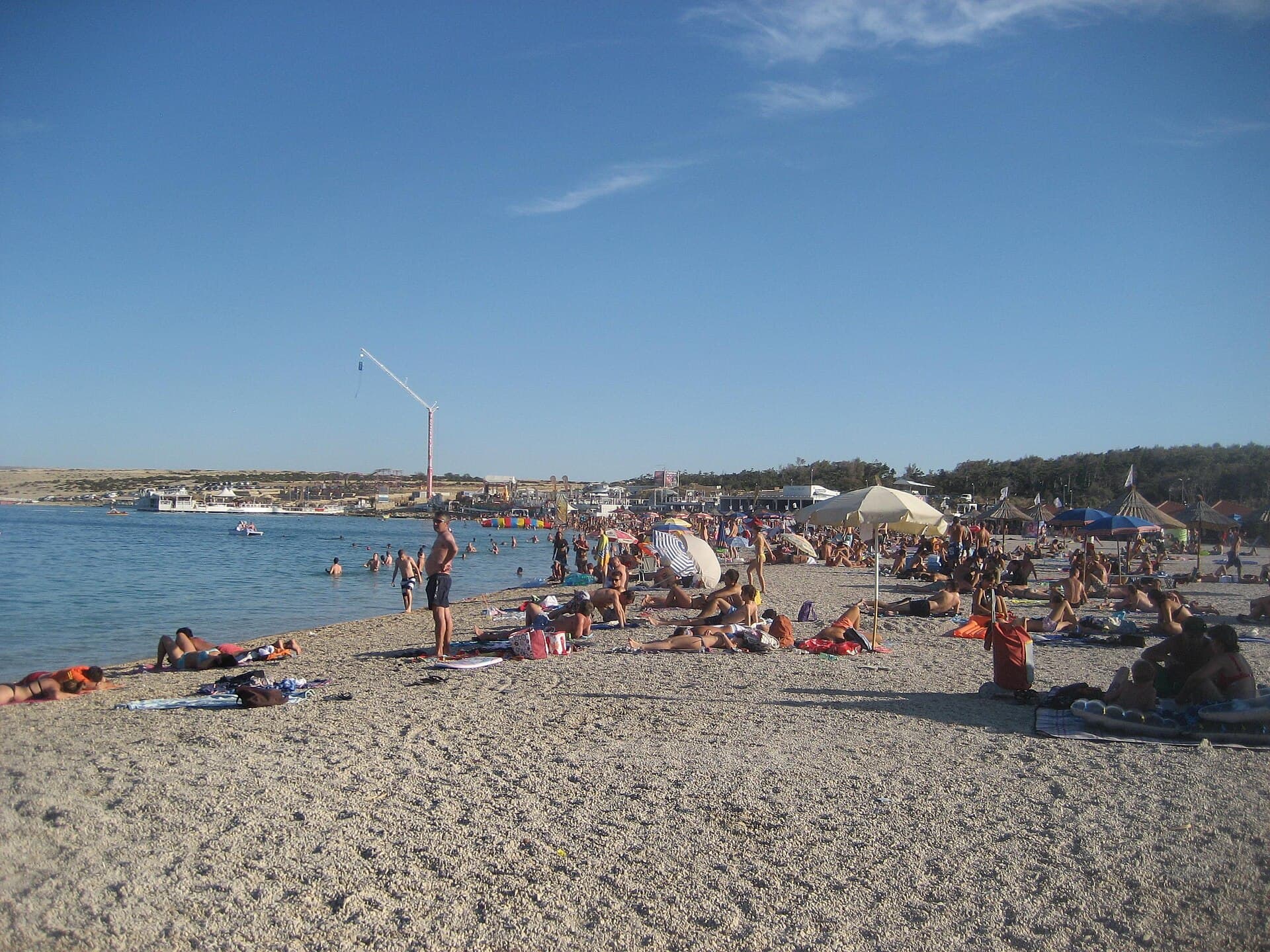
Prosika is the easiest beach to use from Pag town: its sandy shore lies immediately beside the historic centre, parking and sports facilities. For a quieter outing, head to Vlašići, where the bay has a sandy beach and shallow, family-friendly water. Šimuni on the south-west coast combines swimming with the atmosphere of a fishing village roughly midway between Pag and Novalja. On the harsher north-eastern coast, Beriknica near Metajna is distinguished by stone pillars rising from the sea and the prominent Stogaj rock. Coves facing Velebit feel the bora quickly, making the more sheltered side of Pag Bay a better choice when strong north-easterly winds are forecast.
Things to do
Begin on the main square beside the Collegiate Church, whose foundation stone was laid on 18 May 1443, then follow Pag’s ordered streets towards Skrivanat Tower and the historic salt warehouses at Prosika. Continue roughly one kilometre to Old Pag, where the Church of St Mary and remains of a Franciscan monastery survive. On returning, combine the heritage walk with a swim at Prosika, the largest sandy beach immediately beside the old centre. For a clear view of Pag’s planned layout, stop at the Gradac viewpoint on the Pag–Novalja road. A more active itinerary can finish on the Zaton and Mikula hiking routes or in a kayak on Pag Bay, both featured in the tourist board’s Pag Outdoor programme.
Food and drink
Pag’s food identity is built around island sheep’s cheese, lamb, curd, salt, the local Gegić grape and baškotin, the firm twice-baked bread made by the Benedictine nuns. The distinctive character of Pag lamb comes from native sheep grazing rocky ground scattered with sage and other herbs exposed to salt carried by the bora. In and around the old centre, Na Tale, Bile, Bodulo, Trapula and Uhlinac all featured local ingredients during the 2025 Pag na meniju programme. Trapula is a natural stop for pairing Pag cheese with island wine, while baškotin can be bought as a speciality of St Margaret’s convent. A visit to Paška sirana in Zadarska Street adds the production story behind the island’s best-known sheep’s cheese.
Tours and activities
AdAd · partner offers: GetYourGuideThe partner handles booking, payment and support. StayBravo may earn a commission on bookings made through these links.How we choose offersGetYourGuide offers are selected and ordered by GetYourGuide based on the name of the nearest larger town or national park; we do not influence their selection and do not use data about you.GetYourGuide · Pag
We show GetYourGuide offers once you allow their cookies.
Towns
All other placesShow all 10Hide list
Practical information
Practical information
Pag Tourist Board publishes local notices, programmes and visitor contacts through its official website. When planning beyond town, note the administrative split: Pag and the southern settlements do not share the same local tourism authority as Novalja in the north. Pag Bay is particularly exposed to the bora around Pag Gate, Slana and Pag town itself, so check the marine forecast before a boat excursion or a visit to a remote cove. Žigljen and Prizna have a year-round connection, although summer queues and strong winds can affect the journey in practice. A car or bicycle is more useful than walking from the centre when combining Old Pag, the meridian marker and beaches outside town.
Parking
Pag operates seasonal parking charges: the summer tariff runs from 1 April to 30 September, while the winter tariff applies from 1 October to 31 March. Check the posted price list before leaving the car, as the city’s 2026 notice distinguishes charges by season. For Prosika beach, the marked spaces along the urban waterfront are the practical choice, with the gridded streets of the old centre best explored on foot. Municipal documents specifically identify the Ibis parking area and Prosika among maintained public locations, while the narrow streets inside Pag’s historic core are unsuitable for informal stopping.
Getting there and around
The southern approach to Pag uses Pag Bridge near Posedarje and requires no ferry. From the north, Jadrolinija’s route 335 links Prizna with Žigljen throughout the year; the published 2026 information gives a crossing time of roughly 15–20 minutes, and tickets can be used on another departure of the same route on the stated date. Žigljen lies only a few kilometres from Novalja, while Pag town is reached by continuing south on the island road. The Pag–Novalja road crosses the island’s stark interior and passes the Gradac viewpoint. Strong bora conditions may disrupt both the bridge and ferry service, so consult current road and operator notices before setting out.
Frequently asked questions
How long is the Prizna–Žigljen ferry crossing?
Jadrolinija’s 2026 information for route 335 gives a crossing time of roughly 15–20 minutes.
Where is Old Pag?
The archaeological site and Church of St Mary are about one kilometre south of the present town.
Which beach is closest to Pag town centre?
Prosika is a broad sandy beach immediately beside the historic centre, parking and sports facilities.
What survives of Pag’s fortifications?
Skrivanat Tower is the only complete survivor of the nine towers that once defended the town.
Why does the bora matter when planning an outing?
Pag Bay is particularly exposed around Pag Gate, Slana and Pag town, so the bora can affect sailing and visits to open coves.
Related guides
Novalja
Novalja curves around a bay on Pag’s western shore, with the waterfront, Trg Bazilike and streets around Mala crikva forming the centre. Landing places and restaurants line the water, while…
Read the guide
Pag
Pag is a planned stone town whose orderly street grid converges on Petar Krešimir IV Square, the Collegiate Church of the Assumption and the Rector’s Palace. The settlement moved to its…
Read the guide
Povljana
Povljana occupies the greener southern part of Pag, where the island’s limestone terrain gives way to fields, grazing land and shallow bays. It contrasts with Pag’s barer landscapes through…
Read the guide
Jakišnica
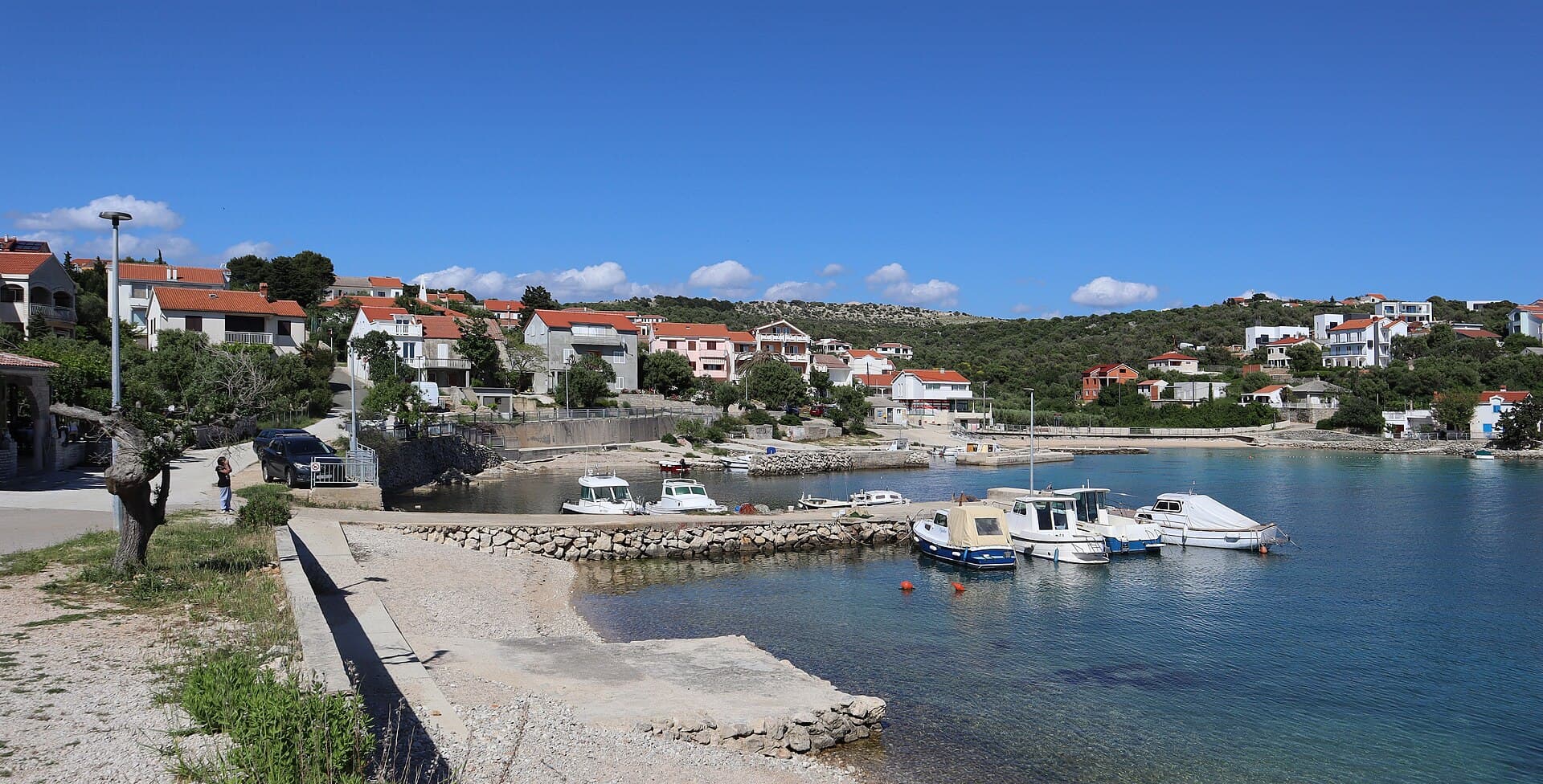
Jakišnica grew as the neighbouring hamlets of Stanišće and Gager gradually extended towards the sea. Its name is associated with Jakov Badurina, described in the local record as the first…
Read the guide
Know Pag? Correct us
Tell us in your own words what is not accurate. We check right away.Do not enter personal data. Corrections are checked by the StayBravo AI assistant; changes to the description are approved by an editor. Use the form instead
Do you know Pag?
Help the guests who come after you.
Help us complete
Nothing is published without an editor’s review.Report illegal content
Photo credits: Pag — Rootmaker at German Wikipedia (CC BY-SA 3.0) · Novalja — JoeTimBlackMax (CC BY-SA 3.0) · Lun, Zubovići, Novalja, Pag, Basilica of the Assumption of Mary, Jakišnica — Palauenc05 (CC BY-SA 4.0) · Stara Novalja — Maik Roscher (CC BY 3.0) · Metajna — Mich973 (CC BY-SA 4.0) · Gajac — Mrdvt92 at en.wikipedia (CC BY-SA 3.0) · Povljana — Moson81 (CC BY-SA 4.0) · Mandre — pepanos (CC BY 3.0) · Pag Triangle — Harald Hetzner (CC0) · Velo blato, Kolansko blato — Lendert Van Laer (CC BY-SA 4.0) · Dubrava Hanzine — Christian Pirkl (CC BY-SA 4.0) · Zrće — Croq (CC BY-SA 3.0) · Apartmani Bukal — Partner (courtesy of the property owner)