Povljana
About this place
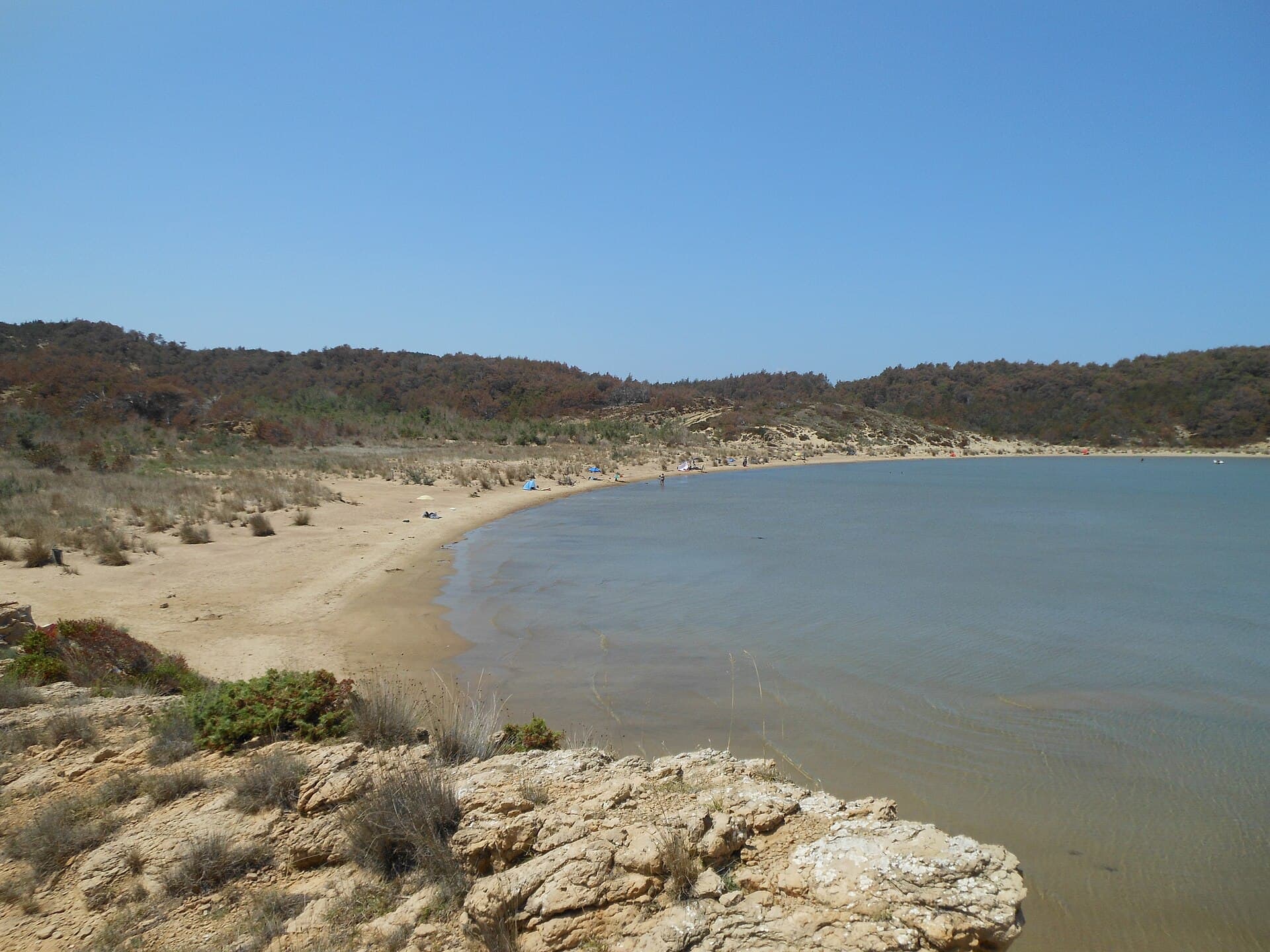
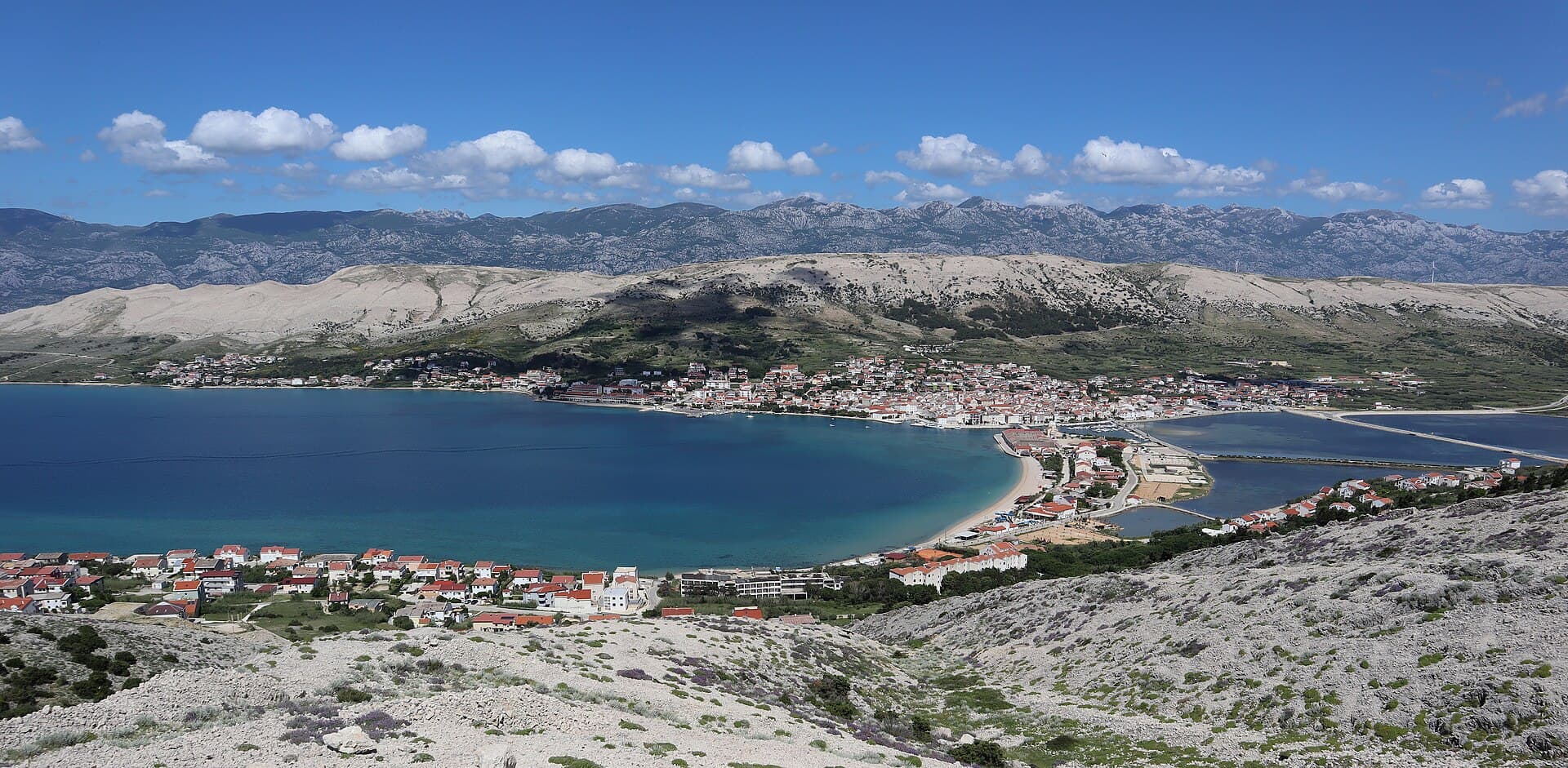
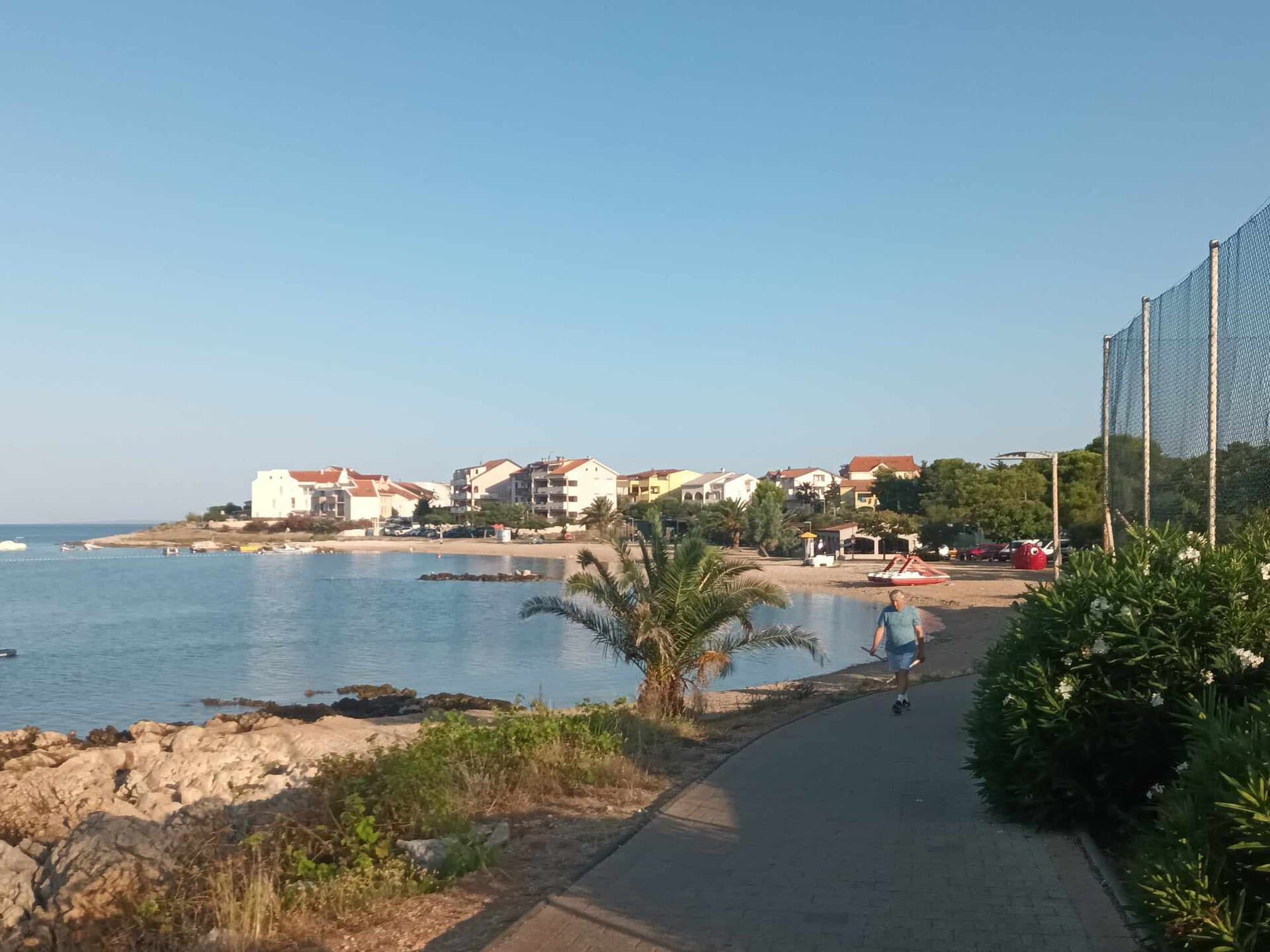
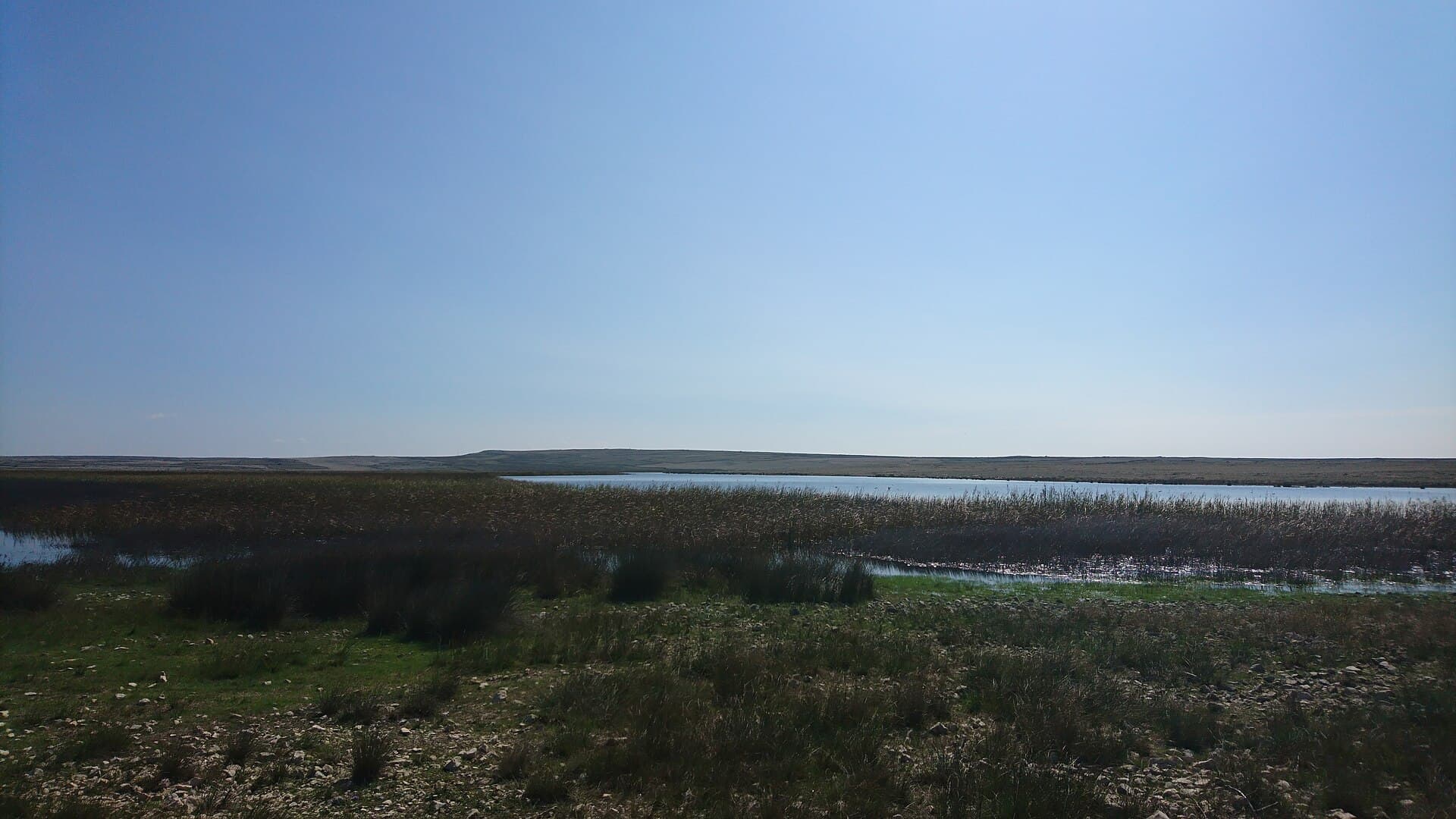
Povljana lies on the southern part of Pag island in a comparatively fertile landscape where karst terrain meets fields, vineyards and wetland habitats. Veliko Blato is the principal natural attraction: this ornithological reserve shelters many wetland birds during nesting, migration and wintering, and the Povljana Tourist Board reports more than 168 recorded bird species. West of the settlement, beside Dubrovnik beach, Lake Segal contains peloid mud. Swimming areas such as Perilo, Dubrovnik, Mali Dubrovnik, Livade, Stara Povljana and Livadine are known for shallow water and sandy or fine-gravel sections of coast. Povljana’s position on southern Pag makes excursions toward Pag town and the island’s saltworks straightforward, while the Pag Bridge provides road access toward Zadar and Ravni Kotari. The settlement has a quieter character than Novalja or Pag town, and its bird reserve and wetland landscape give it a strong identity beyond the usual beach holiday. The cultivated fields around the settlement also distinguish Povljana from the barer limestone landscapes elsewhere on Pag, creating an unusual combination of farmland, wetland and shallow coast within a compact part of the island.
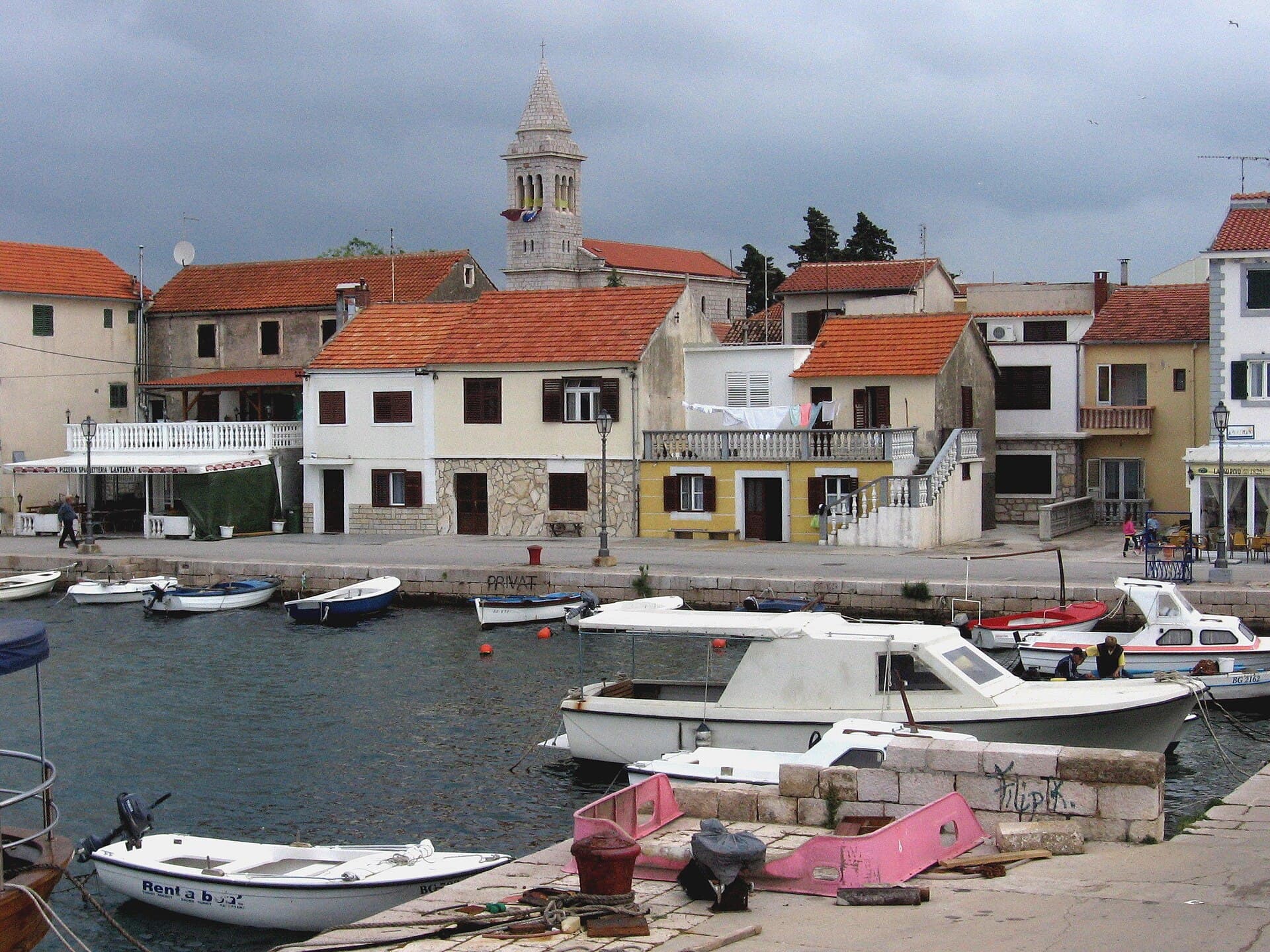
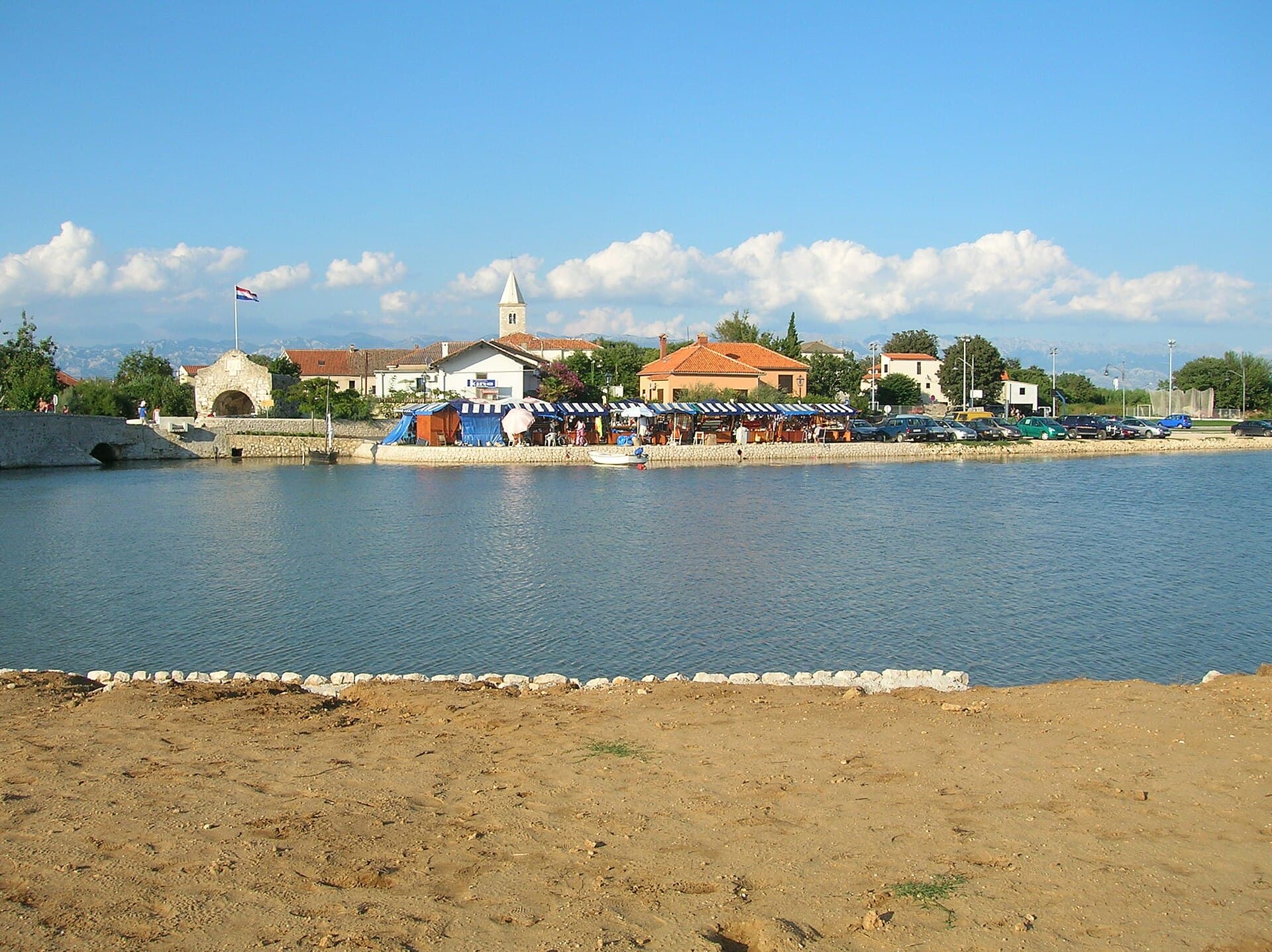
Povljana occupies the greener southern part of Pag, where the island’s limestone terrain gives way to fields, grazing land and shallow bays. It contrasts with Pag’s barer landscapes through its vegetable plots and the Veliko Blato wetland, where more than 168 bird species have been recorded. Stara Povljana preserves the setting of an earlier settlement abandoned by the 17th century, while the present village developed around St George’s Church. A document from 1411 records 18 salt pans in the bay outside the settlement, revealing Povljana’s former economic connection with salt production. Today, the shoreline is defined by Perilo, Dubrovnik and Mali Dubrovnik beaches, linked by promenades and the harbour.
Stays nearby
 Apartment
Apartmeni Klenovica.eu
Klenovica
87 km from Povljana
up to 4 guests · 1 bedroom
The host confirms the exact price for your dates and availability.
Things to see
Veliko Blato is Povljana’s key attraction and one of three important wetland sites on Pag, alongside Malo Blato and Kolansko Blato. The reserve is especially relevant for birdwatching because it provides habitat during nesting, migration and wintering. A second unusual natural feature lies beside Dubrovnik beach: Lake Segal with its dark peloid mud. For conventional swimming, Povljana has several named beaches, including Perilo, Dubrovnik, Mali Dubrovnik, Livade, Stara Povljana and Livadine. The settlement’s natural attractions therefore range from protected wetland habitat to shallow coastal coves rather than being concentrated on a single beach.
Beaches
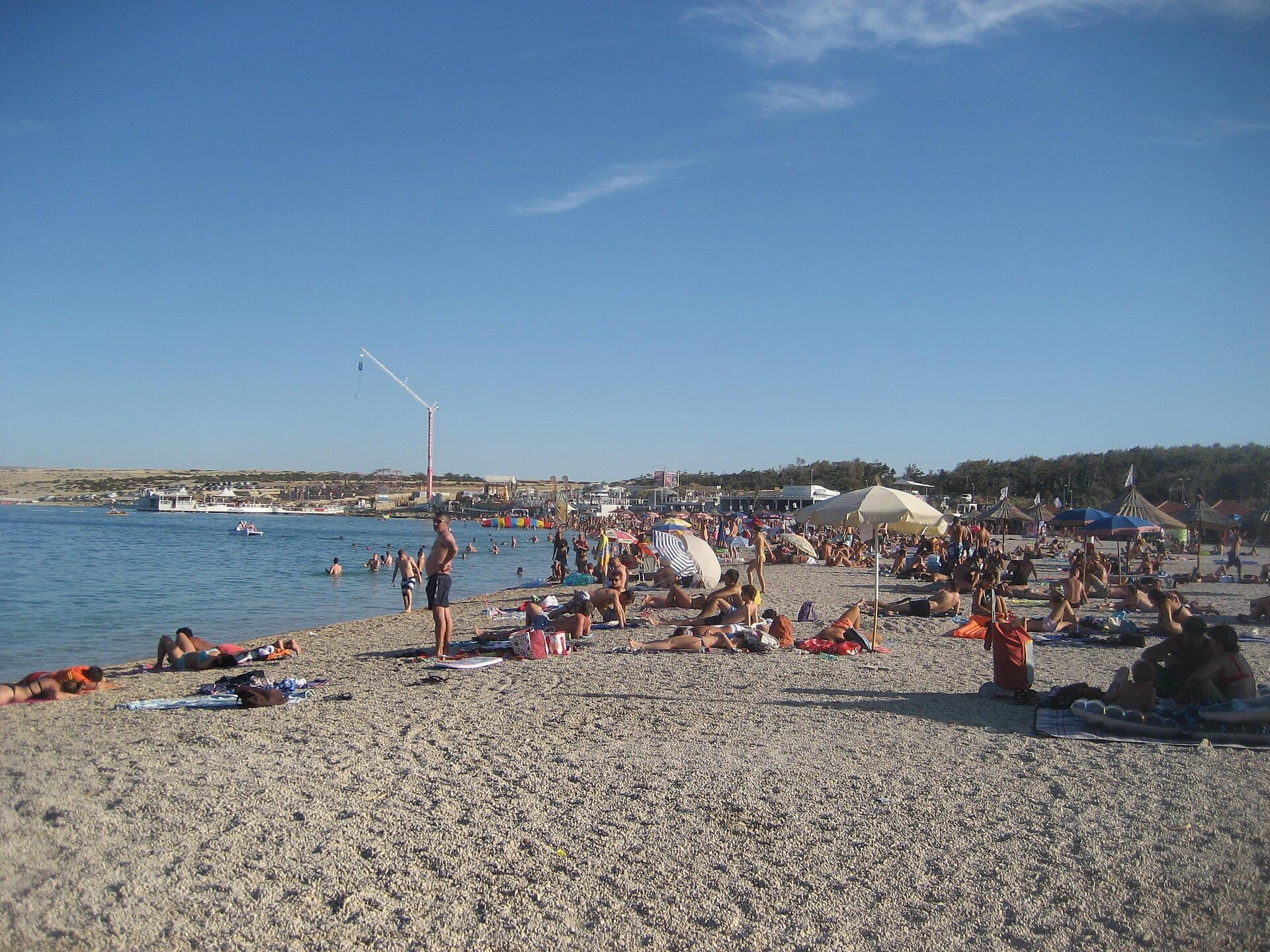
Dubrovnik Beach has pebbles on shore and a sandy seabed that deepens gradually; palms provide limited shade, while showers, bars and restaurants line the beach. A waterfront path of about one kilometre links it with Mali Dubrovnik beside the harbour. Mali Dubrovnik is also pebbled and has a shower and changing cabin, but the tourist board recommends arriving on foot because parking is scarce. Perilo combines sand and shallow water with beach volleyball and rental loungers, parasols and pedal boats, though it offers almost no natural shade. Livade and Obatnice provide quieter sandy shallows, while an asphalt road through the fields reaches Stara Povljana, with rocks on its southern side and small sandy coves along the north.
Things to do
Start early with birdwatching at Veliko Blato, where the wetland rewards quiet movement before the day becomes busy. Continue to St Nicholas’s Church, whose origins are associated with the ninth century, and St Martin’s Church, first documented in 1335. In the afternoon, follow the Viverone promenade beside Mali Dubrovnik and continue for roughly one kilometre to Dubrovnik Beach, a pleasant section for walking or light running. Choose Perilo for shallow-water swimming, picigin and beach volleyball. Finish with a drive through the fields to Stara Povljana Bay, where a series of small sandy coves lies along the northern side.
Food and drink
Povljana’s table brings together the island staples highlighted by its tourist board: sheep and lamb dishes, fish and seafood. Pag cheese is the natural companion to this menu, particularly in a village on the southern side of Pag Island. Restaurant and guesthouse Nirvana in Povljana serves fish specialities, shellfish salads and Pag lamb; its under-the-bell dishes require an order at least 24 hours ahead. A good lunch pairing is a seafood starter with Pag cheese, while dinner is the moment to reserve a peka in advance.
Practical information
Practical information
Povljana Tourist Board is at Stjepana Radića 20 and can be contacted on +385 23 692 003 or at [email protected]. The office provides maps and information on Veliko Blato, local beaches, walking routes and cycling trails. The P&M agency in Povljana sells bus tickets, arranges transfers and excursions, and rents tennis courts, making it useful for visitors without a car. The tourist board specifically recommends walking to Perilo and Mali Dubrovnik because vehicle spaces are limited. Take drinking water and sun protection when heading towards the wetland or Stara Povljana, as these sites are separated from the cafés and other services concentrated around the village’s main beaches.
Parking
Parking for Dubrovnik Beach is available at the end of Povljana’s main road, although the beach can also be reached along a waterfront path of about one kilometre from Mali Dubrovnik. For Mali Dubrovnik, the tourist board explicitly recommends walking because the number of spaces is small. The same caution applies to Perilo: parking is possible nearby, but the official beach description warns of limited capacity. An asphalt road crosses the fields to Stara Povljana Bay, where no paid system or formal zones are published. As Povljana has no unified 2026 parking tariff, the most practical approach is to leave the car near the harbour or accommodation and connect the central beaches on foot.
Getting there and around
Povljana is connected by road to the rest of Pag and to the mainland via Pag Bridge, so motorists do not need a ferry. Antonio Tours operates bus services linking the island with Pag town and Zadar and offers online ticket purchases; seasonal departures should be checked for the intended travel date. Within Povljana, the P&M agency sells bus tickets and arranges transport. A car is useful for reaching Veliko Blato and Stara Povljana Bay, while the harbour, Mali Dubrovnik, Dubrovnik and Perilo are better linked on foot by waterfront paths. A bicycle works well on the flatter roads through southern Pag’s fields, particularly outside the hottest part of the day.
Frequently asked questions
Why is Veliko Blato important for visitors to Povljana?
Veliko Blato is an ornithological reserve and an important wetland habitat during nesting, migration and wintering.
How many bird species are recorded around Povljana’s reserve?
The Povljana Tourist Board reports more than 168 bird species.
Where is the peloid mud near Povljana?
It is found in Lake Segal, west of the settlement beside Dubrovnik beach.
Which Povljana beaches are known for shallow water?
They include Perilo, Dubrovnik, Mali Dubrovnik, Livade, Stara Povljana and Livadine.


Related guides
Novalja
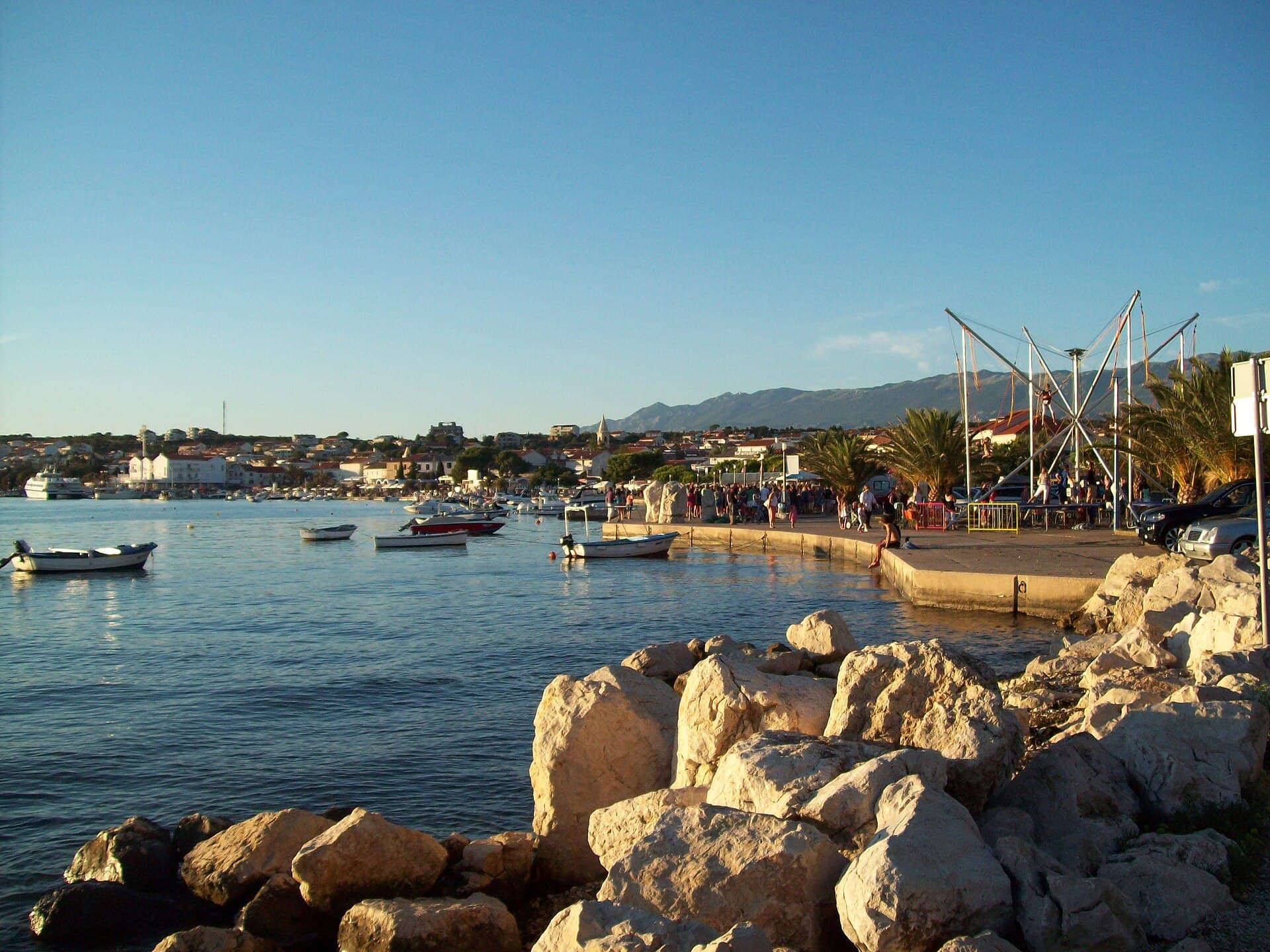
Novalja curves around a bay on Pag’s western shore, with the waterfront, Trg Bazilike and streets around Mala crikva forming the centre. Landing places and restaurants line the water, while…
Read the guide
Help improve this page
Spot something missing or wrong? Suggest a correction, add your photo or report a problem. Editors review every suggestion before it is published.
Photo credits
- Povljana, Dinjiška — Moson81 · CC BY-SA 4.0 · Wikimedia Commons
- Privlaka — Andrzej Mlynarz · CC BY 3.0 · Wikimedia Commons
- Vir — Cro-Cop · CC BY-SA 3.0 · Wikimedia Commons
- Nin — Amphisbène · CC BY 2.5 · Wikimedia Commons