
Dinjiška
About this place
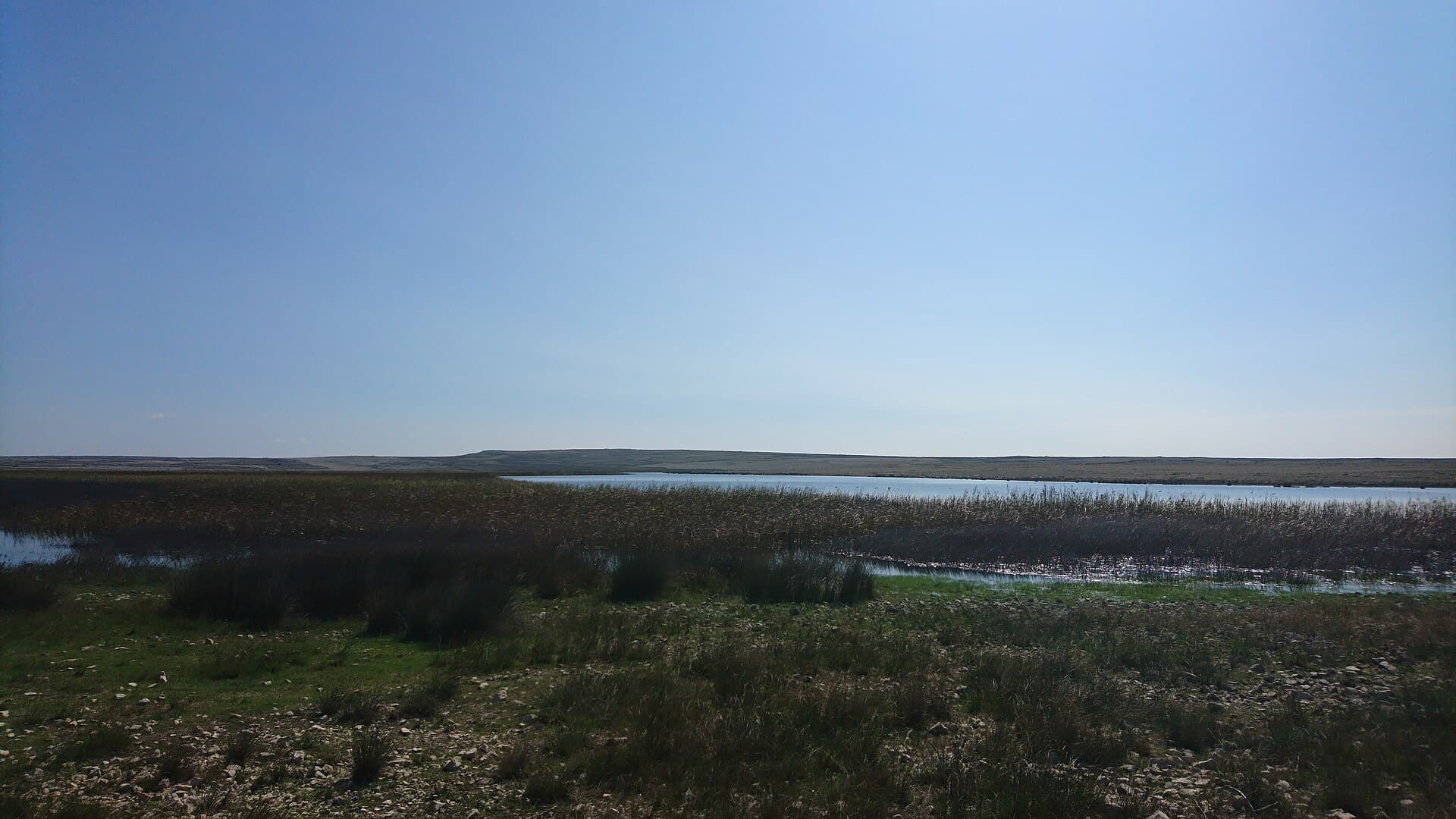
Dinjiška belongs to the City of Pag, yet its 69 residents recorded in the 2021 census give it the scale of a tiny island village. The bay preserves an unusual economic landmark: remnants of saltworks established under French rule in the early 19th century, set below grazing land divided by traditional dry-stone walls. In the village centre, St Maurus Church was thoroughly rebuilt in the 16th century and predates the surviving salt-basin landscape. The most revealing route into Dinjiška’s hinterland is the 6.1 km circular Velo Blato Trail, coded Dnj3, which starts beside the church and follows former saltwork embankments towards the ornithological reserve. Its mix of asphalt, gravel and stone leads to a birdwatching hide, although the lakeside section can flood after heavy rain. This compact corner of southern Pag therefore brings together French-period industrial heritage, sheep-grazing plots and a wetland habitat that contrasts sharply with the bare limestone slopes seen on the approach from Pag Bridge.
Dinjiška is a small settlement on a shallow bay near the southern entrance to Pag, where the coastline meets former salt pans and dry-stone-walled pastures. Its central landmark is the Church of St Maurus, rebuilt extensively in the 16th century. Remains of the saltworks established under French administration in the early 19th century are still visible around the inlet, though their abandoned basins now serve as bird habitat. Velo Blato, an important birdwatching area, lies behind the village. Pag cheese, island lamb and fresh fish connect Dinjiška’s food culture directly with Pag’s sheep farming, surrounding sea and distinctive karst landscape.
Things to see
 National park
Stays nearby
- Apartment
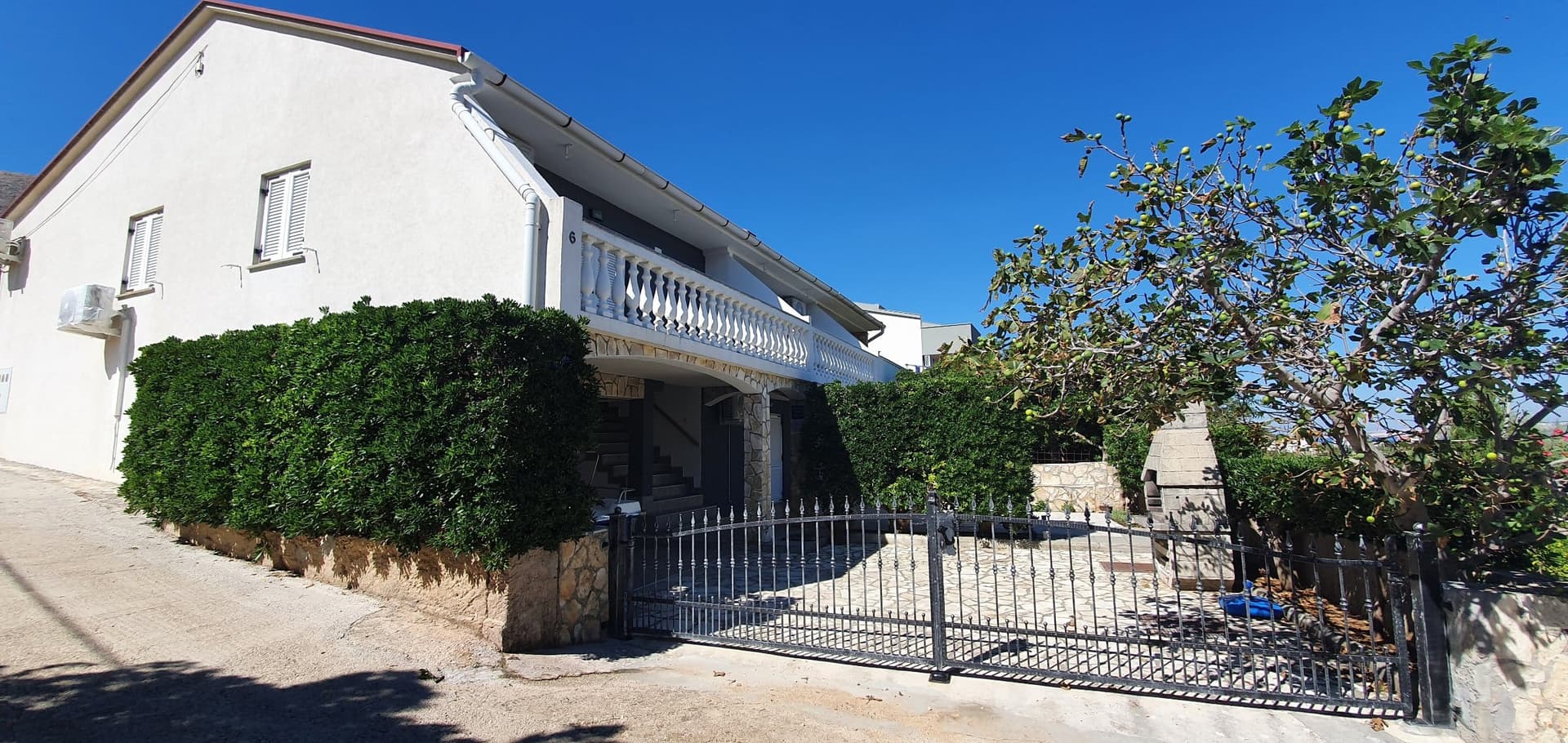 14 km from Dinjiška
Be the first to list here
Guests looking for this place only see stays nearby for now. No commission, and enquiries come straight to you.
List your accommodation
Beaches
Dinjiška’s shore spreads around a gentle, shallow bay where several small and quieter access points replace a single large developed beach. This arrangement makes it easy to combine swimming with a walk beside the former saltworks and the older part of the settlement. The inlet is more sheltered than Pag’s open western coast, though its modest beaches do not provide the equipment associated with the island’s major bathing resorts. In April 2026, the City of Pag included Dinjiška in a beach and seabed clean-up campaign, confirming the village’s established swimming area. Sturdy sandals are useful when moving between the separated shore sections across Pag’s rocky terrain.
Things to do
Begin at the Church of St Maurus, explore central Dinjiška and descend towards the remains of the saltworks in the shallow bay. For a fuller circuit, follow the 6.1-kilometre Velo Blato Trail across former salt pans, embankments, rocky ground and dry-stone-walled grazing land to the lake and its birdwatching hide. Rated moderately difficult, the route combines asphalt, gravel and stone; after heavy rain, the section beside the lake can flood. On returning to Dinjiška, stop for a swim at one of the bay’s small beaches. Finish with Pag cheese or island lamb, two foods rooted in this particular part of Pag’s pastoral landscape.
Tours and activities
AdAd · partner offers: Viator, GetYourGuideThe partner handles booking, payment and support. StayBravo may earn a commission on bookings made through these links.How we choose offersWe choose offers based on the page you are viewing: the partner destination for this place or the nearest one (with its distance), and on a sight page only offers that mention it. We show offers rated at least 4.3 with at least 10 reviews, without multi-day tours or pure transfers, ordered by rating adjusted for the number of reviews and then by the partner’s order. We do not use data about you, and the commission does not affect the order.GetYourGuide offers are selected and ordered by GetYourGuide based on the name of the nearest larger town or national park; we do not influence their selection and do not use data about you.GetYourGuide · Nin
We show GetYourGuide offers once you allow their cookies.
Viator
Nearest destination: Zadar (27 km)
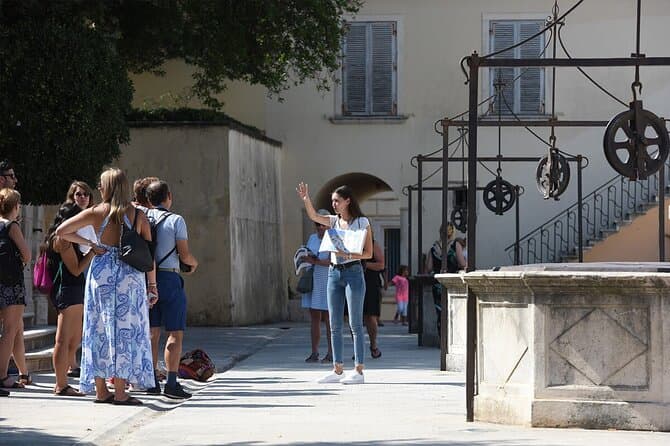
Zadar Highlights: Old Town, Sea Organ & Local Tastings (opens in a new tab)
A 2-hour small-group walk through Zadar's Old Town covering the city's top landmarks, the world-unique Sea Organ, and a tasting of local maraschino liqueur and cheese with a licensed local guide.
Rated 5 out of 5 · 478 reviews· 2 h
Free cancellation
from €20
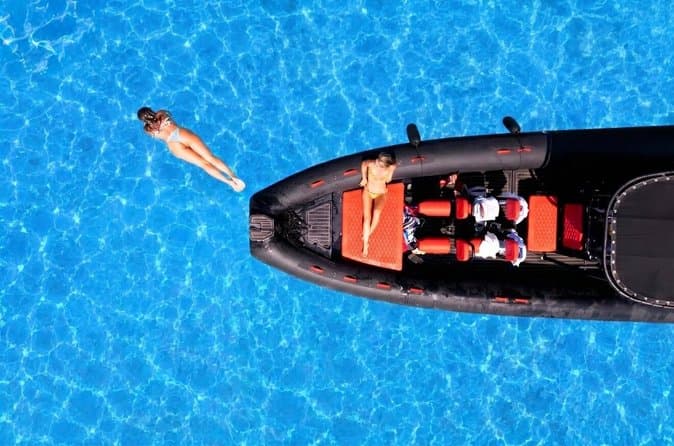
Zadar: Luxury Island Boat Tour, Snorkeling & Unlimited Wine (opens in a new tab)
Embark on an unforgettable adventure and explore the wonderful islands that adorn our Adriatic Sea. You have two types of tour, 4 hour with 3 stops and 3 hour with 2 stops. Explore the crystal clear…
Rated 5 out of 5 · 1,393 reviews· 4 h
Free cancellation
from €47

From Zadar Plitvice Lakes Guided Day Tour with Tickets (opens in a new tab)
Discover the UNESCO-listed Plitvice Lakes with a passionate local guide and enjoy one of the easiest ways to visit Croatia’s most iconic national park from Zadar. Travel through the scenic Croatian…
Rated 4.9 out of 5 · 1,689 reviews· 10 h
Free cancellation
from €45

Zadar: Romantic Luxury Sunset Boat Tour with Aperol Spritz (opens in a new tab)
We will start our tour from the oldest harbor in Zadar, Foša. After that we will cruise by the Zadar seafront and famous Sea Organs where thousands of people come every night to see world famous…
Rated 5 out of 5 · 330 reviews· 1.3 h
Free cancellation
from €25
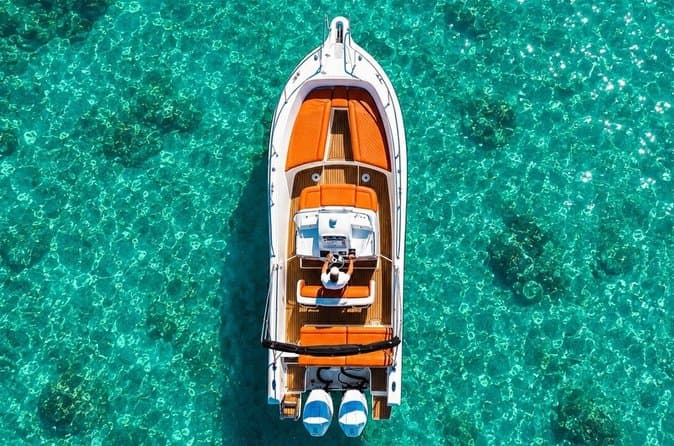
Zadar: Half Day Island Hopping Tour & Old Town Panoramic Cruise (opens in a new tab)
Step off the beaten path and discover the authentic soul of Dalmatia. On the islands, time moves slower and local traditions are still alive. Swim, snorkel, sunbathe, stroll through charming…
Rated 4.9 out of 5 · 418 reviews· 4 h
Free cancellation
from €19
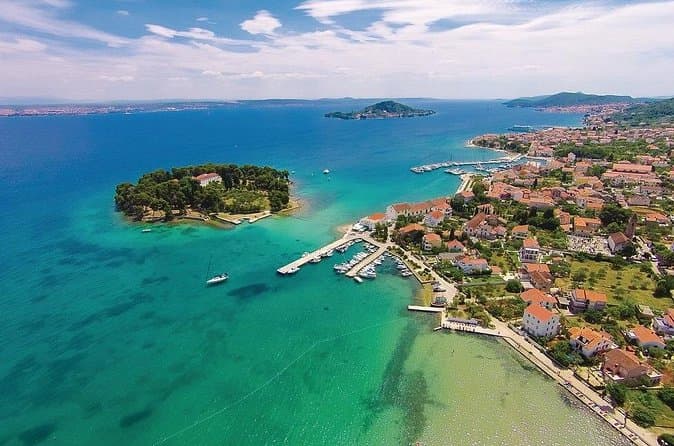
Private Sailing Tours in Zadar Archipelago (opens in a new tab)
We are a family business with a vision of presenting the beautiful nature and history of Zadar and Island Ugljan, Croatia. Sail away with us and absorb the sea breezes and panoramic views over Zadar…
Rated 5 out of 5 · 135 reviews· 4 h
Free cancellation
from €450
Practical information
Getting there and around
Dinjiška is reached from the mainland by road across the Pag Bridge, with no ferry required, making it a practical first stop after entering southern Pag. The road continues north towards Pag town and returns south towards Zadar. Arriva operates the Zadar–Pag connection, a journey of about 55 kilometres and roughly one hour, although individual services may not stop in Dinjiška. FlixBus also lists a Zadar–Dinjiška route, with departures dependent on the selected travel date. For Velo Blato, head first to the Church of St Maurus in Dinjiška, the designated starting point of the marked circular trail.
Frequently asked questions
Where does the Velo Blato Trail begin?
The circular route begins outside the Church of St Maurus in Dinjiška and returns there after 6.1 kilometres.
Can visitors swim in Velo Blato?
The official trail description advises against swimming in the lake because of snakes and leeches; use Dinjiška’s seafront for bathing instead.
What remains of Dinjiška’s old saltworks?
Former salt pans and embankments remain visible in the bay, and the marked trail crosses their area on its way to Velo Blato.
Nearby
Dinjiška
Open in OpenStreetMap(opens in a new tab)Smaller places
straight-line distance
Related guides
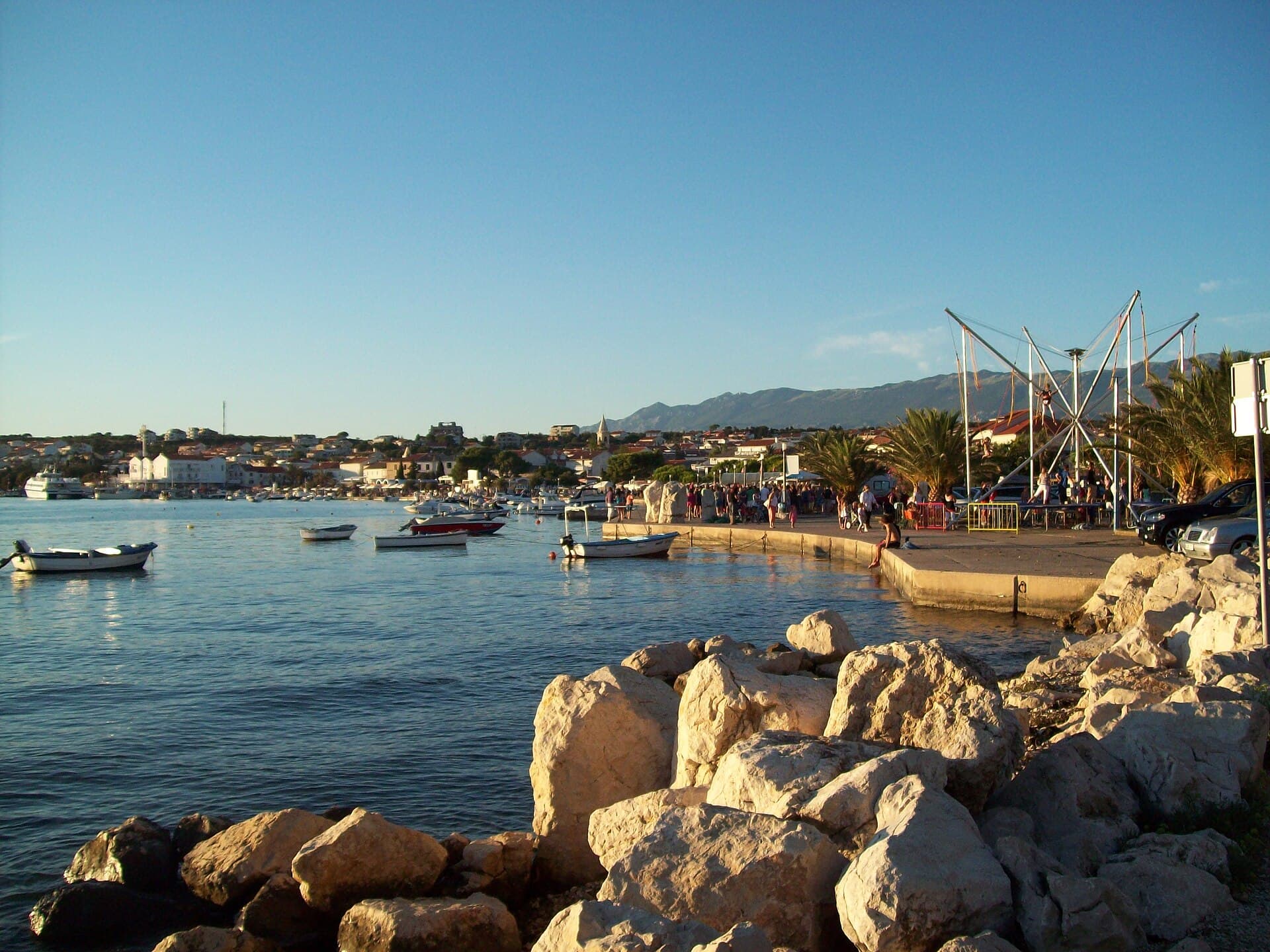
Novalja
Novalja curves around a bay on Pag’s western shore, with the waterfront, Trg Bazilike and streets around Mala crikva forming the centre. Landing places and restaurants line the water, while…
Read the guide
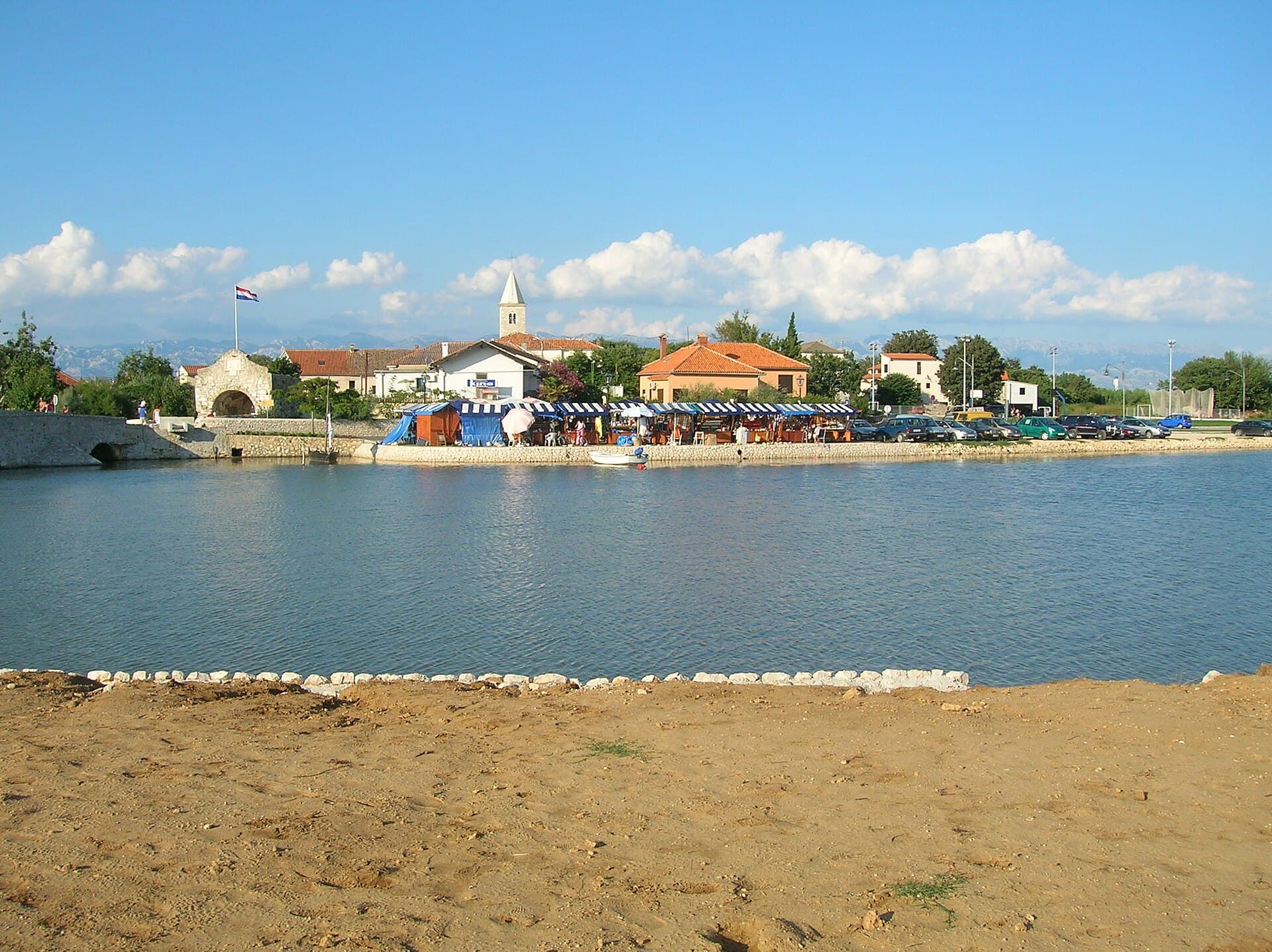
Nin
Nin’s historic centre occupies a low islet within a lagoon, connected to the mainland by bridges. Crossing into the centre creates a different first impression from arriving in nearby…
Read the guide
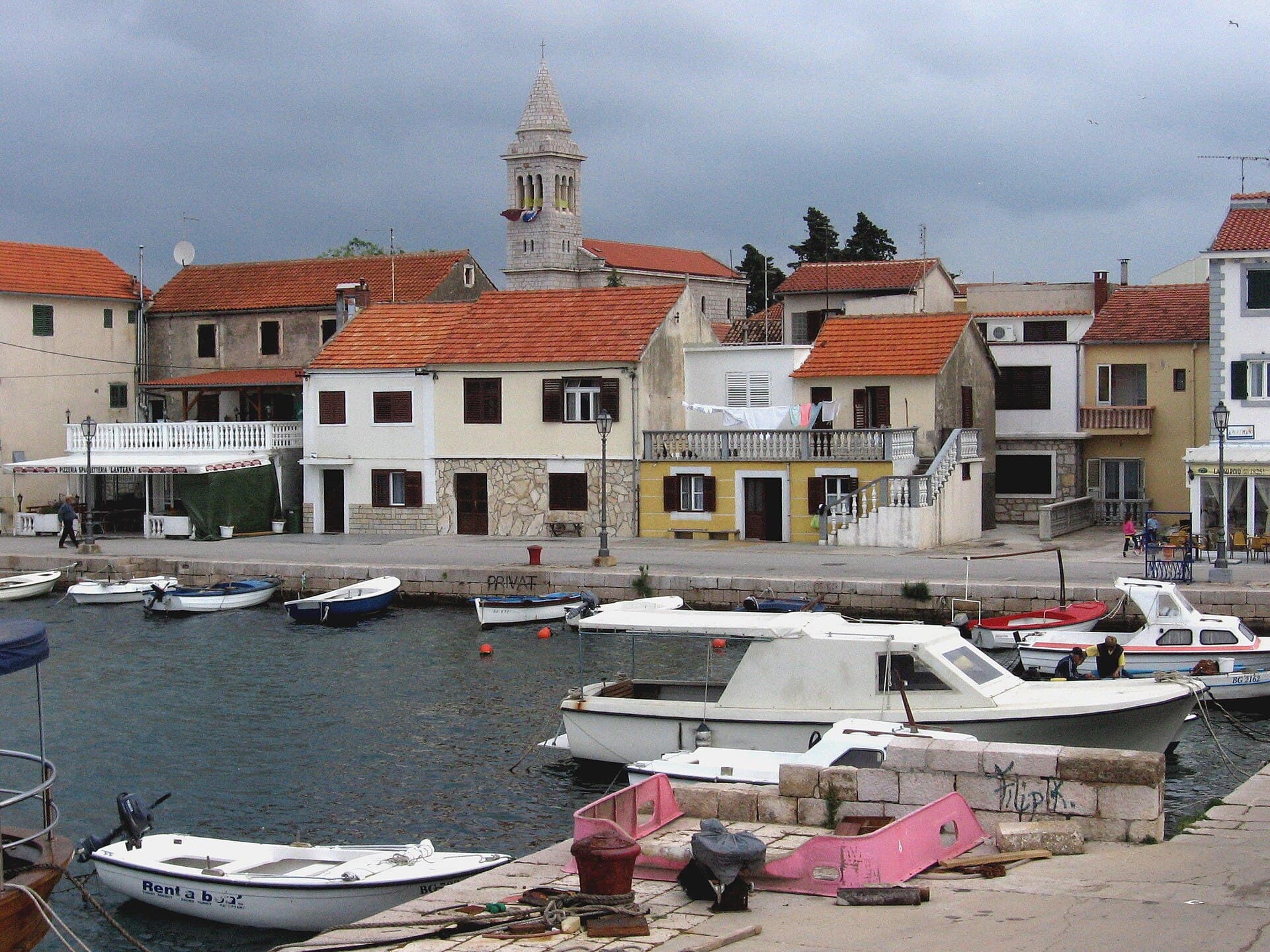
Pakoštane
Pakoštane occupies a narrow strip between the Adriatic and Lake Vrana, allowing visitors to move from a Dalmatian waterfront to the reeds of an ornithological reserve within minutes. The…
Read the guide
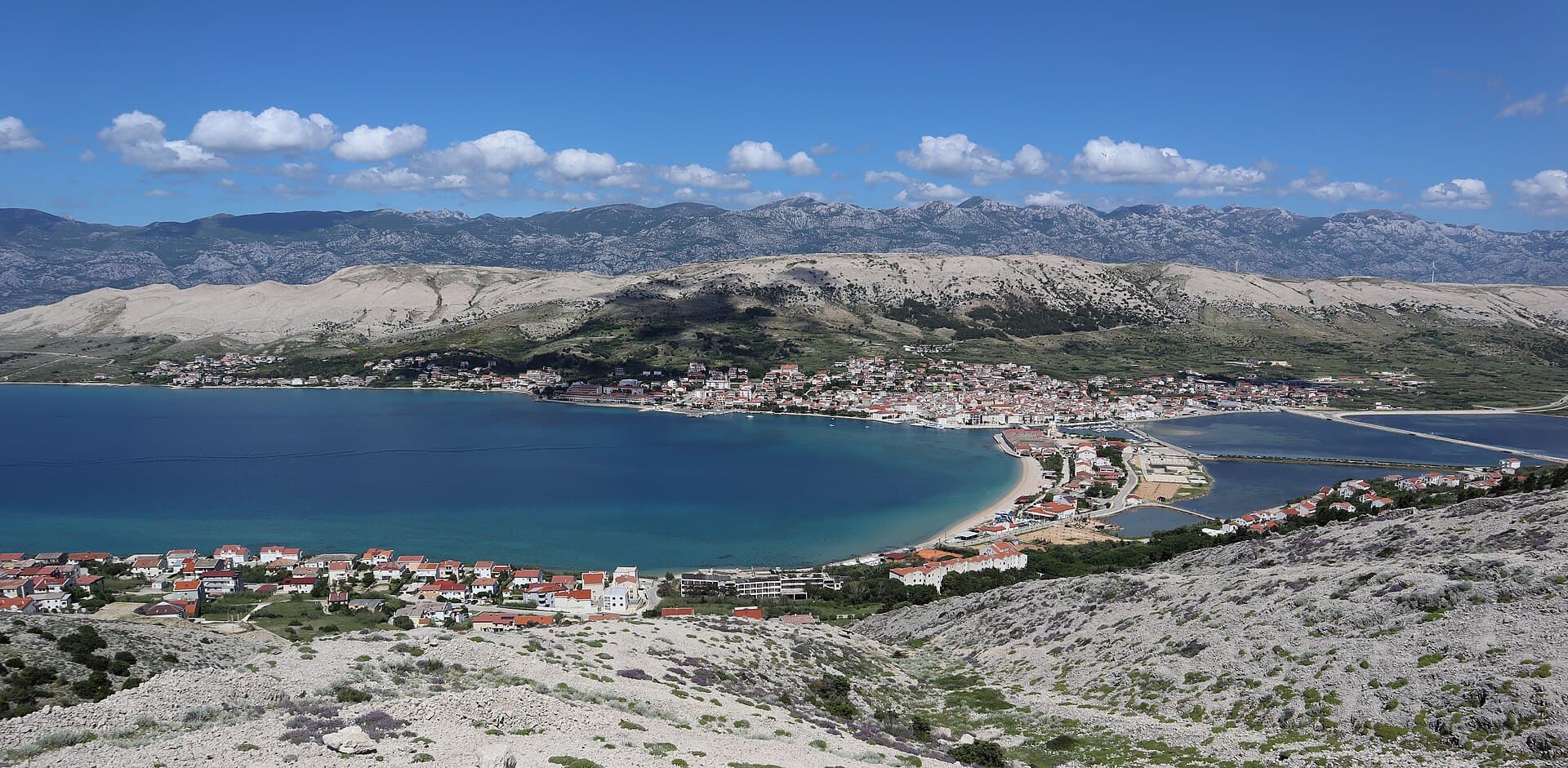
Pag
Pag is a planned stone town whose orderly street grid converges on Petar Krešimir IV Square, the Collegiate Church of the Assumption and the Rector’s Palace. The settlement moved to its…
Read the guide
Know Dinjiška? Correct us
Tell us in your own words what is not accurate. We check right away.Do not enter personal data. Corrections are checked by the StayBravo AI assistant; changes to the description are approved by an editor. Use the form instead
Do you know Dinjiška?
Help the guests who come after you.
Help us complete
Nothing is published without an editor’s review.Report illegal content
Photo credits: Dinjiška, Povljana — Moson81 (CC BY-SA 4.0) · Miškovići — Albamaris (Public domain) · Barić Draga — Zadar33 at Croatian Wikipedia (Public domain) · Lukovo Šugarje — Michael Walsh (CC BY 3.0) · Rtina — ANDREJ NEUHERZ (CC BY-SA 3.0) · Vir — Cro-Cop (CC BY-SA 3.0) · Tribanj — Joadl (CC BY-SA 3.0) · Vrsi — AwOiSoAk KaOsIoWa (CC BY-SA 3.0) · Privlaka — Andrzej Mlynarz (CC BY 3.0) · Velo blato — Lendert Van Laer (CC BY-SA 4.0) · Paklenica — Donarreiskoffer at English Wikipedia (CC BY-SA 3.0) · Aenona — Carole Raddato from FRANKFURT, Germany (CC BY-SA 2.0) · Church of Holy Cross — Böhringer Friedrich (CC BY-SA 2.5) · Apartmani Bukal — Partner (courtesy of the property owner) · Novalja — JoeTimBlackMax (CC BY-SA 3.0) · Nin — Amphisbène (CC BY 2.5) · Pakoštane — Roman Klementschitz, Wien (CC BY-SA 3.0) · Pag — Palauenc05 (CC BY-SA 4.0)