About this place
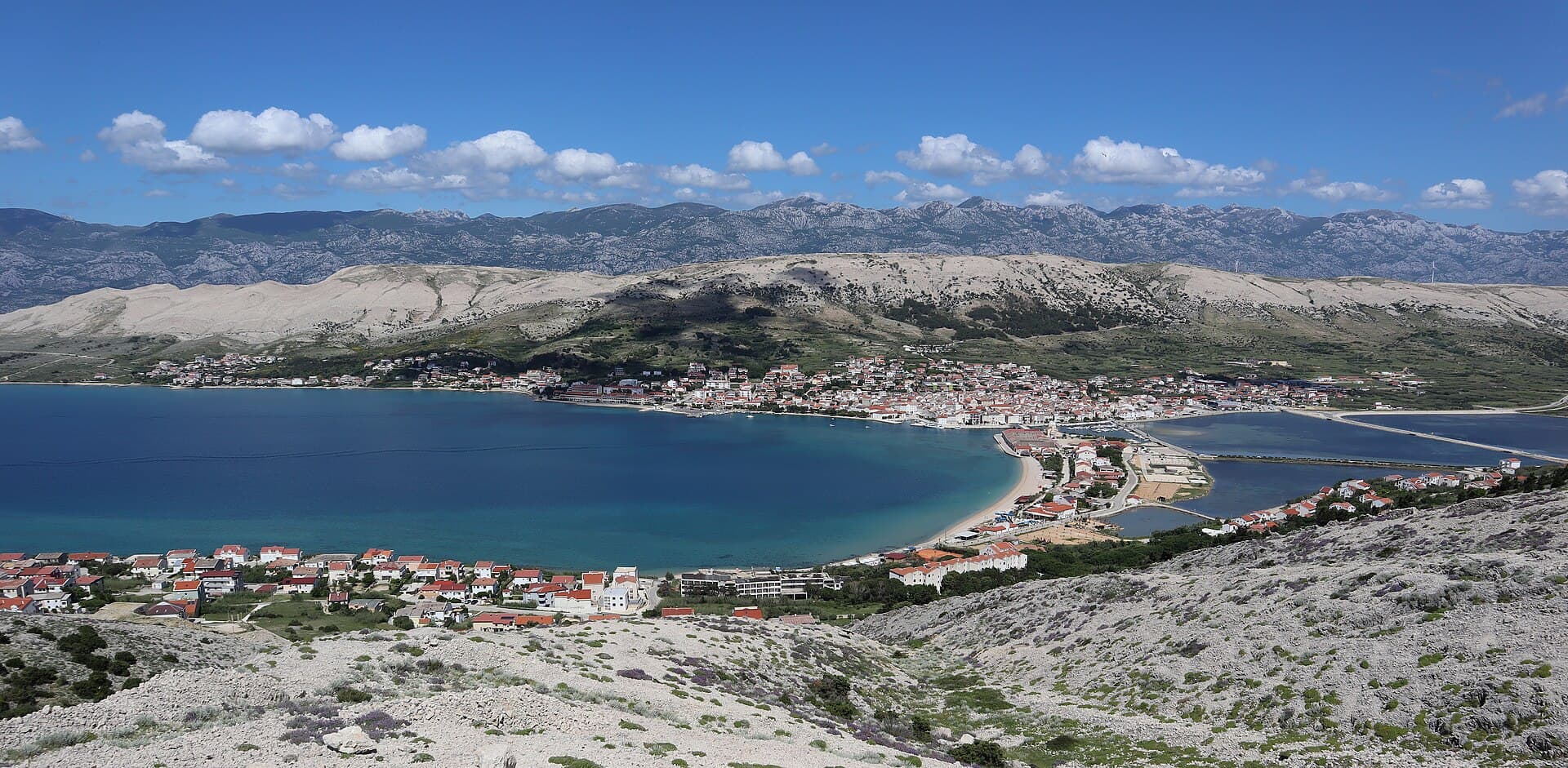
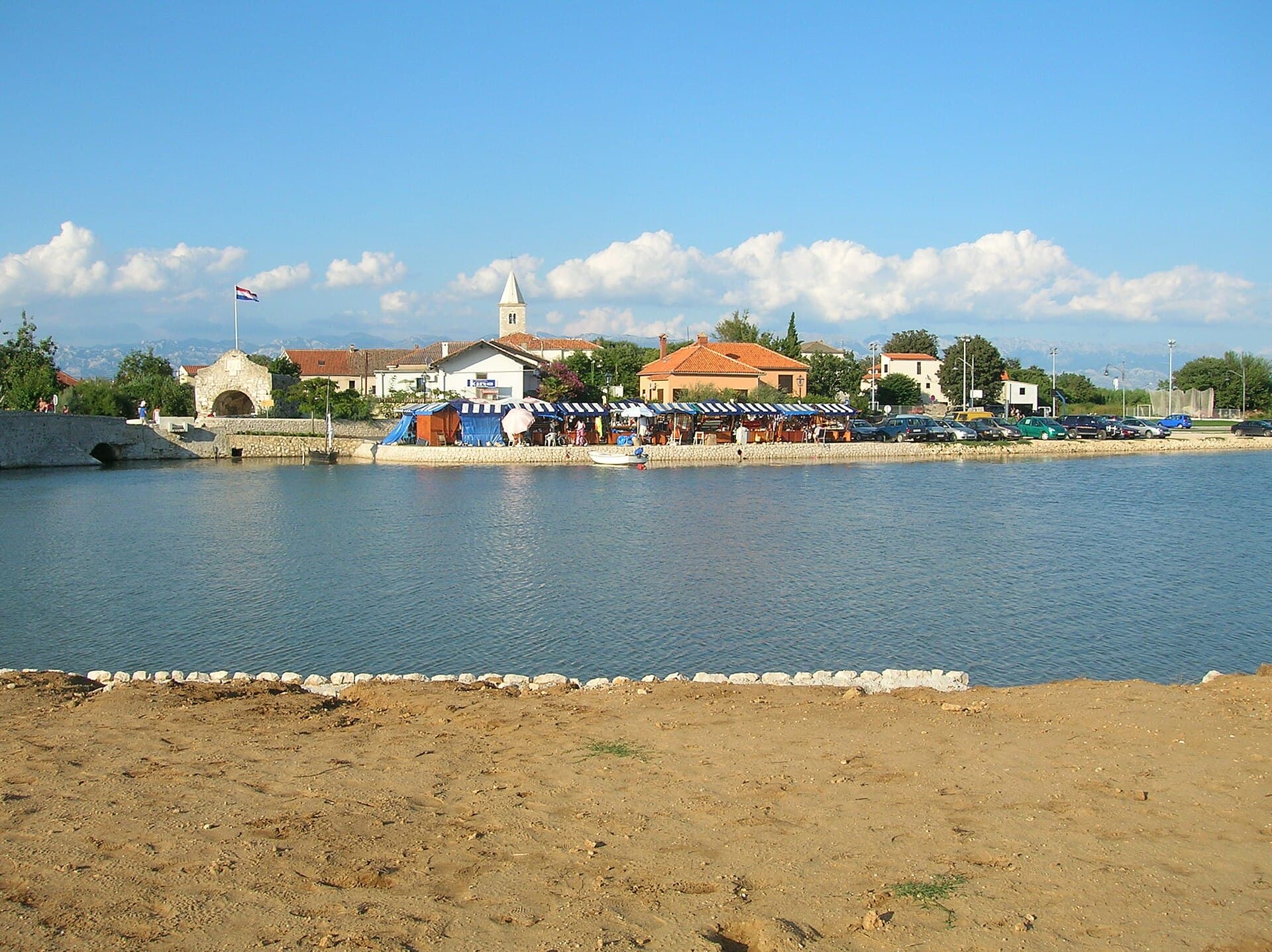
Nin is a small historic town in a lagoon northwest of Zadar. Bridges lead onto the old centre's islet, where a short walk connects Roman remains, early medieval churches and traces of an old harbour. The Church of the Holy Cross is its most recognisable landmark: simple volumes and a small dome stand clearly against the open ground around it. The Museum of Nin Antiquities gives the walk more depth, connecting finds from the ancient settlement with boats that illuminate the history of sailing these shallow waters. Beyond the centre lie the sands of Queen's Beach and the salt pans. Salt is more than a souvenir here. The Salt House introduces working tools, photographs and the process of harvesting salt by hand; visits to the production fields take place with a guide. The Church of St Nicholas, standing separately on a mound towards Zaton, adds another encounter with the area's heritage. Nin suits travellers who want a compact cultural visit alongside substantial time on a sandy shore. Bridges, shallows and salt fields shape its character more than the tall fortifications and deep harbours of other Dalmatian towns.
Nin’s historic centre occupies a low islet within a lagoon, connected to the mainland by bridges. Crossing into the centre creates a different first impression from arriving in nearby Zadar: shallows, the margins of the saltworks and widely spaced monuments take precedence over tall blocks of urban architecture. Kalelarga leads towards St Anselm’s Church, while the open ground around the Church of the Holy Cross allows its small dome to stand clearly apart from neighbouring roofs. The Museum of Nin Antiquities on Kraljevac Square brings together objects from several periods, making the square a useful starting point for understanding Roman and medieval Nin. The ancient settlement was called Aenona, and the remains of its forum and temple reveal an importance not immediately suggested by the present town’s size. The museum’s condura croatica boats connect that urban story with navigation in the shallow waters around Nin and Zaton. Beyond the central islet, St Nicholas’s Church stands separately on its mound at Prahulje; visiting it extends the journey towards Zaton rather than adding another stop along a street in the old centre. The saltworks on Ilirska cesta supplies a third element of Nin’s identity: seawater passes through production ponds and salt is harvested by hand. The Salt House introduces tools and working methods, while a guided walk among the ponds reveals the difference between a museum collection and a living production site. Towards Queen’s Beach and Ždrijac, the cultural walk gives way to a sandy shoreline. This transition between compact historic centre, salt fields and open lagoon shapes a stay in Nin, particularly for visitors combining cultural interests with longer periods beside the sand.
Stays nearby
 Apartment
Apartmeni Klenovica.eu
Klenovica
99 km from Nin
up to 4 guests · 1 bedroom
The host confirms the exact price for your dates and availability.
Things to see
The Church of the Holy Cross and the Roman temple remains introduce two distinct periods of Nin's history. At Holy Cross, look at the cruciform plan, dome and compact exterior; at the temple, notice the contrast between a once-monumental building and today's small urban centre. St Anselm, the former cathedral, adds the story of Nin's role as a bishop's seat. Comparing these buildings is more revealing than collecting a quick photograph of each. The Museum of Nin Antiquities brings together discoveries from the town and its surroundings. Displays move from prehistory through antiquity to later periods, with the medieval boats known as Condura Croatica providing a memorable maritime focus. Conserved and reconstructed timber makes past working life easier to picture than a sequence of dates alone. The Salt House explains another relationship with the lagoon through tools, wagons and photographs of salt production. This remains a working saltworks alongside its visitor facilities. Outside the old centre, St Nicholas occupies a mound towards Zaton and deserves a separate stop in the open landscape. Queen's Beach and Ždrijac complete the picture beside the lagoon's low, sandy margins.

Beaches
Queen’s Beach and Ždrijac give Nin its distinctive sandy shoreline, but occupy different parts of the lagoon. Queen’s Beach draws families spending longer periods beside sand and shallow water, while Ždrijac also features prominently in the kitesurfing scene. Bilotinjak provides another sandy option in the wider Nin area, separate from a walk around the historic islet. Drivers will find dedicated beach-parking arrangements at Queen’s Beach and Ninsko blato, so parking beside the town bridge is not the same as choosing a base for a whole day on the sand. The mud at Ninsko blato belongs to the lagoon’s natural landscape, alongside salt fields and shallows. Choose a named beach rather than the broad Nin Riviera label, which also includes the more distant shores of Zaton, Privlaka and Vrsi.
Bathing water quality nearby
- Ždrijac · 1.3 kmnot classified · season 2025
- Kraljičina Plaža · 1.4 kmnot classified · season 2025
- Zaton H.R. 2 · 1.8 kmnot classified · season 2025
- Zaton H.R. 1 · 1.8 kmexcellent · season 2025
- Jaz · 2.1 kmnot classified · season 2025
Things to do
For a single day, cross into the old centre and walk to the Church of the Holy Cross. Continue past the Roman temple remains, then visit the Museum of Nin Antiquities. Its boats, carved stone and archaeological finds make sense of the separate monuments outside. After lunch, change the setting with time on Queen's Beach. This gives the historical walk a natural counterpart in the lagoon rather than turning the whole visit into a succession of ruins. For three days, devote the first to the centre and museum. On the second, combine the Salt House with a scheduled guided visit to the salt pans, choosing the time from the saltworks' own programme. These are production fields, entered with a guide, not a freely accessible beach path. Keep the afternoon for sand and swimming. On day three, visit St Nicholas on its mound towards Zaton before returning to the Nin shoreline and walking towards Ždrijac. Watching sails on the water can be part of the outing; choose bathing conditions according to the wind and your experience. With children, reduce the number of monuments but retain the museum, where the boats connect objects to the landscape outside.
Activities
Ždrijac is Nin’s principal kitesurfing setting, combining a sandy shore with lagoon space used for learning and developing the sport. Kite-launch areas serve a different purpose from quiet bathing spots, so a family stay at Queen’s Beach and a kitesurfing lesson at Ždrijac are distinct outings. Nin Saltworks offers another hands-on experience: its guided saltworker programme introduces adults to the banks between ponds, seawater regulation and the work involved in manual harvesting. A walking route through the centre can connect Kalelarga, Kraljevac Square and Holy Cross, while St Nicholas’s forms a separate extension towards Prahulje. An active day in Nin can therefore focus on wind, salt production or an archaeological walk, each with its own starting point.
Day trips
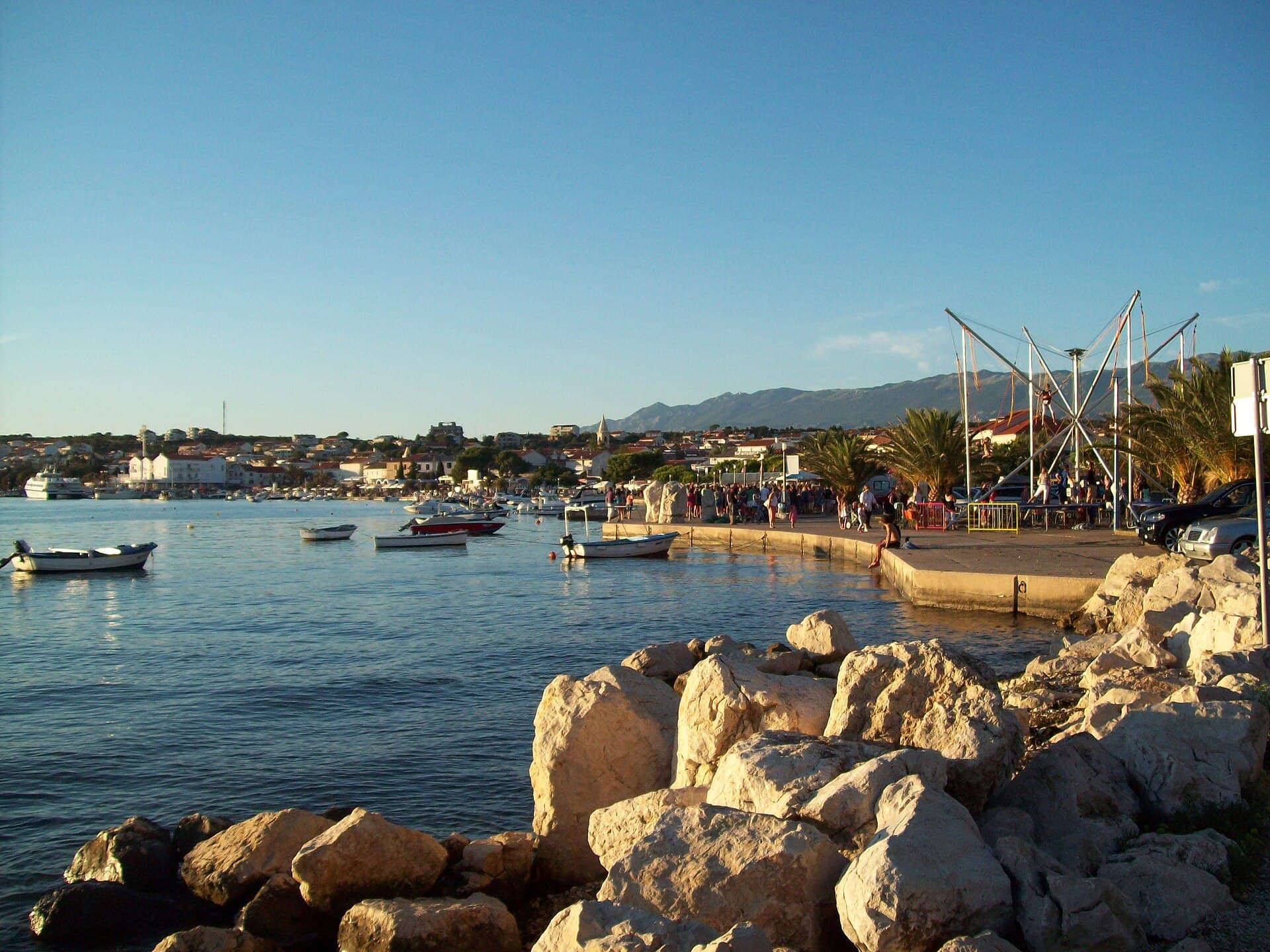
Zadar makes a natural cultural excursion from Nin: its Roman forum, St Donatus and Archaeological Museum extend themes introduced at the Museum of Nin Antiquities. For a shorter outing, head towards Zaton and St Nicholas’s Church at Prahulje. Privlaka, approximately six kilometres northwest of Nin, offers a coast facing Vir and the heritage of the sabunjari, who once extracted sand from the sea. Sabunike belongs to this low, sandy landscape and can provide a separate bathing stop. Vrsi offers another coastal option on the opposite side of the Nin area. Choose Zadar for museums and urban architecture, and Privlaka or Zaton for time by the sea closer to a Nin base.
Food and drink
Ninski šokol gives the town a flavour distinct from a typical Dalmatian seafood menu. Pork is salted, treated with red wine and spices, then cured with smoke and the bora wind; family recipes account for differences between individual examples. Thin slices reveal šokol’s seasoning, while the sea salt sold at Nin Saltworks connects the tasting with the landscape surrounding the town. Flower of salt is a separate saltworks product used to finish dishes. At the Salt House, food heritage gains a practical background through the tools once used to gather and transport salt. Šokolijada brings these strands together by presenting local cured-meat makers and a tradition inseparable from Nin’s salt-producing environment.
Practical information
Practical information
The Museum of Nin Antiquities is on Kraljevac Square, while the Salt House is at Ilirska cesta 7; the two collections have separate entrances and programmes. In 2026, the saltworks distinguishes Salt House admission from the educational field tour, with online tour tickets purchased at least 24 hours ahead and same-day sales handled in its shop. Salt crystallisation is visible during the summer months, so a winter visit to the Salt House differs from a summer walk among the ponds. Parking beside Nin’s bridges serves the historic centre, whereas Queen’s Beach and Ninsko blato have separate bathing-area approaches. Organise the museum, guided saltworks visit and chosen beach around those actual locations rather than treating them as a single entrance complex.
Parking
Under Komunalac Nin’s tariff effective from 1 June 2026, the enclosed car park on Obala kneza Branimira costs €2 per started hour during the summer season. Liburnska obala and Obala Spile offer €5 daily tickets, while beach parking at Queen’s Beach, Ninska Punta and Ninsko blato costs €10 per day. Put Ždrijaca has a separate €1.50 hourly rate. For the historic centre, choose an approach to the bridge; for a full beach day, use the parking area serving the chosen shore rather than assuming a uniform Nin tariff.
Getting there and around
Roads connect Nin with Zadar and the neighbouring settlements of the Nin Riviera, with suburban bus services published by Liburnija Zadar. Arrivals through Zadar Airport can continue through Zadar’s bus network or take road transport towards Nin. The historic centre is explored on foot after crossing the bridge, whereas Nin Saltworks on Ilirska cesta and St Nicholas’s at Prahulje require separate extensions beyond the central islet. Ždrijac and Queen’s Beach also have different road approaches and parking zones. A museum-focused day in Nin therefore involves a different route from a saltworks visit or bathing day, even though all three fit within the comparatively small lagoon area.
Frequently asked questions
Is Nin only a beach destination?
No. The historical centre and salt-making heritage are separate reasons to visit.
Is the Salt House the same as a tour of every salt field?
Do not assume the same scope. Check the specific product with the saltworks.
What is a recognisable sandy beach option?
Queen's Beach, after checking wind, sea conditions and the actual approach.
Should I reserve a cultural visit?
Check guided programmes and group conditions directly with the institution.


Related guides
Novalja
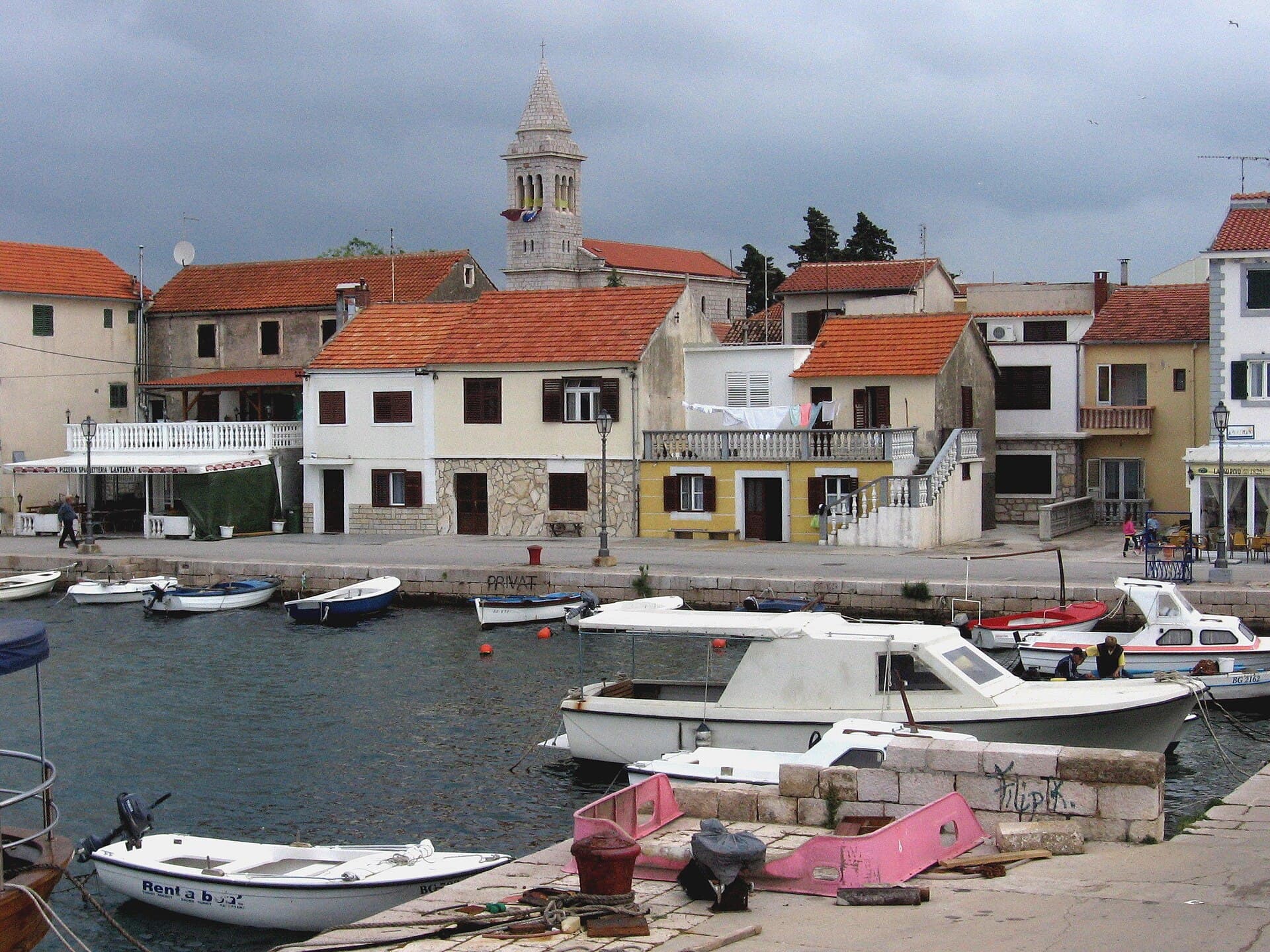
Novalja curves around a bay on Pag’s western shore, with the waterfront, Trg Bazilike and streets around Mala crikva forming the centre. Landing places and restaurants line the water, while…
Read the guide
Help improve this page
Spot something missing or wrong? Suggest a correction, add your photo or report a problem. Editors review every suggestion before it is published.
Photo credits
- Nin — Amphisbène · CC BY 2.5 · Wikimedia Commons
- Zaton, Church of Holy Cross — Böhringer Friedrich · CC BY-SA 2.5 · Wikimedia Commons
- Privlaka — Andrzej Mlynarz · CC BY 3.0 · Wikimedia Commons
- Vrsi