Novalja
About this place
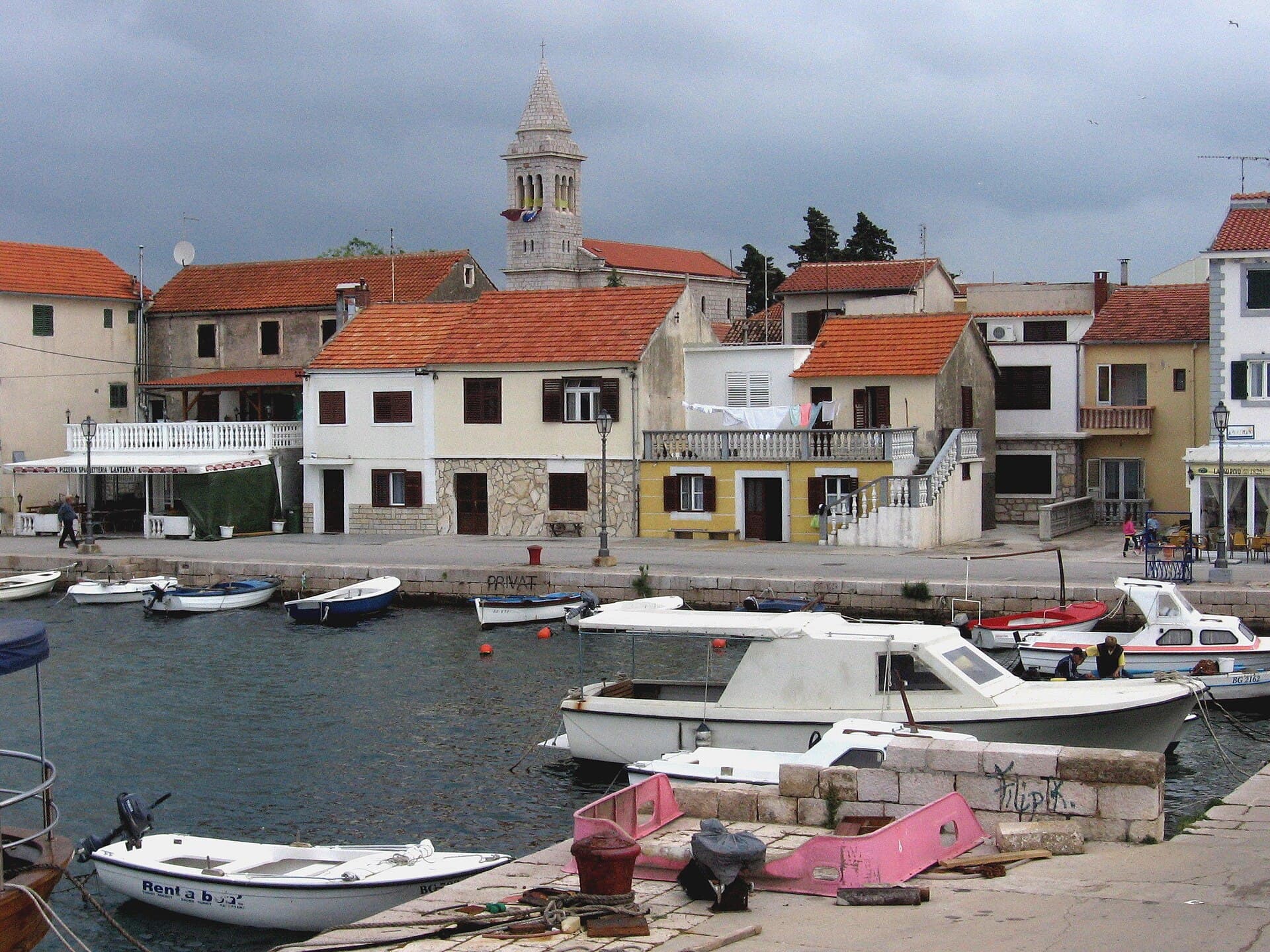
Novalja is a harbour town on Pag where a stay can move between a museum, contrasting beaches and excursions through the island landscape. Beneath its everyday waterfront lies a story of Roman water supply. Talijanova buža, a conduit cut through solid rock, is approached through the Town Museum; the visitor experience concerns its initial section rather than a walk through the entire underground system. It makes a distinctive introduction before the beach becomes the day's focus. The surrounding bathing places have different characters. Babe occupies a shallow cove west of the centre, Planjka Trinćel belongs to Stara Novalja, and Caska combines the shore with traces of an older settlement. Zrće has its own beach-and-music scene, while Lun, further north on the island, offers paths among old olive trees and stone. Novalja can therefore suit both summer nightlife seekers and visitors using the town to explore Pag. Choose accommodation and the day's pace around your interests. A museum visit, one carefully chosen beach and a separate outing to the olive gardens reveal more than constantly driving between locations without time to enjoy them.
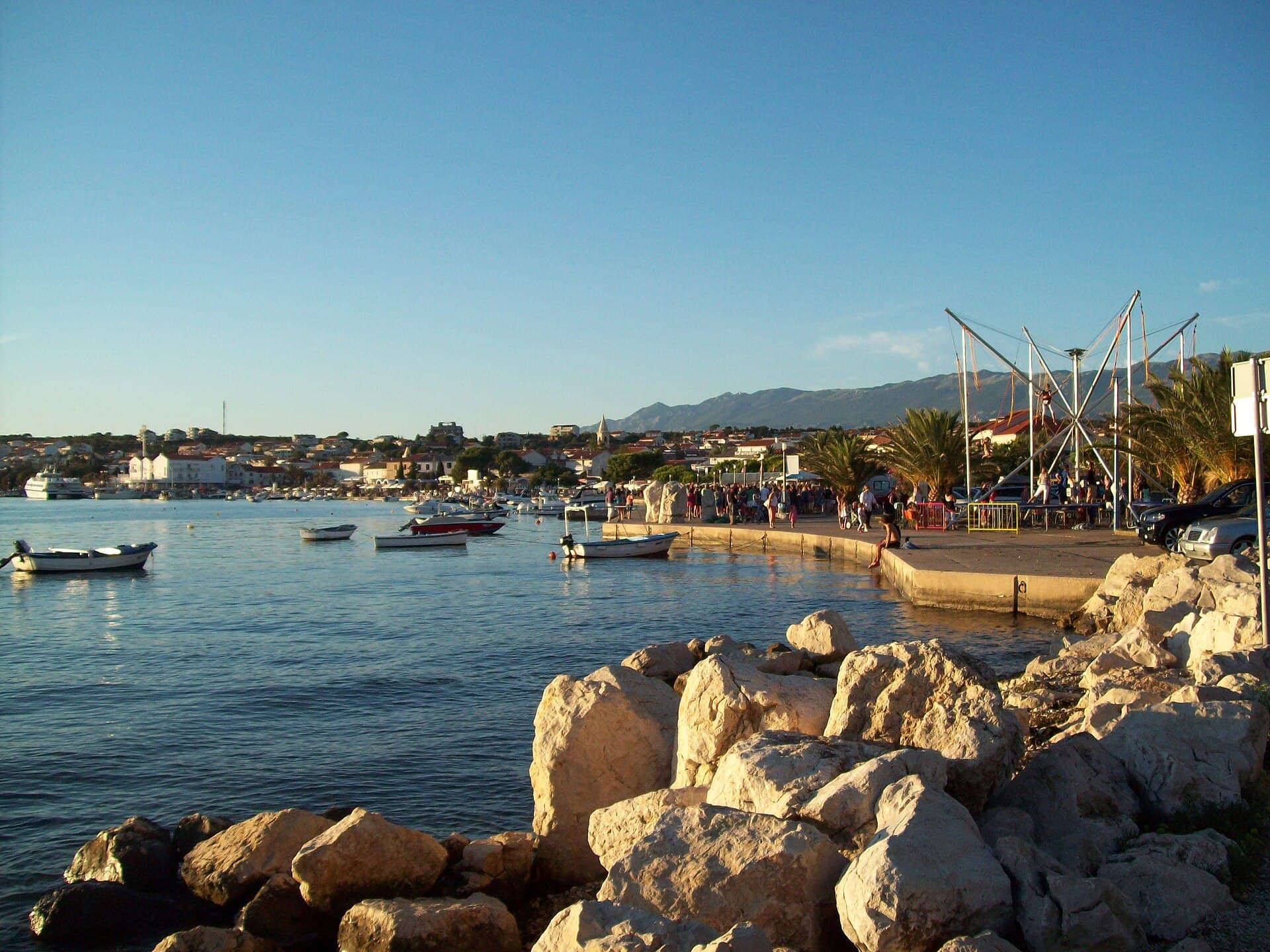
Novalja curves around a bay on Pag’s western shore, with the waterfront, Trg Bazilike and streets around Mala crikva forming the centre. Landing places and restaurants line the water, while Lokunje provides a town beach at the southern end of the bay. Behind this seafront, churches and the Town Museum introduce a different Novalja: the museum opens onto the Roman water channel that once brought fresh water from Novaljsko polje. That inland field remains essential to understanding the town’s setting. Vineyards, olive trees and dry-stone enclosures form a cultivated green belt behind the coastal settlements. Paths beginning near St Anthony’s Church pass through this agricultural landscape, whereas routes towards Zaglava emerge onto much barer ground above the Velebit Channel. The difference between Novaljsko polje and that exposed shore gives a stay here more variety than the waterfront alone suggests. The names around Novalja matter when choosing a base. Lokunje sits beside the town; Planjka belongs to the bay of Stara Novalja; Braničevica adjoins Gajac; and Caska and Zrće occupy another stretch of Pag’s coastline. Zrće concentrates clubs and festivals in one beach setting, rather than describing the atmosphere of every Novalja neighbourhood. The town’s cultural programme also uses Era Gallery and the courtyards behind Mala crikva. Spring brings the MarsOvca food celebration and the Life on Mars race in Metajna, extending Novalja’s visitor calendar beyond summer nightlife. Another change of scenery lies north along the road to Lun, where olive-grove paths lead towards the waterfront at Tovarnele. These settings make Novalja a useful base for comparing the inhabited, cultivated and stony faces of northern Pag.
Stays nearby
 Apartment
Apartmeni Klenovica.eu
Klenovica
61 km from Novalja
up to 4 guests · 1 bedroom
The host confirms the exact price for your dates and availability.
Add your accommodation
Things to see
Talijanova buža provides Novalja's clearest encounter with Roman engineering. The water conduit was cut through rock, and its entrance is inside the Town Museum. Combine the displays with a look at the beginning of the channel: this makes the structure meaningful rather than reducing it to an impressive underground distance. The museum also presents ethnographic material and exhibitions that broaden the picture of local life. St Catherine's Church and the smaller Church of Our Lady of the Rosary add different historical layers in the town centre. At Caska, archaeological traces and the distinctive tuna lookout tower connect the bay with earlier settlement and fishing. Compare this setting with today's town waterfront. The Olive Gardens of Lun require a separate trip north, rewarding visitors with old trees and prepared paths through a stony landscape. Their appeal lies in walking among the changing shapes of trunks and roots, not merely reaching one celebrated specimen. Babe, Planjka Trinćel and Zrće add three different coastal settings: a shallow cove, the bay of Stara Novalja and a beach associated with recreation and music. Choose between them according to your own holiday rhythm.

Beaches
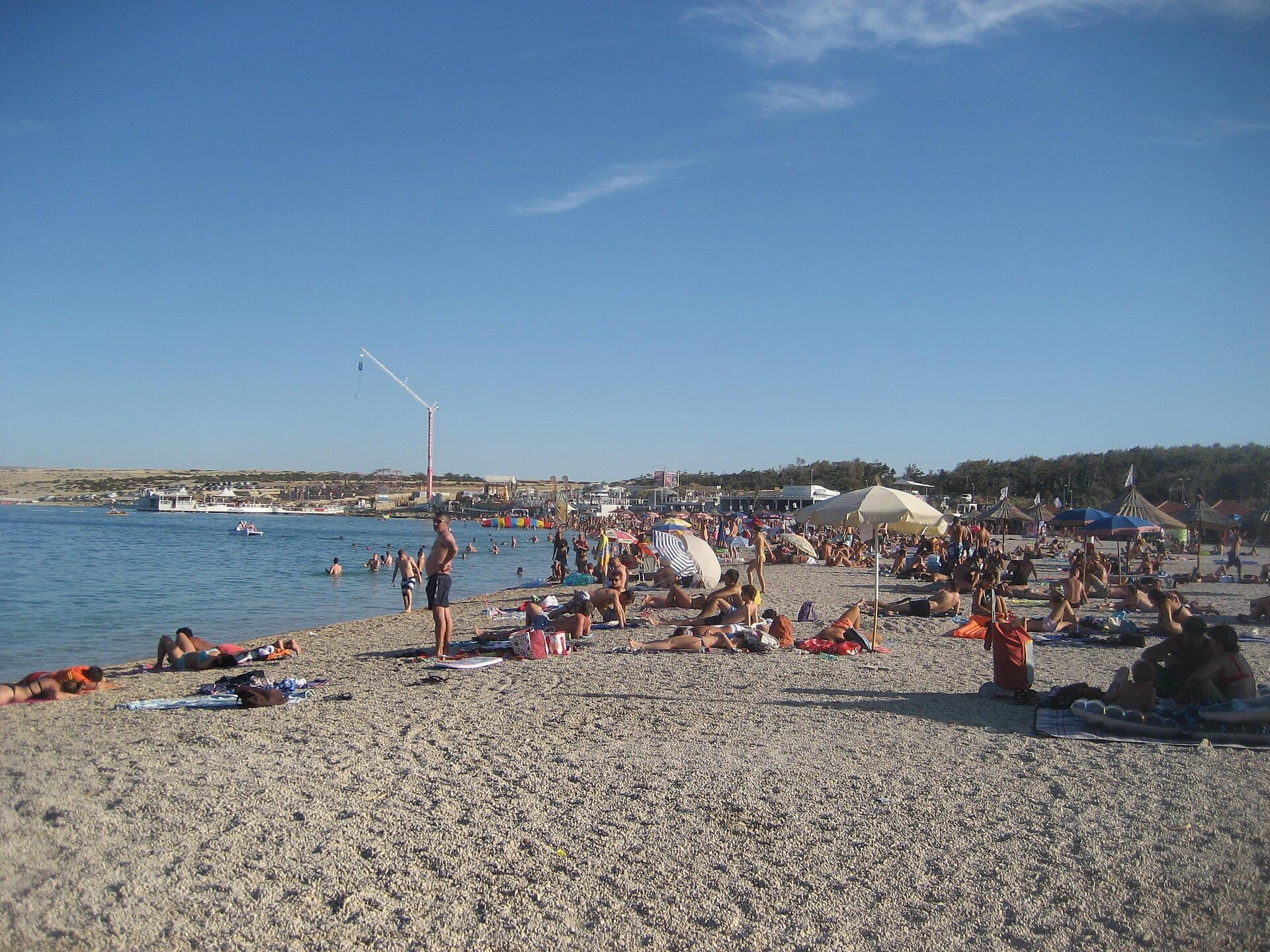
Lokunje is Novalja’s town-beach option at the southern edge of the bay, with a pebbly entrance and greenery behind the shore. West of town, Babe occupies a shallow inlet; southwards, Straško follows the wooded coast of the campsite of the same name. Braničevica is associated with Gajac and the facilities immediately behind its beach. Planjka in Stara Novalja is the option for sand and shallower water, whereas the seabed descends more steeply at parts of Caska and Zrće. Zrće also contains clubs and festival venues, giving it a different evening character from Lokunje. Farther away near Metajna, Ručica and Beriknica offer exposed rocky scenery without natural shade. Visitors with dogs have designated sections at Babe, Braničevica and Jadra rather than unrestricted access to every part of those bays.
Things to do
Begin a one-day visit at the Town Museum and the entrance to Talijanova buža. Understanding the Roman water supply gives a later waterfront walk more meaning: this harbour's story predates its summer entertainment. Continue through the central streets towards St Catherine's Church, then choose Babe for an afternoon beside a shallow cove. In the evening, stay around Novalja's bay or make a separate outing to Zrće when a music programme interests you. For three days, keep the first focused on the town. Give the second to Caska, combining time on the beach with traces of earlier settlement and fishing, or choose Planjka Trinćel in Stara Novalja for a different shoreline. There is no need to squeeze both into one afternoon. On day three, travel north to Lun and its olive gardens. Follow the prepared paths slowly, looking at the varied trunks, roots and stone rather than hurrying between entrances. Choose a route length that matches the weather and your energy. This sequence brings together urban history, swimming and a cultivated island landscape, making three genuinely different days instead of repeating the same beach circuit.
Activities
For a gentler outing from Novalja, the 5.3-kilometre St Anthony’s circuit crosses Novaljsko polje through vineyards and dry-stone enclosures, using both asphalt and gravel. Svetojanj is a substantially more demanding alternative: its 13.6 kilometres and approximately 386 metres of ascent lead across Zaglava towards the fortress remains and views of the Velebit Channel. Around Metajna, Life on Mars routes connect the coastal settings of Ručica, Beriknica and Slana. The sea-level via ferrata between Slana and Cape Sušac is a separate protected climbing section requiring a helmet, harness and suitable safety equipment. Novaljsko polje also offers circular cycling routes through the agricultural hinterland. In 2026, Pag Summer Outdoor adds scheduled guided kayaking, SUP and walking outings, with starting points including Drljanda and Ručica rather than one universal departure point in Novalja’s centre.
Day trips
Lun makes a rewarding half-day journey from Novalja: the Olive Gardens offer guided visits lasting around ninety minutes, with Tovarnele providing a waterfront stop on the same northern outing. For a striking contrast to Lun’s tree canopies, head towards Metajna and Ručica, an access point for the rocky coast explored by Life on Mars trails. A Metajna excursion can remain a beach visit at Ručica or extend into more demanding walking towards Slana and Beriknica. Kolan offers another theme through its Pag cheese producers and the tradition celebrated by Fešta od sira. This inland journey follows a different part of the island from the road to Lun and works better as its own outing. Stara Novalja provides the closest change of bathing bay, with Planjka near its southeastern end and Jadra farther along the coast.
Food and drink
Pag cheese and lamb connect Novalja’s table with the island’s pastures, while makaruni na iglu pasta and curd-cheese strudel reveal other distinctive local flavours. Novaljski brodit supplies the fish-stew tradition alongside fish soup, seafood risottos and salads. Hrostule and frite are the traditional sweets to look for beyond the ice-cream counters on the waterfront. Paški sir has held EU protected designation of origin status since 2019, making the product name and producer’s identification useful when buying cheese. Kolan, visited separately from Novalja, has a particularly strong association with its production. Spring’s MarsOvca celebration extends the sheep-farming theme to meat, fresh curd, whey and island recipes, including special menus in local restaurants. The olive-growing landscape around Lun adds another ingredient-focused journey on northern Pag.
Practical information
Practical information
Novalja’s visitor information point is at Trg Brišćić 1, also a starting location for some guided town programmes. Access to the Roman water channel is organised through the Town Museum, whereas outings on Svetojanj and Life on Mars take place on exposed island terrain. The equipment suited to the greener St Anthony’s circuit is therefore different from that needed for the sea-level via ferrata near Metajna. An evening at Zrće needs its own return plan rather than reliance on parking arrangements in Novalja’s centre, as the beach has a separate entrance and parking operation. Health facilities are located in the Špital area, where the operator identifies car parks P7 and P7A. Visitors travelling with dogs should use the specifically designated sections at Babe, Braničevica or Jadra.
Parking
For a visit to central Novalja, Arburoža lists P1 on Ulica Lokunje, P2 on Obala kralja Petra Krešimira IV and P3 on Obala kneza Domagoja. P4 is beside the cemetery on Slatinska ulica, while P7 and P7A serve the health-centre area at Špital. Planjka uses the separate P5 in Stara Novalja, and Zrće has P11. At Zrće, daytime hourly charging differs from the single overnight charge, so a brief night-time entry is not the same tariff case as daytime parking in town.
Getting there and around
Drivers can reach the Novalja area by two island approaches: Pag Bridge from the south or the Prizna–Žigljen ferry from the mainland below Velebit. Jadrolinija’s route 335 carries vehicles between Prizna and Žigljen, followed by a road journey to Novalja. Passenger route 9309 connects Rijeka, Rab and Novalja, so a catamaran arrival uses a different port from the car ferry. During a stay, roads remain relevant for trips to Lun, Metajna and beaches outside Novalja’s own bay. Lokunje is reached from the town waterfront, whereas Zrće has a seasonal local-transport connection. Arrivals through Zadar follow the southern approach to Pag; the northern mainland coastal route leads towards Prizna. Keeping those two approaches distinct helps when combining flights, ferries and accommodation in Novalja.
Frequently asked questions
Is Novalja the same as Zrće?
No. Zrće is an individual beach; Novalja is the town and wider holiday base.
Can I walk through the whole ancient aqueduct?
No. Museum access concerns the initial section, not an unrestricted underground route.
Does Novalja have cultural attractions?
Yes. The Town Museum and archaeological heritage complement time on the coast.
Is Stara Novalja simply Novalja's old centre?
No. Check its separate location when choosing accommodation and beaches.

Related guides
Nin
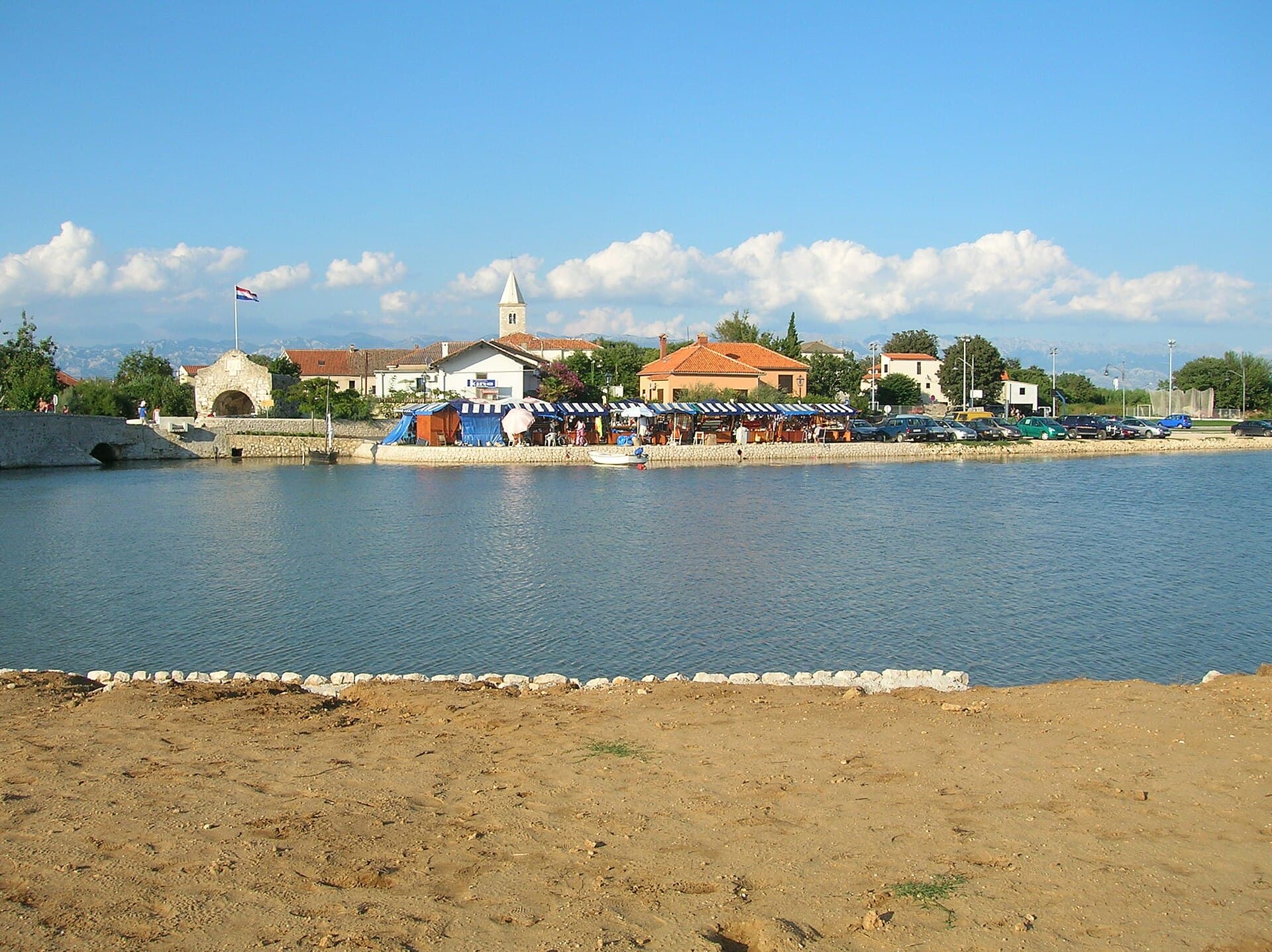
Nin’s historic centre occupies a low islet within a lagoon, connected to the mainland by bridges. Crossing into the centre creates a different first impression from arriving in nearby…
Read the guide
Help improve this page
Spot something missing or wrong? Suggest a correction, add your photo or report a problem. Editors review every suggestion before it is published.
Photo credits
- Novalja — JoeTimBlackMax · CC BY-SA 3.0 · Wikimedia Commons
- Kolan — Marijan · Public domain · Wikimedia Commons
- Šimuni — Silverije · CC0 · Wikimedia Commons
- Stara Novalja — Maik Roscher · CC BY 3.0 · Wikimedia Commons
- Cesarica — Klapi · CC BY-SA 4.0