Vis
About this place
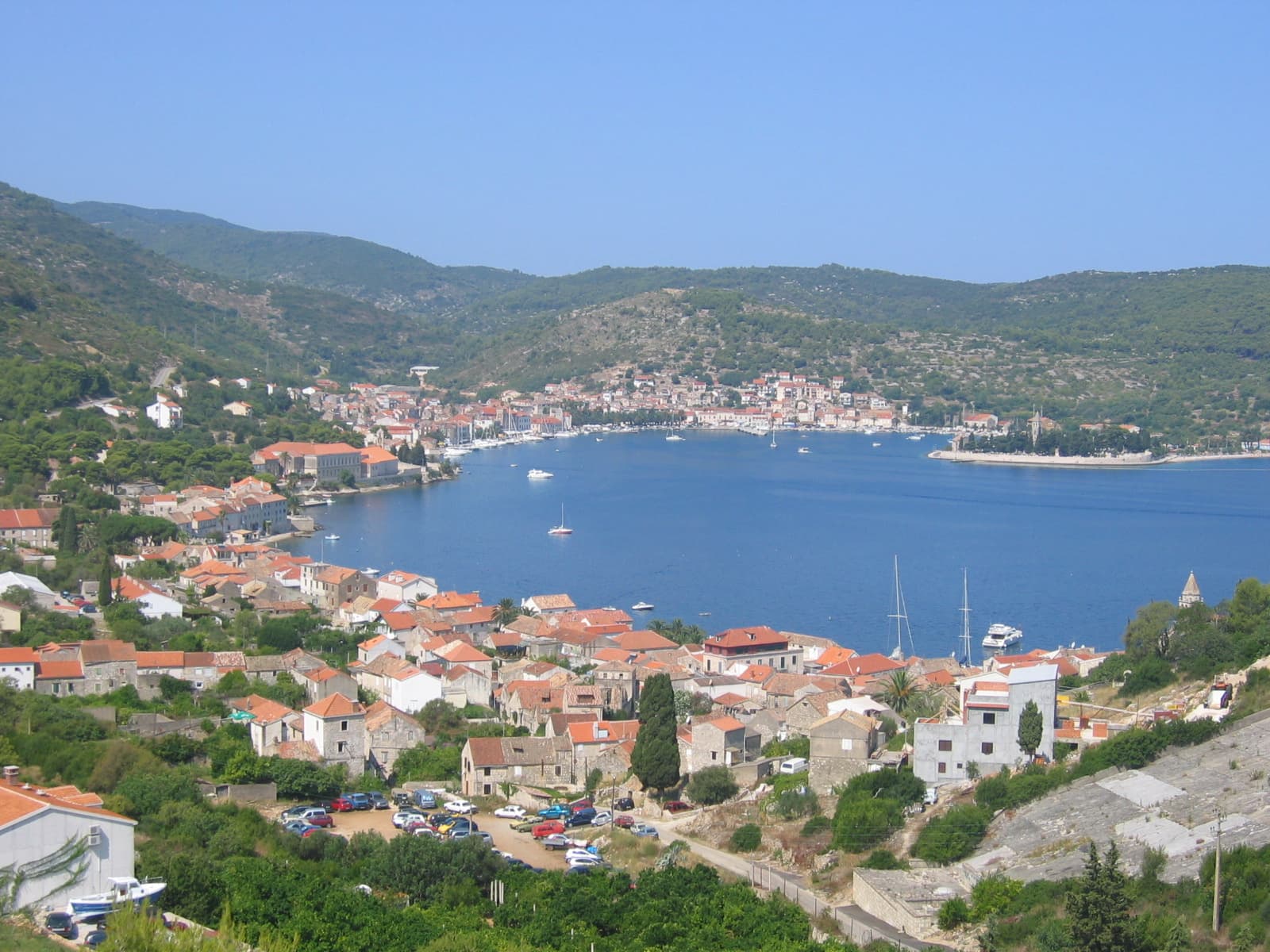
Vis wraps around the broad Bay of St George, with the harbour district of Luka linked by the waterfront to Kut, the Renaissance quarter on the eastern side. Above the modern town lie the remains of ancient Issa, while its streets preserve churches, stone houses and the British-built Fort George. The harbour receives ferries from Split as well as sailing boats, yet vineyards and the island’s cultivated interior begin just beyond the waterfront. A walk from Luka to Kut passes fishing boats in Stonca, the archaeological collection housed in Gospina Batarija and views towards the lighthouse on tiny Host. Prirovo and nearby Grandovac are the easiest swimming choices close to town; Stončica and Zaglav require a ride or boat trip towards the eastern coast. Vis-style pogača is filled with sardines and onion and, unlike the Komiža version, contains no tomato. The year-round ferry from Split takes about 140 minutes, making arrival by sea an essential part of the Vis experience.
Vis occupies the north-eastern end of the island, inside the sheltered Bay of St George. Its two distinct faces are Luka, the busier harbour quarter beside the ferry terminal, and stone-built Kut, where Renaissance houses and small palaces meet the water. Between them stands Gospina Batarija, an Austrian fortress now housing the Archaeological Museum. The town’s identity was shaped by Greek Issa, centuries of seafaring and the period when the island was closed to foreign visitors for military reasons. Facing the open Adriatic, Vis harbour long served fishermen, merchants and naval fleets; the tiny island of Host still marks its northern entrance.
Stays nearby
 Apartment
Apartmeni Klenovica.eu
Klenovica
Klenovica, 251 km from Vis
up to 4 guests · 1 bedroom
The host confirms the exact price for your dates and availability.
Things to see
The most important historic layer of Vis Town is connected with ancient Issa, a Greek colony that developed here in the 4th century BC. Remains of the ancient settlement, necropolis and Roman baths show how the modern town literally continued over an older urban structure. Present-day Vis includes the historic areas of Luka and Kut, linked by the long waterfront around the bay, so the town is best understood on foot. Local tourist agencies organise excursions and offer bicycle and boat hire, making it easier to continue towards other parts of the island. Unlike a quick tour of famous coves, ancient Vis rewards a slower pace and dedicated time for archaeological remains within the town itself.

Beaches
Prirovo is the simplest town beach, occupying the peninsula beside the Franciscan monastery and lying only a short walk from the ferry quay. Grandovac sits at the eastern entrance to Vis harbour; its pebble shore has pine and tamarisk shade, a small bar and a concrete sun terrace built in the 1930s. Farther east, Stončica is known for a shallow bay and sandy seabed, while Zaglav combines pale pebbles with a footpath approach from Milna. Water shoes are useful at Grandovac, whereas Stončica’s extended shallows make it particularly appealing to families. From Vis town, the more distant coves are best reached by car, scooter or taxi boat.
Bathing water quality nearby
- Prirovo · 633 mexcellent · season 2025
- Grandovac · 2.1 kmexcellent · season 2025
Source: European Environment Agency (EEA); data from Croatian authorities. · bathing water profile
Food and drink
In Kut, Pojoda stands at Don Cvjetka Marasovića 8, while Kod Paveta is on Ivana Farolfija Street; both suit an evening after exploring the eastern quarter. Težok occupies the waterfront at Obala kralja Krešimira IV, making it convenient for dinner without leaving Luka. For a meal inland, Roki’s operates in Plisko Polje among the island’s wine-growing landscape. Look for Vis pogača filled with sardines and onion, gregada made with fish and potatoes, and wines based on the island’s Vugava and Plavac Mali grapes. As opening patterns on Vis change markedly with the season, contact the restaurant directly to confirm both a table and service time.
Practical information
Practical information
The Vis Tourist Board office is at Šetalište Stare Isse 5, close to the waterfront and archaeological area. It is sensible to buy tickets for ferry route 602 in advance because a ticket for a chosen departure also reserves a place aboard; Jadrolinija advises arriving at least 45 minutes before sailing, or 60 minutes in summer. The main shops, cash machines and everyday services cluster around Luka, while Kut is better suited to evening walks and restaurant stops. A scooter or car is useful for Stončica, Zaglav and the island’s interior, although parking spaces become scarce in Vis’s older streets during the summer peak.
Getting there and around
State ferry route 602 links Split and Vis throughout the year, carries both passengers and vehicles, and takes roughly 140 minutes. During the 2026 season, Jadrolinija fast-boat route 659 also connects Vis with Hvar, Bol and Split, but does not carry cars. Ferries berth directly in Luka, from where Kut is an easy waterfront walk. Local buses serve Komiža and several island settlements around selected ship arrivals, while a taxi or rented scooter or car is more convenient for coves away from the main road. Travellers bringing a vehicle should reach the port early, particularly for busy summer departures to Split.
Frequently asked questions
What was the ancient city on the site of modern Vis called?
The Greek city on the site of modern Vis was called Issa.
Which two historic areas make up Vis Town?
The town stretches between Luka and Kut, linked by the waterfront around the bay.
Are there Roman archaeological remains in Vis?
Yes. Roman baths are among the ancient remains preserved in the town.
Which typical dish is associated with Vis?
Viška pogača is one of the island’s most recognisable traditional dishes.
Can visitors arrange boat or bicycle hire in Vis Town?
Nearby

Marinje Zemlje
Village · Vis

Related guides

Split
In Split, the transition from ancient monument to ordinary street is almost imperceptible: entering the southern part of Diocletian’s Palace from the Riva leads towards the Peristyle, then…
Read the guide

Help improve this page
Spot something missing or wrong? Suggest a correction, add your photo or report a problem. Editors review every suggestion before it is published.
Photo credits
- Vis — Minestrone · CC BY-SA 4.0 · Wikimedia Commons
- Marinje Zemlje, Host Lighthouse — Ex13 · CC BY-SA 3.0 · Wikimedia Commons
- Podstražje, Rukavac, Komiža — ModriDirkac · CC BY-SA 4.0 · Wikimedia Commons