Brela
About this place
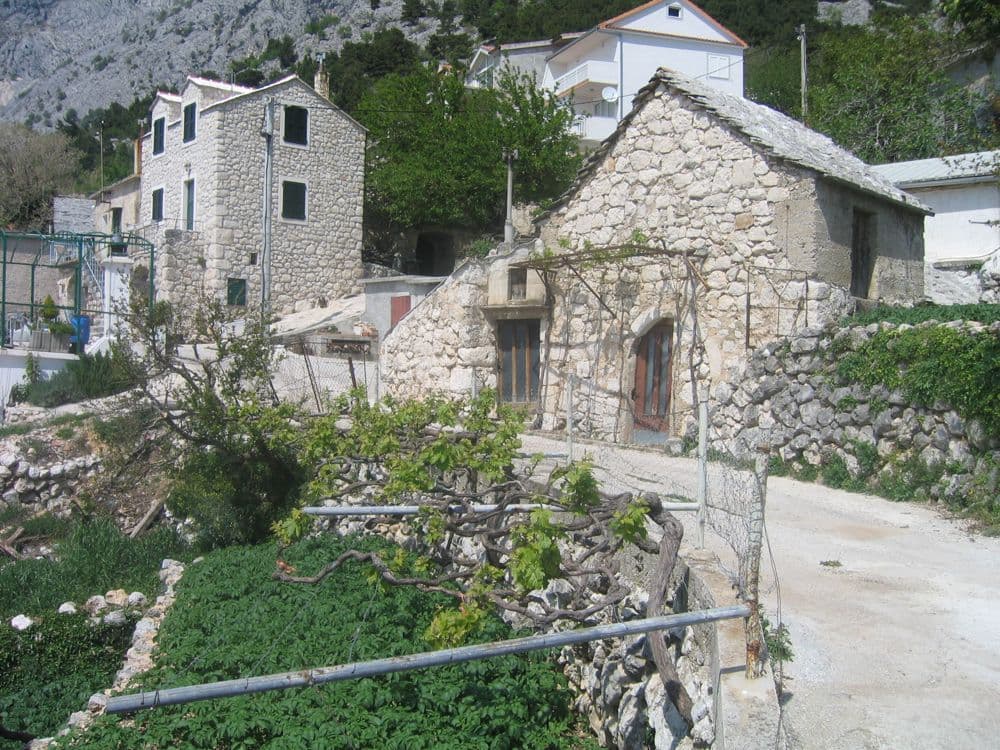
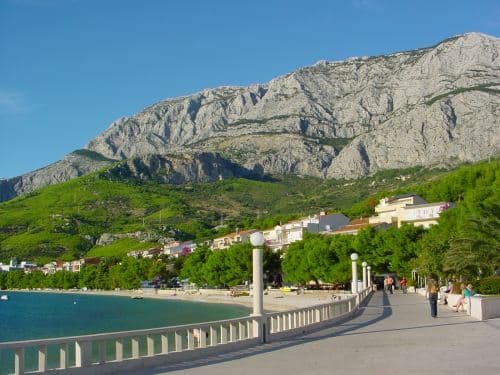
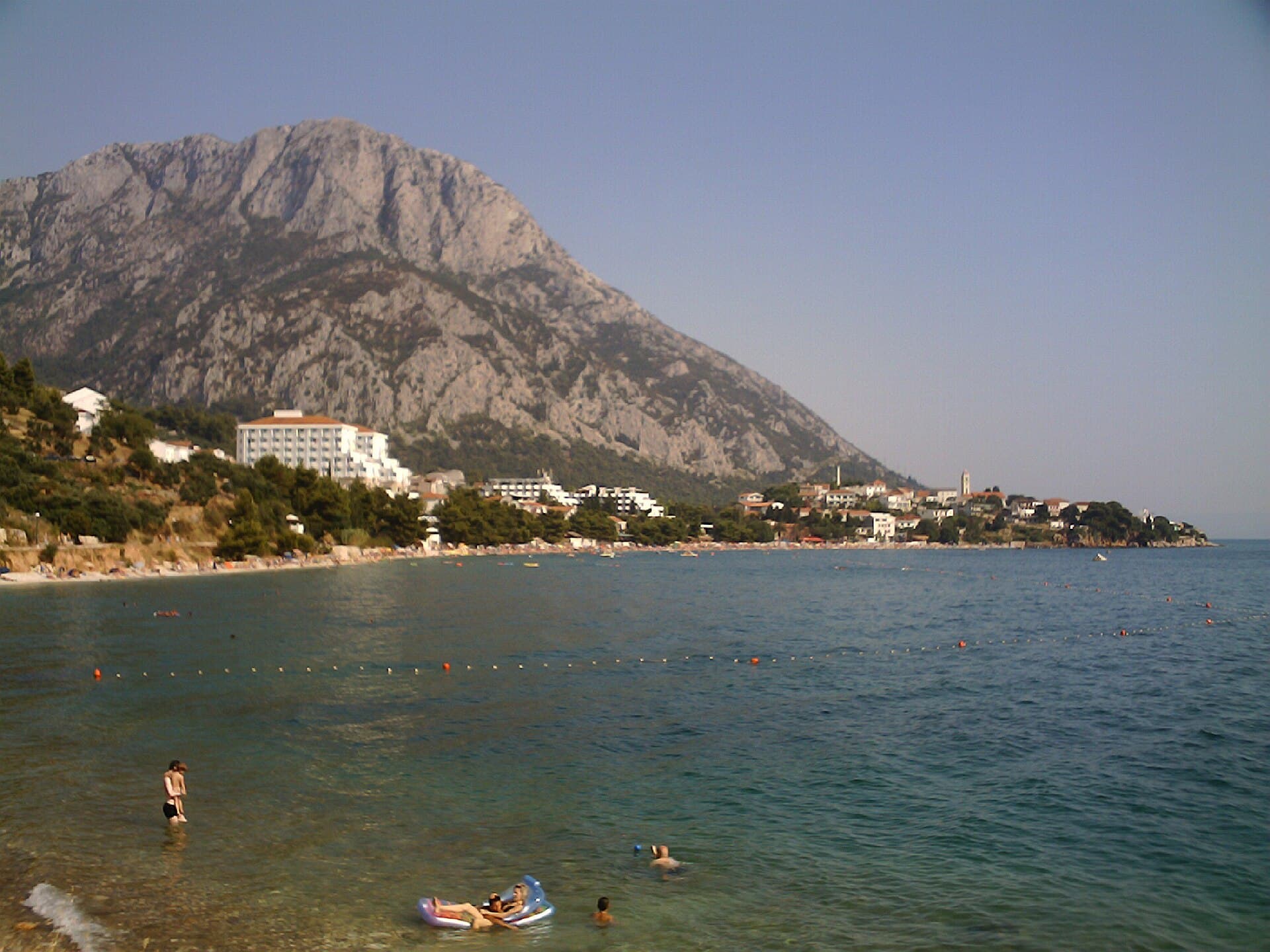
Brela stretches beneath the steep slopes of Biokovo on the western Makarska Riviera, with a chain of pebble coves shaded by Aleppo pines. The best-known is Punta Rata, a protected coastal landscape whose signature feature is the Brela Stone, an offshore rock with pines growing from it. Above the coast is a very different layer of the destination: the French Road, constructed in 1810 and 1811 on the Biokovo slopes at roughly 357 to 444 metres above sea level. The unfinished route, designed with gradients of no more than six per cent, now serves as an educational trail and viewpoint over Brela, the Riviera and the islands. The municipality also includes Gornja Brela, much of which lies inside Biokovo Nature Park. Waterfront activity is concentrated around Soline and Donje Selo, while the mountain side requires sturdier footwear and more time. Brela is therefore more than a beach destination: within a few kilometres the landscape shifts from pine-fringed coves to a historic road high on Biokovo.
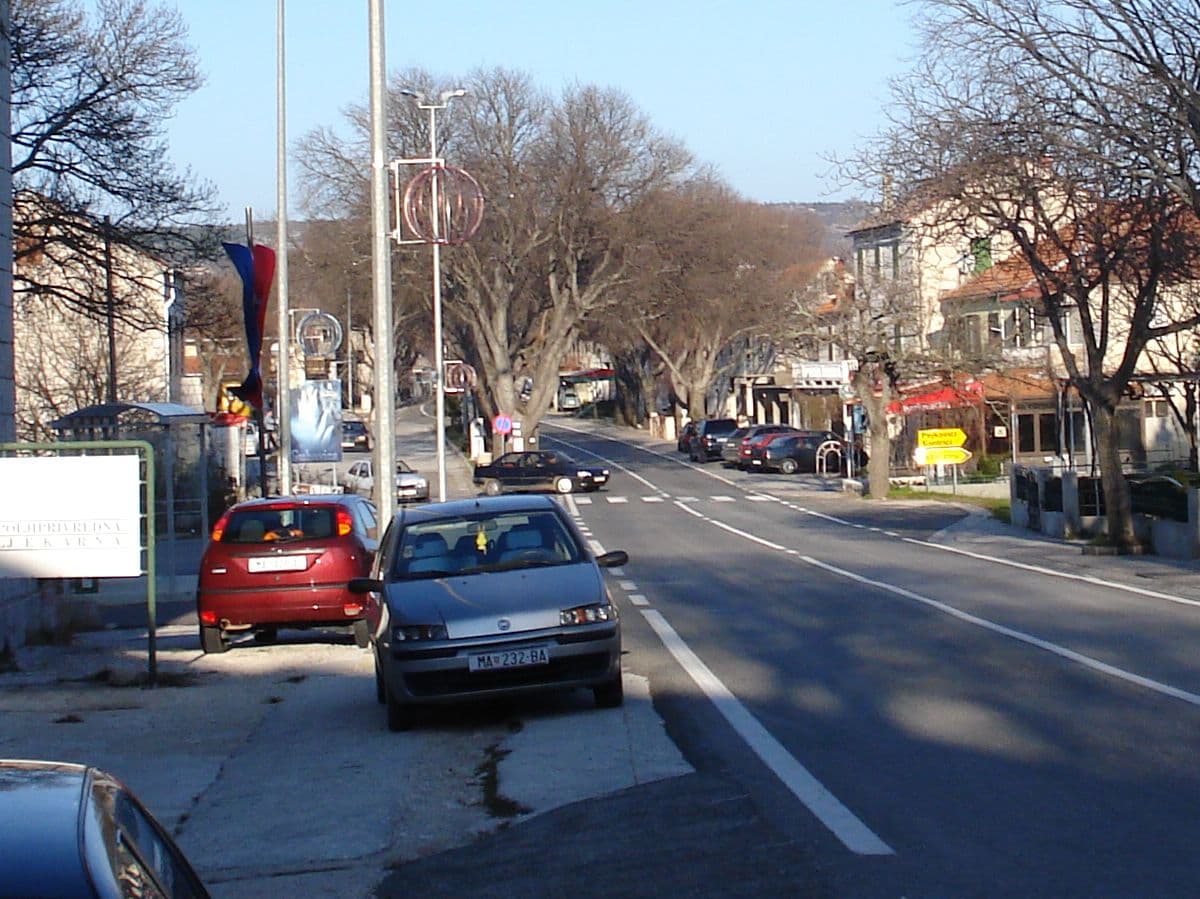
Brela is a municipal seat at the northern end of the Makarska littoral, about 15 km northwest of Makarska, on the Adriatic Highway and in a belt of pine forest at the foot of Biokovo. The 2021 census counted 1,472 residents in Brela itself and another 154 in Upper Brela. The village has grown together with Baška Voda to the south, while almost all of Upper Brela lies inside Biokovo Nature Park. Around 950 Constantine Porphyrogenitus recorded a fortified place called Berulia, and the Roman settlements of Peguntium and Inaronia date from the 1st to 4th centuries. From the mid-15th century until 1684 the area was under Ottoman rule, then Venetian. Tourism began in 1913, the first guesthouse opened in 1932, and the present-day municipality was founded on 13 April 1993. Alongside vineyards and olive groves, hiking and climbing in Biokovo now shape the local economy.
Stays nearby
 Apartment
Apartmeni Klenovica.eu
Klenovica
Klenovica, 254 km from Brela
up to 4 guests · 1 bedroom
The host confirms the exact price for your dates and availability.
Things to see
Punta Rata and the Brela Stone form Brela’s most recognisable coastal scene. Above the village, the French Road, built in 1810–1811, demonstrates historic road engineering on the slopes of Biokovo and now functions as an educational trail.
Beaches
Punta Rata is a pebble beach on a protected cape surrounded by Aleppo pines, with the Brela Stone on its western side. A chain of smaller coves continues along the coast towards Soline and Donje Selo.
Bathing water quality nearby
- Soline Zapad · 318 mexcellent · season 2025
- Soline Istok · 330 mexcellent · season 2025
- Dugi Rat - istok · 510 mexcellent · season 2025
- Dugi Rat - zapad · 642 mexcellent · season 2025
- Berulia · 1.1 kmexcellent · season 2025
- Ikovac · 1.4 kmexcellent · season 2025
Source: European Environment Agency (EEA); data from Croatian authorities. · bathing water profile
Things to do
A good day in Brela starts with the free guided walk around town, held on Tuesdays in September 2026, followed by a trip up to Upper Brela by car or on foot. From Subotišće the educational trail Paths of Ancient Berulia begins: 2.7 km long with nine information boards, it passes dry-stone walls, old wells and archaeological sites on the way to the Church of St Nicholas at 572 m. Subotišće also hosts the Biokovo Nature Park presentation centre with an exhibition on the park; visits must be arranged in advance by email. Stronger hikers can carry on to the summit of Bukovac (1,262 m): the route is 13.2 km with roughly 1,000 m of ascent, takes about six and a half hours, and looks over both the Makarska and Omiš riviera. Back in town, September 2026 also brings painting workshops for adults on Mondays.
Activities
The French Road crosses the Biokovo slopes at roughly 357 to 444 metres above sea level and overlooks Brela and the islands. Although technically easy, it is a mountain trail where suitable footwear and water are necessary.
Food and drink
Some of Brela's best konobas sit well away from the seafront promenade. Konoba Feral is in the centre, about ten metres from the beach, and is known for its black risotto. Galinac and Katara stand in the older, higher part of town with sea views and lean towards meat dishes, while Ivandić Dvori is set among old stone houses, also overlooking the sea. The farthest is Konoba Roko in Upper Brela, around a 15-minute drive, where food is cooked the way it was twenty or thirty years ago. Most konobas arrange pick-ups from an agreed meeting point, so a car is not essential. Among the Dalmatian classics on local menus are pašticada with gnocchi, octopus under the peka bell, brudet and black risotto, finished with rožata and fritule.
Practical information
Practical information
The Tourist Board is at Trg Alojzija Stepinca 10 (021 618 455, [email protected]) and hands out information and promotional material. The municipal office is at Trg žrtava Domovinskog rata 1 and receives visitors on weekdays from 8 am to 3 pm. Brela has a pharmacy (021 618 603) and a clinic, and the clinic in Baška Voda can be reached on 021 620 133. The Makarska bus station answers on 021 612 333. A visit to the Biokovo Nature Park presentation centre in Subotišće must be announced beforehand at [email protected]. Several taxi operators work in the area, and cars, bikes and scooters can be rented from local providers. Beyond the summer season, the Tourist Board still runs free guided walks and beach workouts in September 2026.
Parking
Parking in Brela is run by Greben Brela d.o.o., and the two seaside car parks are on Filipinska ulica by Hotel Maestral, on the way to Punta Rata, and on Trg Gospe od Karmela. According to the 2025 price list, from 1 June to 30 September an hour costs 4 euros between 7 am and 11 pm and 1 euro overnight, while in May and October it is 2 euros an hour. The minimum charge is one hour and there is no maximum stay. From November to April the Trg Gospe od Karmela lot costs 1 euro an hour, free on Sundays and public holidays. For Put Solina and Soline Centar a season ticket costs 600 euros, which only makes sense for a long stay.
Getting there and around
Buses stop at Brela Magistrala, right on the Adriatic Highway. Promet Makarska covers Split to Brela in 50 to 60 minutes, with at least nine departures a day between 8:00 and 22:05; according to the Bus Croatia portal a ticket costs 10 to 12 euros in 2026. Makarska is 15 to 25 minutes away for 4 to 5 euros, with intermediate stops at Baška Voda, Baško Polje, Promajna and Krvavica. Split Airport is about 70 km away: the A1 motorway drive takes roughly an hour and a quarter, the toll-free road about an hour and a half. By bus, take line 37 from the airport into Split, then change for the coastal service. If you arrive via the A1, leave at the Šestanovac exit, about 10 km from Brela.
Frequently asked questions
What is the best-known beach in Brela?
Punta Rata, beside the Brela Stone.
What is the Brela Stone?
An offshore rock with pines, a recognisable symbol of Brela.
When was the French Road built?
In 1810 and 1811.
Was the French Road completed?
No, the historic route remained unfinished.
Is Brela beside Biokovo?
Nearby

Brela (naselje)
Village · Dalmatia – Split

Related guides

Split
In Split, the transition from ancient monument to ordinary street is almost imperceptible: entering the southern part of Diocletian’s Palace from the Riva leads towards the Peristyle, then…
Read the guide
Help improve this page
Spot something missing or wrong? Suggest a correction, add your photo or report a problem. Editors review every suggestion before it is published.
Photo credits
- Brela — Josip-Pino Žamić · CC BY-SA 4.0 · Wikimedia Commons
- Brela (naselje) — Dalibor Ribičić · CC BY-SA 4.0 · Wikimedia Commons
- Baška Voda, Gornja Brela, Promajna, Krvavica, Baška Voda — Mario Žamić · CC BY-SA 3.0 · Wikimedia Commons
- Bast, Baška Voda