Makarska
About this place
Makarska is a Dalmatian town where harbour, beaches and the steep slopes of Biokovo continually share the same view. Sveti Petar and Osejava frame the harbour, offering greener coastal settings that contrast with the developed waterfront. In the centre, a walk leads towards Kačić Square and St Mark's Church, while the Malacological Museum in the Franciscan monastery introduces the world of marine snails and bivalves. There is more here than choosing a beach on the riviera. Spend a morning in the historic centre, an afternoon by the sea and a separate day in Kotišina on the mountain slopes. Its Veliki Kaštel and botanical garden connect local heritage with Biokovo's natural habitats. The garden is built around native vegetation and rocky landscapes rather than the layout of a level urban park. Makarska suits visitors who want town life, swimming and nature excursions in the same stay. Compared with smaller places along the riviera, it provides more reasons to return to the centre after the beach. On a first visit, combine the harbour, a museum and one peninsula. Leave the mountain for another day, with a plan suited to the conditions and the terrain.
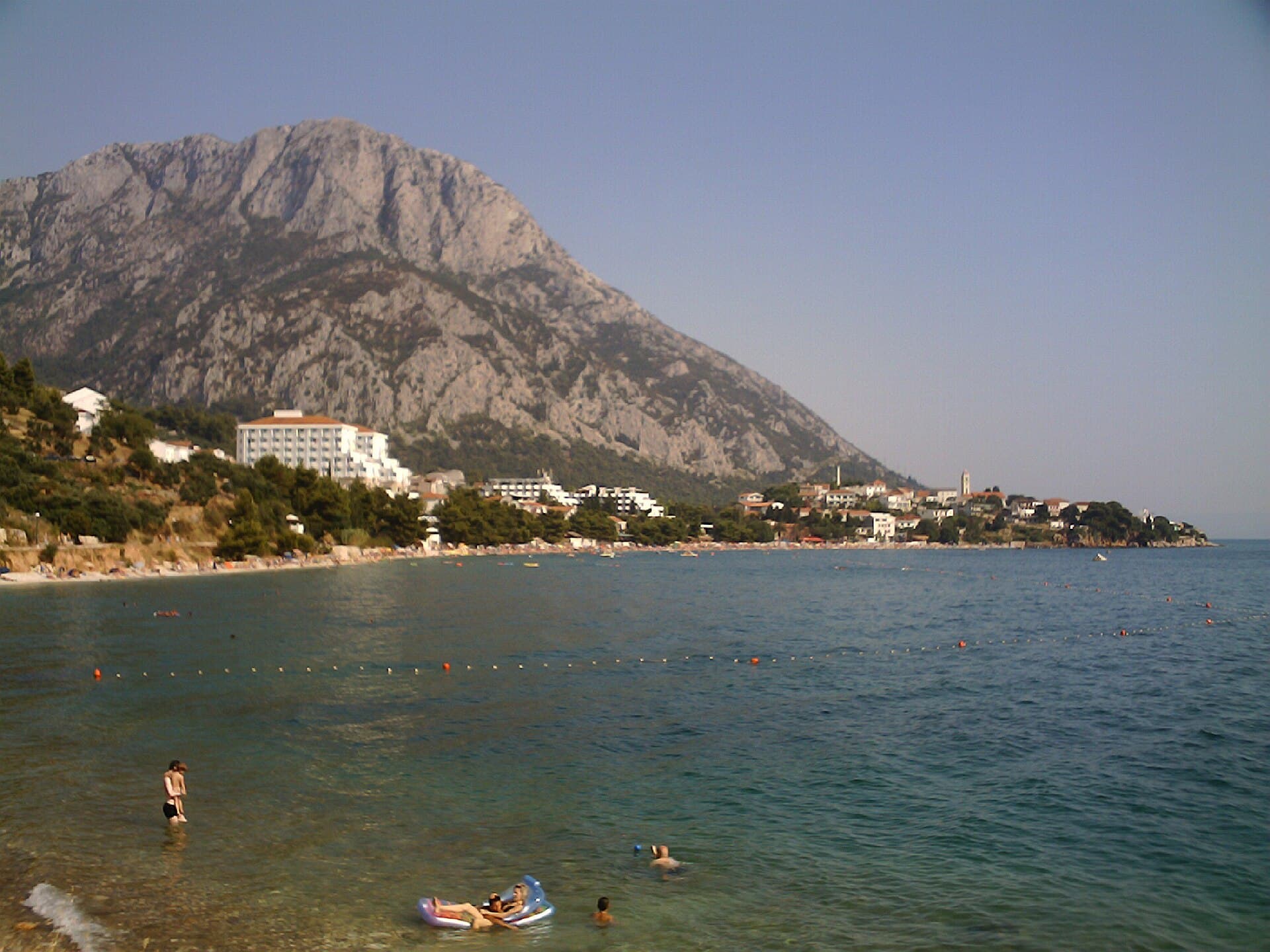
Makarska faces a harbour framed by the Sveti Petar peninsula and Osejava, with Biokovo rising behind the waterfront skyline. The promenade runs past landing places and Tonoli Palace; a short walk inland leads into the stone streets around Kačić Square. Kalalarga belongs to this historic quarter, where carved coats of arms, balconies and worked stone window surrounds reveal the character of former town houses. St Mark’s Church stands above the square, approached by a broad flight of steps. Together, Kalalarga, Kačić Square and the waterfront introduce an urban Makarska quite separate from its beach scene. West of the harbour, the town beach, hotels and coast towards Biloševac and Cvitačka create a different setting. Osejava, on the opposite side, offers wooded paths towards Nugal’s cove, giving the two coastal directions distinct purposes. Sveti Petar separates the harbour bay from the bathing waterfront and provides a side-on view of Makarska’s roofs beneath Biokovo. Tonoli Palace supplies another perspective through the City Museum’s archaeological and cultural-history collections, while the Franciscan monastery houses the Malacological Museum. These institutions connect Makarska’s role as a port and town with the study of its marine surroundings. Kotišina, above the centre, introduces a much closer relationship between buildings and cliff, especially around Veliki Kaštel and the Biokovo botanical garden. The harbour, Kotišina and the mountain road towards the Skywalk involve different distances, elevations and ways of visiting. Makarska can therefore serve as a base for Biokovo without making the mountain an extension of a casual waterfront stroll. Within town, daily life remains focused on Kačić Square, Kalalarga and the sea. Summer festivals add further uses to those public spaces, from the waterfront to Fra Jure Radić Park.
Stays nearby
 Apartment
Apartmeni Klenovica.eu
Klenovica
Klenovica, 265 km from Makarska
up to 4 guests · 1 bedroom
The host confirms the exact price for your dates and availability.
Things to see
Kačić Square and St Mark's Church provide a useful introduction to Makarska's historic centre. The church's position, open square and streets leading towards the waterfront reveal the urban side of a destination often first encountered from a beach. The Malacological Museum, in the old part of the Franciscan monastery, changes the subject to shells from marine snails and bivalves of the Adriatic and other seas. Look for differences in form and structure rather than treating them as a row of seaside souvenirs. Sveti Petar and Osejava extend the visit into greener surroundings. The former offers a peninsula walk by the lighthouse and views towards the harbour; the latter has pine woodland and coastal paths. They provide two different perspectives on Makarska, with town and mountain behind them. In Kotišina, Veliki Kaštel is built against the rock and now interprets nature, archaeology and local life together. The nearby botanical garden preserves natural Biokovo habitats, making it an introduction to rocky terrain and native plants. Kotišina belongs to a separate foothill excursion, while the square, museum and Sveti Petar can be connected within a town visit.

Beaches
Makarska’s main beach stretches west of the harbour beside the built-up and hotel waterfront. Its pebbly entrances and proximity to town services distinguish this bathing strip from the coves further towards Biloševac and Cvitačka. Those two areas continue westwards with more separated stretches of shoreline and pine trees. Nugal lies on the opposite, southern side of Makarska, beneath cliffs and reached through Osejava or from the sea. Visiting Nugal involves a woodland approach, whereas the central town beach fits more directly into a stay near the waterfront. Biokovo forms the backdrop to many Makarska beaches, but the walk to Nugal is a different outing from following the hotel-lined shore.

Things to do
For one day, walk from the waterfront to Kačić Square and St Mark's Church. Continue to the Franciscan monastery and its Malacological Museum; the collection of marine snails and bivalves gives the sea a different perspective after a harbour walk. In the afternoon, choose Sveti Petar. Time among greenery and a view back towards the town complement the cultural visit. Keep swimming separate from your museum appointment rather than rushing between both. If you have three days, devote the second to the coast and Osejava. Instead of hurrying around both peninsulas, choose one walking route and notice the meeting of pine woodland, rocks and water. Leave the rest of the day for a beach. On the third, visit Kotišina. Veliki Kaštel introduces the area's archaeological, ethnological and natural heritage, while the botanical garden presents native Biokovo plants within their landscape. Plan the higher parts of Biokovo as a separate mountain excursion, not a casual drive after swimming. The Adrion presentation centre in Makarska offers another introduction to the mountain without that ascent. Combining museum, coastal paths and foothills creates three distinct days without continually moving along the entire riviera.
Activities
Osejava offers a walking route out of Makarska towards Nugal, through coastal woodland and rocky stretches above the sea. Sveti Petar is a shorter choice for circling the harbour’s edge and changing your view of the town. Ascents from Makar or Veliko Brdo towards Biokovo belong to a more demanding category, gaining considerable height from the waterfront. Those approaches featured in the 2026 Absolute Biokovo Challenge, whose races finished beneath Vošac. Along the coast, swimming and paddling provide water-based activities, while the Skywalk’s glass structure is a viewpoint approached via the park road. Osejava, Sveti Petar and Vošac therefore involve very different choices of footwear, time and fitness.
Day trips
Kotišina combines cliff-side Veliki Kaštel with the botanical garden on Biokovo’s lower slopes. This outing explores a foothill settlement and natural-history heritage, unlike the drive along the mountain road to the Skywalk at Ravna Vlaška. Reaching the Skywalk from Makarska involves the nature park’s main entrance beside the D512 and then a narrow mountain road. Jadrolinija’s Makarska–Sumartin service offers a sea-based alternative: the 2026 route information gives a crossing of about an hour to eastern Brač. Tučepi provides a closer coastal excursion, with its own bathing waterfront and historic summer residences. Sumartin, Kotišina and Tučepi therefore offer quite different additions to a Makarska stay: ferry travel, Biokovo’s rocky foothills or the neighbouring riviera.
Food and drink
Torta Makarana combines almonds with citrus and liqueur aromas and is the signature cake bearing Makarska’s name. Alongside it, look for Makarska’s version of pašticada and dishes combining fish with vegetables. The 2026 Autentica programme included a kumpet-making workshop, local producers’ stalls and cooking based on the area’s ingredients, introducing a less familiar sweet speciality than Makarana cake. Kalalarga and the streets around Kačić Square provide the old-town setting for exploring those flavours, while the waterfront places a meal beside the harbour. Almonds, citrus and Makarska’s traditional sweets form a distinct strand of the local food experience rather than merely a final course after fish.
Practical information
Practical information
A stay beside Makarska’s harbour and a trip onto Biokovo require separate access planning: the nature park entrance is beside the D512, while the Skywalk stands on the mountain road inside the park. In 2026, park tickets are sold through the official online shop with a limited number of vehicles admitted per time slot. The drive towards Ravna Vlaška uses a narrow road with passing places, making the Skywalk a planned mountain outing rather than a stop on a town drive. Makarska’s City Museum, Antun Gojak Gallery and Veliki Kaštel occupy different locations with separate visiting arrangements. On the Sumartin ferry, the 2026 booking rules tie the ticket to the selected departure.
Parking
Makarska uses red, yellow and blue street-parking zones alongside separate facilities such as Živkin dvor and Sinokoša. From 1 July 2026, part of Vladimira Nazora Street entered the blue zone, with a published summer rate of one euro per hour. For the waterfront and Kačić Square, the exact parking location matters because a place beside the harbour and one further from the centre may belong to different zones. Makarska’s resident and pensioner concessions are not general visitor discounts; tourists use the regular ticket for their chosen parking facility.
Getting there and around
Makarska’s bus station is at Ante Starčevića 30, inland from the waterfront. Intercity coaches connect Makarska with Split, Dubrovnik and other Dalmatian destinations, while Điro is the separate circular town-transport service. The direct ferry from Makarska to Brač arrives in Sumartin, not Supetar, whose main mainland connection is through Split. Jadrolinija’s 2026 route information gives a crossing of approximately 60 minutes and a ticket reserving the selected departure. Kačić Square and Kalalarga are explored on foot, whereas Kotišina and the main Biokovo entrance involve travelling beyond the coastal centre. The coach station, ferry landing and Điro stops therefore serve different parts of a Makarska journey.
Frequently asked questions
Is Biokovo part of an ordinary town walk?
No. Plan park access and mountain outings separately according to conditions and weather.
What is there besides the beach?
Consider the Malacological Museum, Sveti Petar and Osejava, checking access to the chosen site.
Are all coastal paths step-free?
That is not established. Check a specific route for pushchairs or reduced mobility.
Where should I check a Biokovo visit?
On the Biokovo Nature Park's official website before purchasing and travelling.
Nearby

Veliko Brdo
Village · Dalmatia – Split
Related guides

Split
In Split, the transition from ancient monument to ordinary street is almost imperceptible: entering the southern part of Diocletian’s Palace from the Riva leads towards the Peristyle, then…
Read the guide

Help improve this page
Spot something missing or wrong? Suggest a correction, add your photo or report a problem. Editors review every suggestion before it is published.
Photo credits
- Veliko Brdo, Krvavica, Baška Voda, Promajna, Baška Voda, Rastovac, Zagvozd — Mario Žamić · CC BY-SA 3.0 · Wikimedia Commons
- Tučepi — Reinhard Kraasch · CC BY-SA 4.0 · Wikimedia Commons
- Bast, Baška Voda — Aleksandar Topuzović · CC BY 3.0