About this place
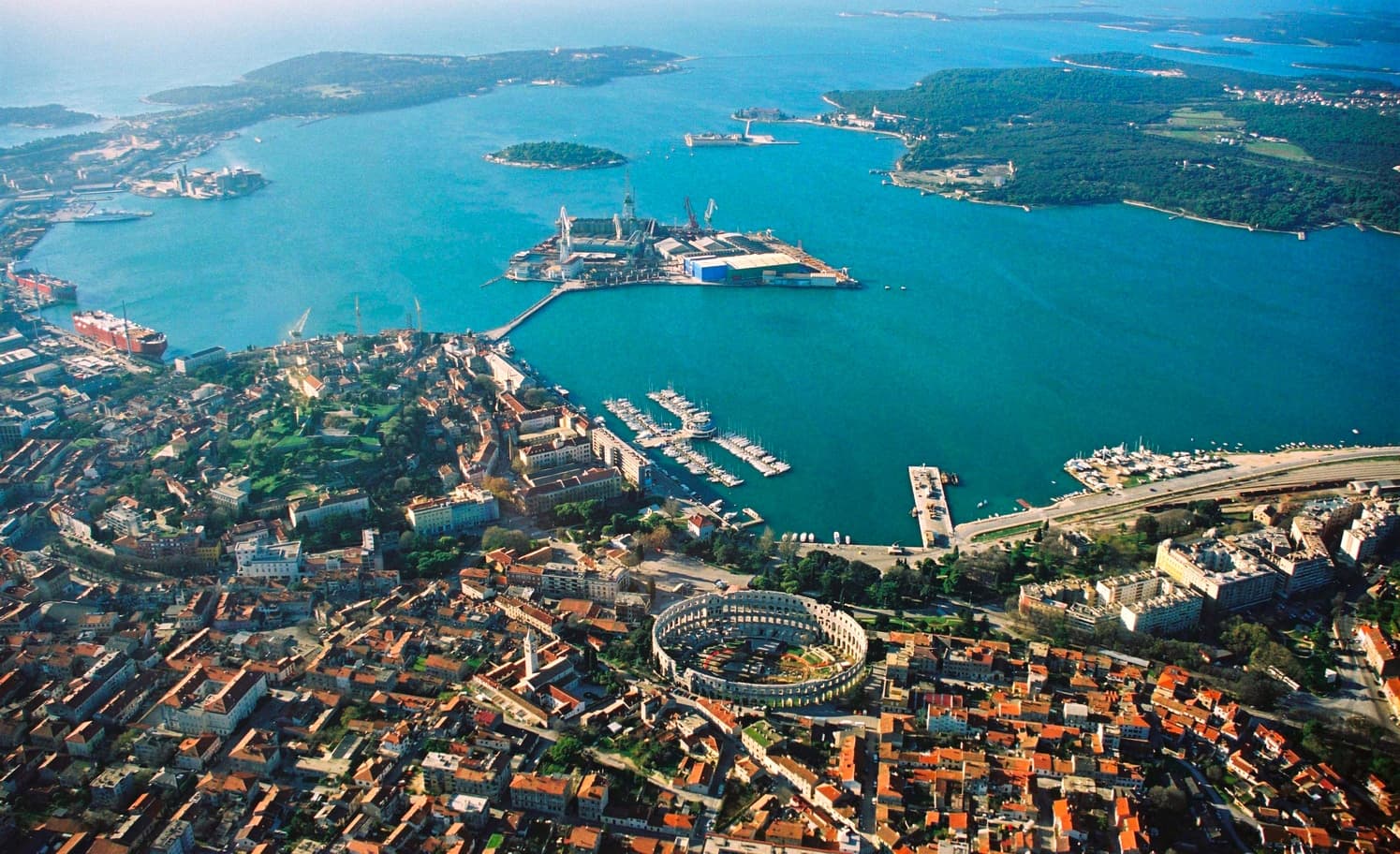
Pula suits travellers who want a coastal stay to include a city worth exploring away from the beach. The Arena is the obvious starting point, but it does not explain the whole town on its own. Continue towards the Twin Gates, then through the centre to the Arch of the Sergii and the Forum with the Temple of Augustus. This route connects several different remnants of Roman Pula rather than reducing its heritage to one spectacular building. For another perspective, climb towards the Kaštel fortress or include Zerostrasse, whose underground spaces introduce a different part of the city's past. Pula therefore works well for visitors who enjoy architecture, museums and the rhythm of a functioning city together. Give the coast a separate part of your stay instead of trying to add every swimming stop to a single sightseeing day. Collections devoted to contemporary art, olive oil and maritime history broaden the choice. Select a few connected places and walk between them: the contrast between periods is more revealing than an overfilled checklist.
Central Pula offers two connected but different sightseeing strands. One follows public spaces and visible Roman monuments: the Arena, gates, Forum and temple. The other explores museum interiors, the fortress and underground passages. This distinction matters when planning: an outdoor walk leaves room to pause, while museum admissions depend on current arrangements. A ticket for one attraction should never be assumed to cover all the city's collections.
Stays nearby
 Apartment
Apartmeni Klenovica.eu
Klenovica
83 km from Pula
up to 4 guests · 1 bedroom
The host confirms the exact price for your dates and availability.
Things to see
The Arena, Temple of Augustus and Arch of the Sergii illustrate different forms of Roman architecture and work well as a connected group. The Twin Gates add the theme of movement into and through the town. Kaštel and the Historical and Maritime Museum of Istria introduce another strand, while Zerostrasse reveals an underground setting. The official cultural directory also lists the Museum of Contemporary Art of Istria and the House of Istrian Olive Oil.

Beaches
Pula's swimming beaches are outside the monumental harbour, with distinct choices along Lungomare, on Verudela and near Štinjan. Gortanova Bay interrupts the rocky Lungomare shoreline with a pebble entrance and a pine-backed beach. On Verudela, Ambrela combines white pebbles with nearby parking and wheelchair-friendly access; the open-air sculptures of Verudela Art Park occupy the approach between the parking area and the sea. Hidrobaza, near Štinjan, looks towards Brijuni and extends for approximately 700 metres, with a promenade, cycle path and sports areas. A designated part of Hidrobaza accommodates visitors with dogs. Choose Gortanova for a coastal walk with a swim, Ambrela for access to Verudela's attractions, or Hidrobaza for a broader stretch of recreational shoreline.
Valkane
Beach · Pula
Valkane is an urban bathing area on Pula’s western coast, linked to the Lungomare and known for concrete terraces, pine trees and accessible facilities.
Things to do
Dedicate one day to the Arena and a walking route through the centre to the Forum, allowing time for squares and breaks between major monuments. For a three-day stay, make the first day Roman, the second museum-focused with the fortress or Zerostrasse, and reserve the third for the coast and a part of the city you have not explored. This is a suggested sequence; check each institution's access arrangements separately.
Activities
Organise a city walk around a theme: outdoor architecture, museum collections or underground spaces. This is often more useful than choosing stops solely by distance. When time is limited, select one theme and a few connected places rather than trying to sample every category.
Day trips
The departure point for a visit to Veliki Brijun is Fažana, rather than Pula's harbour. The national park's organised island tour lasts roughly three and a half hours, combining a tourist train with visits around the harbour. St German's Church presents Istrian frescoes and Glagolitic monuments, while the Boathouse introduces the natural environment of the Brijuni archipelago. Allow separately for the journey from Pula to Fažana, as this is outside the island itinerary. A land-based alternative heads south to Premantura and Donji Kamenjak, exchanging Roman streets for low coastal vegetation and a deeply indented shoreline. Fažana also warrants a visit without boarding a boat: its fishing vessels and sardine-processing heritage give the waterfront a distinct story of its own.
Events
The Pula Film Festival changes the Arena from a daytime monument into an open-air cinema. Its 2026 edition ran from 9 to 16 July, with screenings also taking place at other city venues, including Cinema Valli. Giardino diVINO occupied Tito's Park from 8 July to 2 August 2026, combining Istrian food and wine with live music. The 2026 calendar placed Visualia, Pula's light festival, on 17–19 September, when installations gave façades and public spaces a different appearance after dark. A film in the Roman amphitheatre and a walk between Visualia installations offer contrasting ways to experience Pula's architectural setting beyond a conventional museum visit.
For families
Food and drink
Start exploring Pula's food at Narodni trg, home to the central market and fish market, rather than limiting Istrian cuisine to a restaurant menu beside the Arena. The market brings together seafood, vegetables and produce from Istrian farms, including cheeses sold at its stalls. On Istarska Street, the House of Istrian Olive Oil explains the contrast between Roman oil processing and modern production, with educational tastings focused on recognising different oils. Veruda has its own market on Tomasinijeva Street, a useful alternative for visitors staying outside the historic centre. In summer 2026, Giardino diVINO brought Istrian wine, cheese, prosciutto and olive oil to Tito's Park, turning the green space near the Arena into a food destination as well.
Practical information
Practical information
When choosing a base in Pula, distinguish the historic centre around the Forum and Arena from Verudela's beaches and the Štinjan–Hidrobaza coast overlooking Brijuni. Staying on Verudela involves different daily transport from staying beside Giardini, even though both addresses are in Pula. Air passengers can use the airport shuttle to the main bus station; that connection does not terminate at each Verudela hotel. From 1 April 2026, the new zone 0 parking rules restricted the streets around the Castle to residents and eligible business users. During the July 2026 film festival, the Arena serves an additional role as a screening venue, while Šijana Forest provides a nature-focused alternative to the centre. For food shopping, use Narodni trg near the old town or Veruda's market in the southern districts.
Parking
Pula introduced new parking zones on 1 April 2026. Blue zone 0 covers old-town streets, including Castropola and approaches to the Castle, and is not available for ordinary visitor parking. Red zone 1 serves the centre and has a two-hour maximum stay; yellow zone 2 covers a wider central area. Karolina, opposite the Arena, operates separately from the street zones. For 1 June–30 September 2026, charging was published as daily from 7 a.m. to 11 p.m. in the zones and around the clock at Karolina. A lengthy museum itinerary therefore fits poorly with a two-hour zone 1 space.
Getting there and around
Pula Airport's published 2026 shuttle service connects the terminal with the main bus station at Trg I. istarske brigade 1, using platform 16. The fare is €6, payable by cash or card, and departures from the airport follow arriving flights. For onward travel to the beaches, Pulapromet's 2a connects the bus station with Verudela, while the 3a links Šijana, Vidikovac and Verudela. Route 1 heads to Stoja and the 5a serves Štinjan. Pulapromet's 2026 regional network also includes Fažana, Vodnjan, Medulin and Premantura, giving Pula several car-free excursion options. Once in the centre, the Forum, Sergijevaca Street and Giardini can form a walking route rather than separate bus journeys.
Frequently asked questions
How do I get from Pula Airport into town?
The airport shuttle runs to platform 16 at the main bus station, Trg I. istarske brigade 1. Its published 2026 fare is €6.
Can visitors park beside Pula Castle?
From 1 April 2026, blue zone 0 in the old town is reserved for residents and eligible business users. Visitors should use other zones or the separately operated Karolina car park.
Which Pula beach has pebbles and easier access?
Ambrela on Verudela has pebbles and wheelchair-friendly access; Gortanova Bay provides a pebble entrance along Lungomare.
Where does the boat to Veliki Brijun depart?
The national park's organised island visit departs from Fažana, so visitors staying in Pula first need to reach Fažana harbour.
Nearby

Pješčana Uvala
Village · Istria

Related guides
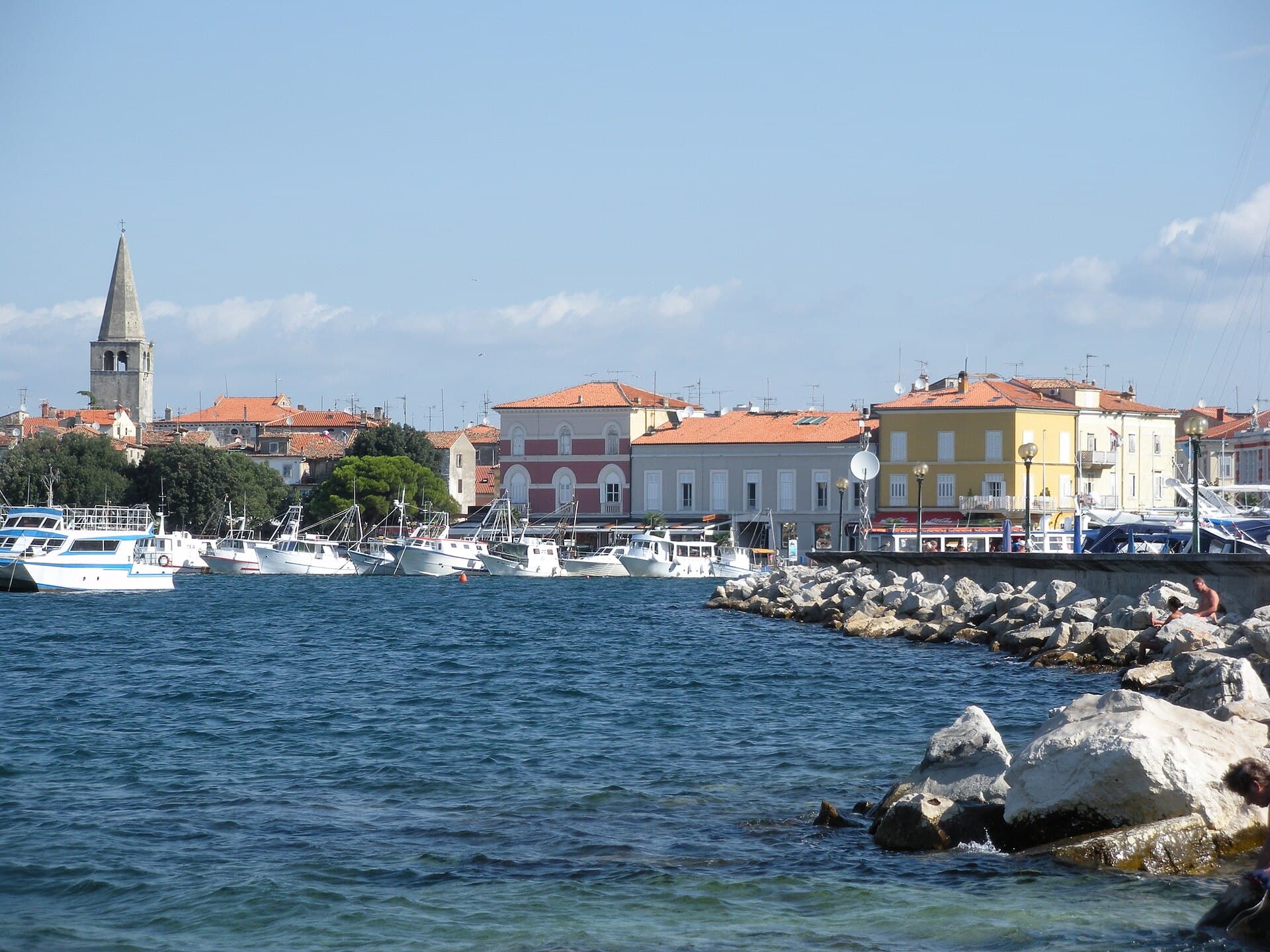
Poreč
Organise the stay around the distinction between the centre and the wider holiday area. In the centre, a cultural visit can form part of a walk, while beaches, excursions and additional…
Read the guide

Help improve this page
Spot something missing or wrong? Suggest a correction, add your photo or report a problem. Editors review every suggestion before it is published.
Photo credits
- Pula, Agripina's house — Orlovic · CC BY-SA 3.0 · Wikimedia Commons
- Pješčana Uvala, Vinkuran — nikola_pu · CC BY-SA 3.0 · Wikimedia Commons
- Banjole — Bandino56 · CC BY 3.0 · Wikimedia Commons