About this place
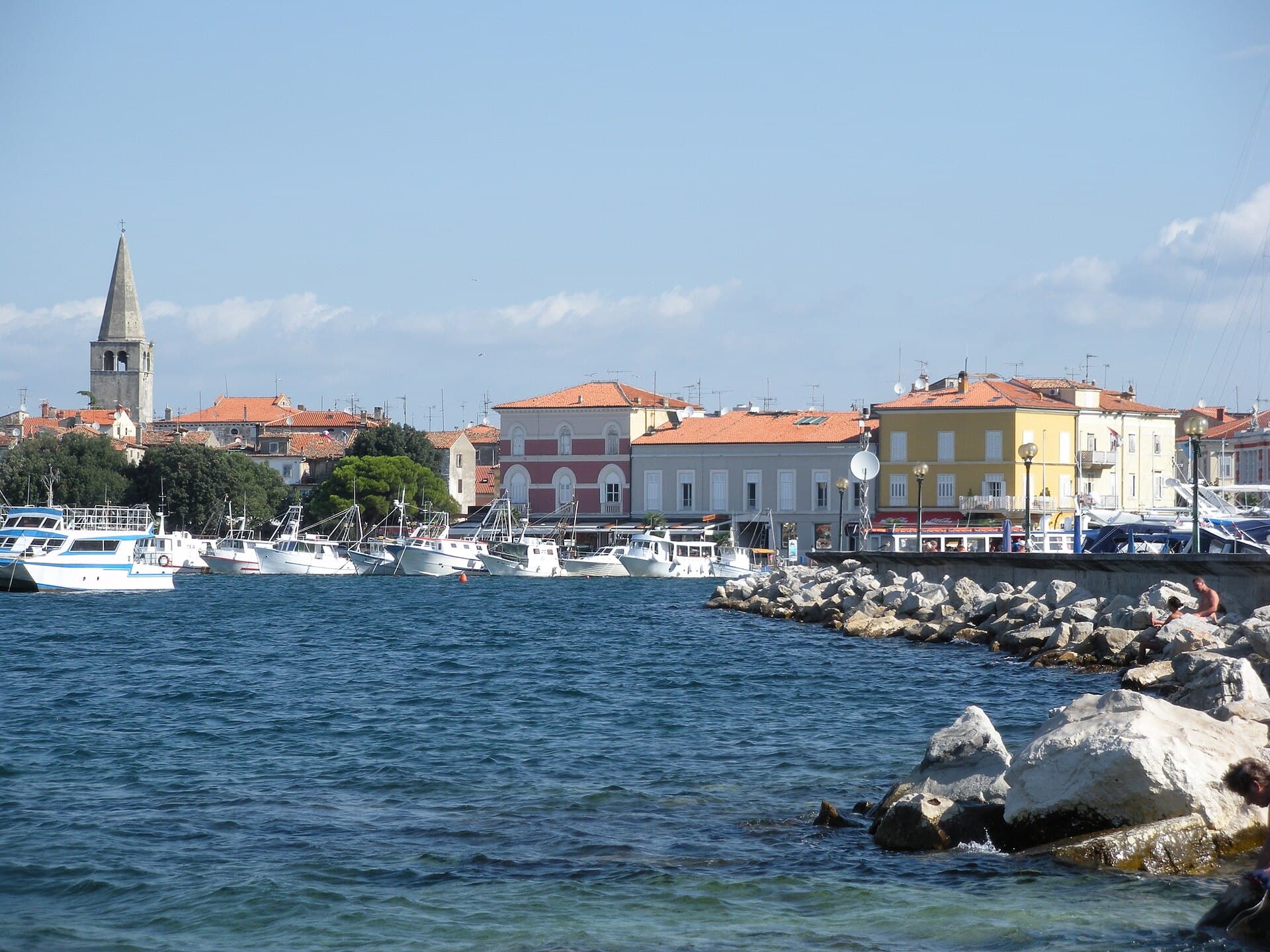
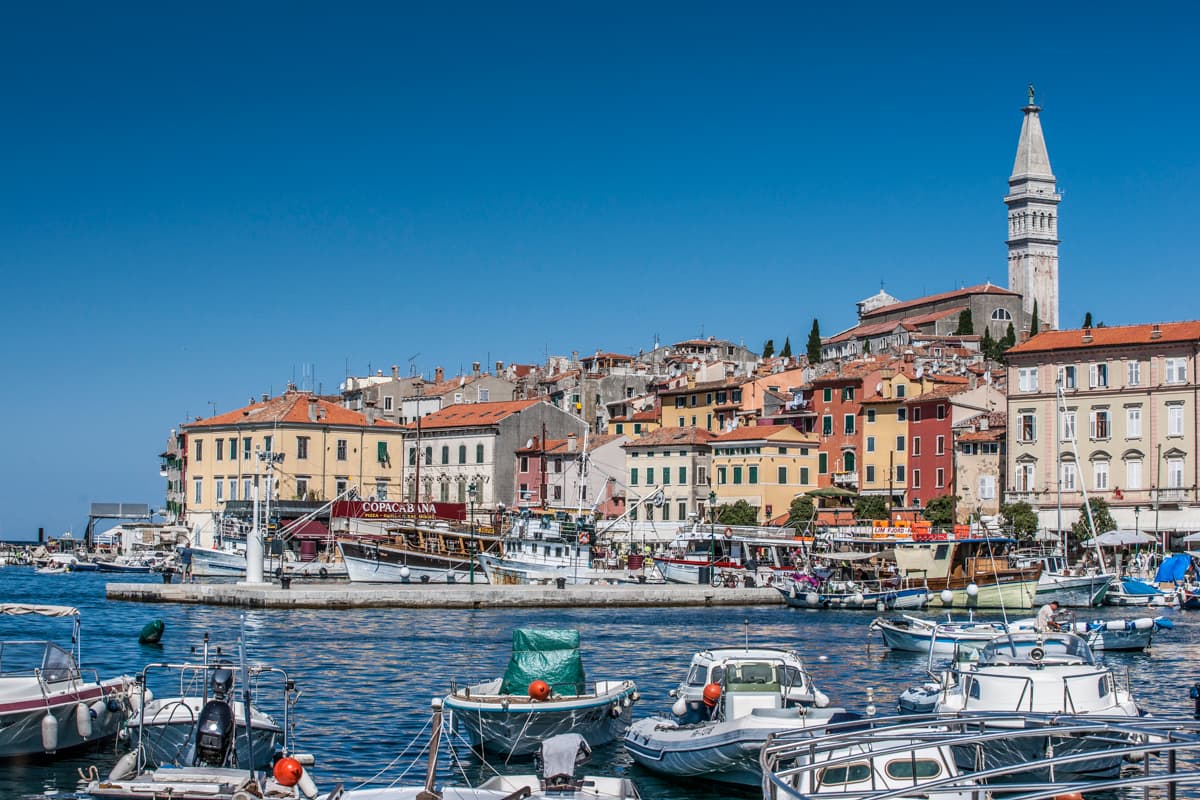
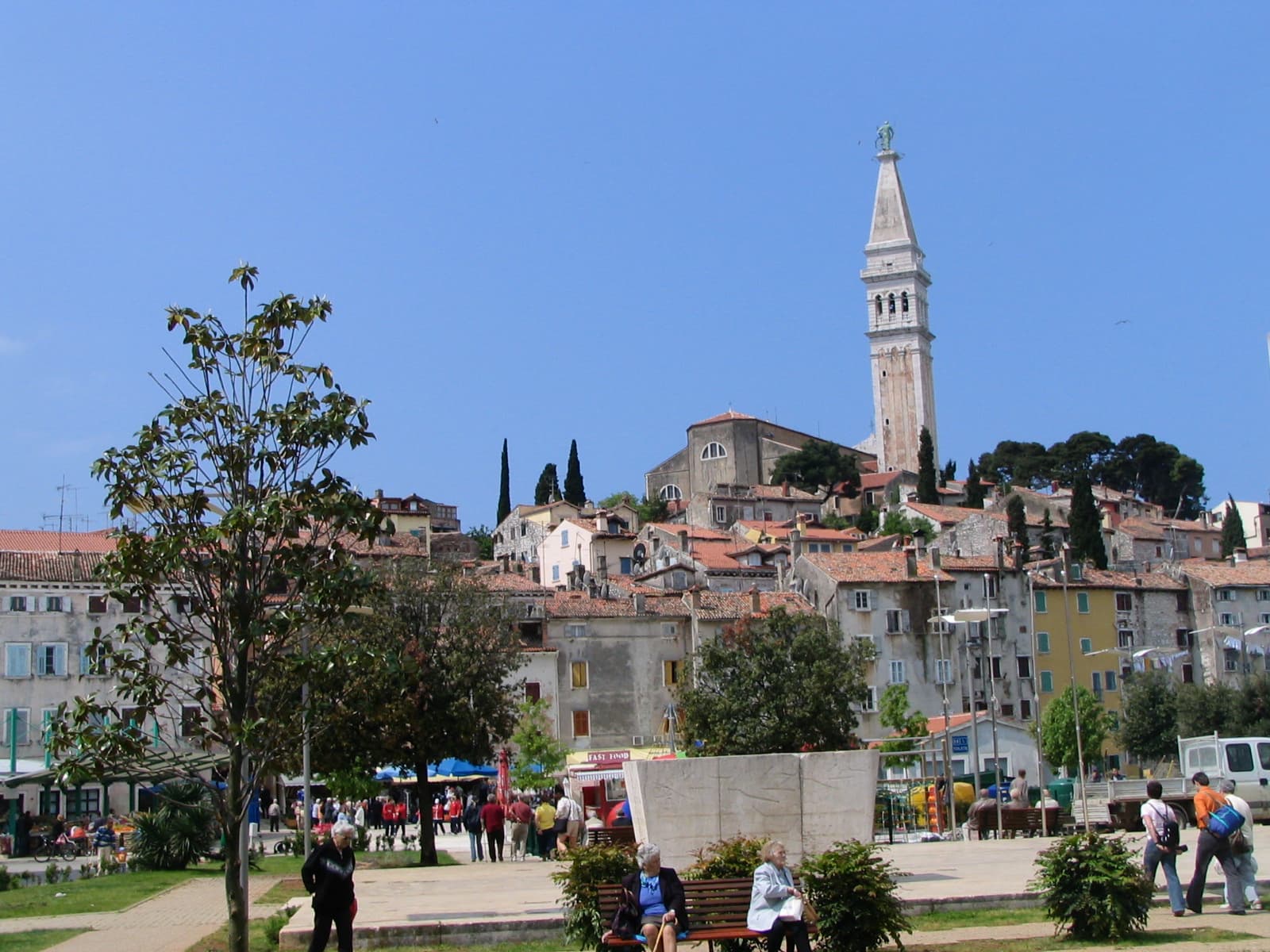
Rovinj rewards a visit on foot, moving from the harbour and waterfront houses into the narrow streets of the old town and uphill towards the Church of St Euphemia. That change of level is an important part of the experience: the waterfront introduces the town, while the lanes and church plateau reveal it from another perspective. Rather than collecting a single panoramic photograph, explore Grisia, return towards the main square and consider the relationship between the harbour and everyday town life. The Batana Ecomuseum adds a particularly local dimension, focusing on a traditional wooden boat rather than a grand palace. Leave another part of the day for Zlatni rt, where urban sightseeing gives way to woodland and the coast. This combination makes Rovinj a useful choice for travellers seeking heritage, gentle activity and time by the water in the same stay. On a longer visit, give the wider coastline its own day instead of trying to fit everything between museum stops. The most rewarding contrast is between the stone town, its maritime setting and its green coastal spaces.
Avoid treating Rovinj's lanes simply as shortcuts between monuments. A loop works better: start at the harbour and main square, climb through Grisia and neighbouring passages, spend time around St Euphemia and return by a different route. This leaves room to notice stairways, courtyards and glimpses of the sea without retracing every step. The harbour and Zlatni rt offer a different rhythm from the old-town climb. Planning them as distinct parts of the day is more rewarding than squeezing them into the remaining minutes after sightseeing.
Stays
No stays listed here yet
Things to see
Three anchors help explain Rovinj: St Euphemia for the relationship between the hill and old town, Batana for maritime culture, and the harbour for the connection between settlement and sea. Grisia, Veli trg and the town clock complement that route without requiring every corner to become a major standalone stop. Zlatni rt serves a different purpose: it is a setting for walking and outdoor time, rather than another museum on the same checklist.

Beaches
Official tourism information identifies Monte by the old town and bathing areas along the wider coast, including Zlatni rt. Check the actual entry into the water and the surface before choosing a spot.
Uvala Polari
Beach · Rovinj
Polari Bay is a bathing area south of Rovinj within Polari campsite, combining developed pebble sections with longer stretches of more natural coastline.
Valalta
Beach · Rovinj
Valalta is an extensive naturist bathing area north of Rovinj, with a long pebble-and-sand shoreline inside a dedicated FKK resort.
Things to do
For one day, start with the old town and St Euphemia, then pause by the harbour before visiting the Batana Ecomuseum. Use the afternoon for either a longer walk or coastal time around Zlatni rt. With three days, separate these experiences: devote one to the town, another to the woodland and shoreline, and the third to an additional cultural visit that is operating during your stay. This is a suggested itinerary, not a packaged tour with guaranteed admissions.
Activities
Combine an old-town walk with a separate outing to Zlatni rt. Treat the steps in the centre and the coastal part of the route as different walking conditions, adapting the distance to heat, footwear and your group. A harbour stroll should not be taken as evidence that every uphill route to the church plateau will be equally manageable.
Day trips
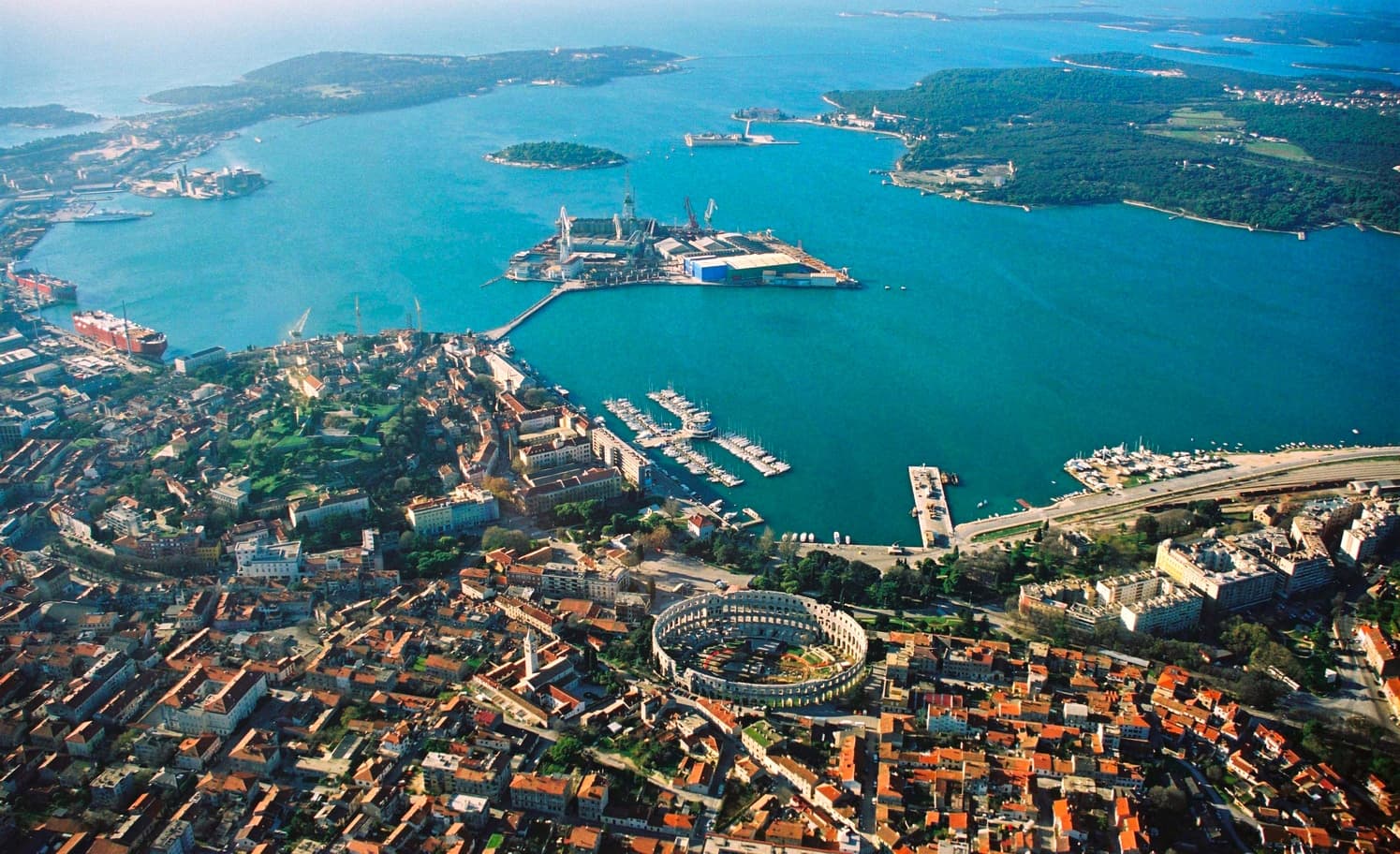
North of Rovinj, Lim Bay replaces the open Istrian coast with steep slopes enclosing a long, drowned karst valley. A road excursion from Rovinj reaches the landward approaches, while a boat trip reveals the sides of Lim from water level. Romuald’s Cave sits above the bay, so travelling along Lim does not in itself include entering the cave. South of Rovinj, Palud–Palù offers a different outing centred on a wetland, its observation hide and birdlife. The approach leaves the Rovinj–Pula road towards Veštar and Cisterna, with the final visit made on foot. For a city excursion without a car, the Rovinj–Pula bus connects the two bus stations, leaving a walk to Pula’s Arena at the other end. Treat Lim, Palud and Pula as three separate outings from Rovinj: one introduces a marine landscape, another wetland wildlife and the third Roman and Austro-Hungarian heritage.
Events
Grisia took place on 23 August 2026, turning its namesake old-town street into an exhibition space between Matteotti Square and the area beside St Euphemia’s Church. The Grisia programme linked artwork in the street with children’s workshops, Gandusio cinema and additional artistic events. Rovinj’s 2026 Eufemia Festival occupied the waterfront and town squares on 4–5 September. A separate programme for City Day and St Euphemia’s feast ran from 11 to 17 September 2026, with the patron saint’s day on 16 September. Grisia supplies an art-focused reason to visit Rovinj, while the Eufemia Festival brings evening music to the waterfront; the patronal celebration has its own cultural and religious programme.
Food and drink
Rovinj’s spàcio brings wine storage, conversation and fishing-community food into the ground floor of a stone house. Spacio Matika in Švalba Street belongs to the Batana Ecomuseum, allowing the town’s maritime traditions to continue around a table rather than remain behind museum glass. Fish and seafood, local olive oil, Malvasia and Teran form the core of this food culture. Brodet combines different fish in a single stew, while Batana’s meals also give a place to Rovinj songs and communal entertainment. Nearby Lim Bay supports mussel and oyster cultivation, adding a shellfish theme to an excursion north of Rovinj. Choose an Ecomuseum programme for an evening explicitly connected with batana heritage; for an ordinary waterfront meal, compare the fish and shellfish preparations alongside the selection of Istrian wines.
Practical information
Practical information
For an old-town stay in Rovinj, distinguish reaching the harbour from climbing Grisia towards St Euphemia’s: the stone streets on the peninsula require walking, and the northern Valdibora approach leads into a different part of the centre from the bus station to the south. Travellers visiting Palud for birdwatching can use the reserve manager’s seasonal pattern: spring migration extends from late February to late April, with autumn migration between September and December. Rovinj’s cultural calendar offers another way to choose dates: Grisia fell in August in 2026, while the Eufemia Festival and City Day belonged to September. Separate the Batana House visit on Obala Pina Budicina from programmes at Spacio Matika in Švalba Street. For accommodation on Rovinj’s peninsula, the apartment address and the point reached by car may therefore be different places.
Parking
Velika Valdibora, Mala Valdibora and Boksiti are Rovinj car parks listed by the municipal operator, Komunalni servis. Valdibora provides an approach to the northern side of the old town, with the climb towards Grisia and St Euphemia’s continuing on foot. For accommodation on the peninsula, agree a luggage handover point with your Rovinj host rather than navigating to the bell tower itself. Use the operator’s tariff displayed at the selected Rovinj car park; its historic notice about an initial free period in 2023 is not a 2026 price list.
Getting there and around
Rovinj bus station stands at Trg na lokvi 6, south of the old town and close to the waterfront. Arriva’s 2026 offer links the Rovinj and Pula bus stations, making Pula a useful interchange for onward travel through Istria. Travellers bound for Pula Airport need a separate airport transfer after the Rovinj–Pula bus: Pula bus station is not the airport terminal. Continue on foot from Rovinj station towards Obala Pina Budicina and Marshal Tito Square, with the route to St Euphemia’s climbing through the old town. Batana evenings have their own meeting point at the Small Pier, so follow the pier name on the programme confirmation. An outing to Palud can use a car or bicycle to reach the reserve approach, followed by walking along its paths to the birdwatching hide.
Frequently asked questions
Where can I park to visit Rovinj’s old town?
Velika and Mala Valdibora serve the northern approach; continue on foot towards Grisia and St Euphemia’s Church.
Can I travel from Rovinj to Pula without a car?
Arriva’s 2026 offer includes a service between Rovinj bus station at Trg na lokvi and Pula bus station.
What is a Rovinj spacio?
A spacio is a traditional place for wine and social gatherings; Spacio Matika in Švalba Street belongs to the Batana Ecomuseum and its food programmes.
When was Grisia held in 2026?
The Grisia open-air exhibition took place on 23 August 2026 in its namesake old-town street.
Nearby

Vrsar
Village · Istria

Related guides

Novigrad
Novigrad-Cittanova developed on Istria’s north-western coast near the mouth of the Mirna, in a maritime setting that shaped centuries of fishing and trade. The historic centre still…
Read the guide
Help improve this page
Spot something missing or wrong? Suggest a correction, add your photo or report a problem. Editors review every suggestion before it is published.
Photo credits
- Rovinj — Florian Hirzinger - http://www.fh-ap.com · CC BY-SA 4.0 · Wikimedia Commons
- Vrsar — Ekaterina Polischuk · CC BY-SA 4.0 · Wikimedia Commons
- Rovinjsko Selo — nschuwi · CC BY 3.0 · Wikimedia Commons
- Funtana — Tanya Dedyukhina · CC BY 3.0 · Wikimedia Commons
- St. Euphemia's Basilica