About this place
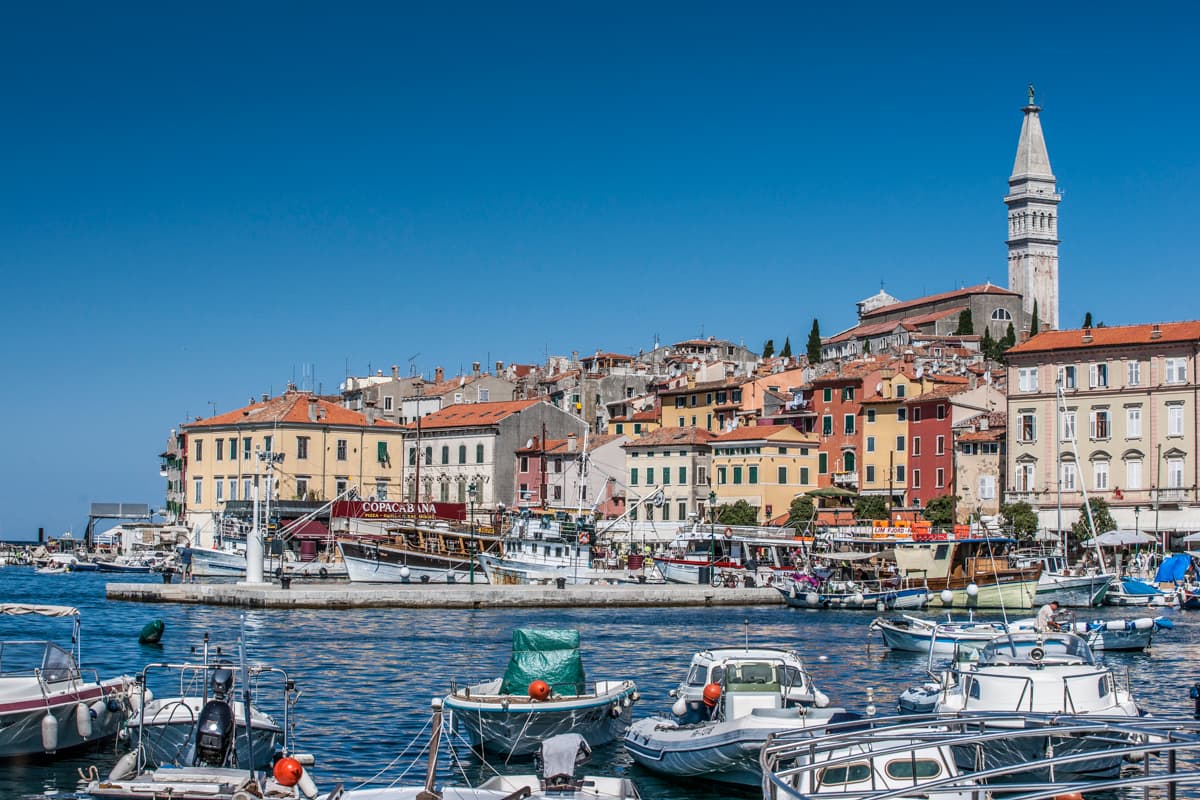
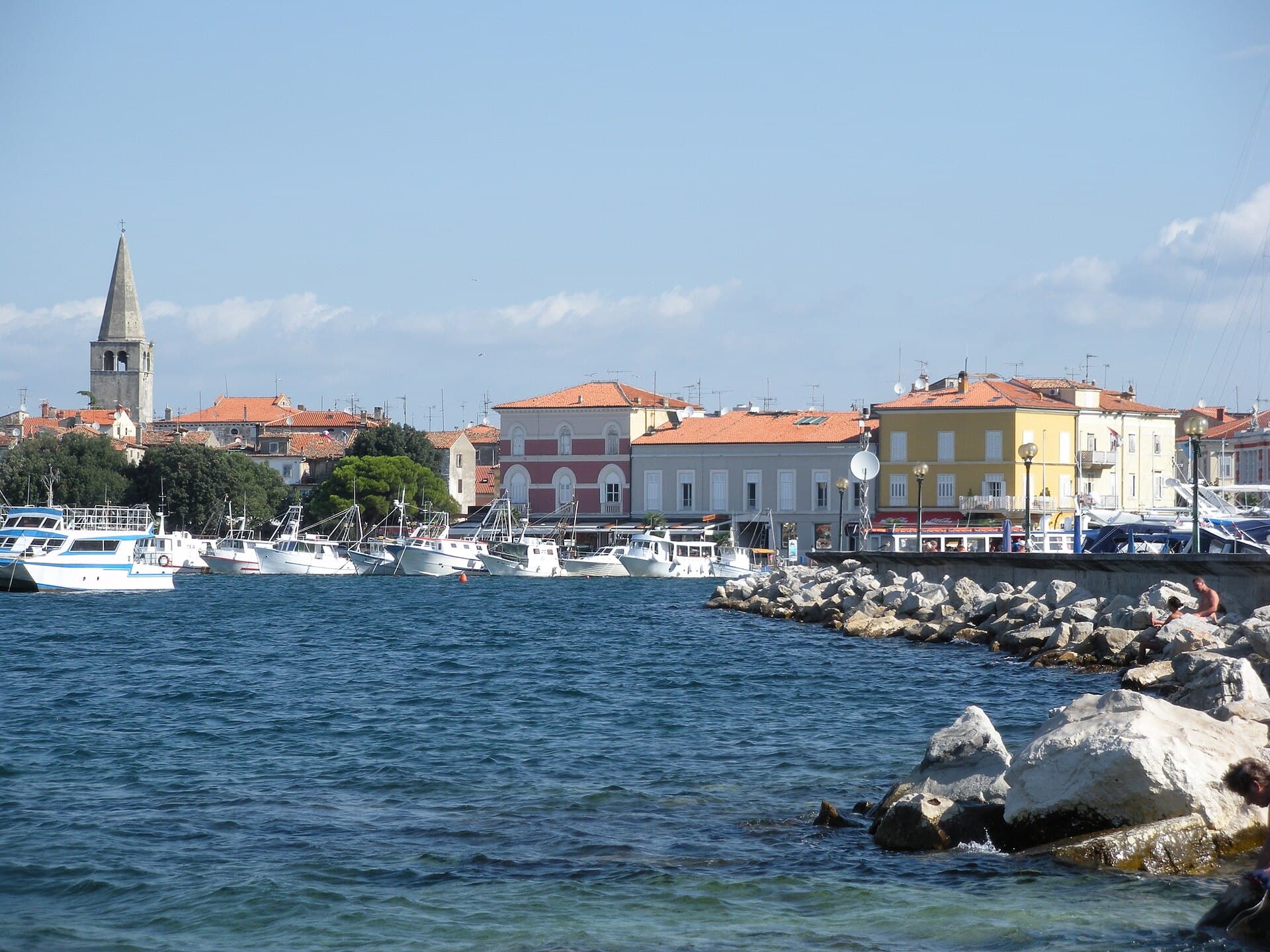
Poreč stands on Istria's western coast, with its old centre occupying a small peninsula. Decumanus, the main street, and Marafor Square connect an everyday walk with the layout of the Roman town. Look above the shopfronts and restaurant terraces: windows, carved stone frames and residential facades reward attention alongside the headline monuments. The cultural centrepiece is the UNESCO-listed episcopal complex of the Euphrasian Basilica, where mosaics, an atrium and a baptistery invite a slower, more concentrated visit. Near Marafor, the Romanesque House offers a different scale of architecture, with stone walls, a paired window and a wooden balcony. Compare its exterior with the more elaborate houses along Decumanus before returning to the waterfront. This makes a satisfying route for travellers who enjoy history without wanting every holiday hour to revolve around museums. Swimming can occupy a separate part of the day. South of the centre, Brulo combines pebbles, rocks, built bathing areas and greenery; choose the water entrance that suits your group. For a longer stay, Baredine Cave near Nova Vas introduces inland Istria's underground landscape. Poreč works particularly well when cultural mornings, coastal walks and unhurried beach afternoons share the itinerary.
Organise the stay around the distinction between the centre and the wider holiday area. In the centre, a cultural visit can form part of a walk, while beaches, excursions and additional attractions require their own location checks. Keep the town, Riviera and episcopal complex distinct: these names do not describe the same geographical extent.
Stays nearby
 Apartment
Apartmeni Klenovica.eu
Klenovica
99 km from Poreč
up to 4 guests · 1 bedroom
The host confirms the exact price for your dates and availability.
Things to see
The Euphrasian complex deserves more than a passing stop. Its sixth-century church is celebrated for mosaics, but the experience also depends on the ensemble: atrium, baptistery, episcopal palace and traces of earlier buildings. The episcopal complex joined the UNESCO World Heritage List in 1997. Alternate close attention to mosaic details with a wider look at how the rooms fit together; the art becomes more interesting when its architectural setting is understood. Decumanus leads towards Marafor, the site of the Roman forum. Surviving paving and temple walls give the ancient town a tangible presence. Nearby, the Romanesque House shifts attention from religious and civic monuments to domestic architecture. Its paired window and wooden balcony make useful details to compare, with the balcony belonging to a later alteration of the medieval building. At the beginning of Decumanus, the Pentagonal Tower marks the former defended entrance to town. Looking at tower, house and church together turns a handful of nearby stops into a coherent exploration. For a natural contrast outside Poreč, choose Baredine's underground chambers and cave formations, visited with a guide. Keep that excursion separate; the old centre itself works best as a sequence of short walks and attentive pauses.
 UNESCO
Beaches
Brulo lies south of Poreč’s historic centre, combining pebbles, rock and built bathing areas with pines, cypresses and oaks. The town beach and promenade towards Brulo make it possible to continue a visit to the old town beside the sea without travelling to a more distant part of the riviera. Northwards, the tourist directory lists Val Parentino Family Beach, Val Marea Sandy Family Beach and Materada; Parentium and Delfin are associated with the southern resort complexes. Use the specific beach or hotel name when choosing where to swim: Brulo, Materada and Zelena Laguna are different arrival points. For children or visitors with reduced mobility, Brulo has its own access and facilities described in the official directory, rather than one set of conditions applying to the entire Poreč coast.
Borik
Beach · Poreč
Borik is a developed beach north of Poreč’s old town, combining views of the historic peninsula with stone bathing areas and sports facilities.
Things to do
For one day, follow Decumanus towards Marafor, breaking the walk with short turns into side streets. At the Romanesque House, notice the paired window and wooden balcony, then give the Euphrasian complex the main part of your morning. Spend time with the church mosaics and include the atrium and baptistery in your route. This lets the different spaces form a coherent experience rather than reducing the visit to a photograph of the apse. In the afternoon, continue along the waterfront or swim at Brulo, leaving the seaside hours deliberately unhurried. For three days, devote the first to the historic peninsula and basilica. Spend the second along the southern shore, combining walking, swimming and a break among Brulo's greenery. Choose between pebbles, rock and built bathing areas according to your group. Children can look for different window shapes and towers when you return to town. On the third day, visit Baredine Cave near Nova Vas. The underground route is guided, and its stairs and return climb call for secure footwear and a pace everyone can manage. Chambers and cave formations offer a striking change from the coast. Finish back on the waterfront rather than adding another distant excursion to the same day.
Activities
From Poreč, the Parenzana leads towards Istrian villages, vineyards and former railway stations. The railway operated between 1902 and 1935, while its walking and cycling use now provides a different experience of the hinterland from driving along the coast. For shorter coastal exercise, follow Poreč’s waterfront towards Brulo, where bathing areas alternate with pines; continuing towards the resort zones increases the distance from the old town. Poreč Dolphin has a distinct swimming identity: the 2026 edition took place on 29–30 August at Valamar Parentino beach, combining recreational distances with other water-based activities. Outside the town, Parenzana in Vižinada was held on 27 September 2026 as a separate cycling event starting in Vižinada, rather than on Poreč’s waterfront.
Day trips
Baredine Cave near Nova Vas turns an excursion from Poreč into a guided descent among cave formations and underground chambers. The site stands near Gedići, between Poreč, Višnjan and Tar. On the same outing, Traktor Story introduces a very different subject: historic tractors, threshing machines and the agricultural development of Poreč’s hinterland. The Konobon Gallery links those machines with bread, wine and olive oil, giving the Baredine area both a natural-history and an ethnographic dimension. For a cycling excursion, choose a section of the Parenzana inland from Poreč, following the former narrow-gauge railway corridor. Parenzana is a regional route, whereas Baredine is one managed underground attraction; the two outings call for different equipment and a different use of the day.
Food and drink
Poreč’s market around Peškera is a useful starting point for ingredients found in Istrian taverns: seasonal vegetables, olive oil, honey, eggs and dairy produce. The fish market adds Adriatic fish and shellfish to that inland selection. In Poreč’s food guide, fuži, ravioli and posutice appear alongside Istrian pršut, boškarin beef and wild asparagus, allowing meals to follow a particular ingredient rather than a broad label such as Mediterranean cuisine. For a September visit, the 2026 Tunalicious programme included a tuna restaurant week and waterfront street food. The produce market, Istrian pasta and the tuna festival therefore offer three different ways into Poreč’s food culture, with the marina-facing festival atmosphere contrasting with everyday shopping around Peškera.
Practical information
Practical information
Treat Poreč’s historic centre as the walking part of your stay, separate from arrival at the main town car park or the bus station on Karla Huguesa Street. Peškera is the landmark for market shopping, while the town beach and Brulo provide bathing choices south of the centre. Staying in Materada or Zelena Laguna creates a different daily journey to the Euphrasian Basilica from accommodation beside Decumanus. Baredine is an inland excursion near Nova Vas with guided entries, rather than an extension of an old-town stroll. From 1 May to 30 September 2026, Usluga Poreč charges for street parking on weekends and public holidays as well, making the journey from the resort zones part of the cost of a visit to the historic centre.
Parking
Poreč’s street parking is charged daily from 07:00 to 23:00 between 1 May and 30 September 2026. Usluga Poreč lists hourly rates of €2 in zone 1, €1.50 in zone 2 and €1 in zone 3 for that period. The main town car park has a separate tariff, rather than automatically using the surrounding street-zone rate. Peškera market stands beside the central parking area, making it a useful arrival point for produce shopping followed by a walk towards the historic centre.
Getting there and around
Poreč bus station is at Karla Huguesa 2, and the official transport directory lists Arriva, Brioni and other operators for intercity travel. Pula Airport is the nearest international airport identified by the tourist board, with the final journey to Poreč made by road. The local tourism directory describes a road train connecting the centre towards Špadići and the marina area towards Zelena Laguna. That coastal service is distinct from Parenzana, the former railway corridor now used for recreation inland. For the old town, town beach and Brulo, the waterfront walking route provides a direct way of linking the visit on foot. A Baredine excursion requires a separate inland journey to Nova Vas rather than either of those coastal routes.
Frequently asked questions
Where is Poreč bus station?
Poreč bus station is at Karla Huguesa 2, outside the historic centre.
Which beach fits a visit to central Poreč?
The town beach and Brulo are linked by the waterfront promenade south of the centre; Brulo combines pebbles, rock, built areas and vegetation.
Can visitors explore Baredine without caving experience?
Baredine Cave near Nova Vas is equipped for guided tourist visits, following an underground route with steps.
What does street parking cost in Poreč in summer 2026?
From 1 May to 30 September 2026, hourly rates are €2 in zone 1, €1.50 in zone 2 and €1 in zone 3, with charging from 07:00 to 23:00.
Related guides

Novigrad
Novigrad-Cittanova developed on Istria’s north-western coast near the mouth of the Mirna, in a maritime setting that shaped centuries of fishing and trade. The historic centre still…
Read the guide
Help improve this page
Spot something missing or wrong? Suggest a correction, add your photo or report a problem. Editors review every suggestion before it is published.
Photo credits
- Poreč — Hobe / Holger Behr · Public domain · Wikimedia Commons
- Červar-Porat, Novigrad — Sl-Ziga · Public domain · Wikimedia Commons
- Euphrasian Basilica — Tiefkuehlfan · CC BY-SA 4.0 · Wikimedia Commons
- Sinčić Palace — Maesi64 · CC0 · Wikimedia Commons
- Apartmeni Klenovica.eu — Apartmani Klenovica.eu · courtesy of the property owner