About this place
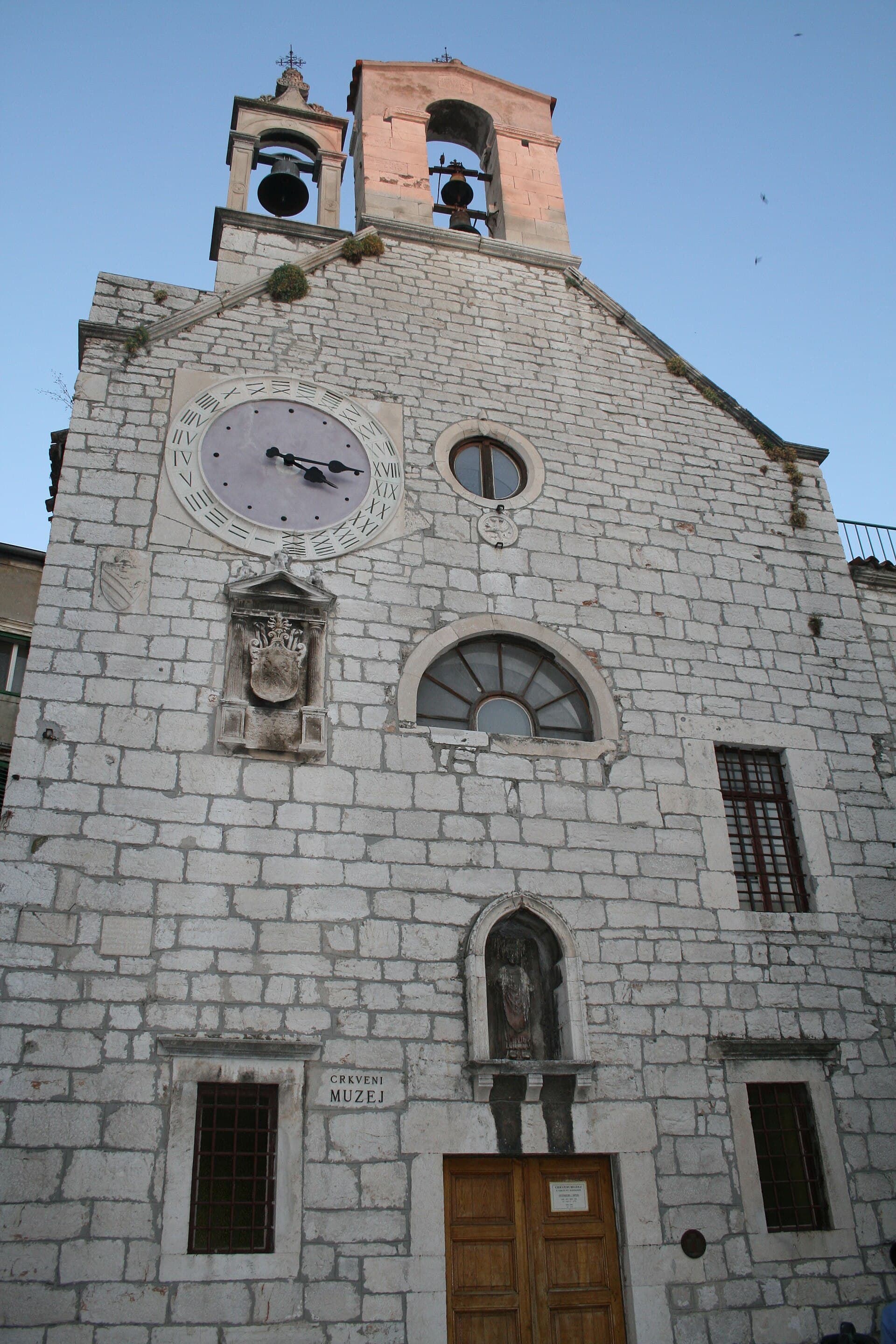
Sibenik is best understood through changing levels. Moving from the waterfront and the area around St James's Cathedral towards the town's fortresses changes the relationship between rooftops, sea and surrounding landscape. The cathedral is a distinct UNESCO World Heritage property, while St Michael's, Barone and St John's offer their own visiting programmes. Do not treat every fortress as the same admission product or the same physical undertaking. In particular, distinguish St Nicholas's Fortress, associated with St Anthony's Channel, from the three urban sites managed by Fortress of Culture. For a first visit, the cathedral and one fortress are more useful than rushing through every name. Compared with nearby seaside resorts, Sibenik suits a stay where urban heritage is central rather than an occasional excursion from the beach. Arrange waterfront breaks and uphill viewpoints according to your mobility. A longer visit allows separate fortress visits, a cultural programme or a checked excursion towards the channel. There is no need to conquer the city in one large circuit: several shorter outings provide a clearer picture and more time for detail.
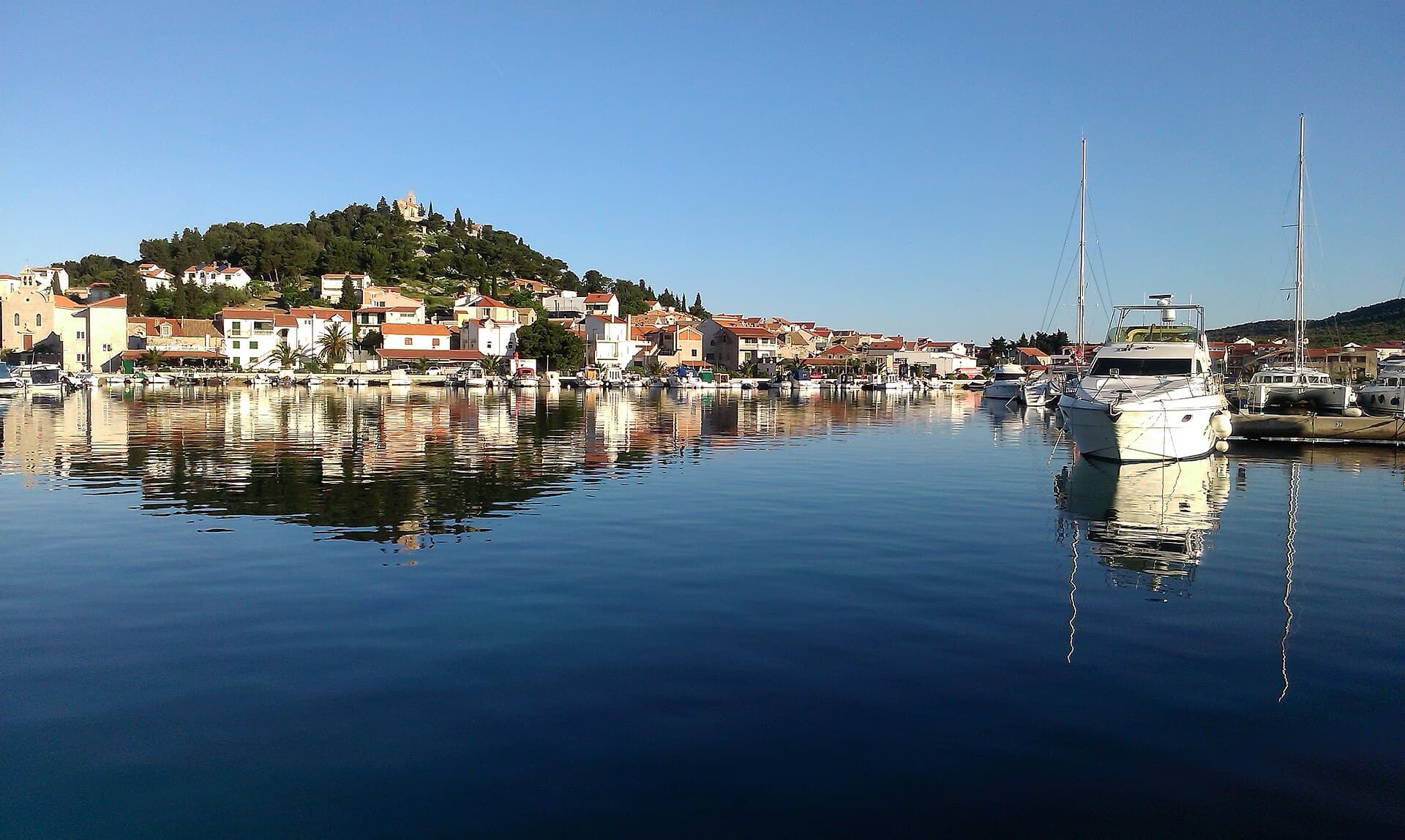
Three contrasting areas help explain Šibenik's historic centre: the steep lanes of Gorica, waterfront Dolac and the central streets around Kalelarga. In Gorica, stone steps climb towards St Michael's Fortress, with gaps between houses revealing the roofs below. Dolac belongs to the seafront and the coastal continuation towards Crnica, offering a different experience from the uphill fortress approach. Ulica kralja Tomislava, known locally as Kalelarga, leads through the centre towards the Cathedral of St James. Zagrebačka Street, also called Masna, recalls the town's inns and traditional mid-morning meals. Around these intersecting routes, Šibenik feels like a working town of shops and everyday encounters rather than just a panorama of domes and fortifications. Galbiani Palace on Kalelarga houses Civitas Sacra, an interpretation centre devoted to sacred heritage and the cathedral's construction. The Rector's Palace beside the cathedral takes a different approach: the City Museum connects archaeological finds from the surrounding region with the development of Šibenik itself. Although both palaces occupy a compact pedestrian area, they offer distinct subjects. Above the cathedral, St Lawrence's monastery garden adds greenery to Gorica's dense stone fabric. The waterfront opens towards the harbour and St Anthony's Channel, while Banj beach in Crnica provides a view back across the old town. From the beach, the relationship between St Michael's Fortress, the cathedral and the houses descending the slope becomes especially clear. During the International Children's Festival, squares and lanes become performance spaces; concerts at St Michael's give the fortress a separate evening role. Choosing accommodation in Šibenik therefore involves a real distinction between Gorica's steep streets, waterfront Dolac and more distant bathing districts such as Jadrija.
Stays nearby
 Apartment
Apartmeni Klenovica.eu
Klenovica
Klenovica, 173 km from Šibenik
up to 4 guests · 1 bedroom
The host confirms the exact price for your dates and availability.
Things to see
The Cathedral of St James stands out for its stone construction, dome and sculptural details; Civitas Sacra in Galbiani Palace provides a useful companion visit. This interpretation centre concentrates on the cathedral's construction and place in Šibenik rather than presenting a general history of Dalmatia. In the Rector's Palace, the City Museum broadens the story to Danilo culture, Roman finds and the growth of the medieval town. Objects connected with buildings just outside the museum make particularly rewarding links between collection and streetscape. St Michael's Fortress combines harbour views with an open-air performance venue, while Barone introduces defensive history through augmented reality. St John's occupies a higher position, allowing visitors to understand its relationship with Barone and the urban slope below. St Nicholas belongs to a separate maritime defence at the entrance to St Anthony's Channel. In the 2026 season, organised visits to that fortress depart by boat from Šibenik's waterfront. For a smaller old-town stop, choose St Lawrence's monastery garden, where herbs and geometrically arranged beds contrast with the surrounding stone lanes.
 UNESCO
Beaches
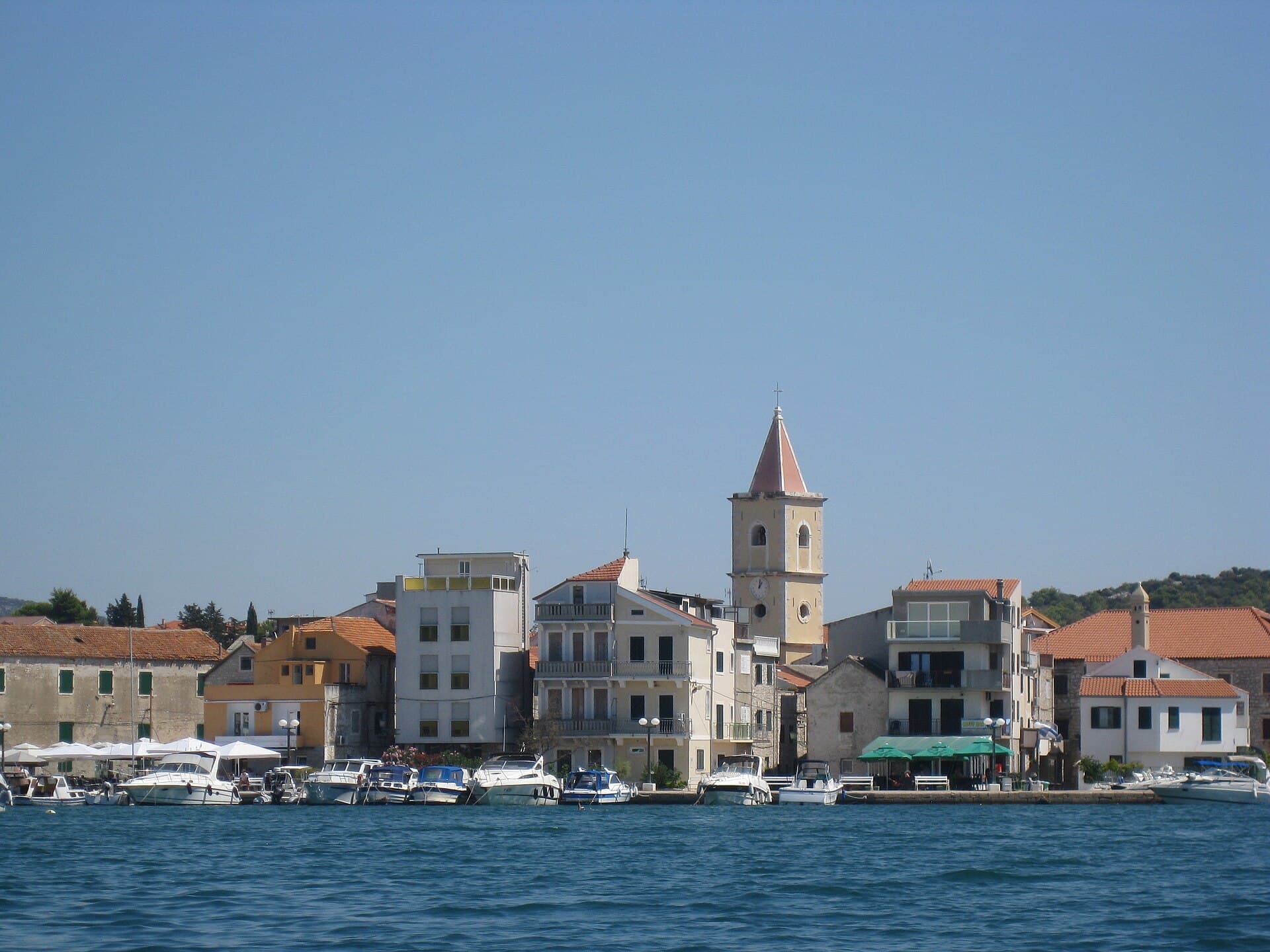
Banj is the city's pebble beach in Crnica, looking back towards St James's Cathedral and St Michael's Fortress. Northwest of the historic centre, it combines naturally with a waterfront walk through Dolac. Showers, a children's playground and exercise equipment accompany the beach, while Šibenik's distinctive skyline remains in view from the shore. Jadrija offers a different bathing atmosphere: colourful cabin doors, concrete and pebble sections, and pines near the outlet of St Anthony's Channel. Reaching Jadrija from central Šibenik involves the road or seasonal boat transport, making it a separate part of the day. Rezalište belongs to Brodarica south of town, while Martinska lies on the opposite side of Šibenik Bay. These places are not successive sections of one continuous beach walk from the centre.

Things to do
For one day, choose St James's Cathedral and one fortress. Use the interval to understand the city's relationship with the waterfront rather than merely reaching the next ticket gate quickly. With three days, leave the first to the old town, the second to fortresses you did not see and the third to a separate St Anthony's Channel visit or another confirmed excursion. A combined ticket makes sense only after deciding which sites you genuinely want and are able to visit. Check its validity period and included properties, especially the distinction between St Nicholas and the urban fortresses. For reduced mobility, Barone publishes information on ramps and an adapted toilet; that does not establish equal accessibility along the whole approach through town. A concert and a daytime visit are different products, so check event admission separately. With children, choose one uphill objective and a break afterwards. This plan assumes neither identical opening arrangements nor a need to visit every site on the same day.
Activities
St Anthony's Channel provides Šibenik's clearest transition from urban sightseeing to walking along a protected coast. Its paths connect with Minerska Bay and the visitor centre, while approaches from Zablaće and Mandalina allow different walking routes. Cycling access to Minerska follows the coastal network rather than the old town's steep flights of steps. Banj in Crnica combines bathing with outdoor exercise equipment, keeping a short recreational outing on the city waterfront. Jadrija is associated with windsurfing and the more exposed water near the channel's outlet. Climbs towards Barone and St John's offer a third kind of activity: urban walking with pronounced changes of height and views over Šibenik's roofs. Barone publishes information on adapted access to its exhibitions and ramps within the fortress itself.
Day trips
Skradin and Lozovac provide two different approaches to Skradinski buk in Krka National Park. Arriving through Skradin can involve a boat or riverside path, while Lozovac is the land entrance with onward access to the waterfalls. The 1,900-metre circular route around Skradinski buk follows bridges, travertine barriers and restored watermills. Swimming at Skradinski buk is prohibited. For an island day from Šibenik, choose Zlarin, where the Croatian Coral Centre connects coral-working traditions with today's relationship with the sea. Jadrolinija's passenger line 505 links Šibenik with Zlarin and Prvić in 2026, allowing either island to be explored without taking a car. A shorter outing towards the open sea is the organised boat visit to St Nicholas Fortress through St Anthony's Channel; walking along the channel is a separate excursion.
Food and drink
Šibenik's pidoće connect its cooking with the waters where the Krka meets the sea. This local name for mussels also appears in the “Pidoće & Debit” food event, pairing shellfish from the Šibenik area with a white wine of the hinterland. For red wine, Babić is the regional starting point, particularly associated with the Primošten vineyards; Maraština and Debit broaden the choice of local white varieties. For the history of everyday eating, walk along Zagrebačka Street, known as Masna. Its popular nickname recalls inns, cooking and workers' mid-morning meals, making it relevant beyond contemporary restaurant menus. Around Šibenik, coastal shellfish dishes and wines from Dubrava or Primošten's stony vineyards offer complementary themes. A tasting in the hinterland therefore adds a different perspective from dinner on the city waterfront.
Practical information
Practical information
For a Šibenik visit, distinguish the urban fortresses of St Michael, Barone and St John from maritime St Nicholas. In September 2026, Tvrđava kulture's combined ticket covers one visit to each of the three urban fortresses within seven days; St Nicholas requires its own organised boat visit. Barone has ramps between certain levels for visitors with reduced mobility, while Gorica's stepped streets and the approach from the waterfront form a separate part of the journey. From 1 July to 1 October 2026, the City Museum's permanent display is closed on Mondays and public holidays. For individual visits, the museum specifies payment in euros and cash, useful to arrange before reaching the Rector's Palace. With accommodation in Gorica, the address and stepped approach matter more than a short map distance from the cathedral.
Parking
Poljana garage stands beside the eastern approach to the old town, with a pedestrian continuation towards Kalelarga. The published 2026 tariff is €1.33 per hour from 1 June to 30 September and €0.66 during the rest of the year. Gat Krka on the waterfront uses a different rate: €3 in summer and €1.50 outside that period. Draga car park and the railway-station area provide further options south of the historic centre. Reaching Gorica and St Michael's from these parking areas involves continuing on foot and negotiating steps.
Getting there and around
Šibenik combines an overland bus arrival with passenger-boat routes into its archipelago. City and suburban services follow the Gradski parking timetable, whose autumn 2026 schedule began on 7 September. The bus station and waterfront occupy the southern approach to the historic centre, allowing an onward walk towards Kalelarga and the cathedral. Jadrolinija's passenger line 505 connects Šibenik with Zlarin, Prvić and Vodice; this is an island journey without transporting a private car. The tourist boat to St Nicholas Fortress is a separate service operated by the county's public nature-management institution. In the 2026 season it leaves from the Krka pier, beside the information centre at Obala dr. Franje Tuđmana 4. Minerska and the walking route along St Anthony's Channel use the land approach from Zablaće or Mandalina.
Frequently asked questions
Is St James's Cathedral UNESCO-listed?
Yes, it has its own World Heritage inscription.
Are St Nicholas and St Michael the same site?
No. They are different fortresses with different access and visiting arrangements.
Which site publishes ramp information?
Barone. Check the approach to its entrance and your individual requirements separately.
Must I see all the fortresses in one day?
No. Choose one initially and spread the others according to time and ticket validity.
Nearby
Bilice, Šibenik-Knin County
Village · Dalmatia – Šibenik

Related guides
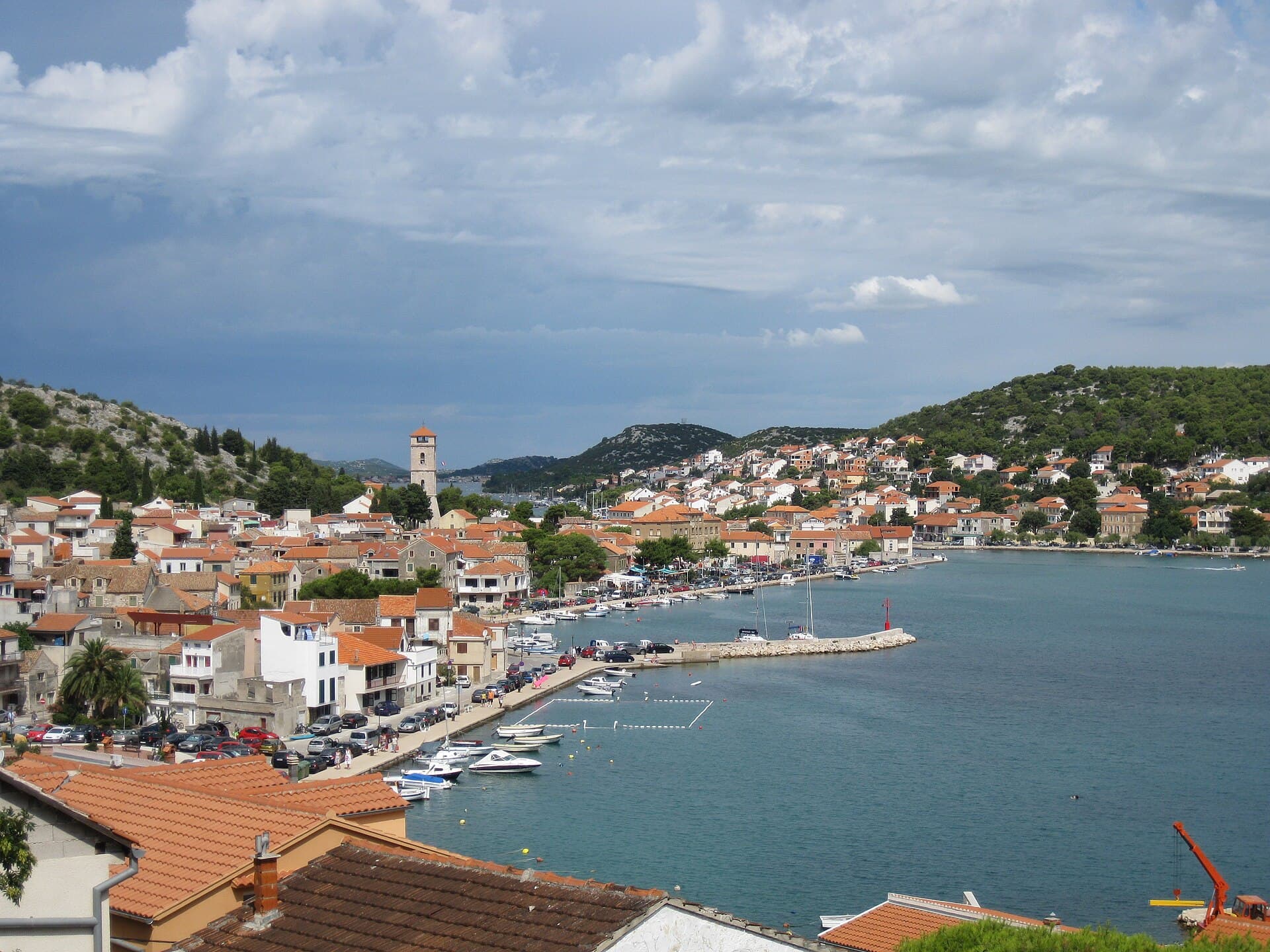
Tisno
Tisno is neither conventionally insular nor wholly mainland: its houses, squares and waterfronts occupy both sides of the strait. The settlement’s name derives from this narrow passage,…
Read the guide

Help improve this page
Spot something missing or wrong? Suggest a correction, add your photo or report a problem. Editors review every suggestion before it is published.
Photo credits
- Šibenik — Bernard Gagnon · CC BY-SA 4.0 · Wikimedia Commons
- Bilice, Šibenik-Knin County — The original uploader was Jdulibic at Croatian Wikipedia. · CC BY-SA 3.0 · Wikimedia Commons
- Brodarica — Luka Krstulović · CC BY-SA 2.5 · Wikimedia Commons
- Krapanj, Šibenik — Original uploader was Tooma2 at en.wikipedia · CC BY-SA 3.0 · Wikimedia Commons
- Zlarin, Šibenik — Shanticm (talk) · CC BY-SA 3.0