Krapanj, Šibenik
About this place
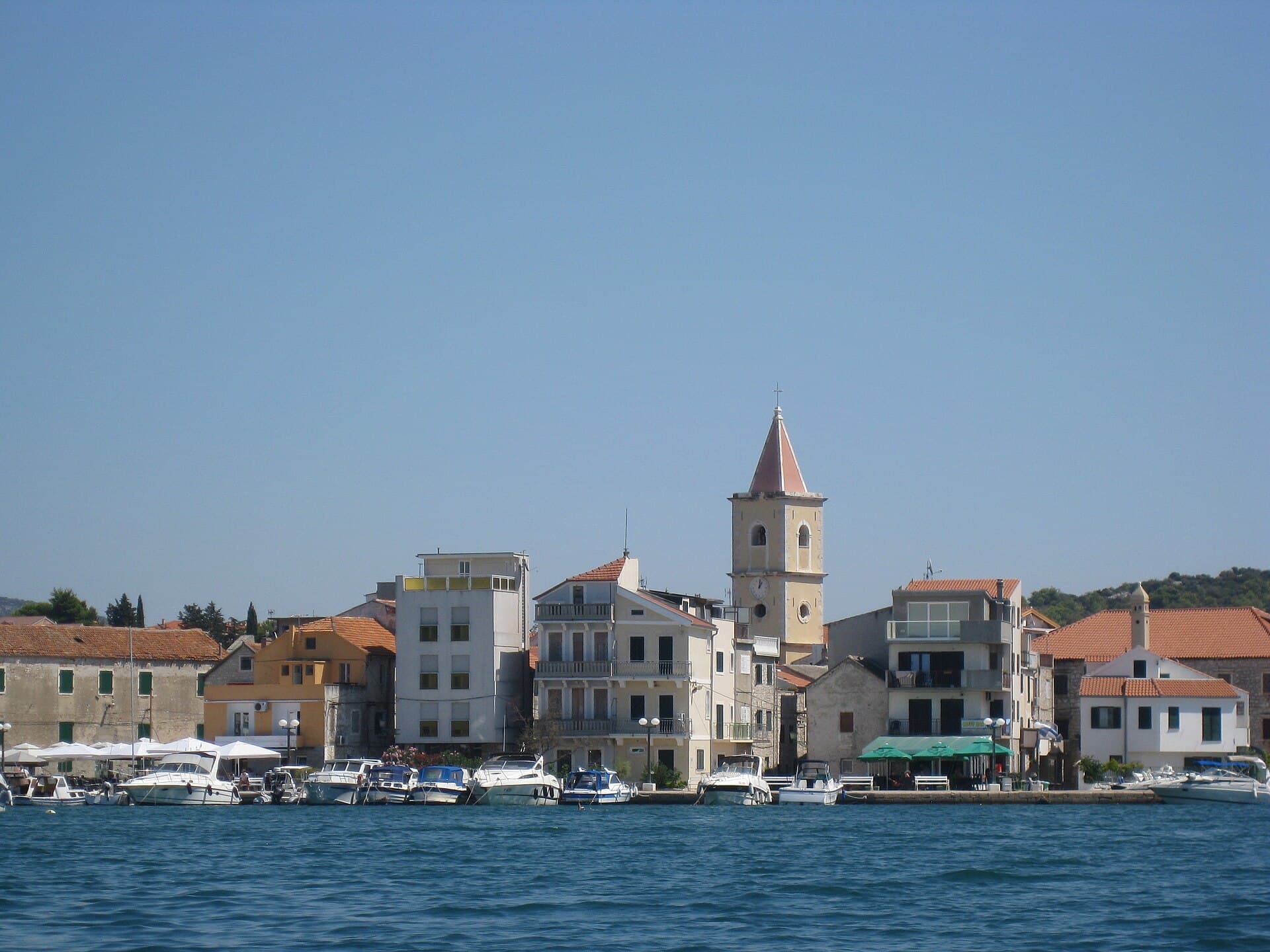
Krapanj is a tiny, exceptionally low island opposite Brodarica, only a few hundred metres from the mainland and closely tied to the Šibenik area. Its surface is about 0.36 square kilometres, while the highest ground barely rises above sea level, making the stone settlement appear almost level with the Adriatic. In Croatia, Krapanj is especially associated with sponge harvesting, a tradition developed over centuries and still visible in local collections and island culture. The Monastery and Church of the Holy Cross preserve religious and maritime objects, while the Spongiola collection focuses on diving and the island’s sponge divers. The crossing from Brodarica takes about five minutes, which makes Krapanj an easy day trip from the Šibenik coast. Once ashore, narrow stone lanes, small beaches and the island’s very short distances mean that almost everything can be explored on foot without the need for local motor transport.
Krapanj covers only about 0.36 square kilometres just off Brodarica, and its extremely low elevation is one of the island’s most unusual geographical features. The settlement developed as a dense pattern of stone houses and narrow passages around the harbour and the Monastery of the Holy Cross. Local identity is strongly tied to sponge harvesting, a craft passed through generations and one that distinguishes Krapanj from other small islands in the Šibenik archipelago. The monastery collections, Spongiola and the island’s diving tradition show why the sea here is more than a place for swimming: it has also been a source of work and specialised knowledge. The mainland remains exceptionally close, with the boat crossing from Brodarica taking roughly five minutes.
Stays nearby
 Apartment
Apartmeni Klenovica.eu
Klenovica
Klenovica, 180 km from Krapanj, Šibenik
up to 4 guests · 1 bedroom
The host confirms the exact price for your dates and availability.
Things to see

Cathedral of the Dormition of the Mother of God
Landmark · Šibenik
church in Šibenik-Knin County, Croatia
7 km from Krapanj, Šibenik

Beaches
Krapanj does not have long resort beaches; local tourism sources describe small beaches and coves distributed along the island’s exceptionally low shoreline. That scale suits an island of only about 0.36 square kilometres, where sea, settlement and footpaths are always close together. Swimming can therefore be combined easily with a visit to the monastery or Spongiola without needing transport between attractions. Krapanj’s beach experience should be understood as a series of small local waterfront spots beside the stone village rather than broad sandy resort zones. The sources reviewed do not provide reliably updated 2026 details about sunbeds, showers or other seasonal equipment at individual beaches, so such facilities are not listed.

Frequently asked questions
How long is the boat ride to Krapanj?
The crossing from Brodarica to Krapanj takes about five minutes.
What is Krapanj especially known for?
Krapanj is especially known for its centuries-old tradition of harvesting and processing natural sea sponges.
What can be seen in the monastery?
The monastic collection preserves books, votive offerings, amphorae, corals, sponges and other objects connected with island history.
Do you need transport to explore Krapanj?
Because the island covers only about 0.36 km², its main points can be explored on foot after arriving by boat.

Related guides

Šibenik
Three contrasting areas help explain Šibenik's historic centre: the steep lanes of Gorica, waterfront Dolac and the central streets around Kalelarga. In Gorica, stone steps climb towards St…
Read the guide
Help improve this page
Spot something missing or wrong? Suggest a correction, add your photo or report a problem. Editors review every suggestion before it is published.
Photo credits
- Krapanj, Šibenik — Original uploader was Tooma2 at en.wikipedia · CC BY-SA 3.0 · Wikimedia Commons
- Primošten — Carsten Steger · CC BY-SA 4.0 · Wikimedia Commons
- Šibenik — Bernard Gagnon · CC BY-SA 4.0 · Wikimedia Commons
- Zlarin, Šibenik — Shanticm (talk) · CC BY-SA 3.0 · Wikimedia Commons