Tisno
About this place
Tisno occupies both sides of the narrow channel between the mainland and Murter Island, only about 38 metres wide at its narrowest point. The two halves are linked by a movable bridge; the present mechanical structure dates from 1968 and replaced an older bridge first built in the early 18th century. The historic settlement developed from the late medieval period, with important religious landmarks including the 16th-century parish Church of the Holy Spirit and the shrine of Our Lady of Caravaggio, reached by 214 steps. On the mainland side near Ivinj, the archaeological complex beside St Martin’s Church preserves remains of a Roman villa rustica from the 2nd and 3rd centuries together with later layers. Tisno is both a gateway to Murter and a destination in its own right, with a long waterfront, beaches and summer events. In 2026, from 1 June to 15 September, the bridge is scheduled to open daily from 18:00 to 18:20, an important detail when driving towards Murter.
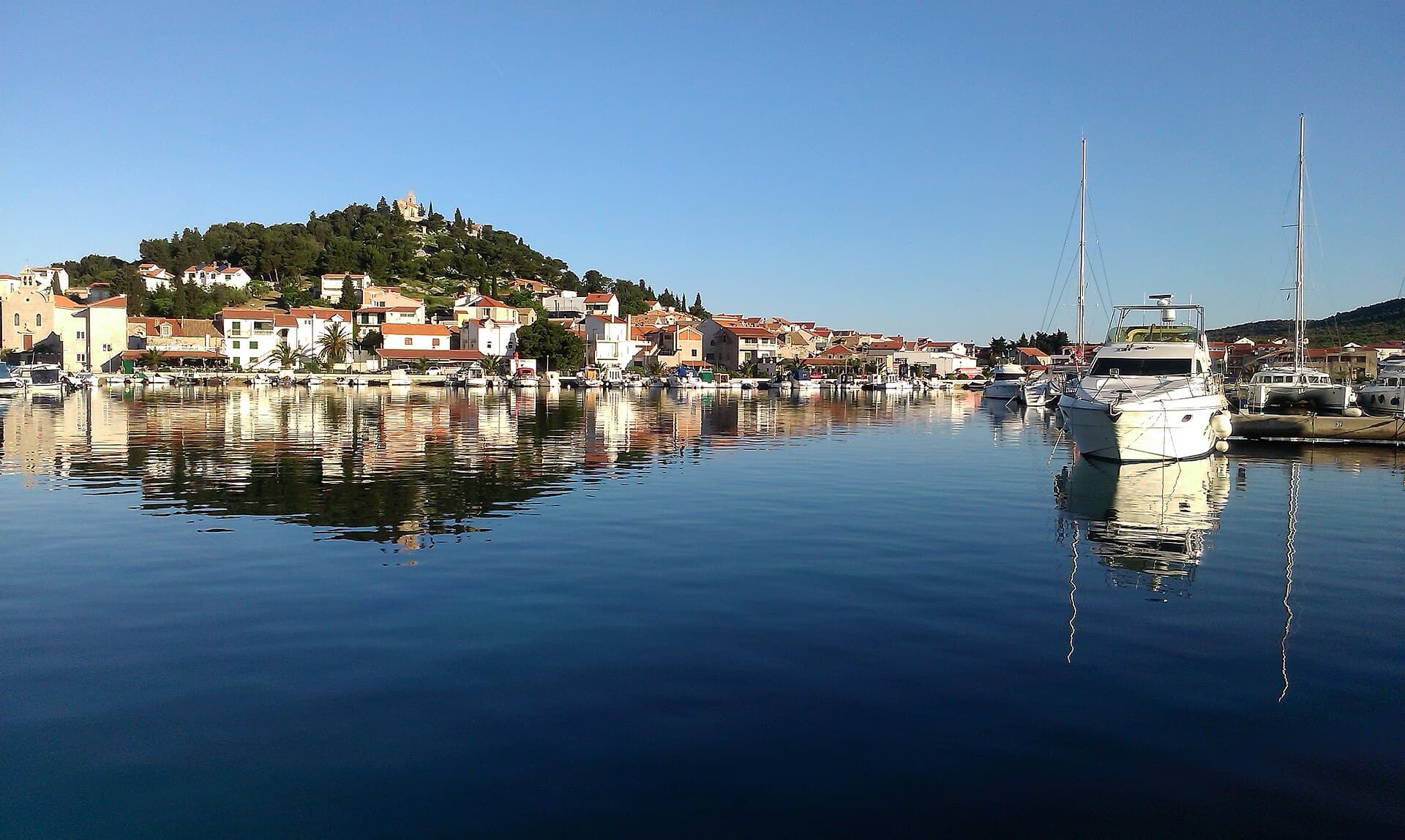
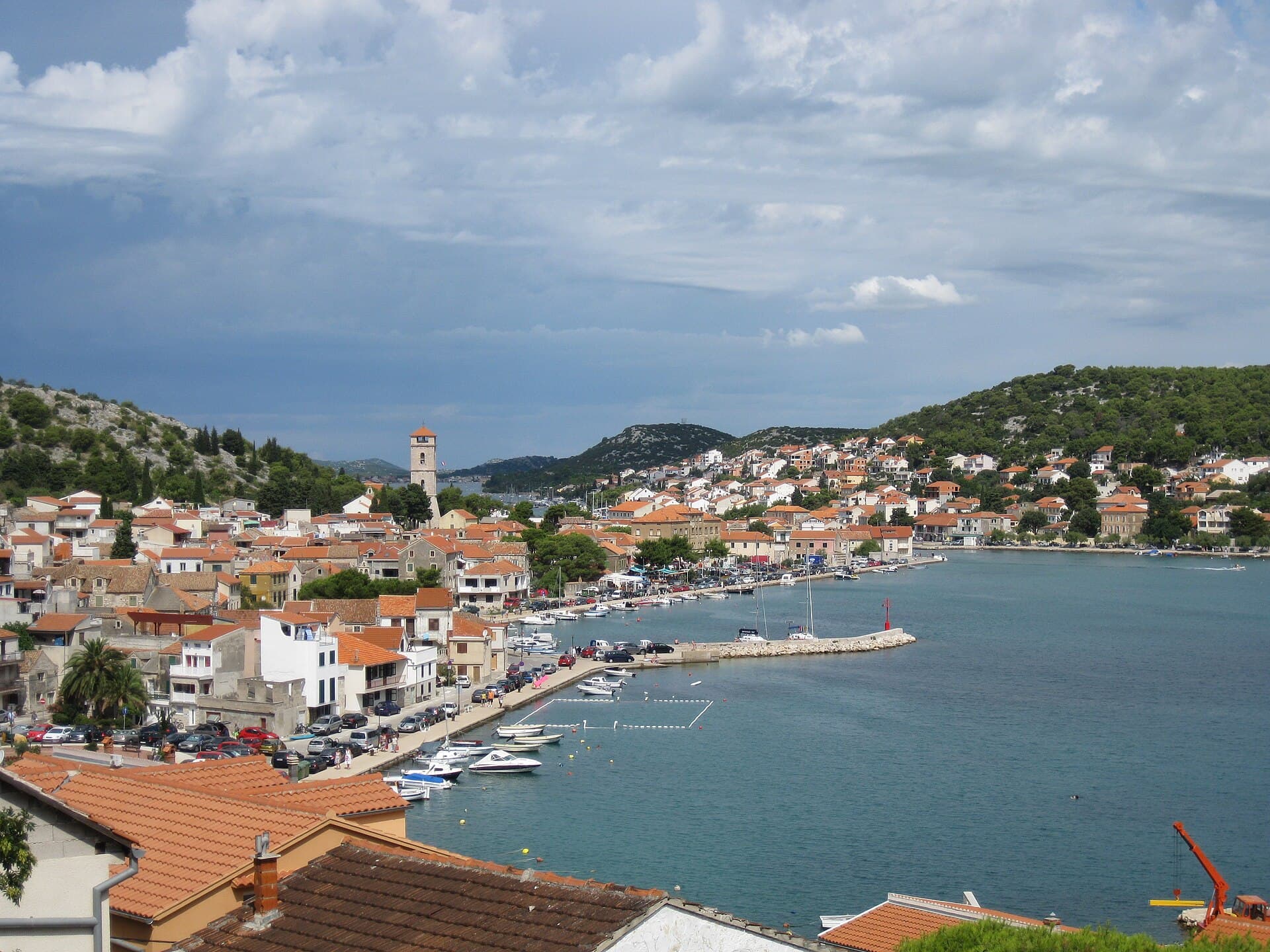
Tisno is neither conventionally insular nor wholly mainland: its houses, squares and waterfronts occupy both sides of the strait. The settlement’s name derives from this narrow passage, while the beginnings of the present community are associated with 1567 and population movements during Ottoman attacks. Dense stone houses and narrow lanes characterise the island side, whereas the mainland section extends towards Jazine and Rastovac Bay. The long waterfront beside the channel remains Tisno’s defining public space, concentrating everyday traffic, boat moorings, evening walks and the operation of the lifting bridge within a remarkably compact area.
Stays
No stays listed here yet
Things to see
The 1968 movable bridge is Tisno’s most recognisable functional landmark because it joins the mainland and island halves of the town. Historic highlights include the 16th-century Church of the Holy Spirit, the shrine of Our Lady of Caravaggio and the Ivinj archaeological complex beside St Martin’s Church.
Culture and history
Tisno developed on both sides of the channel, with the early-18th-century bridge encouraging expansion onto the mainland. At Ivinj, remains of a Roman villa rustica from the 2nd and 3rd centuries survive, while the pilgrimage to Our Lady of Caravaggio is held on 26 May.
Beaches
Bathing water quality nearby
Things to do
Start along the channel waterfront and cross the lifting bridge to compare Tisno’s mainland and island quarters, then climb through the narrow lanes of the older core. Continue south-east towards St Andrew’s Beach and the Tisno–Jezera ecological interpretation trail. St Andrew’s Bay contains Croatia’s first educational marine trail, with seven underwater panels designed primarily for snorkellers. Cyclists passing through Tisno can follow route 216, Bodulska priča; route 217, Putem mora i bora; or route 211, Staza crkve, which links Murter Island with the municipality’s mainland hinterland.
Practical information
Practical information
The Tisno municipal tourist office provides information on local beaches, events and excursions around Murter. The municipal administration is at 1 Uska Street, with the published telephone number +385 22 439 260; public office hours are Monday and Wednesday from 8:30 to 12:00. Local journeys should account for the settlement’s two halves and the lifting bridge, particularly when an opening has been announced. Access to Jazina Beach remains public even when the adjacent campsite is closed, a point explicitly confirmed by the municipality in June 2025.
Getting there and around
In 2026 the movable bridge is scheduled to open daily from 18:00 to 18:20 between 1 June and 15 September; from 16 September to 31 May the published opening is Monday and Friday from 09:00 to 09:20. The bridge carries road traffic towards Murter Island.
Frequently asked questions
Is Tisno on an island or the mainland?
Both: the town occupies the mainland and Murter Island.
How wide is the channel at Tisno?
About 38 metres at its narrowest point.
When was the present movable bridge built?
In 1968.
When does the bridge open in summer 2026?
From 1 June to 15 September, daily from 18:00 to 18:20.
What can be seen at Ivinj?
Related guides

Šibenik
Three contrasting areas help explain Šibenik's historic centre: the steep lanes of Gorica, waterfront Dolac and the central streets around Kalelarga. In Gorica, stone steps climb towards St…
Read the guide

Help improve this page
Spot something missing or wrong? Suggest a correction, add your photo or report a problem. Editors review every suggestion before it is published.
Photo credits
- Tisno — Cholo Aleman · CC BY-SA 3.0 · Wikimedia Commons
- Jezera — Kris Martyn · CC BY-SA 4.0 · Wikimedia Commons
- Pirovac — MS.4Berlin · CC BY-SA 3.0 · Wikimedia Commons
- Betina — pepanos · CC BY 3.0 · Wikimedia Commons
- Murter