Betina
About this place
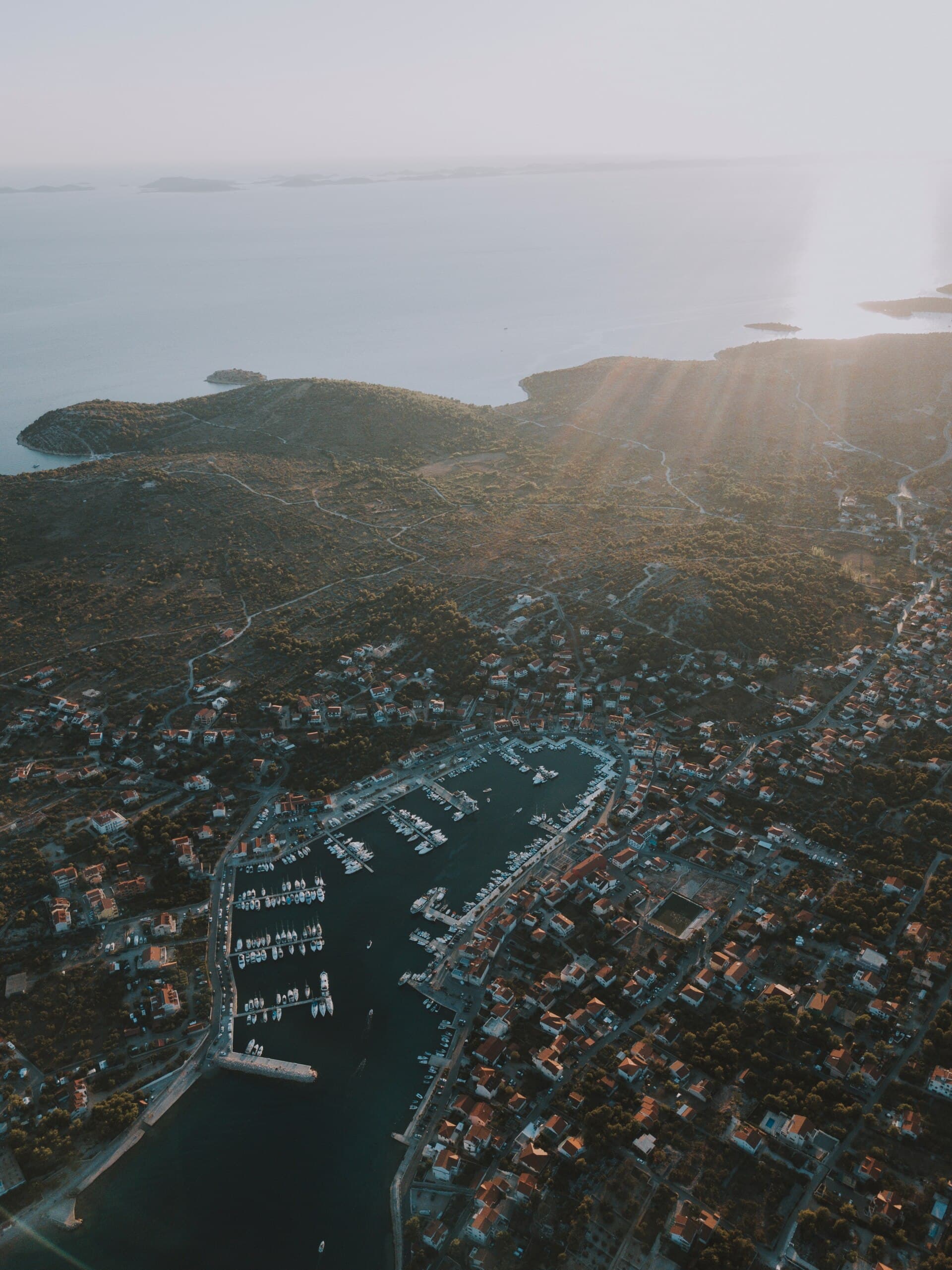
Betina grew around a naturally sheltered harbour on the north-eastern side of Murter island, and wooden boatbuilding still defines its character. Its essential address is the Betina Museum of Wooden Shipbuilding at Vladimira Nazora 7, housed in an old property once owned by the Uroda boatbuilding family. Six exhibition rooms explain gajeta construction, island household life and the residents’ connection with their offshore farmland. The story continues in the village harbour, where an open-air museum displays 46 traditional gajetas, leuts, small kaić boats and lađas. Highlights include Cicibela, a 1931 gajeta protected as cultural property, and Marija, built in 1922 and restored in 2021. Above the waterfront stands the Church of St Francis, about a five-minute walk from the museum through narrow stone lanes. For swimming, Zdrače is the most practical choice: 700 metres from the centre, it combines a sandy-pebbly seabed with concrete sunbathing areas, tamarisk shade, showers, a playground and public parking. Bilave lies closer to the old centre, while shallow Plitka Vala works particularly well for families. Following the museum–harbour–church–shipyards sequence reveals how the gajeta shaped both Betina’s shoreline and its streets.
Betina faces a sheltered harbour on Murter island, and wooden shipbuilding has shaped its architecture, crafts and maritime vocabulary. The settlement was founded in the late 15th century, while its tradition of small wooden yards developed over subsequent centuries. The Betina gajeta evolved as a robust working boat carrying people, livestock and harvests to island holdings. That relationship remains visible in active family shipyards, the museum inside the old village and the fleet of traditional vessels moored in the local harbour.
Stays nearby
 Apartment
Apartmeni Klenovica.eu
Klenovica
Klenovica, 154 km from Betina
up to 4 guests · 1 bedroom
The host confirms the exact price for your dates and availability.
Things to see
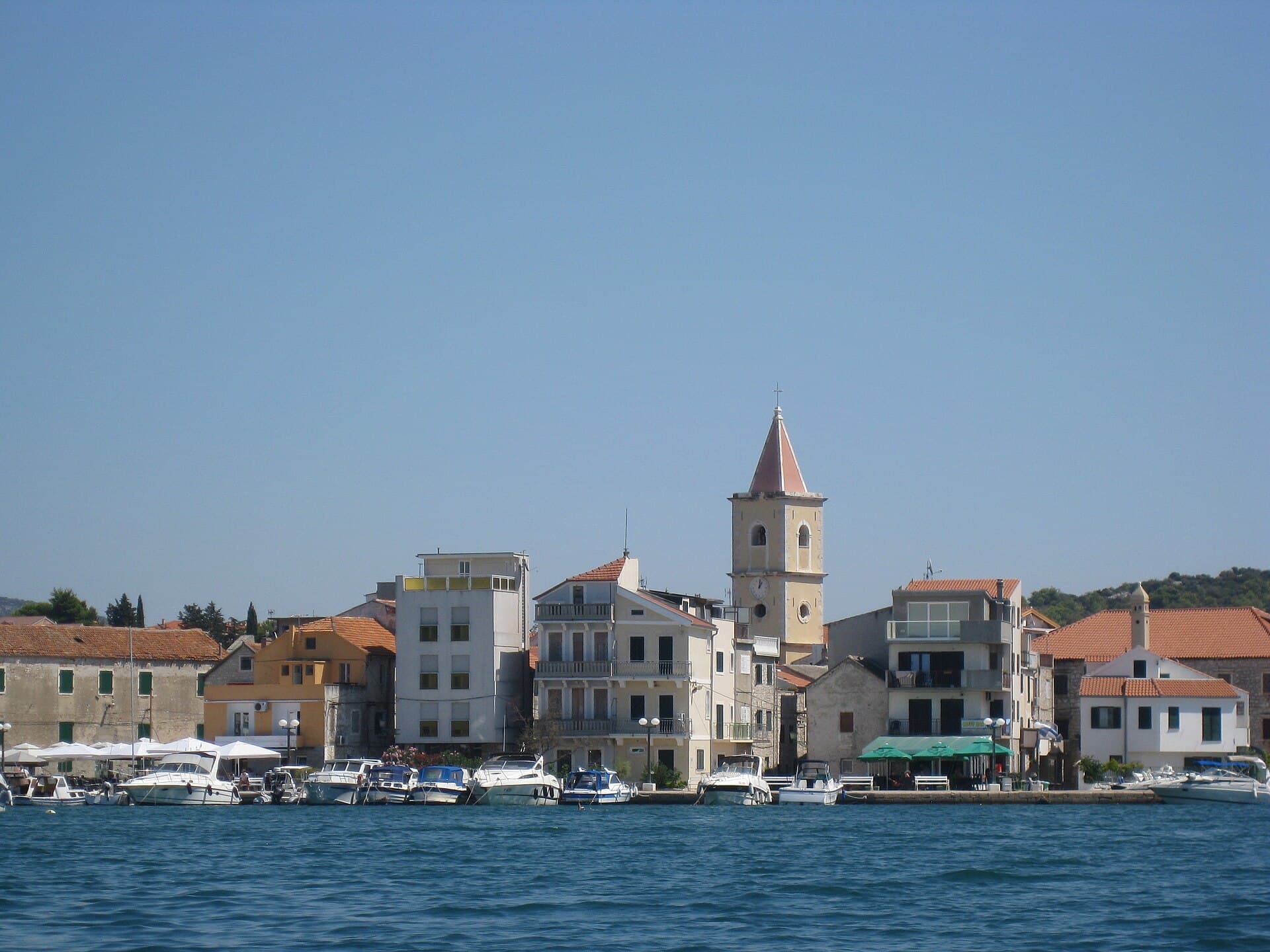
The Betina Museum of Wooden Shipbuilding occupies one of the oldest houses in the historic core, formerly owned by the Uroda boatbuilding family. Its floating extension covers 1,482 square metres of the village harbour and presents 46 traditional craft. The centrepiece, Cicibela, was built in 1931 in the Filipi family yard and is the only gajeta listed as Croatian cultural property. Beside it lies Marija, constructed in 1922 and restored in 2021. Above the harbour, the Church of St Francis—begun in 1600—is crowned by a tall Baroque bell tower made by Ivan Skoko.

Beaches
Zdrače is Betina’s town beach between Betina and Murter, 700 metres from the centre. Its seabed mixes sand and pebbles, concrete terraces line the shore, and tamarisks provide shade; facilities include showers, a café, children’s and football play areas, and public parking. Bilave lies closer to the centre, combining pebbles and rocks with a playground and nearby restaurant. Plitka Vala has sandy and rocky sections plus shallow water suited to children, with a restaurant, café and shop. Kosirina combines sand, pebbles and rock within the campsite of the same name.
Bathing water quality nearby
- Betina, Zdrače · 561 mexcellent · season 2025
- Murter, Hramina · 1.6 kmexcellent · season 2025
Things to do
Start exploring Betina at the Museum of Betina Wooden Shipbuilding, at Vladimira Nazora 7, where the display introduces the skills behind the local gajeta. Then continue to the open-air museum in the harbour: it includes Cicibela, the only gajeta entered in Croatia’s register of cultural goods, and Marija, built in Betina in 1922 and restored in 2021. A five-minute climb through stone lanes leads to St Francis’s Church, begun in 1600. Finish along the working boatyards on the village’s south-eastern shore.
Food and drink
For lunch by the bay, choose Restaurant Plitka Vala in the campsite of the same name at Plitka Vala bb; its menu includes fish, meat, pasta and risotto, and guests have parking and a children’s playground. In Betina itself, the local tourist board lists Konoba Stari Mlin and the Kalafat, Na Moru and Plitka Vala restaurants, making a harbour-side dinner an easy continuation of an evening walk. The Murter tourist portal lists Plitka Vala’s hours as 10 am to 11 pm.
Practical information
Practical information
Betina’s tourist information centre is at Dolac 2a, with telephone +385 22 436 523 and email [email protected]. The museum is at Vladimira Nazora 7; in 2026, admission costs €7 for adults and €5 for pupils, students and pensioners. During July and August 2026, it opens daily from 9:00 to 21:00, with different schedules during the rest of the year. Groups must book at least five days ahead, while workshops and educational sailing sessions require separate arrangements.
Parking
For the Museum of Betina Wooden Shipbuilding, allow for a car park about 300 metres away, then walk through the old core to the building on Vladimira Nazora Street. The same approximate distance is given for parking when visiting St Francis’s Church above the harbour. Municipal parking terms published in 2023 cover charged spaces in Betina, including Zdrače, Dolac and Kralja Petra Krešimira IV Street, with payment from 7 am to 11 pm daily.
Getting there and around
Betina reaches the mainland across the lifting bridge at Tisno, approximately seven kilometres from the village. The island road continues through Jezera towards Murter, while Betina occupies Murter island’s north-eastern side. Arriva’s fare document confirms a Šibenik–Betina bus connection, although individual departures should be checked for the travel date. Coaches can approach the museum, whose visitor information identifies a drop-off and parking area roughly 200 metres from the building. The old centre, harbour, church and shipyards are then best explored on foot.
Frequently asked questions
How many boats are in the open-air museum?
Betina harbour displays 46 traditional wooden boats, arranged according to type and heritage value.
Why is the gajeta Cicibela special?
Cicibela was built in 1931 and is the only gajeta entered in Croatia’s register of cultural property.
Is Zdrače suitable for children?
Zdrače combines a sandy-pebbly entry with tamarisk shade and enclosed children’s and football play areas.
How far is St Francis Church from the museum?
The Church of St Francis is roughly a five-minute walk through Betina’s historic core.

Related guides

Šibenik
Three contrasting areas help explain Šibenik's historic centre: the steep lanes of Gorica, waterfront Dolac and the central streets around Kalelarga. In Gorica, stone steps climb towards St…
Read the guide
Help improve this page
Spot something missing or wrong? Suggest a correction, add your photo or report a problem. Editors review every suggestion before it is published.
Photo credits
- Betina — pepanos · CC BY 3.0 · Wikimedia Commons
- Murter — Luboš Holič · CC BY-SA 3.0 · Wikimedia Commons
- Tisno — Cholo Aleman · CC BY-SA 3.0 · Wikimedia Commons
- Jezera — Kris Martyn · CC BY-SA 4.0 · Wikimedia Commons
- Pirovac