Tribunj
About this place
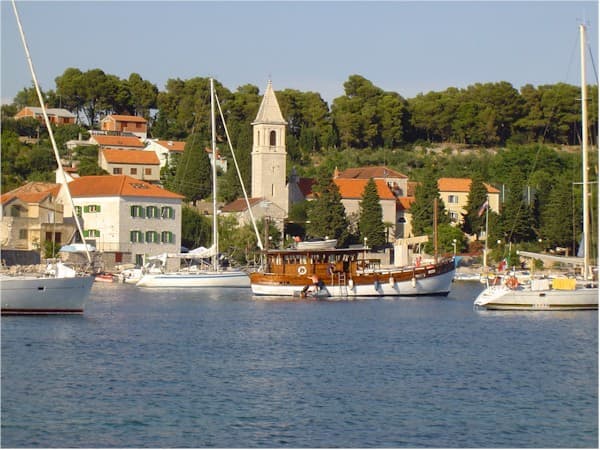
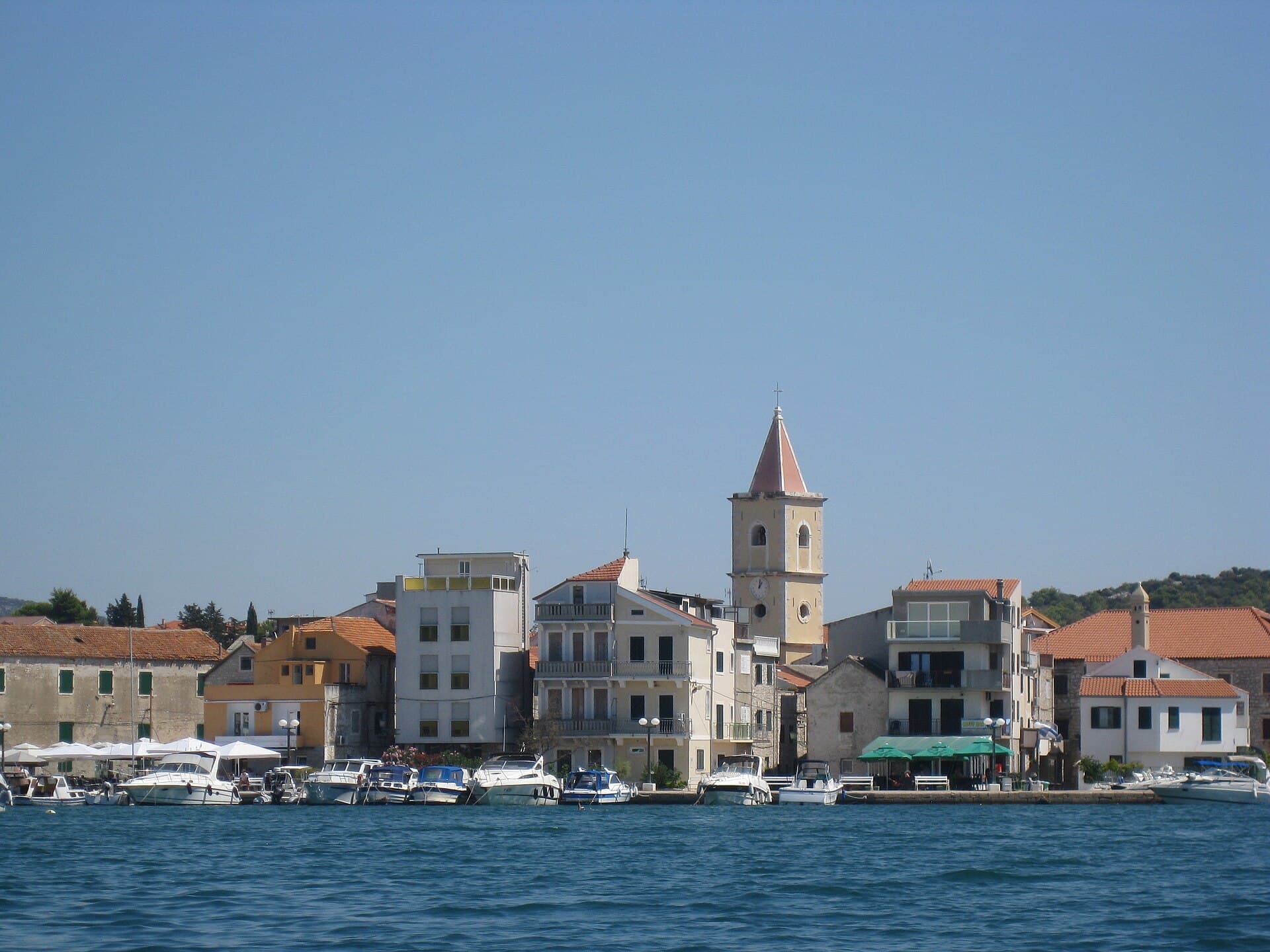
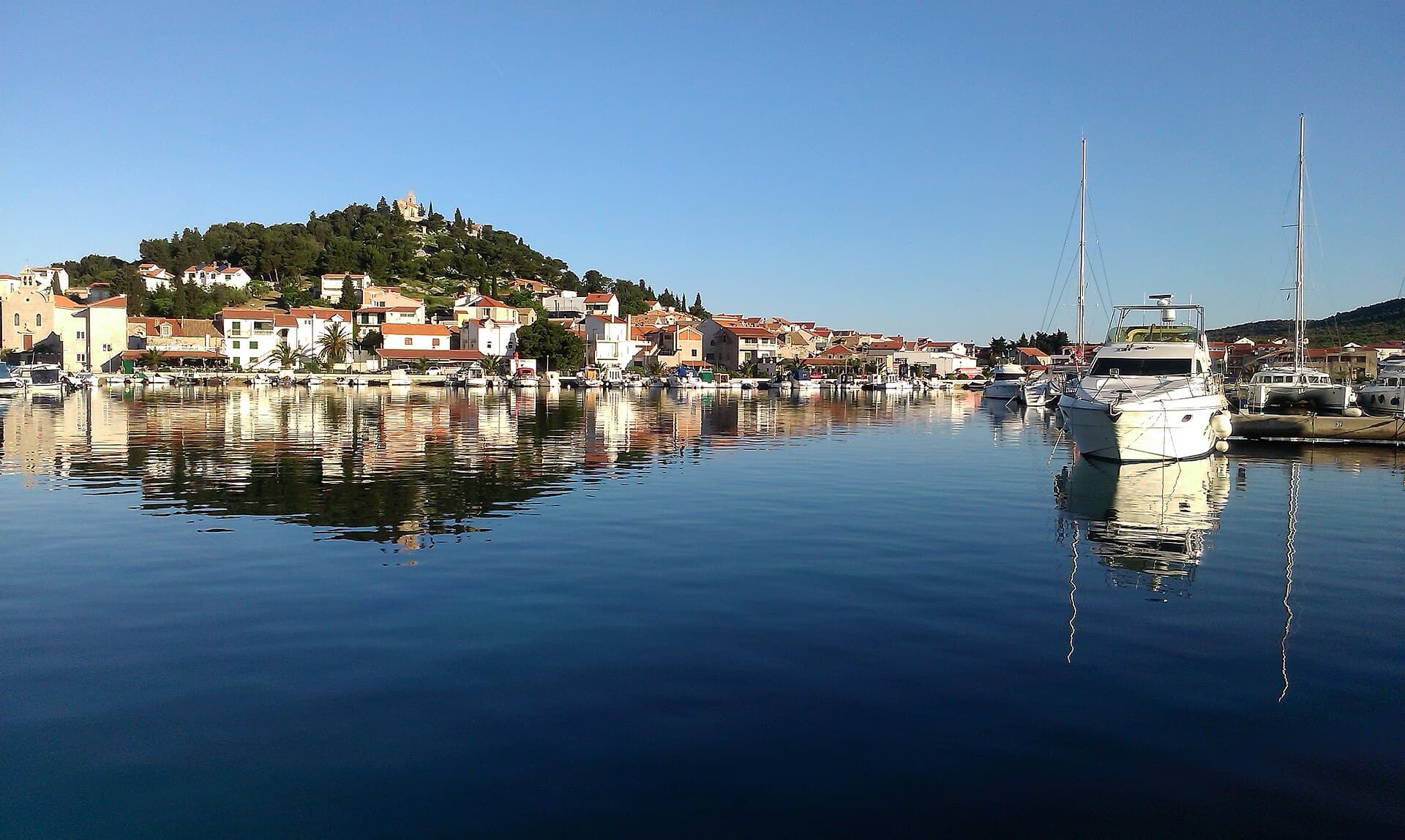
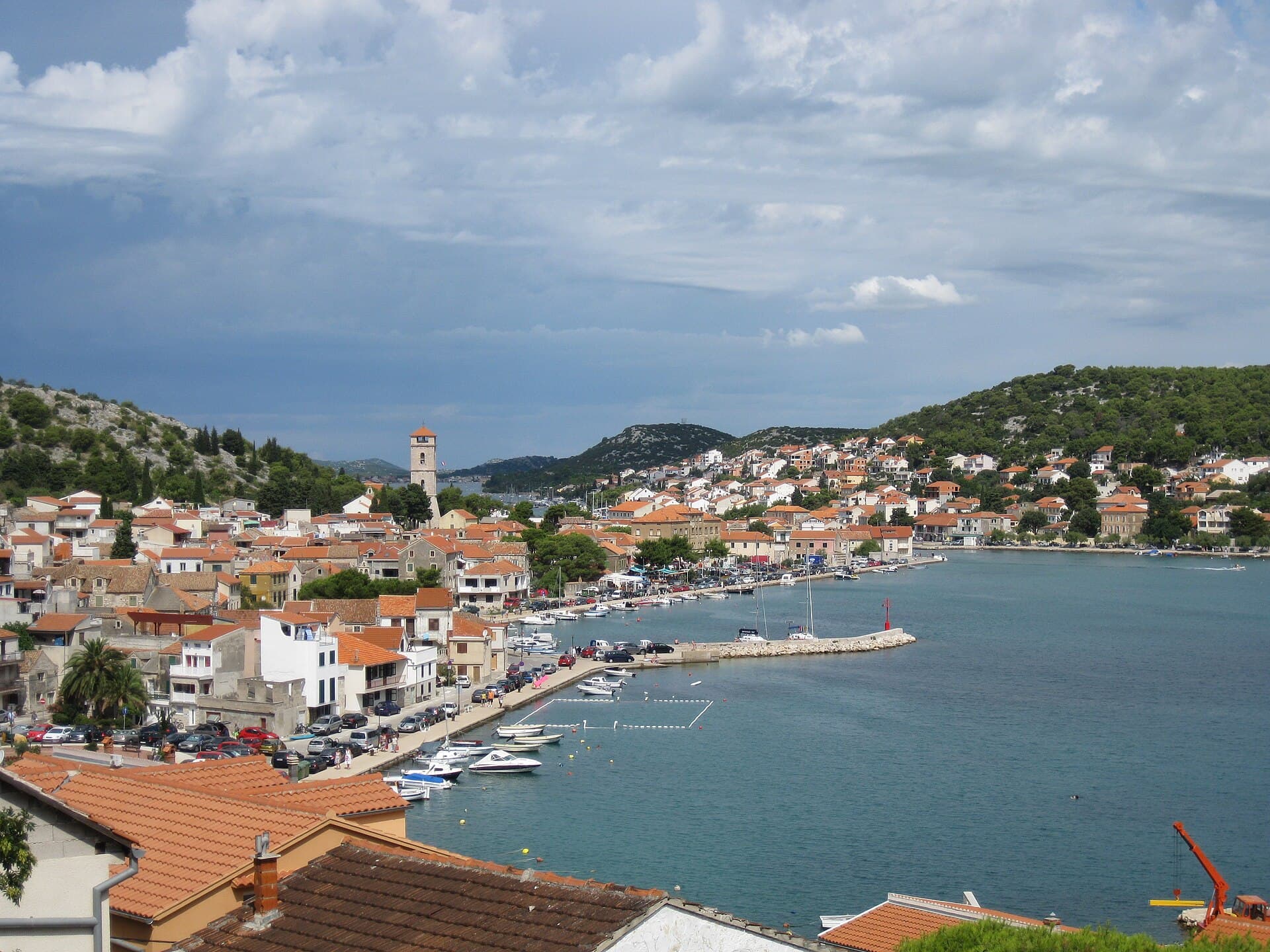
Tribunj is a small Dalmatian settlement whose historic core occupies an islet connected to the mainland by a stone bridge. A dense cluster of stone houses beside the sea gives it a distinctive silhouette, while the hill of St Nicholas above the village holds the remains of Jurjevgrad fort and St Nicholas’ Church. Fishing remains central to local identity, visible in the harbour, food culture and summer fishermen’s evenings. The tourist board also highlights the traditional donkey race among its events, alongside concerts, klapa performances and classical music evenings. Tribunj is compact enough for the old core, bridge and waterfront to be explored on foot, while climbing towards St Nicholas provides a broader view over the settlement. Vodice is very close, and Šibenik offers a larger cultural excursion without a long journey. A first visit works particularly well when it combines a morning walk around the islet, a climb to the historic remains and a dinner focused on local fish, because those three elements explain Tribunj’s character particularly clearly.
Tribunj grew around a tiny island core connected to the mainland by a stone bridge. Closely packed houses and narrow passages are overlooked by St Nicholas Hill, with its church and the remains of Jurjevgrad. On the mainland, the settlement spreads around the waterfront, fishing harbour and marina, while olive groves, vineyards and dry-stone walls begin just behind the coast. Fishing is not merely a historical motif here: local catch still shapes Tribunj’s food, summer fishermen’s evenings and the daily scene of small working boats. Its position between Vodice and Murter makes Tribunj a quieter coastal base with straightforward access to Šibenik’s monuments and the Kornati archipelago.
Stays nearby
 Apartment
Apartmeni Klenovica.eu
Klenovica
Klenovica, 166 km from Tribunj
up to 4 guests · 1 bedroom
The host confirms the exact price for your dates and availability.
Things to see
The most recognisable part of Tribunj is its old centre on a small islet connected to the mainland by a stone bridge. Narrow lanes and houses standing directly beside the water are best explored on foot. For a broader view, climb St Nicholas hill, where St Nicholas’ Church and the remains of Jurjevgrad fort can be found. The local tourist board links the settlement’s history with periods of Ottoman raids and Venetian rule, while fishing remains visible in contemporary village life. Summer programmes include fishermen’s evenings, klapa performances and the traditional donkey race. Tribunj therefore offers an unusually compact combination of an island-like historic core, a defensive position above the village and an active fishing harbour.

Beaches
Zamalin is the closest beach to the historic core, extending west of the islet beside the coastal promenade and seasonal beach bars. Bristak lies on the Vodice side of town; it is Tribunj’s longest pebble beach and has parking, a children’s playground, sunbed rental and a designated dog area at its far end. Sovlja is a quieter bay west of the centre, with bathing spots beside the settlement and local refreshments. In the other direction, the long pebble strip known as Plava plaža continues between Tribunj and Vodice. Bristak is particularly practical for families because of its gentle sea entry and direct access by car.
Zamalin
Beach · Tribunj
Zamalin is a popular Tribunj beach with fine pebbles, lush surroundings and sections of natural rocky shoreline.
Bathing water quality nearby
- Tribunj, Zamalin · 467 mexcellent · season 2025
- Plava plaža kraj · 1.5 km
Things to do
Begin a Tribunj walk at the 24-metre stone bridge linking the mainland to the old-town islet. On the islet, look for the 17th-century Ferara house and the house with a Gothic window, then return to the shore for Zamalin beneath its greenery. Continue from Zamalin along the coastal promenade towards Bristak, listed in municipal planning as a local walking route. For a different perspective, climb Sveti Nikola hill, associated with the remains of Jurjevgrad. A more active day can extend onto Tribunj’s local cycling routes through the hinterland.
Food and drink
Tribunj’s taverns cluster around the old core, Ribarska Street and the waterfront. Bepo is at Ribarska 11, Šimun at Ribarska 6 and Markiolac at Trg Pijaca 10, making each easy to combine with an evening walk across the stone bridge. Pijero operates in Varoš, while Lanterna at Zamalin is convenient after a swim on the nearby beach. Local choices naturally include grilled fish, shellfish, black risotto and dishes finished with Dalmatian olive oil, reflecting the continuing importance of fishing to Tribunj. Current opening hours and the day’s fresh catch should be confirmed directly with the chosen restaurant.
Practical information
Practical information
The Tribunj Tourist Board is at Badnje 1 and publishes local information on beaches, excursions, cycling routes and events. The historic island core is unsuitable for sightseeing by car, so vehicles should remain on the mainland side before visitors continue across the stone bridge on foot. Stable footwear helps on the climb to St Nicholas Church, particularly where the dry stone becomes polished and slippery. Zamalin, the marina and central waterfront are readily reached on foot, while Sovlja and the farther parts of Bristak are more convenient by bicycle or car. For summer 2026, the tourist board also publishes information on visitor healthcare services in Šibenik-Knin County.
Getting there and around
Tribunj lies on the coastal road between Vodice and Tisno, along the route towards Murter Island. Vodice is the nearest larger bus hub, while Šibenik provides both a railway station and a broader intercity bus network. Road access ends on the mainland side of Tribunj’s centre; the final approach to the historic core is made on foot across the stone bridge. Marina Tribunj serves visiting yachts, while Kornati excursions are offered locally and from neighbouring Vodice and Murter. Zadar Airport is generally more convenient from the north and Split Airport from the south, but either arrival still requires an onward road transfer to Tribunj.
Frequently asked questions
Where is Tribunj’s old centre located?
The old centre stands on a small islet connected to the mainland by a stone bridge.
What is on St Nicholas hill above Tribunj?
St Nicholas’ Church and the remains of Jurjevgrad fort stand there.
Which traditional race features in Tribunj’s summer programme?
The tourist board lists the donkey race among the village’s distinctive events.
Is Tribunj’s old centre practical to explore on foot?
Yes. The islet, stone bridge and waterfront form a very compact walking area.
Nearby

Vodice
Town · Dalmatia – Šibenik

Related guides

Šibenik
Three contrasting areas help explain Šibenik's historic centre: the steep lanes of Gorica, waterfront Dolac and the central streets around Kalelarga. In Gorica, stone steps climb towards St…
Read the guide
Help improve this page
Spot something missing or wrong? Suggest a correction, add your photo or report a problem. Editors review every suggestion before it is published.
Photo credits
- Tribunj — Sztudva Gyöngyi · CC BY-SA 3.0 · Wikimedia Commons
- Vodice — VitVit · CC BY-SA 4.0 · Wikimedia Commons
- Prvić Šepurine — croatguy · CC BY 2.0 · Wikimedia Commons
- Srima, Church of the Blessed Virgin Mary,