About this place
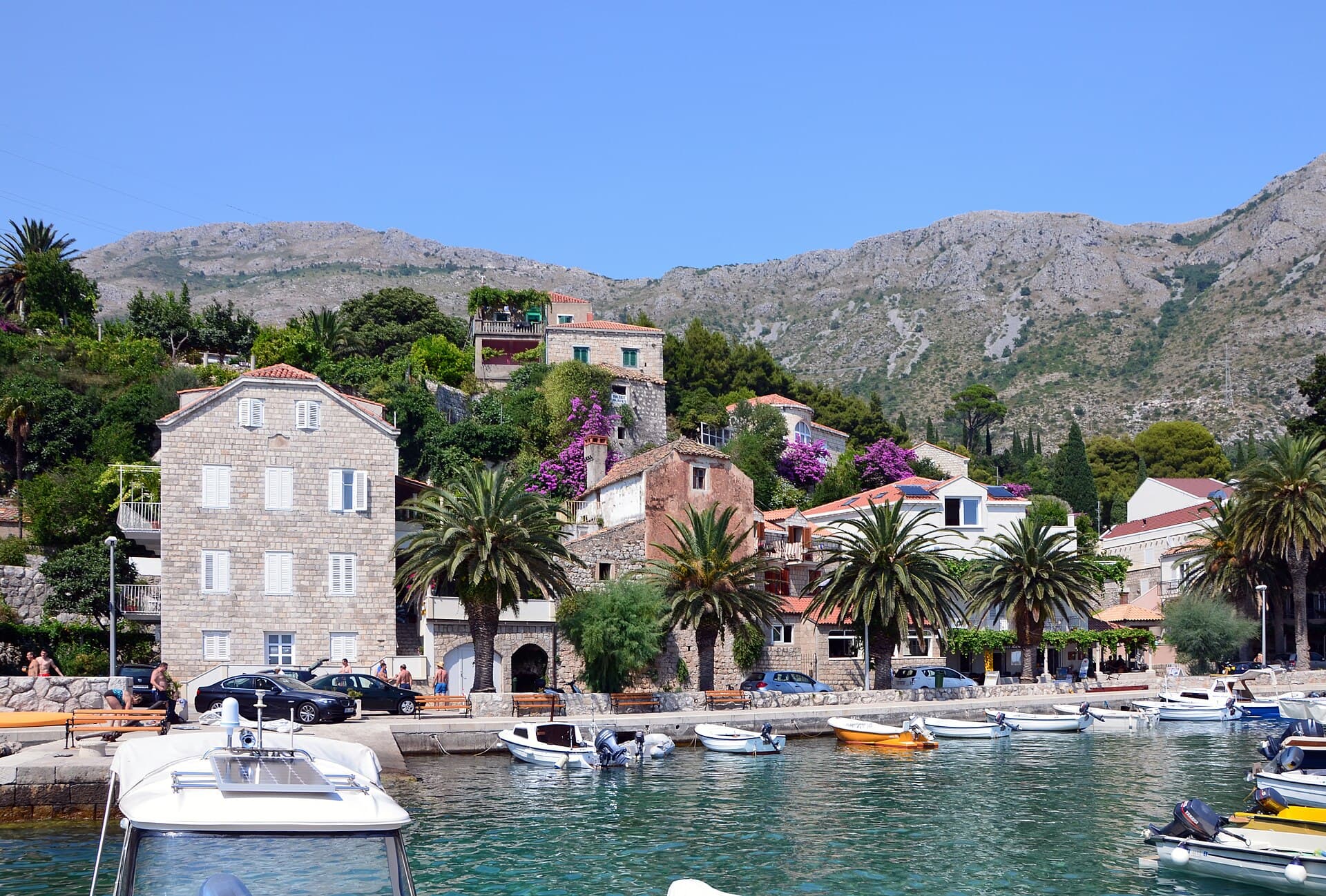
Mlini is a village in Župa dubrovačka on Župa Bay, 11 kilometres south-east of Dubrovnik. Its distinctive setting brings together the Zavrelje stream, shallow pebble coves, sheltered bays and old gardens. The name comes directly from the springs that powered grain mills; one of those former mills survives. In the 14th century, two boats regularly carried water from Mlini to Dubrovnik, giving the village a tangible link to the Republic’s history. Above the shore stands the Church of St Hilarion, first officially recorded in 1272; the present Baroque church was rebuilt after the 1667 earthquake. Mlini belongs to a parish stretching from Kupari to Obod, making Srebreno, Kupari, Zavrelje and Plat natural extensions of a coastal walk. Come for an unhurried exploration of its coves and its unusually water-shaped past.
Mlini sits on Župa Bay below Malaštica, where the Zavrelje stream and other springs emerge at the meeting of flysch and limestone. Those springs powered the grain mills that gave the village its name. The local tourist board records one surviving former mill, while parish history likewise notes the grain mills beside the parish seat. St Hilarion’s parish extends from Kupari to Obod and includes Mlini, Zavrelje, Srebreno and Plat. Mlini’s shoreline is known for shallow pebble beaches and sheltered coves.
Stays nearby
 Apartment
Apartmeni Klenovica.eu
Klenovica
Klenovica, 385 km from Mlini
up to 4 guests · 1 bedroom
The host confirms the exact price for your dates and availability.
Things to see
The Church of St Hilarion is Mlini’s principal historic landmark, first officially recorded in 1272. The earlier building was damaged in the 1667 earthquake, and the present church was built in 1683; its three-bell tower dates from 1934. Zavrelje’s water is another essential local sight: its streams powered the mills. The tourist board notes that one mill survives well, and parish history confirms that the grain mills determined the village’s name. For context, the parish of Mlini separated from Mandaljena in 1449.
Beaches
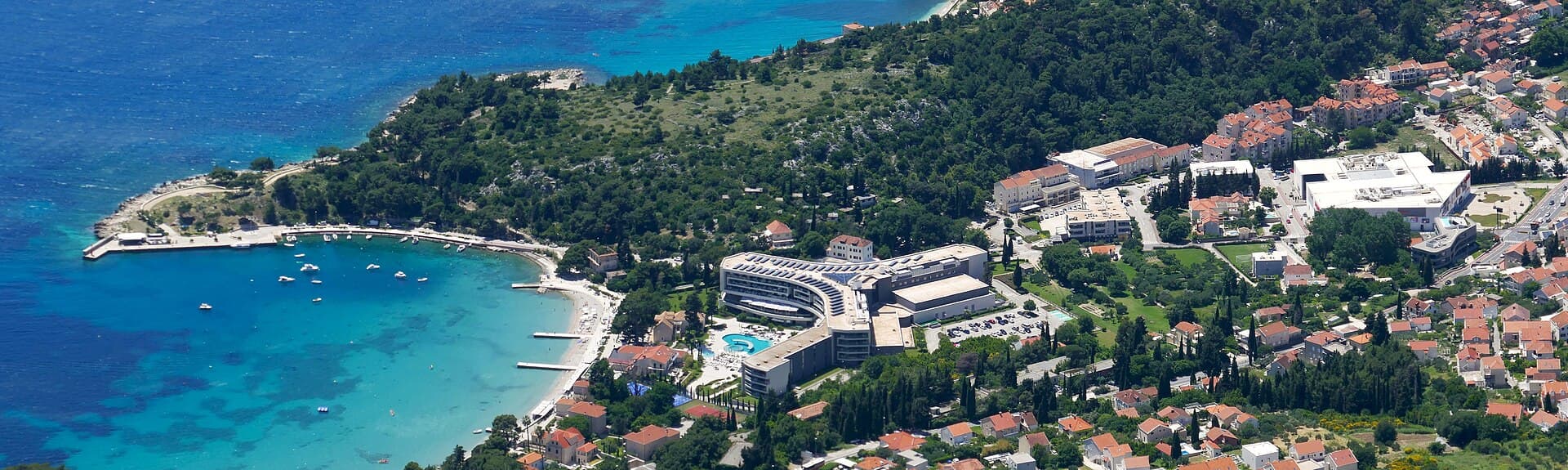
Croatia’s official profile describes Mlini Beach as a natural shore about 260 metres long and 20 metres wide, with a gentle landward slope and a moderately sloping seabed. A pedestrian path provides access, free parking is recorded nearby and summer bather density is high. The Župa Dubrovačka tourist board highlights the village’s shallow pebble beaches and sheltered coves. Walking west leads to the larger bathing areas at Srebreno, while landscaped sections beside Hotel Mlini and Villas Mlini include the beachfront Oleander Bistro & Restaurant.

Bathing water quality nearby
Things to do
Begin beside Zavrelje, whose springs once drove the mills that named Mlini. Continue to the Church of St Hilarion, on the village’s oldest site. From there, make for the shallow, sheltered pebble coves of Župa Bay. The coastal outing can then extend to Srebreno, Kupari and Plat, all within the parish of St Hilarion, which runs from Kupari to Obod. It is a compact route linking the spring, the surviving mill, the church and the sea.
Practical information
Parking
The official Mlini Beach profile records free parking beside its pedestrian access, but also notes high bather density during the season. In 2025 the municipality announced that barriers were removed from some spaces in Mlini, Srebreno and Kupari after rental agreements expired, returning those places to public use. Hotel Mlini applies its own parking arrangements for guests, so its grounds should not be confused with the municipal parking beside the beach. For a walk towards Srebreno, it is more practical to park once and continue along the waterfront promenade.
Frequently asked questions
How long is Mlini Beach?
The official bathing-water profile records a length of about 260 metres and an average width of roughly 20 metres.
Where is the nearest clinic to Mlini?
The local clinic is in Kupari at Put dr. Ante Starčevića 19.
Can you take a bus from Mlini to Cavtat?
Libertas route 10 serves the Dubrovnik–Mlini–Cavtat corridor; check the operator’s current departure before travelling.
Why is the village called Mlini?
The name comes from grain mills powered by the springs of Zavrelje; one former mill still survives.
Related guides

Dubrovnik
Dubrovnik’s historic centre is organised around Stradun, yet its character changes within a few steps of that main street. At the western end beside Pile stand the Large Onofrio Fountain,…
Read the guide

Help improve this page
Spot something missing or wrong? Suggest a correction, add your photo or report a problem. Editors review every suggestion before it is published.
Photo credits
- Mlini — Gzzz · CC BY-SA 4.0 · Wikimedia Commons
- Zavrelje, Srebreno, Župa dubrovačka, Soline, Župa dubrovačka — Tiia Monto · CC BY 4.0 · Wikimedia Commons
- Mlini Beach — keithlawson · CC BY 3.0 · Wikimedia Commons
- Apartmeni Klenovica.eu


