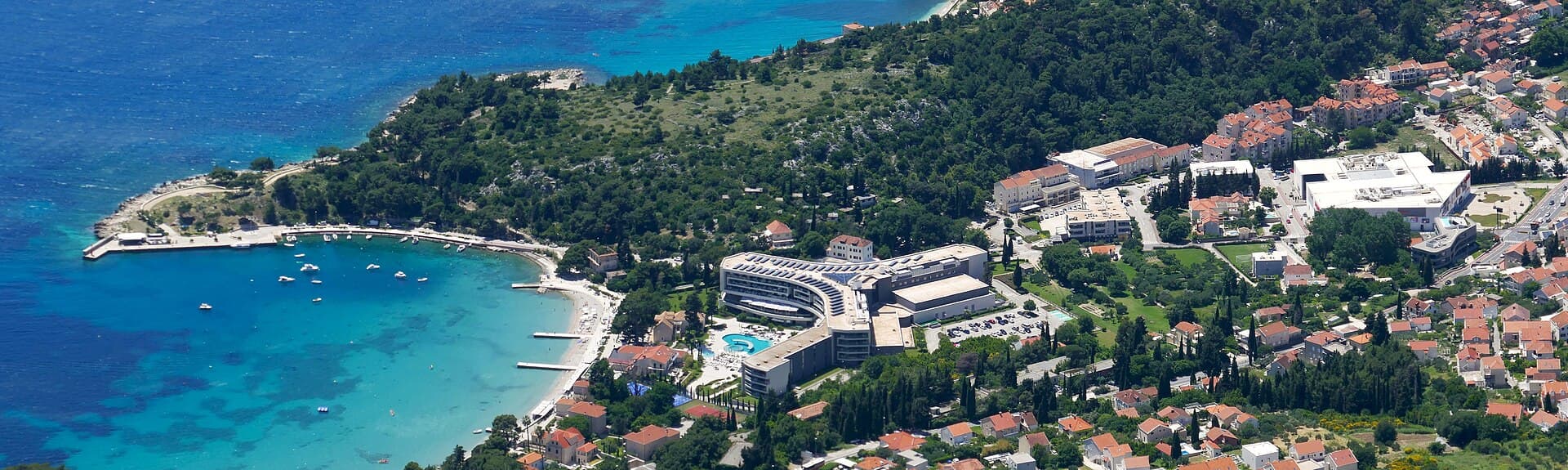
About this place
Srebreno is a seaside settlement in Župa dubrovačka immediately east of Kupari, with a long pebbly shoreline, promenade and traces of older Dubrovnik country-estate culture. The village was first recorded in 1272, while its modern name is linked with the older Srebrno and the form Sub Burnum. Roman coins, amphorae and urns have been found here, while later heritage includes the remains of the Bunić family garden and chapel, the small Church of St Nicholas and the Renaissance stone house of the Miloslavić seafaring family. The Church of the Sacred Heart stands directly beside the beach and is one of the most recognisable features of the waterfront. Srebreno is also easy to reach from Dubrovnik: Libertas line 16A runs daily between Dubrovnik and Srebreno in 2026 with multiple departures each way. Kupari lies immediately to the west, allowing the seaside walk to continue towards its broad beach and former resort area. Places such as TuttoBene at Šetalište dr. Franja Tuđmana 8 make it easy to combine swimming, walking and dinner without a car.
Srebreno lies on the coast east of Kupari in the central seaside part of Župa dubrovačka. The local tourist board dates the first written mention of the settlement to 1272 and notes Roman amphorae, urns and coins found in the area. Alongside the modern resort waterfront are traces of the country-estate culture of the Dubrovnik Republic: the Bunić family garden and chapel, the small Church of St Nicholas and the Renaissance house of the seafaring Miloslavić family. The Church of the Sacred Heart stands directly beside the beach, so Srebreno’s historic details are woven into the present promenade, parks and swimming area rather than concentrated in a separate old town.
Stays nearby
 Apartment
Apartmeni Klenovica.eu
Klenovica
Klenovica, 385 km from Srebreno
up to 4 guests · 1 bedroom
The host confirms the exact price for your dates and availability.
Things to see
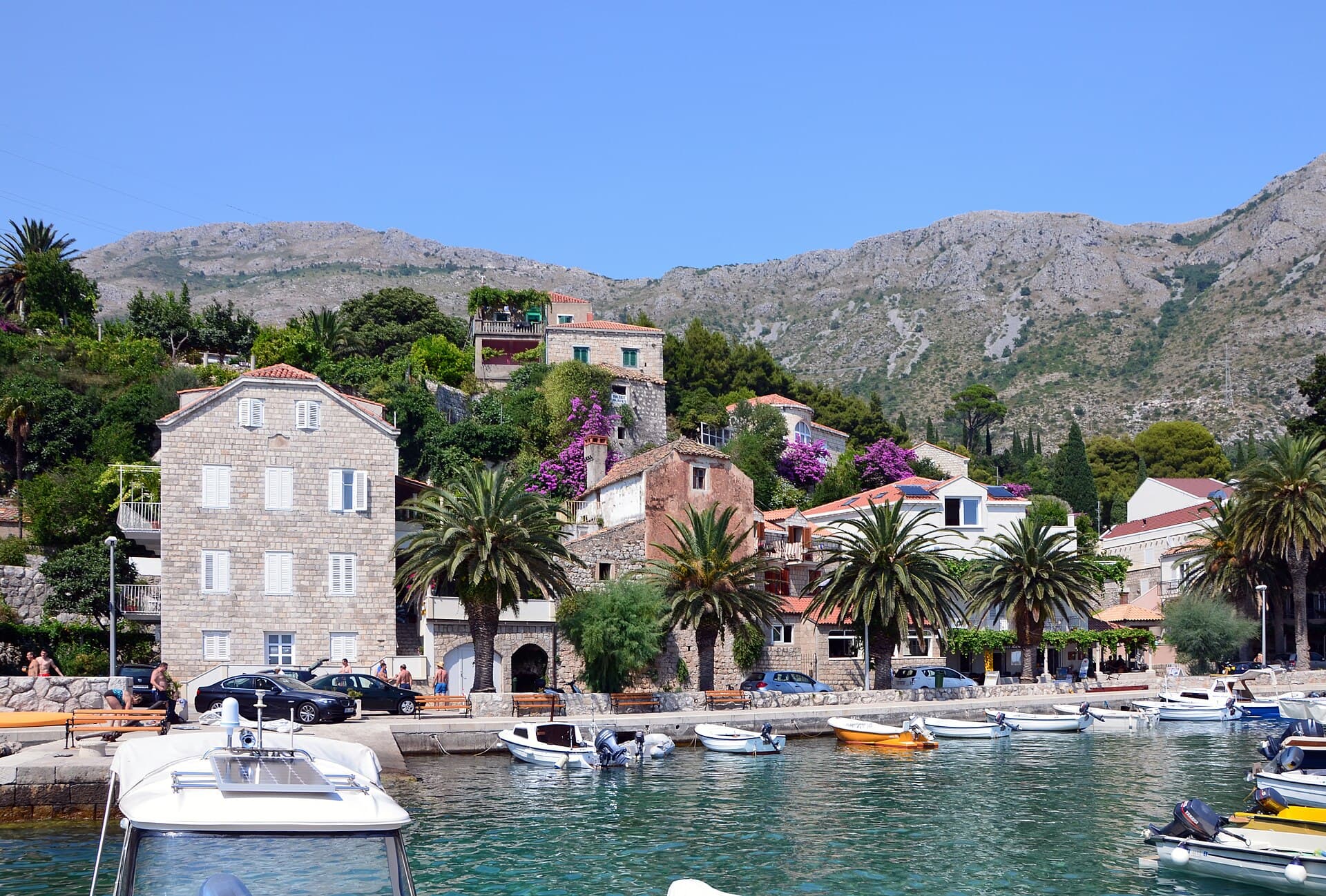
The easiest small landmark to spot in Srebreno is the Church of the Sacred Heart directly beside the beach, built through donations from priest and writer Silvo Miloslavić. An older layer is represented by the Church of St Nicholas within a later complex, while the former Bunić family estate survives through its garden, walls and a chapel bearing family coats of arms. The Renaissance stone house of the seafaring Miloslavić family stands almost at the water’s edge and recalls the settlement’s maritime past. Immediately west, Kupari adds the Church of St Stephen and the former resort area, allowing both places to be linked on one coastal walk.
Beaches
Srebreno has a pebbly shoreline and small coves arranged along the promenade, so the main swimming area is reached directly from the settlement without separate transport. The Župa dubrovačka tourist board specifically describes Srebreno through its pebble beaches and hidden coves, while its one-day itinerary notes more than twenty beaches across the municipality. Immediately to the west, the coastal strip continues into Kupari, where the broad beach is one of the settlement’s main features. Because Srebreno and Kupari are so close, swimmers can move between several sections of shore in the same day without returning to the main road.

Things to do
A day in Srebreno can begin with a waterfront walk past the Church of the Sacred Heart and older stone houses before moving to the pebbly shore for swimming. The pedestrian route west continues into Kupari, where the beach is accompanied by remains of the former hotel complex and the Church of St Stephen, recorded in local sources in 1279. Lunch or dinner does not require leaving the promenade, as TuttoBene is at Šetalište dr. Franja Tuđmana 8. When staying in Dubrovnik, Libertas line 16A makes this entire coastal itinerary practical as a stand-alone day trip by public transport.
Practical information
Getting there and around
Libertas suburban line 16A directly connects Dubrovnik and Srebreno. In the timetable available in 2026, buses from Dubrovnik begin at 07:30 and continue with multiple departures through the day into the evening; from Srebreno the first listed departure is 06:30. The operator marks the line as operating regularly but also warns that the timetable may change without prior notice. The wider eastern suburban network includes other routes through Župa dubrovačka, so Srebreno can also serve as a transfer point for travel towards Plat, Cavtat or Dubrovnik once the relevant line is checked.
Frequently asked questions
Is there a bus from Dubrovnik to Srebreno?
Yes. Libertas line 16A runs between Dubrovnik and Srebreno every day according to the timetable available in 2026.
What is Srebreno beach like?
The tourist board describes Srebreno through pebble beaches and small coves along the village shoreline.
Can you walk to Kupari?
Yes. Kupari continues immediately west of Srebreno along the same coastal strip and promenade.
Where is TuttoBene in Srebreno?
TuttoBene Pizzeria & Fast Food is at Šetalište dr. Franja Tuđmana 8.
Related guides

Dubrovnik
Dubrovnik’s historic centre is organised around Stradun, yet its character changes within a few steps of that main street. At the western end beside Pile stand the Large Onofrio Fountain,…
Read the guide

Help improve this page
Spot something missing or wrong? Suggest a correction, add your photo or report a problem. Editors review every suggestion before it is published.
Photo credits
- Srebreno, Zavrelje, Župa dubrovačka, Čibača — Tiia Monto · CC BY 4.0 · Wikimedia Commons
- Mlini, Kupari Beach — Gzzz · CC BY-SA 4.0 · Wikimedia Commons
- Srebreno Beach


