Kaštel Štafilić
About this place
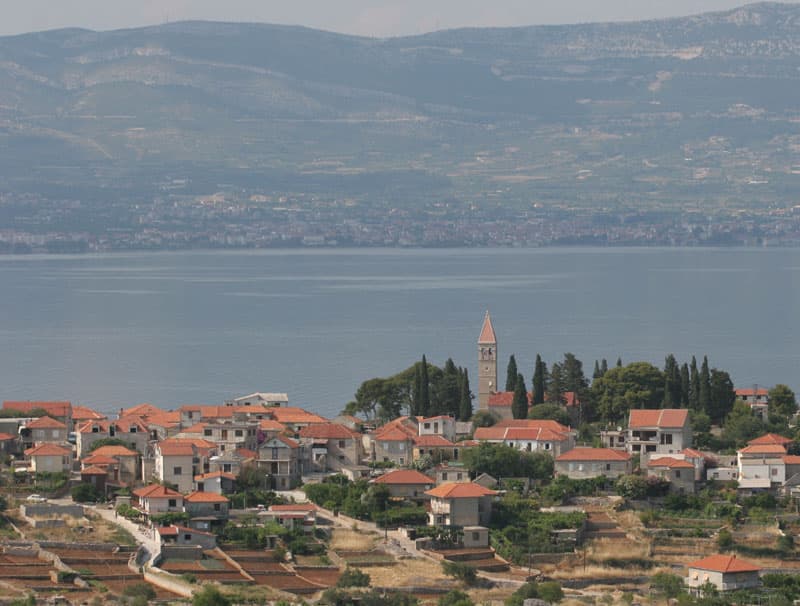
Kaštel Štafilić is the westernmost of Kaštela’s seven historic settlements, occupying the shore between Kaštel Novi and Split Airport. Its waterfront identity comes from two very different fortifications: the compact Rotondo castle within the old core and the unfinished Nehaj tower, whose stone walls stand at the edge of the shallows. The village’s most distinctive landmark is the Old Olive Tree, protected as a natural monument since 1990 and estimated to be about 1,500 years old. It grows close to remains associated with a Roman rural estate, creating an unusually tangible link between the ancient landscape and Kaštela’s continuing olive-growing tradition. Swimming is spread across several modest coastal sections rather than one resort beach, with Gabine and Stari Resnik among the named spots. The location is also notably convenient for arrivals: Split Airport lies beside the western end of Kaštela, while Promet bus 37 links Trogir, the airport, the Kaštela settlements and Split. A compact visit can therefore combine the olive tree, Rotondo’s stone lanes, views of Nehaj and a swim at Gabine.
Štafilić grew around the fortified residence of the Trogir nobleman Stjepan Štafileo, also known as Rotondo. Once the Ottoman threat receded, the settlement expanded eastwards beyond its defensive enclosure. West of the old core, the Lodi family began building Nehaj tower but never completed it, leaving a striking fragment beside the water. The Old Olive Tree adds another layer to this identity: the protected specimen stands in an area connected with a Roman agricultural estate, while branches removed during expert pruning have also supplied local cultural projects. This combination of unfinished fortifications, Roman traces and a living olive tradition makes Štafilić more than a conventional seaside suburb.
Stays
No stays listed here yet
Things to see
Crkva sv. Jurja od Žestinja u Kaštel Novom
Landmark · Kaštel Štafilić
Beaches
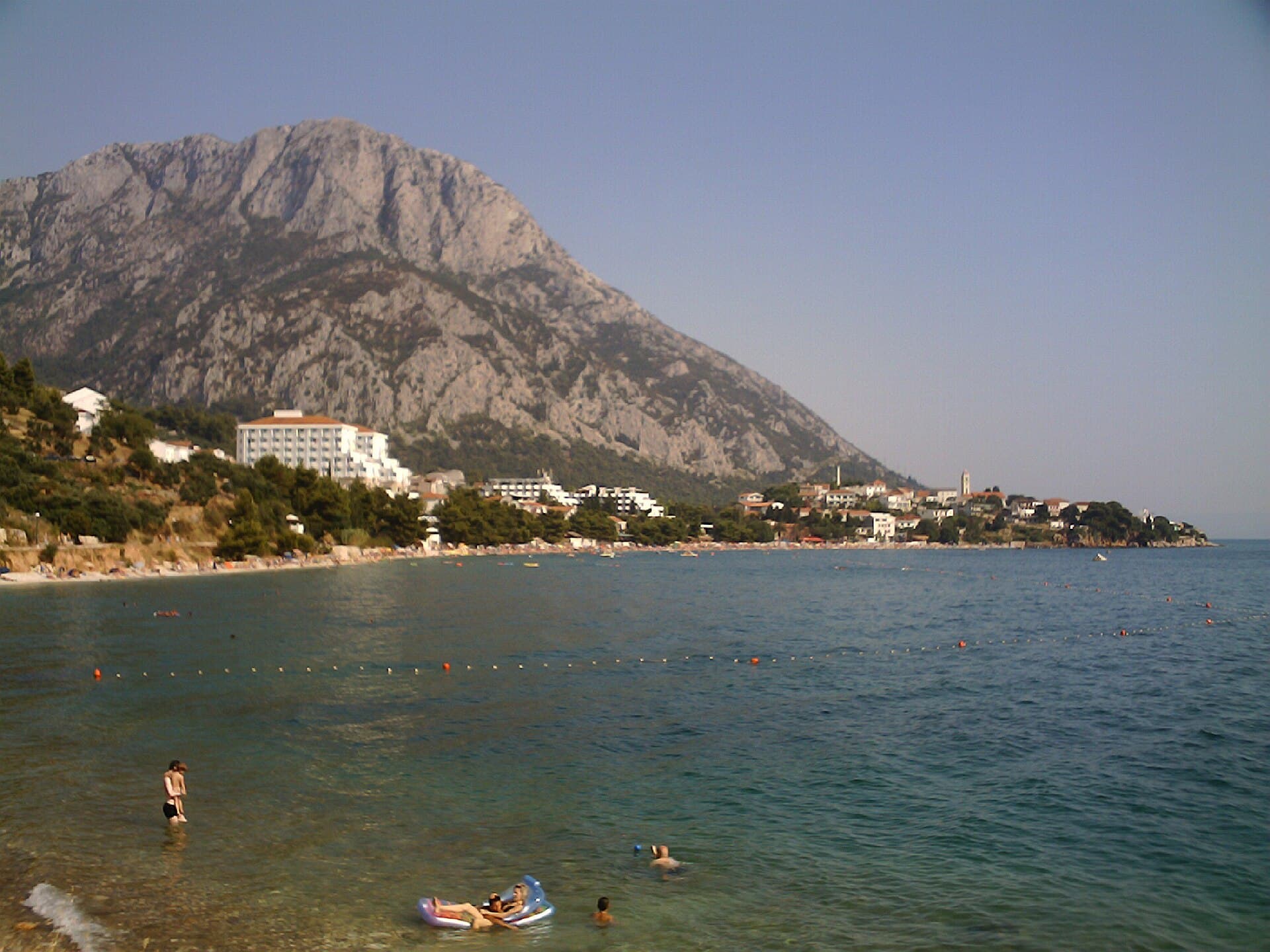
Gabine is the best-known swimming spot within Štafilić itself, combining a partly developed pebble shore with an open view across Kaštela Bay. Because it sits on the inhabited waterfront rather than in an isolated cove, it is easy to pair with a walk through the old centre. Farther west, the official Kaštela beach listing identifies Stari Resnik, closer to the airport side of the settlement and the Resnik hotel area. Smaller access points occur between the named beaches, although their surfaces and level of maintenance vary. Water shoes are useful where the shoreline becomes rougher beyond Gabine’s central section.
Bathing water quality nearby
- K. Štafilić - Gabine · 382 mexcellent · season 2025
- Đardin · 1.1 kmsufficient · season 2025
- Hotel Palace · 1.7 kmexcellent · season 2025
- Resnik · 1.8 kmexcellent · season 2025
- Miljenko i Dobrila · 1.9 kmexcellent · season 2025
- Šulavi · 2.2 kmexcellent · season 2025
Things to do
Begin at the Old Olive Tree, where the “Hidden Habitats” interpretation project introduces the protected tree and its surroundings. Walk downhill into the historic core and around Rotondo castle, following the narrow lanes until they meet the waterfront. Continue west towards Nehaj tower; its unfinished stone shell is most dramatic from the shore, particularly when the sea covers the foundations. Turn back along the coast and stop at Gabine for a swim or a break beside the pebbles. If you want a longer coastal outing, continue towards Stari Resnik, another officially listed Štafilić beach, instead of following the busier road towards Split Airport.
Practical information
Getting there and around
Promet bus 37 follows the Split–Airport–Trogir corridor and serves the Kaštela settlements en route, making it Štafilić’s principal public link with both neighbouring cities. Stops are on the old main road above the waterfront core, so passengers continue downhill on local streets for Gabine or Rotondo. Split Airport lies immediately west of the settlement, although the road layout makes a short bus or taxi ride more comfortable than walking to the terminal with luggage. Drivers arriving from Split follow the chain of Kaštela westwards towards Trogir; from Trogir, Štafilić comes before Kaštel Novi. Consult Promet’s 2026 timetable because departures differ by day.
Frequently asked questions
Where is the Old Olive Tree?
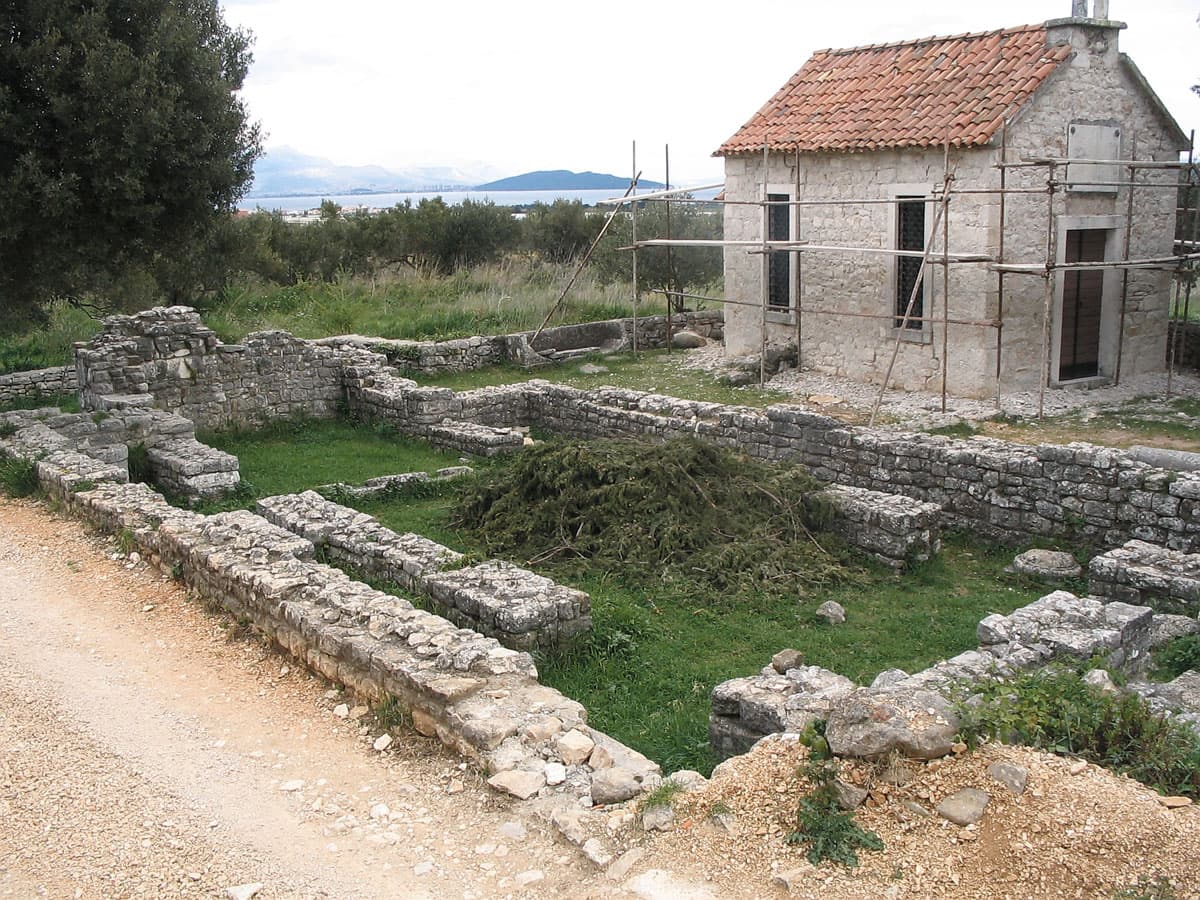
The protected Old Olive Tree grows in Kaštel Štafilić, close to remains associated with a Roman villa rustica found about 50 metres to the north.
Which bus links Štafilić with Split and Trogir?
Promet route 37 runs between Split and Trogir via Kaštela and Split Airport; check the current 2026 timetable before travelling.
Is Gabine a pebble beach?
Yes. Gabine has a partly developed pebble shoreline in Kaštel Štafilić.
Nearby
Kaštel Novi
Village · Dalmatia – Split

Related guides

Split
In Split, the transition from ancient monument to ordinary street is almost imperceptible: entering the southern part of Diocletian’s Palace from the Riva leads towards the Peristyle, then…
Read the guide

Help improve this page
Spot something missing or wrong? Suggest a correction, add your photo or report a problem. Editors review every suggestion before it is published.
Photo credits
- Kaštel Štafilić, Kaštel Stari, Kaštel Lukšić — Peranz · CC BY-SA 3.0 · Wikimedia Commons
- Kaštel Novi — Ante Perkovic · CC BY-SA 3.0 · Wikimedia Commons
- Kaštela — Николай Максимович · CC BY 3.0 · Wikimedia Commons