Kaštel Lukšić
About this place
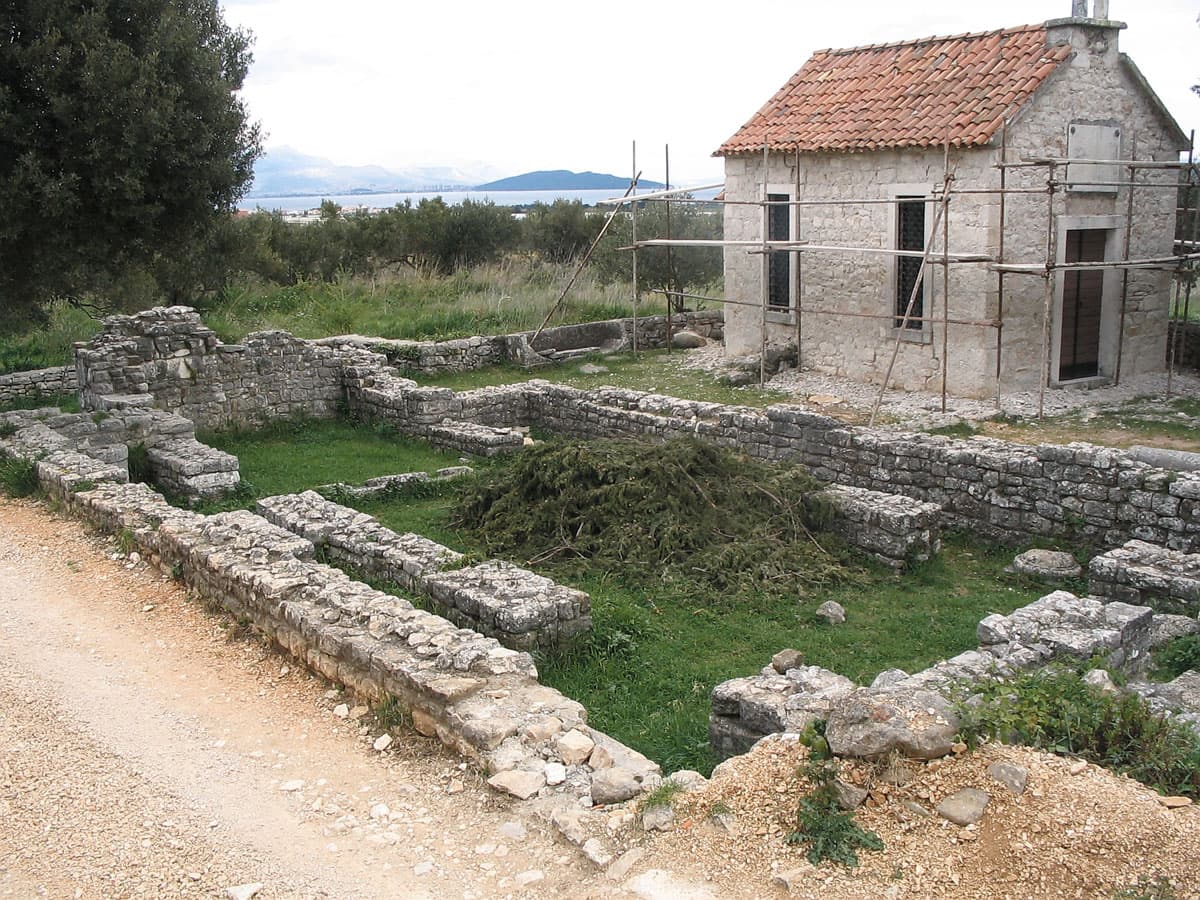
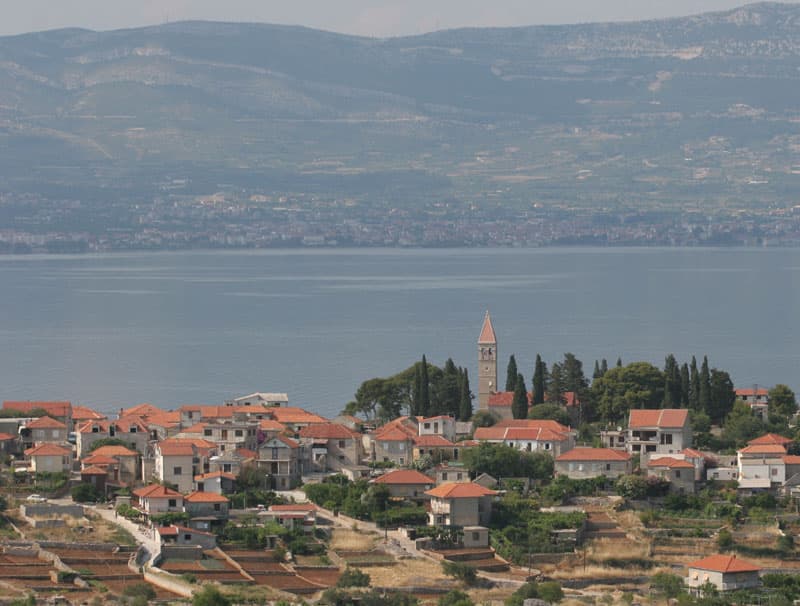
Kaštel Lukšić is one of the seven historic settlements that make up the town of Kaštela, stretched along Kaštela Bay between Split and Trogir. Its focal point is Vitturi Castle, a fortified seaside palace built by Trogir noblemen Nikola and Jerolim Vitturi to protect their families and the farmers from Ostrog. They secured Venetian permission in 1487, and the castle reached its final form in 1564. The south façade contains the residential quarters, balcony and a sea exit, while two defensive towers, a machicolation and the former drawbridge define the northern side; the drawbridge was replaced by a single-arch stone bridge in the 18th century. Arcades surround the courtyard and galleries occupy the upper floors. The restored castle houses the Museum of the Town of Kaštela and the town tourist board, making it a natural stop on a waterfront walk. Nearby Vitturi Park is a late-18th-century neoclassical garden, protected as a monument of park architecture since 1968. Lukšić is also inseparable from the tragic local love story of Miljenko and Dobrila.
Kaštel Lukšić grew around the Vitturi family’s coastal stronghold and retains a compact core where the Renaissance castle, churches, Brce square and the sea are only minutes apart. Completed in 1564, the castle combines a residential southern wing, northern defensive towers, an arcaded courtyard and a stone bridge that replaced the drawbridge in the 18th century. The settlement also draws identity from the legend of Miljenko and Dobrila, whose family homes and graves are associated with Lukšić. Vitturi Park, Šoulavy’s pioneering tourism venture of 1909 and the waterfront bathing areas show how an old defensive shoreline gradually became a cultural and recreational promenade.
Stays
No stays listed here yet
Things to see


Beaches
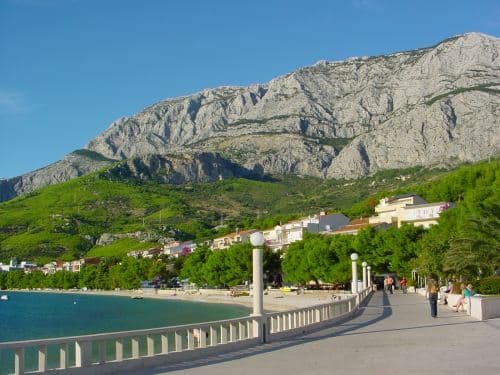
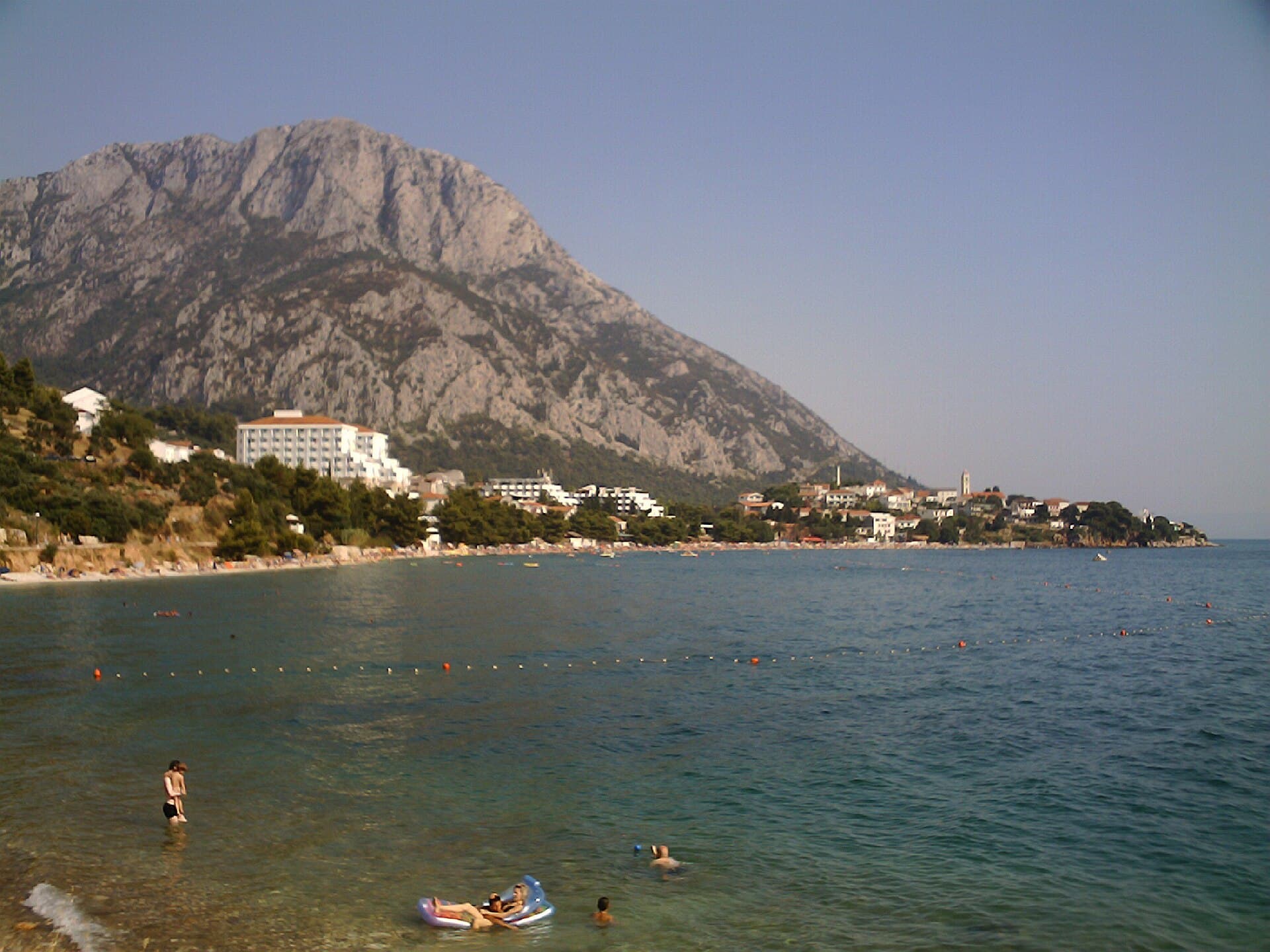
Lukšić’s waterfront consists of several small pebble and developed bathing areas connected by a promenade, making it easy to change beaches without driving. Šoulavy lies beside a garden and the former guesthouse opened by Henrik Šoulavy in 1909; planning records identify this as the site of one of Kaštela’s earliest tourist beaches. Mala mora extends west of Vitturi along a concreted shore planted with tamarisks, while Ostrog, Glavica and Poštanski mark further swimming points towards eastern Lukšić. Their position within the settlement provides straightforward access to cafés and the promenade, although exposed sections can collect waves and debris after a strong bora wind.
Bathing water quality nearby
- Puntica (Poštanski) · 585 mexcellent · season 2025
- Šulavi · 759 mexcellent · season 2025
- Miljenko i Dobrila · 1.0 kmexcellent · season 2025
- Baletna škola · 1.1 kmgood · season 2025
- Hotel Palace · 1.2 kmexcellent · season 2025
- Đardin · 1.8 kmsufficient · season 2025
Things to do
Begin inside Vitturi Castle with the Kaštela Town Museum’s permanent display, whose 679 objects cover prehistory, antiquity, the Middle Ages, defence against Ottoman attacks and the lives of Kaštela’s noble families. Leave the arcaded courtyard for Brce square, pass the old Church of the Assumption and continue through Vitturi Park. Following the story of Miljenko and Dobrila, walk west towards Rušinac and conclude at the Church of St John the Baptist, where their graves are found. Reserve the afternoon for Mala mora and a swim at Šoulavy or Ostrog, linking the Renaissance core with the beginnings of Kaštela tourism in 1909.
Practical information
Getting there and around
Promet’s route 37 is the key bus link for travelling between Split, the Kaštela settlements, Split Airport and Trogir. The operator publishes both Split–Airport–Trogir and Trogir–Airport–Split directions, with the timetable marked as valid from 8 September 2025. The Town of Kaštela likewise identifies route 37 as the Split–Trogir connection. From Kaštel Lukšić, use Promet’s interactive map to confirm the right stop and the live estimated arrival, as it displays bus locations and predicted times at individual stops.
Frequently asked questions
What is inside Vitturi Castle?
The restored castle houses the Kaštela Town Museum, the Kaštela Tourist Board and other cultural institutions; the museum display contains 679 objects.
Where are Miljenko and Dobrila buried?
Their graves are in the Church of St John the Baptist in Kaštel Lukšić, a key site in the local story of the tragic couple.
Why is Šoulavy Beach linked to early tourism?
Henrik Šoulavy opened Kaštela’s first guesthouse in 1909 and developed an early tourist beach beside it.
Nearby

Kaštel Kambelovac
Village · Dalmatia – Split

Related guides

Split
In Split, the transition from ancient monument to ordinary street is almost imperceptible: entering the southern part of Diocletian’s Palace from the Riva leads towards the Peristyle, then…
Read the guide

Help improve this page
Spot something missing or wrong? Suggest a correction, add your photo or report a problem. Editors review every suggestion before it is published.
Photo credits
- Kaštel Lukšić, Kaštel Stari, Kaštel Štafilić, Crkva sv. Ivana Krstitelja u Kaštel Lukšiću — Peranz · CC BY-SA 3.0 · Wikimedia Commons
- Kaštel Kambelovac — Martin Brož · CC BY 3.0 · Wikimedia Commons
- Kaštela