Knin
About this place
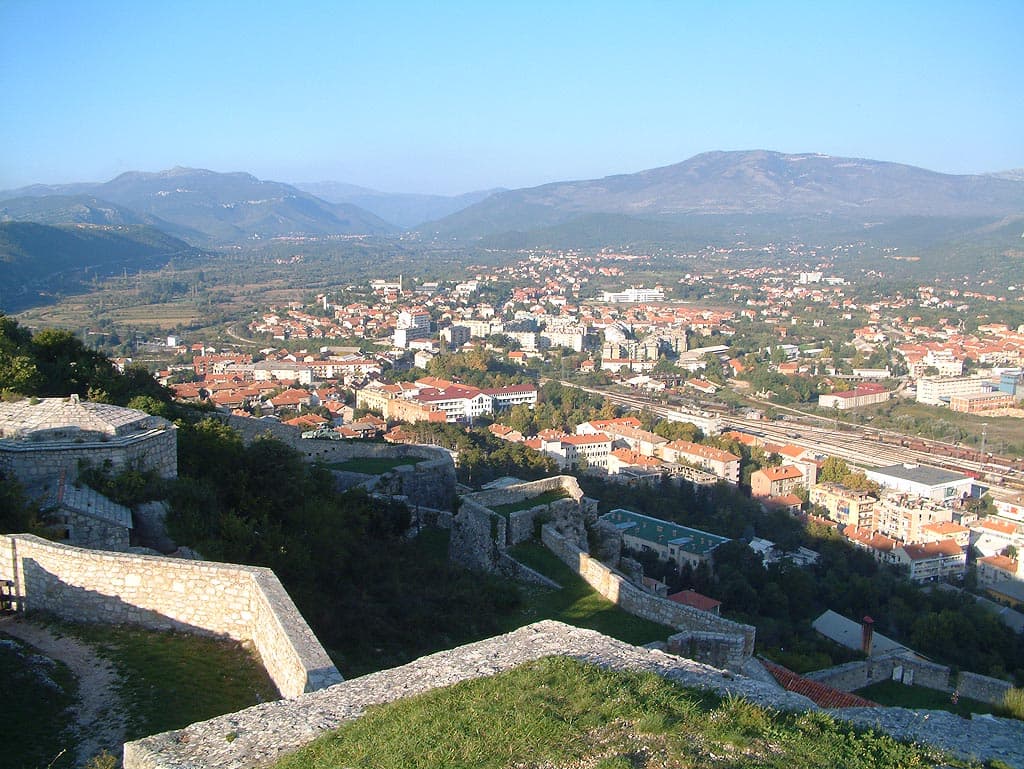
Knin occupies a strategic position between Mount Dinara and the source of the Krka, beneath one of Croatia’s largest fortress complexes. Nine mountains surround the city, while seven rivers define its wider landscape, bringing history and nature unusually close together. On Spas hill, a walk through Knin Fortress leads past successive defensive compounds to Knin Museum, whose collections range from prehistory to the late Middle Ages and include ethnographic, archaeological, geological and palaeontological material. Views from the ramparts extend across Kninsko polje towards the point where the Krčić ends its ten-kilometre journey through a travertine-lined canyon. There it plunges over the 22-metre Topoljski buk, immediately above the source of the Krka. Krčić is most impressive during wetter months and may dry out in summer. Knin is also a railway junction on routes towards Split and Šibenik, making car-free arrival possible, although a car or bicycle is more useful for springs, waterfalls and villages beneath Dinara. Local food bridges the Dalmatian hinterland through game, river fish, hearty stews and grilled trout.
Knin is a city of fortress walls, railway lines and karst waters. Its centre lies below Spas hill, where Kninsko polje, Mount Dinara and the headwaters of the Krka meet. The local tourist board characterises the region through seven rivers and nine surrounding mountains, including the Krka, Cetina and Zrmanja and Mount Dinara, whose 1,831-metre Sinjal is Croatia’s highest summit. This geography explains both the fortress’s military importance and Knin’s present role as a gateway to canyons, waterfalls and mountain routes. Rather than a coastal destination, Knin is a hub of the Dalmatian hinterland with a distinctly riverine and mountainous identity.
Stays
No stays listed here yet
Things to see
Knin Fortress on Spas hill consists of several defensive compounds and dominates the city, Kninsko polje and the approaches to Dinara. Within its walls, Knin Museum displays archaeological material spanning prehistory to the late Middle Ages, an ethnographic collection and fossils and geological specimens found around Knin. The fortress’s natural counterpart is Topoljski buk, the final and largest waterfall on the Krčić, with a 22-metre drop; the River Krka rises immediately below it. Above the falls, about two kilometres from Knin, Topoljska gradina occupies a former caravan route beside the old Napoleonic road into the Krčić canyon.
Beaches
Knin has no seacoast, so its waterside spots are river locations rather than Adriatic beaches. Marunuša on the Krka features in the officially documented 12.65-kilometre “Along the Krka to Marunuša” cycling route and works better as a riverside ride destination than as a serviced beach with conventional coastal facilities. The Krka spring and the foot of the Krčić waterfall should be treated as sensitive natural sites, particularly when water levels are high. For a conventional swimming day with managed facilities, visitors should choose an officially designated bathing area outside Knin and reserve the city’s rivers for walking, photography and cycling.
Things to do
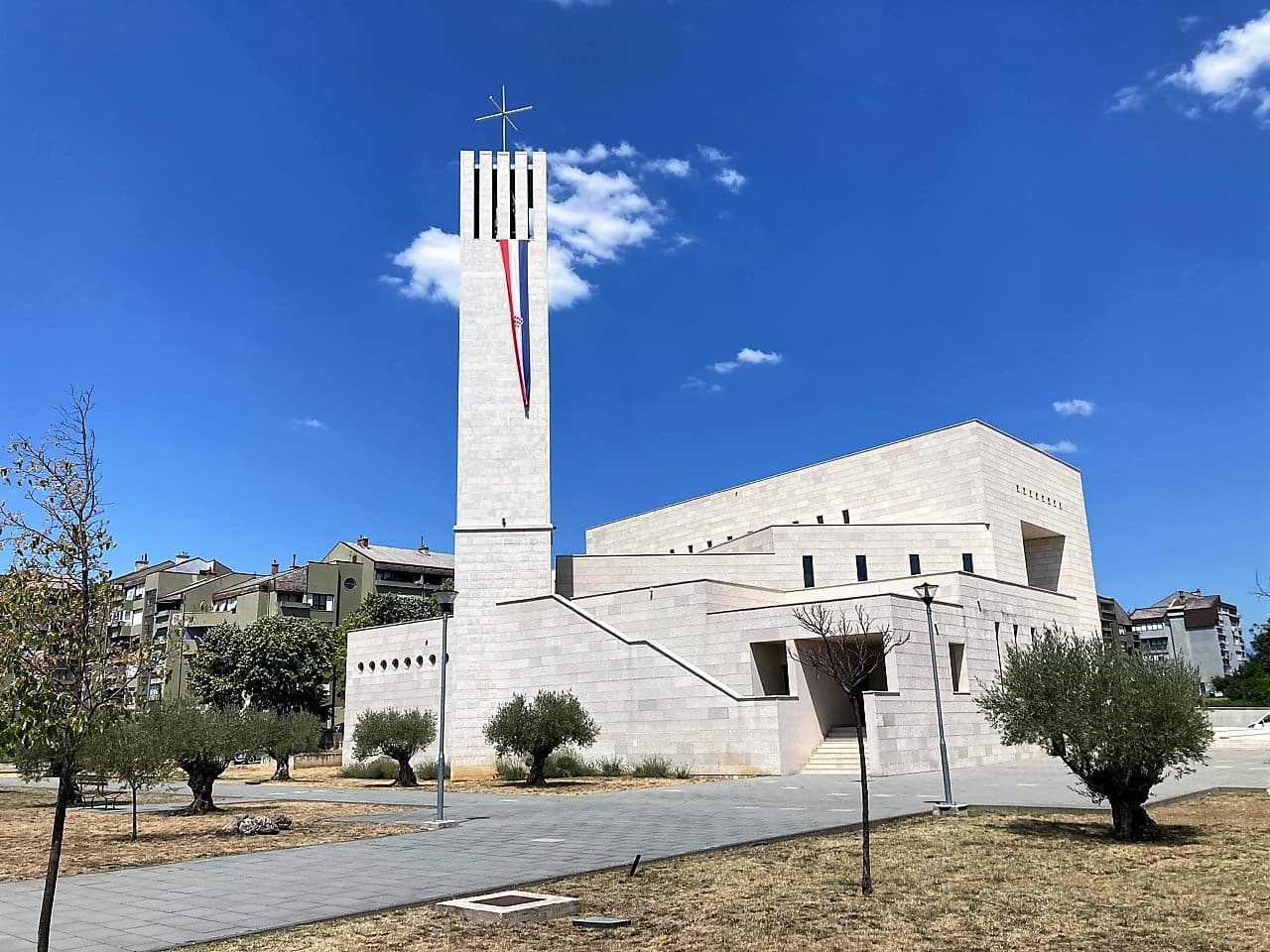
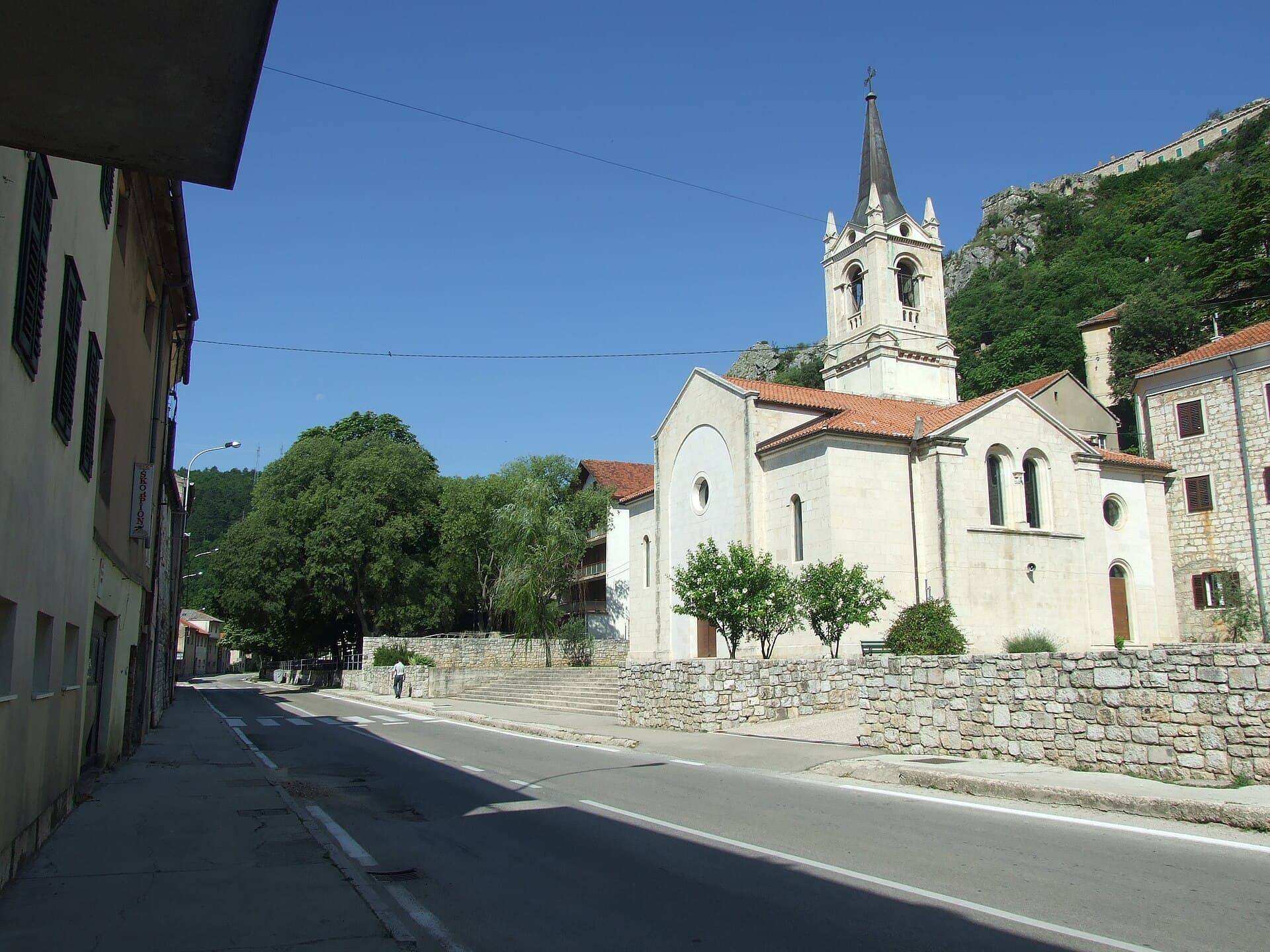
Begin by climbing to Knin Fortress and allow time for its separate defensive compounds, viewpoints and the permanent collections of Knin Museum. Afterwards, continue two kilometres from the centre to the Krka spring and Topoljski buk; the 22-metre Krčić waterfall is strongest in winter and spring. More active visitors can follow the old Napoleonic road through the Krčić canyon or ride the 12.65-kilometre “Along the Krka to Marunuša” cycling route. A full mountain day requires an excursion onto Dinara, while a shorter city itinerary can combine the fortress, museum, Knin’s churches and a walk beside the Krka.
Food and drink
A good introduction to Knin’s table begins with the dishes singled out by the city tourist board: grofovski—also called kraljevski—goulash and grilled trout. After visiting Knin Fortress, Tri Lovca is an option for a lunch that includes a fish platter, Dalmatian pašticada and its “Tvrđava” platter. For spit-roasted and grilled dishes, Grill & Bar KaPeLa at 2A 4. gardijske Street uses hornbeam and beech wood, a practice it says it has maintained since 1996. This makes it easy to pair the town’s signature goulash or trout with dishes genuinely offered in Knin.
Practical information
Getting there and around
Knin is linked by rail to Split via Perković, while HŽ Passenger Transport’s 2026 timetable also shows stops on the Knin–Perković–Šibenik section. For onward coach travel, Knin Bus Station has connections noted by the local tourist board to Zagreb, Šibenik, Zadar and Split. Check the specific travel date in the HŽ timetable, as some services on this route do not run daily. That makes Knin a useful inland Dalmatian interchange between the Šibenik branch and Split.
Frequently asked questions
When is the Krčić waterfall strongest?
Topoljski buk is most reliable in winter and spring, while the Krčić may dry up in summer.
How high is Topoljski buk?
The final Krčić waterfall is 22 metres high, and the Krka rises immediately below it.
Where is Knin Museum?
Knin Museum is housed within Knin Fortress on Spas hill.
What is a typical Knin dish?
The tourist board highlights count’s or royal stew and grilled trout.
Can Knin be reached by train?


Related guides

Šibenik
Three contrasting areas help explain Šibenik's historic centre: the steep lanes of Gorica, waterfront Dolac and the central streets around Kalelarga. In Gorica, stone steps climb towards St…
Read the guide
Help improve this page
Spot something missing or wrong? Suggest a correction, add your photo or report a problem. Editors review every suggestion before it is published.
Photo credits
- Knin, Vrbnik — Julian Nyča · CC BY-SA 3.0 · Wikimedia Commons
- Žagrović — StevenL · CC BY-SA 3.0 · Wikimedia Commons
- Kovačić — Pidge Copetti · CC BY-SA 4.0 · Wikimedia Commons
- Biskupija