Dobrinj
About this place
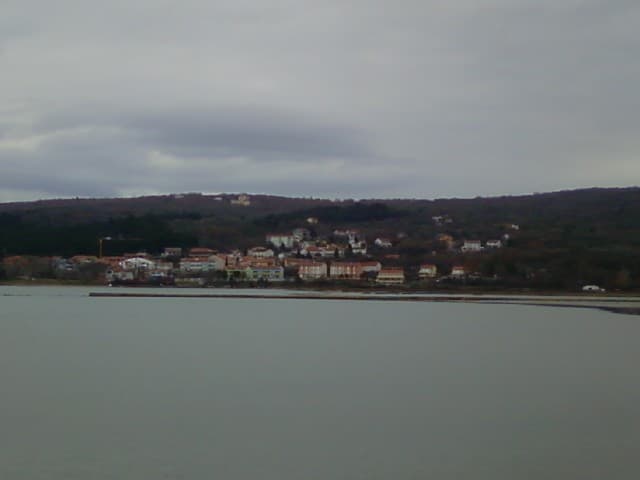
Dobrinj differs from most well-known places on Krk because it does not sit directly on the coast. Its old centre occupies a hill roughly 200 metres above sea level overlooking Soline Bay, so a visit naturally links an inland stone settlement with bathing areas several kilometres below. The parish Church of St Stephen is documented in 1100 and preserves a 14th-century antependium by Paolo Veneziano. The small Church of the Holy Trinity stands above the main square, while Dobrinj’s Glagolitic tradition gives the settlement a special place in Krk’s cultural history. For the sea, the road descends towards Soline, Klimno and Čižići; the Meline area is known for shallow water and dark mud traditionally used by bathers. The contrast between the elevated historic core and the enclosed bay is the key to exploring the area. Dobrinj rewards a combination of sacred heritage, hilltop views and a short drive to a very different coastal landscape on northeastern Krk.
Dobrinj is a historic inland settlement on Krk, set on a hill about 200 metres above sea level. Stone houses and narrow lanes developed around the 12th-century parish church of St Stephen. Its many Glagolitic inscriptions make Dobrinj one of the island’s important centres of Glagolitic heritage. The Sacred Art Museum and Ethnographic Museum add substance to a walk around the church and small squares. Unlike coastal Šilo, Dobrinj looks down from its hill towards Soline Bay and its villages.
Stays nearby
 Apartment
Apartmeni Klenovica.eu
Klenovica
19.4 km from Dobrinj
up to 4 guests · 1 bedroom
The host confirms the exact price for your dates and availability.
Things to see
The parish Church of St Stephen is one of Dobrinj’s key monuments. It is mentioned in records from 1100 and was rebuilt several times in later periods. The church preserves a 14th-century antependium attributed to Paolo Veneziano, giving this small settlement a work of art with significance far beyond the local area. Above the main square, Placa, stands the small Church of the Holy Trinity. Dobrinj was also an important centre of Glagolitic culture on Krk, connected with its local chapter and Croatian Glagolitic documents. Exploring the old centre is therefore not simply a walk through stone streets but an encounter with the island’s sacred art and written tradition.
Beaches
Dobrinj’s old centre has no beach of its own; swimming means heading to Soline Bay or Šilo. Meline at Soline is known for its coastal mud, and the municipal plan provides for sun loungers, parasols, pedal boats and a food-and-drink outlet there. Šilo has pebble bathing spots including Konjin, Mala plaža, Pješčana, Tiha and Konjska. For a sandier setting, choose Sv Marek cove near Risika; Slivanjska cove lies below Biserujka Cave.
Bathing water quality nearby
- Soline · 2.4 kmexcellent · season 2025
- Čižići · 3.0 kmexcellent · season 2025
Source: European Environment Agency (EEA); data from Croatian authorities. · bathing water profile
Things to do
Begin on foot in Dobrinj’s stone-built centre, where the tiny squares and narrow lanes provide the village’s most distinctive experience. After taking in the view over Soline Bay, drive down towards Čižići and Meline, where shallow water meets the bay’s well-known coastal mud. Later, continue to Šilo, six kilometres south-east of Dobrinj, for organised bathing areas and views across to the Crikvenica Riviera. For a contrasting finish, head to Rudine: an easy educational trail with five information panels links Biserujka Cave to Slivanjska Cove, and the walk takes roughly half an hour.
Food and drink
For dinner by the water, Klimno is more practical than Dobrinj’s hilltop centre. This Soline Bay village has a long hospitality tradition, with local menus centred on fish, seafood and island wine. Šilo provides another coastal option within the municipality, with restaurants serving the main holiday settlement opposite the Crikvenica Riviera. Inland flavours are represented by Krk lamb, homemade cheese, olive oil and local wines. As Dobrinj, Klimno and Šilo are separate settlements, it makes sense to choose a restaurant near the final stop of the day rather than return uphill solely for dinner; seasonal opening hours should be checked directly.
Frequently asked questions
How high above sea level is Dobrinj?
Dobrinj’s old centre stands on a hill roughly 200 metres above sea level.
Which artwork is preserved in the Church of St Stephen?
The church preserves a 14th-century antependium attributed to Paolo Veneziano.
Why is Dobrinj important to Krk’s Glagolitic heritage?
Dobrinj was an important Glagolitic centre with a local chapter and a tradition of Croatian Glagolitic documents.
Where do visitors go from Dobrinj for shallow water and mud?
The Meline area in Soline Bay is known for shallow water and dark mud used by bathers.
Nearby
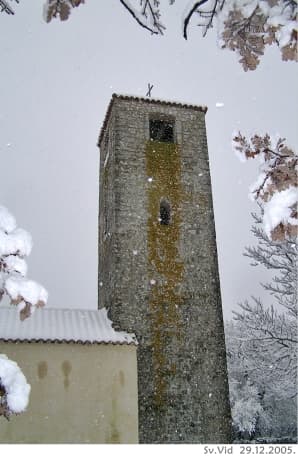
Sveti Vid Dobrinjski
Village · Krk

Related guides
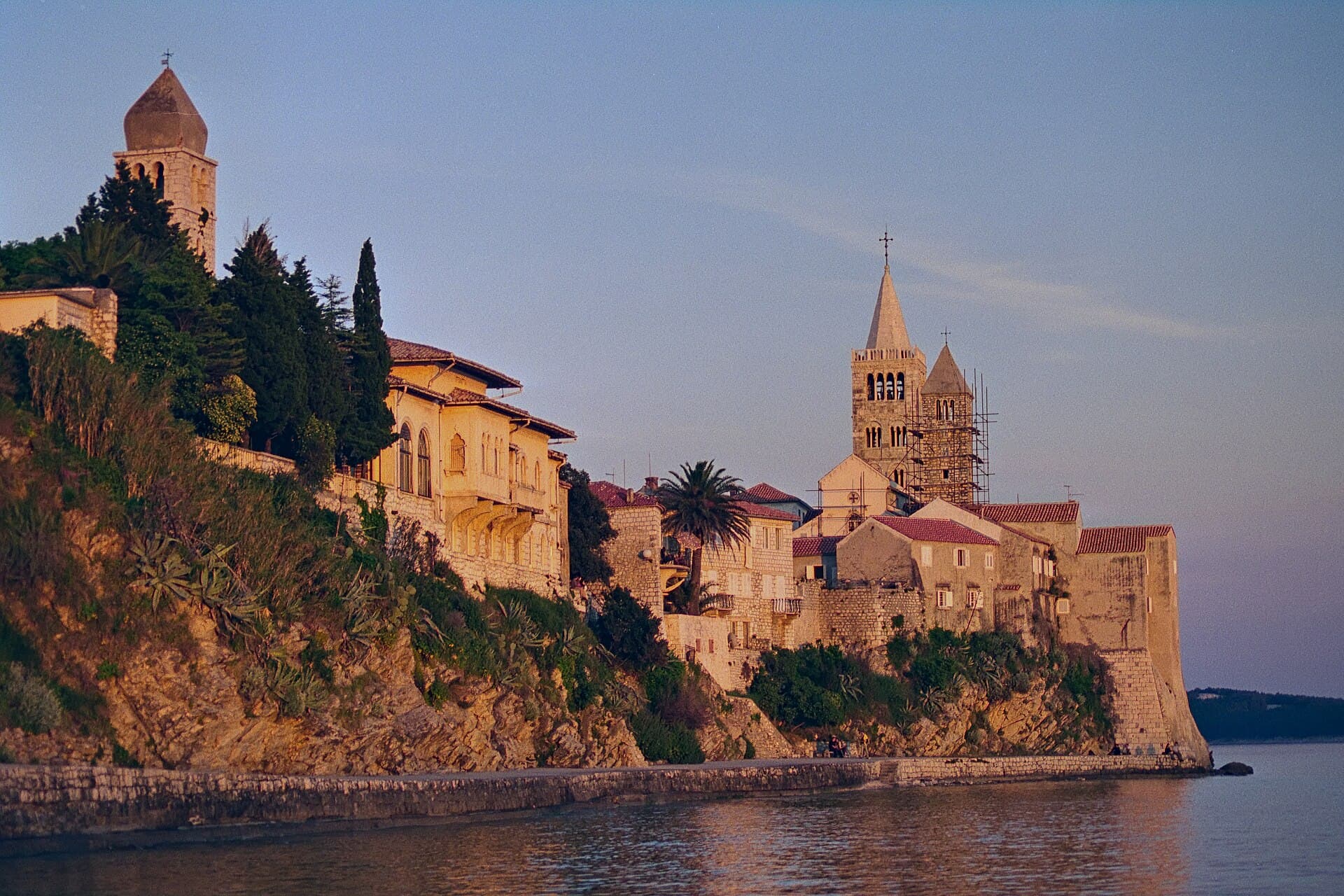
Rab
Rab's old town has a clear silhouette, but it rewards more than a postcard view. Its four towers mark distinct religious sites: the Assumption of Mary, St John the Evangelist, St Andrew and…
Read the guide
Help improve this page
Spot something missing or wrong? Suggest a correction, add your photo or report a problem. Editors review every suggestion before it is published.
Photo credits
- Dobrinj — Roberta F. · CC BY-SA 3.0 · Wikimedia Commons
- Sveti Vid Dobrinjski — The original uploader was Ivanatu at Croatian Wikipedia. · CC BY-SA 3.0 · Wikimedia Commons
- Klanice, Soline — Bzmarko · Public domain · Wikimedia Commons
- Apartmeni Klenovica.eu — Apartmani Klenovica.eu · courtesy of the property owner
- Rab — Herbert Ortner · CC BY 4.0 · Wikimedia Commons