About this place
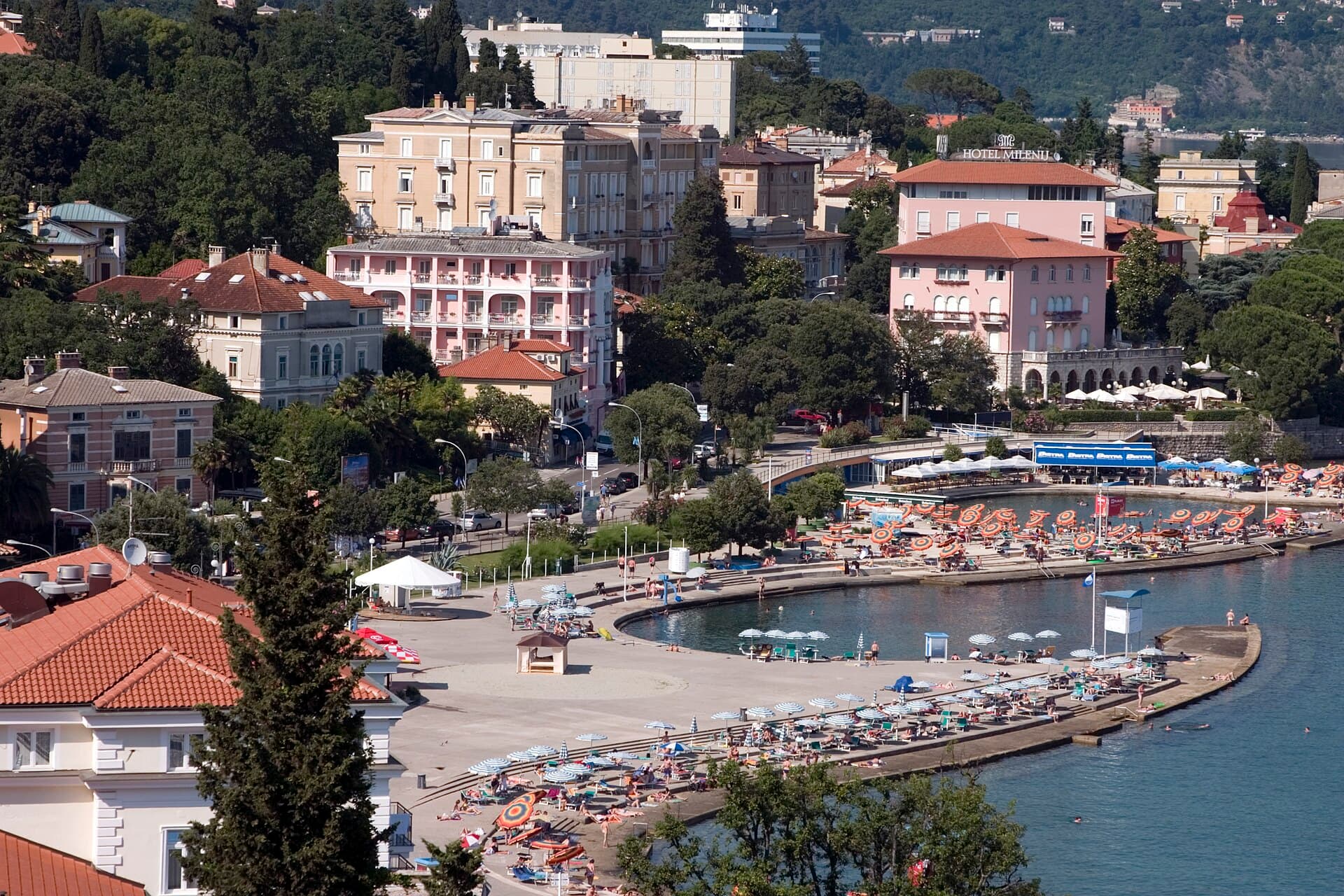
Opatija is a town of parks, villas and coastal walks on the Kvarner shore beneath Učka. Its tourism history can be read in the landscape itself: substantial houses facing the sea, planted gardens and bathing places create a setting different from the tightly packed stone centres of many Adriatic towns. Villa Angiolina, home to the Croatian Museum of Tourism, is a useful starting point. After the museum, stay in the park before continuing to the water and the Maiden with the Seagull, one of the town's best-known coastal landmarks. The Lungomare links the centre with Volosko in one direction and Ičići, Ika and Lovran in the other. You do not need to walk its entire length. Choose a section that allows time to pause beside the sea and notice the changing waterfront. Volosko's small fishing harbour and narrow streets offer a different scale from Angiolina's landscaped surroundings. Opatija suits visitors who enjoy combining culture, walking and seaside time without arranging a distant excursion every day. Here, the route between landmarks often matters as much as the landmark itself.
Opatija's central experience revolves around the shore and parks. The Lungomare is a connection, not an obligation to complete the entire route in one outing. Treat Angiolina and St James's parks as places to spend time rather than shortcuts to the next photograph. Volosko and Lovran have their own spatial identities and deserve separate sections of a visit.
Stays nearby
 Apartment
Apartmeni Klenovica.eu
Klenovica
50 km from Opatija
up to 4 guests · 1 bedroom
The host confirms the exact price for your dates and availability.
Things to see
Villa Angiolina and its grounds offer the clearest introduction to Opatija's development as a resort. The villa houses the Croatian Museum of Tourism, while planted beds and garden paths continue the story outdoors. Notice how the house relates to the grounds and the sea, rather than treating the park as a shortcut. St James's Church and its surroundings reveal an earlier layer of the town, preceding the grand hotels and villas. On the shore, the Maiden with the Seagull supplies a small, recognisable focal point against the open water. The Lungomare is a landmark experienced in motion. Garden walls, bathing places, rocks and steps to the water replace one another as you walk; a shorter attentive section can be more rewarding than a hurried end-to-end route. Volosko has a distinct waterfront setting around its fishing harbour, with narrow streets climbing above the boats. Nearby Črnikovica adds a swimming option with pebbled and paved parts of the shore. Museum, gardens, promenade and harbour work best together: Opatija is explained less by a single monument than by the way these spaces occupy the coastline.

Beaches
Tomaševac, beside the Ambasador hotel, combines a pebbly bathing area with built waterfront surfaces and a children’s playground listed by Opatija’s tourist board. Slatina is the central urban bathing area, linked to the promenade and Maršala Tita Street. Northwards towards Volosko, compare Lipovica, Škrbići and Črnikovica: their positions make different choices practical for visitors staying in central Opatija or around Volosko. The official beach directory identifies designated dog-bathing sections at Slatina and Mali Raj, rather than allowing dogs throughout Opatija’s bathing areas. A Lungomare walk between Tomaševac and Volosko can include a look at several beaches before choosing where to swim. Slatina, by contrast, fits naturally into a stay centred on Opatija’s main waterfront and the shops and cafés along Maršala Tita Street.

Things to do
For one day, connect Villa Angiolina, its park and the central Lungomare. Begin at the Croatian Museum of Tourism, then look for the same story in the gardens and waterfront buildings outside. Follow the coast towards St James's Church and the Maiden with the Seagull, leaving Slatina for a pause beside the town's bathing area. This creates a coherent walk without moving the car between every landmark. For three days, keep the first around Angiolina and the centre. On the second, walk north along the Lungomare to Volosko. Allow time for its small harbour and the streets above it, continuing to Črnikovica for swimming on its pebbled and paved shore when conditions suit. Use day three for the southern direction towards Ičići, Ika and Lovran. Walk only as far as you comfortably wish and decide on the return beforehand; the outward route need not be repeated entirely on foot. Compare the small harbours, sea access points and houses along the way. A sequence of shorter, purposeful walks leaves room for the museum, a waterfront break and an interesting side street rather than turning the promenade into an endurance task.
Activities
The Lungomare connects Volosko and Lovran through Opatija’s waterfront, following approximately 12 kilometres of coastline. For a greener walk, choose Carmen Sylva: the official route description highlights the Vrutki spring, a former washing place and the Vela and Mala Fortica viewpoints. Carmen Sylva runs through woodland above the waterfront rather than following the shore beside Slatina and Angiolina Park. Opatija’s autumn 2026 guided-walking programme starts at Villa Angiolina and includes routes towards Ičići, Veprinac and Lovran; published dates include 3, 10 and 17 October. For an independent outing, follow the Lungomare towards Volosko to finish around its fishing harbour, or choose Carmen Sylva for woodland and views from higher ground. These two routes provide distinct ways of exploring Opatija without making a mountain ascent on Učka part of the same walk.
Day trips
Poklon provides a useful starting point for an excursion from Opatija into Učka. Its visitor centre occupies a restored farm building and introduces the mountain’s wildlife, landscapes and human history. A visit to Poklon can remain an indoor experience or continue along marked routes towards Vojak. The stone tower on Vojak gives a perspective on Kvarner very different from the Lungomare, although driving to Poklon does not bring you to the summit. For geology, choose Vela Draga, where an educational trail reveals limestone towers on another side of the mountain. Lovranska Draga offers a separate rural outing: orchards, sweet chestnuts and the path towards its waterfall connect the mountain landscape with the coast around Medveja. Choose Poklon, Vela Draga or Lovranska Draga according to the experience you want from Opatija; their different access routes make them separate outings rather than stops on one short walk.
Food and drink
Opatija’s food culture links the fishing waterfront of Volosko with the café tradition of its historic hotels. Look for Kvarner scampi, particularly prepared in buzara sauce, and fish dishes associated with the northern Adriatic. Wild asparagus is a recurring spring ingredient in Opatija’s food programme, appearing in fritaja, risotto and pasta. For a local sweet accompaniment to coffee, the Kamelija cake brings together figs, almonds, carob and marzipan in the combination described by the tourist board. Choose Volosko when you want a meal beside the small fishing harbour, or central Opatija for a café stop between Angiolina and Slatina. The autumn Chocolate Festival adds a different food theme, with activities at Gervais and the Šporer pavilion alongside chocolate-inspired offerings in Opatija’s hospitality venues.
Practical information
Practical information
Two parallel routes make Opatija easier to navigate: the Lungomare along the shore and Maršala Tita Street, which links services and bus stops. The tourist information office is at Maršala Tita 146, while the Croatian Museum of Tourism is at Park Angiolina 1. Accommodation described as Opatija may be closer to Volosko, Slatina or the southern waterfront, changing the everyday walk to a beach or Gervais. For a cultural day, combine Angiolina with the central parks; for a mountain outing, treat the journey to Poklon separately from a waterfront walk. Opatija’s autumn 2026 programme includes guided walks from Angiolina and the Chocolate Festival in November, providing specific reasons to choose dates beyond the Slatina bathing season.
Parking
Opatija 21 manages the public parking system and publishes separate information for street zones and garages. In the tariff available in September 2026, zone 1 costs €1 per hour; other zones vary by location and season. Gorovo and the garage beside the Marino Cvetković sports hall are useful arrival options to identify before heading towards Slatina or Angiolina. The operator lists parking machines, SMS and Bmove payment, with the zone displayed at the chosen parking area determining the relevant payment details.
Getting there and around
Autotrolej route 32 links Rijeka, Opatija and Lovran; the operator’s 2026 notices confirm this coastal connection and temporary diversions during Opatija events. Routes 34, 35 and 37 also feature in the area’s suburban network, but they do not provide interchangeable journeys or stops. Rijeka Airport is on the island of Krk, so continuing to Opatija requires a land transfer across the bridge. Once in central Opatija, the Lungomare connects Angiolina Park, Slatina and the direction of Volosko on foot. A trip to Poklon or Lovranska Draga is a separate transport undertaking: the roads into Učka Nature Park differ from the coastal bus route towards Lovran.
Frequently asked questions
How long is Opatija’s Lungomare promenade?
The Lungomare extends for approximately 12 kilometres from Volosko to Lovran through Opatija, Ičići and Ika.
Which Opatija beach has a children’s playground?
The tourist board lists a playground at Tomaševac, beside the Ambasador hotel.
Where is the Croatian Museum of Tourism?
The museum is housed in Villa Angiolina at Park Angiolina 1 in central Opatija.
Which bus connects Rijeka and Opatija?
Autotrolej route 32 links Rijeka, Opatija and Lovran; special diversions apply during events on Opatija’s main street.
Nearby

Veprinac
Village · Kvarner

Related guides

Krk
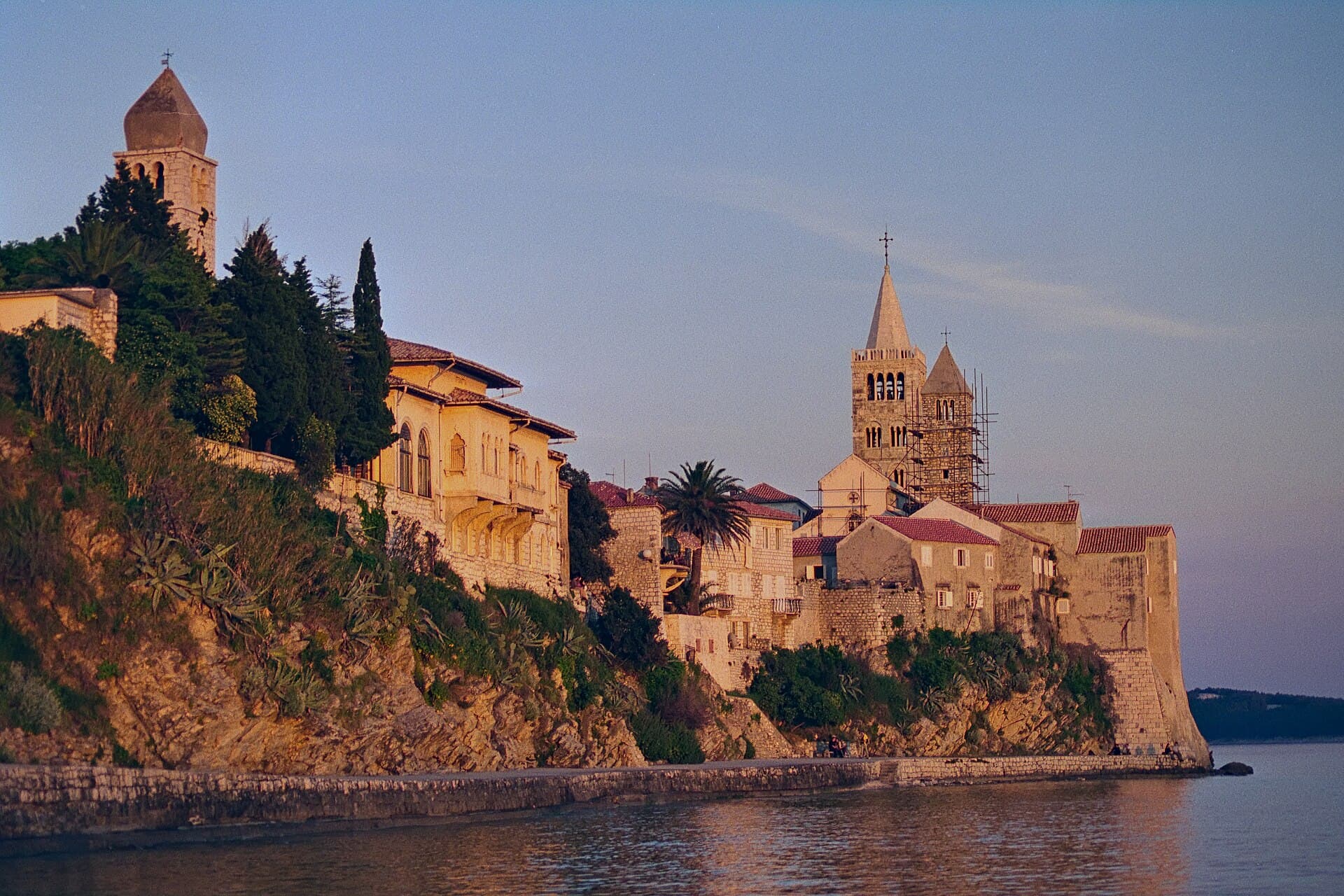
Kamplin makes a useful starting point because several aspects of the town meet in a small area. The castle's defensive architecture stands alongside the religious complex, while changes in…
Read the guide
Help improve this page
Spot something missing or wrong? Suggest a correction, add your photo or report a problem. Editors review every suggestion before it is published.
Photo credits
- Opatija — Jimmy Harris · CC BY 2.0 · Wikimedia Commons
- Veprinac — Original uploader was Filip.poscic at it.wikipedia · Public domain · Wikimedia Commons
- Rukavac, Matulji — Zoran Kurelić Rabko · CC BY-SA 3.0 · Wikimedia Commons
- Matulji — User:P199 · CC BY-SA 4.0 · Wikimedia Commons
- Ičići — Nibelung26 · CC BY-SA 3.0