About this place
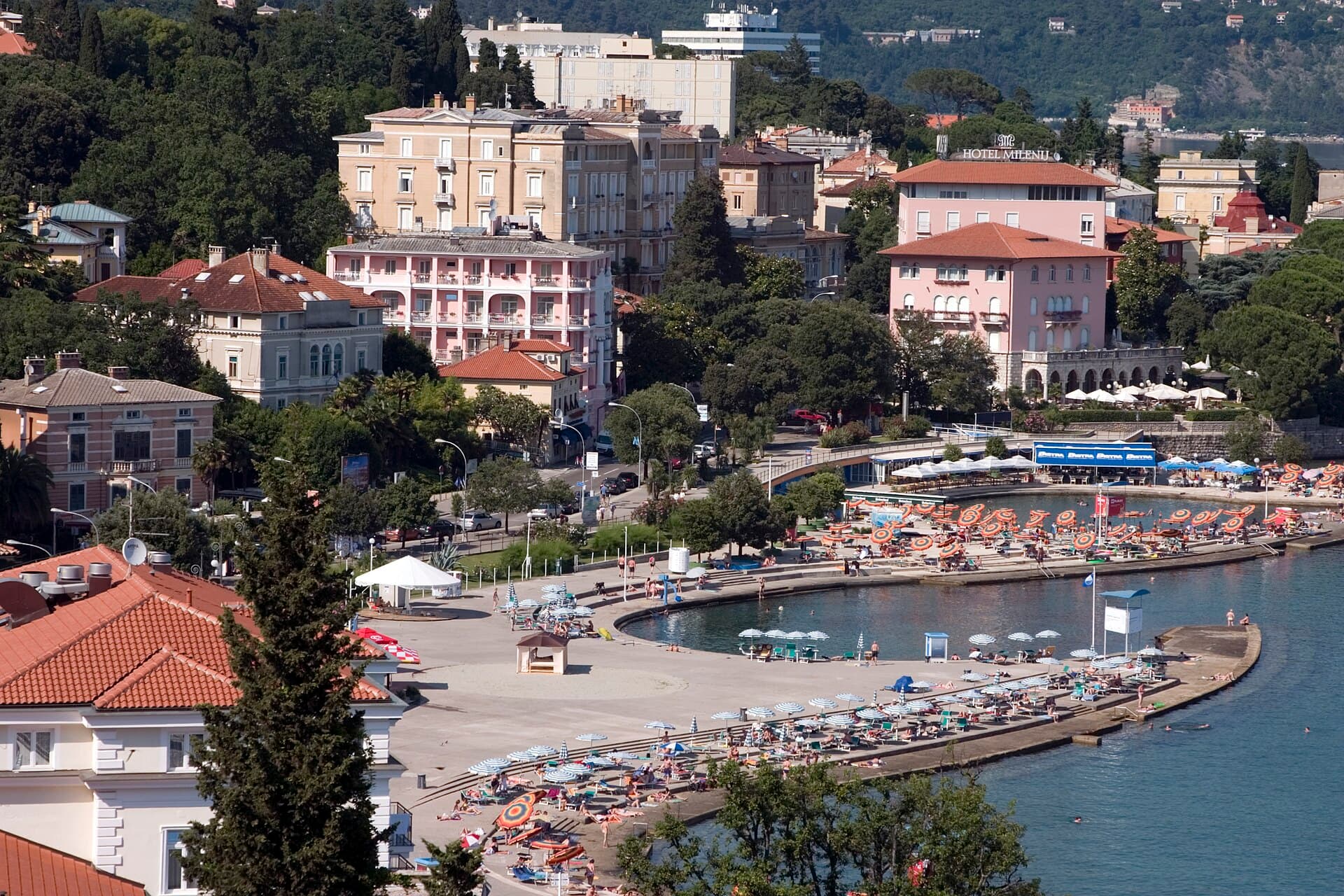
Crikvenica stands at the mouth of the Dubračina, on the Kvarner coast opposite Krk island. Its appeal extends beyond swimming: the waterfront, river mouth and rising hinterland reveal quite different sides of the same town. Beaches and promenades line the sea, while the Crikvenica Municipal Museum connects local archaeology with fishing and the development of tourism. Roman pottery provides a particularly tangible connection with the past. Beside the Dubračina, a reconstructed kiln interprets the archaeological discoveries made locally. For a first visit, combine a morning in the centre and museum with an afternoon by the water. The Love Path introduces another landscape: this approximately eight-kilometre walking route leads through greenery above the coast, linking historical sites and views towards Vinodol. Treat it as a separate outing rather than an extension of the level seaside promenade. Crikvenica suits families and travellers who enjoy mixing beach time with manageable cultural visits and walking. Compared with quieter neighbouring parts of the riviera, its centre brings museums, bathing areas and public spaces into a more concentrated setting. Keep a relaxed day beside the sea; for a more active day, choose one inland route instead of rushing between several excursions.
Distinguishing town and Riviera helps when planning walks. A coastal visit, the Aquarium and a route towards the hinterland are different activities. Give each day a main focus and leave other possibilities optional rather than treating them as obligations.
Stays nearby
 Apartment
Apartmeni Klenovica.eu
Klenovica
15 km from Crikvenica
up to 4 guests · 1 bedroom
The host confirms the exact price for your dates and availability.
Things to see
The Crikvenica Municipal Museum is a useful starting point for understanding the town beyond its summer bathing scene. Its collections encompass archaeology, fishing, photography and everyday life, giving the objects a connection with the streets outside. A reconstructed Roman pottery kiln stands beside the Dubračina. Combine it with the museum: it demonstrates production techniques rather than presenting an untouched ancient kiln in its original position. The former Pauline monastery beside the Church of the Assumption of the Blessed Virgin Mary forms an important part of old Crikvenica. The monastery building acquired a hotel function. Focus on the complex's setting, church and exterior rather than expecting a monastery museum inside. For heritage in a different landscape, consider Kotor, the old settlement above town, or Badanj in the hinterland. Badanj is linked with the Love Path, which places cultural landmarks within a walk through greenery and viewpoints. These are outings on more uneven ground, not stops along the urban promenade. Crikvenica's attractions work particularly well together: the museum explains, the kiln illustrates a craft, and the former monastery and hinterland show how the settlement evolved before modern seaside tourism.
Culture and history
Ad Turres reveals a Crikvenica that predates the seaside resort: a Roman pottery workshop beside the Dubračina produced objects for domestic life, construction and trade. Its location combined access to Vinodol’s clay, timber and water with opportunities to transport finished goods by land and sea. The reconstructed kiln beside the river turns archaeological evidence into a visible explanation of that manufacturing process. The Crikvenica Municipal Museum also holds Roman coins recovered at the Igralište–Ad Turres site. A separate strand of local history belongs to the sea: the museum’s boat models and Fishermen’s Week connect surviving objects with maritime traditions. The sea-bathing facility opened in 1888 marks a further chapter, the development of Crikvenica as an organised seaside holiday destination.
Nature
The Dubračina is a useful starting point for understanding Crikvenica’s landscape: its riverside walk brings the watercourse together with the Roman site of Ad Turres. Above the coast, the Love Path changes the perspective towards Badanj Fort, the Kavranova Stena rock and Vinodol. The viewpoint between Badanj and Kavranova Stena looks towards Tribalj and its reservoir. Pod Veli Kamik, on the same route, recalls a former spring and Crikvenica’s water supply. Farther north, Jadranovo offers a different coastal setting, where shoreline walks connect with woodland paths and the coves of this separate part of the riviera.
Beaches
Balustrada is a pebbly town beach beside Strossmayerovo Šetalište, making it straightforward to combine swimming with a walk back towards central Crikvenica. Its listed facilities include showers, changing cabins and places to eat or drink. Podvorska serves a different need: a designated pebble beach for dogs occupies part of the harbour area on Šetalište Vladimira Nazora. For families travelling with a dog, that marked section is the relevant bathing spot; the name Podvorska alone does not describe identical arrangements along the whole waterfront. Crikvenica’s bathing tradition reaches back to its public wooden sea-bathing facility of 1888, and the contemporary beaches remain closely linked to the town’s coastal promenades.
Bathing water quality nearby
- Hotel Internacional · 291 mexcellent · season 2025
- Hotel Kaštel · 364 mexcellent · season 2025
- Plivalište · 365 mexcellent · season 2025
- Balustrada · 468 mexcellent · season 2025
- Podvorska · 640 mexcellent · season 2025
- Glavna plaža istok-žal kod male luč.
Things to do
For one day, begin at the mouth of the Dubračina. Walk beside the water to the reconstructed Roman pottery kiln, then visit the Crikvenica Municipal Museum to connect it with local manufacturing, fishing and tourism history. Leave the rest of the morning for the centre and the former Pauline monastery complex by the sea. In the afternoon, choose the main town beach or continue along the waterfront. Travellers with dogs can use the specifically designated section at Podvorska. For three days, separate the town, walking and riviera experiences. Keep the first day for the museum and sea. Give the second to the Love Path, choosing part or all of its approximately eight-kilometre route according to your fitness. Badanj, woodland and views towards Vinodol make this a worthwhile outing without adding several car journeys. On the third day, explore the coast towards Selce, or make a separate visit to Jadranovo and its Fishermen's House. Avoid squeezing all three landscapes into one circuit. A waterfront stroll allows an easy-going schedule; trails above town call for footwear suited to uneven ground and sufficient water. The museum provides a useful change of perspective during a stay otherwise centred on the beach.
Activities
The Love Path climbs above Crikvenica towards Badanj Fort and the Vinodol landscape, following a route approximately eight kilometres long. Walkers can look for the former Pod Veli Kamik spring and the viewpoint between Badanj and Kavranova Stena. For time below the surface, Crikvenica’s official activity directory lists the Dive City diving centre, while Mihurić is associated with neighbouring Selce. Choose the Love Path for an inland walk, and arrange a diving excursion with the centre serving your departure point: Crikvenica and Selce have separate meeting locations. A return to the waterfront along Strossmayerovo Šetalište can finish with a swim at Balustrada.
Day trips
Grižane offers an inland excursion from Crikvenica centred on art and the Vinodol landscape. Housed in a former school at Grižane 45, the House of Klović introduces Renaissance miniature painting alongside the valley’s cultural heritage. Roads from Crikvenica approach Grižane through Dolinci or past the quarry. Walkers can continue from the village centre onto the Stone Steps Trail, a circular route incorporating more than 1,300 steps cut into the rock. Combining the museum with part of this trail reveals the inland routes that once linked Vinodol with Gorski Kotar; climbing those stone steps is a different undertaking from strolling along Crikvenica’s waterfront.
Food and drink
Crkveniške rupice, the fish balls featured on the Blue Fish Route, provide a distinctive introduction to Crikvenica’s cooking. The local food offer pairs oily fish with Žlahtina from the Vinodol area and Frankopan cake, connecting the waterfront with flavours from the hinterland. Travellers cooking in an apartment can also explore Crikvenica’s fish market and produce market instead of limiting their food experience to restaurant menus. In 2026, Blue Fish Month runs from 18 September to 18 October, with culinary presentations and fish dishes in the town centre. The Blue Fish Route is a gastronomic initiative involving different venues, rather than the name of a single street to follow on foot.
Practical information
Practical information
Crikvenica’s tourist information office is at Trg Stjepana Radića 1c, close to the waterfront and town parking areas. Bus travellers arrive at the station in Nike Veljačića Street 3; a visit to the House of Klović requires continuing inland to Grižane rather than remaining on Crikvenica’s seafront. Accommodation near Balustrada is convenient for Strossmayerovo Šetalište, while visitors travelling with a dog may prioritise the designated dog beach at Podvorska. Eko Murvica operates different seasonal and off-season parking arrangements, so choosing Petak or Dubračina also involves the applicable charging system. Blue Fish Month adds a food-focused reason to visit in September and October 2026.
Parking
For central Crikvenica, distinguish the enclosed Petak car park from the open spaces around Petak, Ivana Skomerže Street and Dubračina. Eko Murvica manages these through a zoned system with separate seasonal arrangements from June to September. Petak provides a waterfront starting point for walking towards the centre, while the Dubračina parking area lies beside the stream opposite the church of the Blessed Virgin Mary. On an excursion to Grižane, parking is available outside the House of Klović; that museum approach is separate from Crikvenica’s town-centre parking zones.
Getting there and around
Arriva links Crikvenica with Rijeka, using the Crikvenica bus station at Nike Veljačića Street 3. Local routes serve Dramalj and Jadranovo, Selce, and the Gornji Kraj area. For Selce, distinguish the local service from the intercity stop on the Adriatic Highway above the settlement. Rijeka Airport is on Krk island, so arrival by air involves an onward road journey to Crikvenica. Arriva describes the Crikvenica–Krk town connection as a direct seasonal service, with a connection through Kraljevica outside that period; reaching Krk town is therefore a different transport undertaking from a short journey to Selce.
At a glance
Frequently asked questions
Which beaches work well for a first visit?
Start with the main town beach or Podvorska, then choose the western shore according to facilities and your accommodation.
Do I need a car in Crikvenica?
Not for the centre and waterfront. A car is much more useful for Vinodol, Gorski kotar and longer day trips.
Is Crikvenica suitable for children?
Yes. Managed beaches, promenades, the Aquarium and short excursions make family days easy to vary.
When is the best time to visit?
Summer is liveliest for swimming; June and September are often easier for combining the sea with walking and excursions.

Related guides
Rab
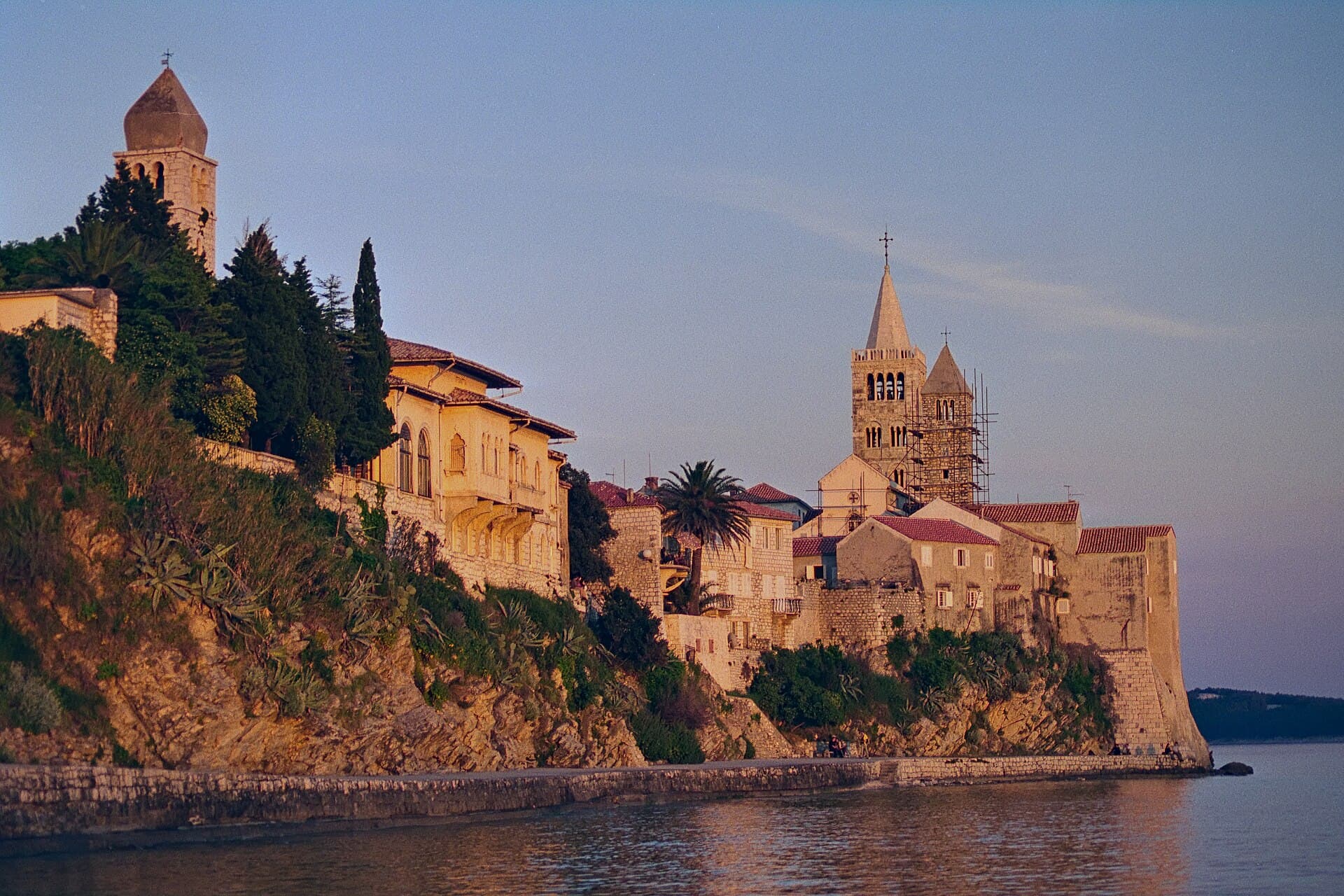
Rab's old town has a clear silhouette, but it rewards more than a postcard view. Its four towers mark distinct religious sites: the Assumption of Mary, St John the Evangelist, St Andrew and…
Read the guide
Help improve this page
Spot something missing or wrong? Suggest a correction, add your photo or report a problem. Editors review every suggestion before it is published.
Photo credits
- Crikvenica, Dramalj — Roberta F. · CC BY-SA 3.0 · Wikimedia Commons
- Selce — Elekes Andor · CC BY-SA 4.0 · Wikimedia Commons
- Šilo — Allie_Caulfield from Germany · CC BY 2.0 · Wikimedia Commons
- Grižane-Belgrad — Croq · CC BY-SA 3.0