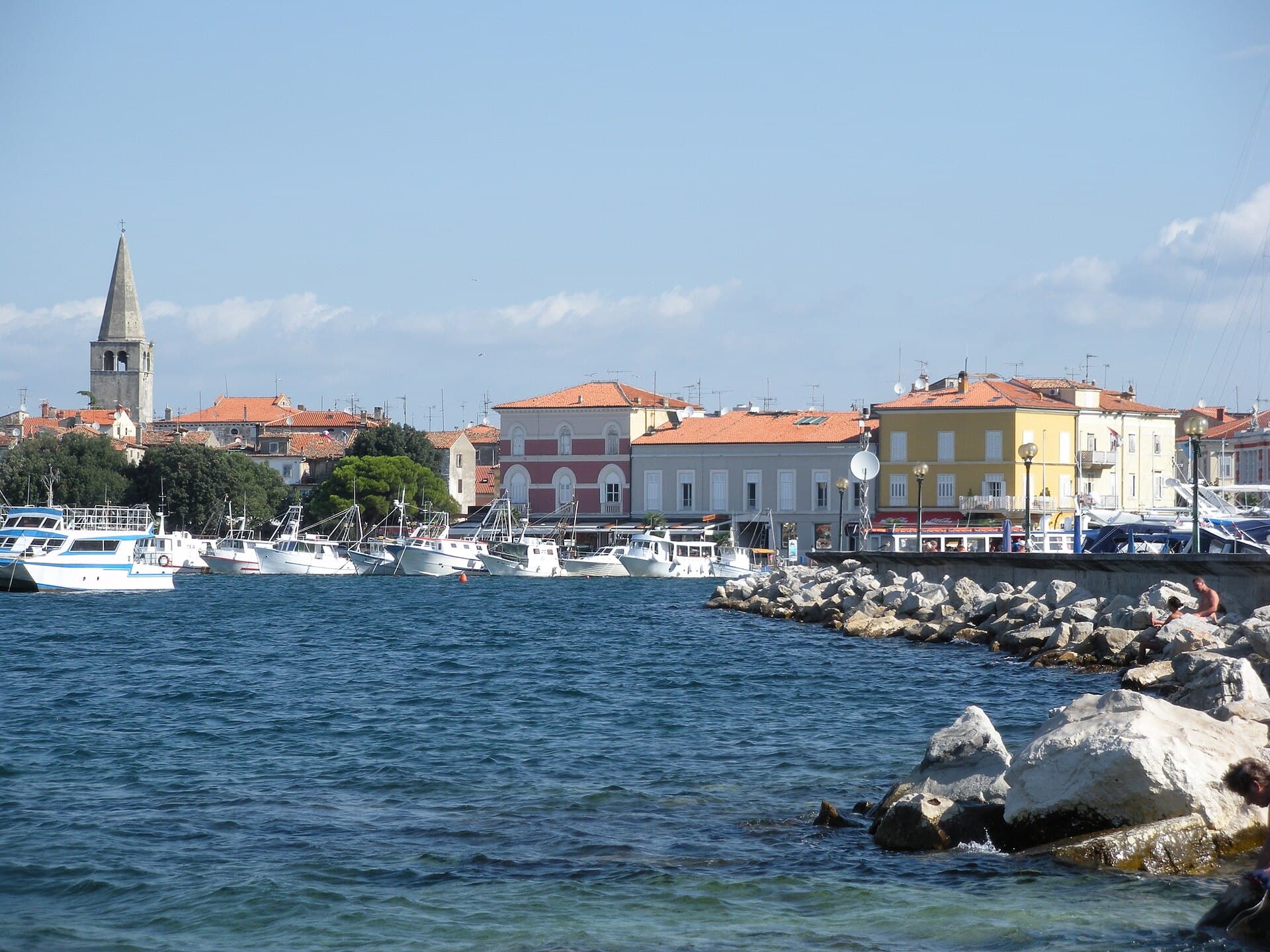
Vodnjan
About this place
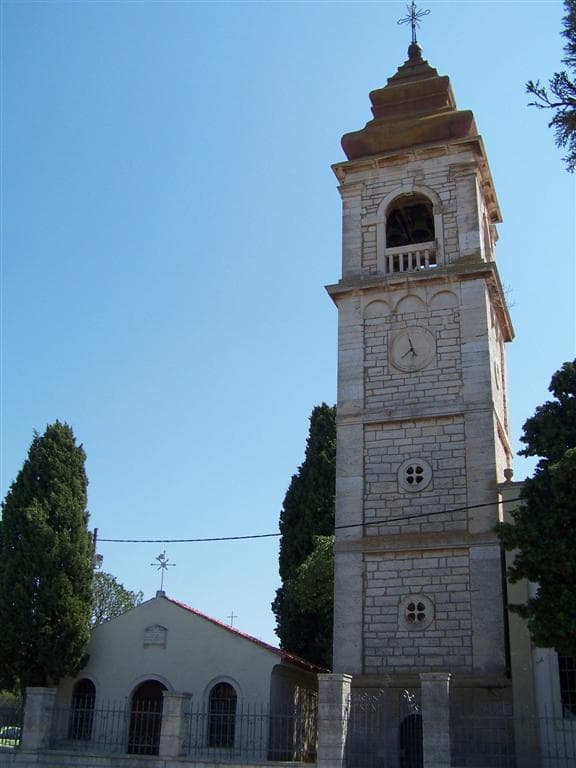
Vodnjan, or Dignano, lies twelve kilometres north of Pula and is one of southern Istria’s most distinctive historic centres. Its old town preserves Gothic, Renaissance and Baroque palaces, while the parish Church of St Blaise is the largest church in Istria and is known for a major collection of sacred art, relics and preserved bodies of saints. The separate bell tower, about 65 metres high, dominates the town skyline. The wider Vodnjan area is also a landscape of kažuni and dry-stone walls; these traditional field shelters stand among olive groves and farmland around the town. The municipality includes Peroj, Galižana and the coastal area around Barbariga, so Vodnjan is not only an inland historic centre. Olive growing remains central to local identity, and the annual Young Olive Oil Days place that agricultural and gastronomic tradition in the foreground. Murals painted on town façades have also reshaped contemporary Vodnjan by creating a modern art route through the older urban fabric.
Vodnjan stands 135 metres above sea level and 11.7 kilometres from Pula, while its municipal territory extends to the coast at Peroj and Barbariga. Gothic, Renaissance and Baroque buildings shape the old centre alongside Bettica Palace and St Blaise’s Church with its detached bell tower. Beyond the streets, olive groves, vineyards, dry-stone walls and an exceptional concentration of kažuni field shelters define the landscape. Contemporary Vodnjan adds another layer: more than forty murals created through the Street Art and Boombarstick festivals turn house fronts into an open-air gallery. The bilingual name Vodnjan–Dignano, local Istrian speech and the area’s enduring agricultural traditions distinguish the town from nearby Pula and its coastal neighbours.
Stays nearby
 Apartment
Apartmeni Klenovica.eu
Klenovica
80 km from Vodnjan
up to 4 guests · 1 bedroom
The host confirms the exact price for your dates and availability.
Things to see
The parish Church of St Blaise is Vodnjan’s principal landmark. Built between 1760 and 1800, it contains a major sacred-art collection, numerous relics and preserved bodies of saints. Its separate bell tower, roughly 65 metres high, is visible across much of the surrounding countryside. In the old town, Bettica Palace and houses influenced by Venetian Gothic architecture reveal Vodnjan’s former urban importance. Outside the centre, kažuni and dry-stone walls represent a completely different form of heritage and are best explored among fields and olive groves toward Galižana, Peroj and other settlements in the Vodnjan area.

Beaches
Vodnjan’s historic centre has no beach of its own; the municipality’s shoreline lies around Peroj and Barbariga. The Peroj coast alternates between limestone shelves and pebble coves, continuing towards Portić and the small harbour of Marić, while seasonal beach bars operate at Martulina. Barbariga offers roughly eight kilometres of coast, including long strips of pale pebbles backed by pine woods and views towards the Brijuni Islands. Some coves retain a largely undeveloped character and appeal to swimmers seeking greater seclusion, although many can be approached by car or bicycle. Strong sun and rocky entries are typical of this coast, making water shoes and an adequate supply of drinking water useful additions to a beach bag.
Things to do
Start on Narodni trg and walk to St Blaise’s Church, then follow Trgovačka Street while using the official mural map to locate painted façades. Visit Bettica Palace for an introduction to Vodnjan’s heritage before seeking out the town’s famously narrow and short lane. The second half of the itinerary belongs to the countryside: on the road towards Bale and Rovinj, the Kažun Park demonstrates four stages in the construction of these dry-stone shelters. Cyclists can continue along field tracks between olive groves and stone walls, drawing on more than 120 kilometres of routes across the Vodnjan area. End with a tasting of local extra-virgin olive oil or the traditional dessert wine Vin de Rosa.
Food and drink
Restaurant Vodnjanka at Istarska 22B is the most direct introduction to the town’s cooking, while the official tourism listing also includes Maslina on San Rocco Street. Outside the centre, Betiga, Bukaleta and Danijela taverns allow a meal to be combined with an outing towards Barbariga. Vodnjan’s food identity rests especially on olive oil, cured ham and the sweet wine Vin de Rosa. Bumbarska torta, made with eggs, sugar and ground almonds, once accompanied Christmas, Easter and wedding celebrations and can be sought out at Vodnjanka. Travellers wishing to take local flavours home can add the Buršić prosciutto farm or one of Vodnjan’s olive-oil tasting rooms to their route.
Practical information
Practical information
The Vodnjan Tourist Board office is at Narodni trg 10 and provides maps covering the murals, walking routes and surrounding settlements. Its free Guide for You app brings together beaches, restaurants, excursions and sights across the Vodnjan area; the tourist board lists access code 52215-0001. Medical emergencies are handled through telephone number 194, while Pula General Hospital’s combined emergency department is at Santoriova 24A. The 2024 visitor health information identified the Centar pharmacy at Giardini 14 in Pula as the round-the-clock duty pharmacy. For trips to the Peroj and Barbariga coast, arrange a car in advance or consult the current timetable for Pulapromet route 21.
Getting there and around
Vodnjan has road, bus and rail links with Pula. Arriva gives a distance of ten kilometres between the two bus stations and a journey of about ten minutes, depending on the service and seasonal traffic. Pulapromet route 22 connects Pula, Galižana and Vodnjan, while route 21 follows the coastal corridor through Fažana, Peroj and Barbariga. Vodnjan railway station lies on the line into Pula; the timetable valid from 14 June to 12 December 2026 lists several regional trains daily, with the ride from Vodnjan to Pula taking about sixteen minutes. For reaching beaches away from the town centre, a car, bicycle or the coastal route 21 is generally the practical choice.
Frequently asked questions
What is distinctive about St Blaise’s Church in Vodnjan?
The church contains a major sacred-art collection, numerous relics and the well-preserved bodies of several saints.
How tall is Vodnjan’s bell tower?
The Croatian Encyclopedia gives a height of about 65 metres, and the tower stands separately from St Blaise’s Church.
Where can you see kažuni around Vodnjan?
Kažuni are scattered among fields, dry-stone walls and olive groves on routes through the Vodnjan countryside.
Why is Vodnjan well known among olive-oil enthusiasts?
The area has a strong olive-growing tradition, highlighted each year by the Young Olive Oil Days.

Related guides

Novigrad
Novigrad-Cittanova developed on Istria’s north-western coast near the mouth of the Mirna, in a maritime setting that shaped centuries of fishing and trade. The historic centre still…
Read the guide
Help improve this page
Spot something missing or wrong? Suggest a correction, add your photo or report a problem. Editors review every suggestion before it is published.
Photo credits
- Peroj — Annebethmi · CC BY-SA 3.0 · Wikimedia Commons
- Fažana — ModriDirkac · CC0 · Wikimedia Commons
- Zbirka relikvija u Vodnjanu — Modzzak · CC BY-SA 3.0 · Wikimedia Commons
- Saint Blaise church — Silverije · CC BY-SA 4.0 · Wikimedia Commons