Drvenik, Gradac
About this place
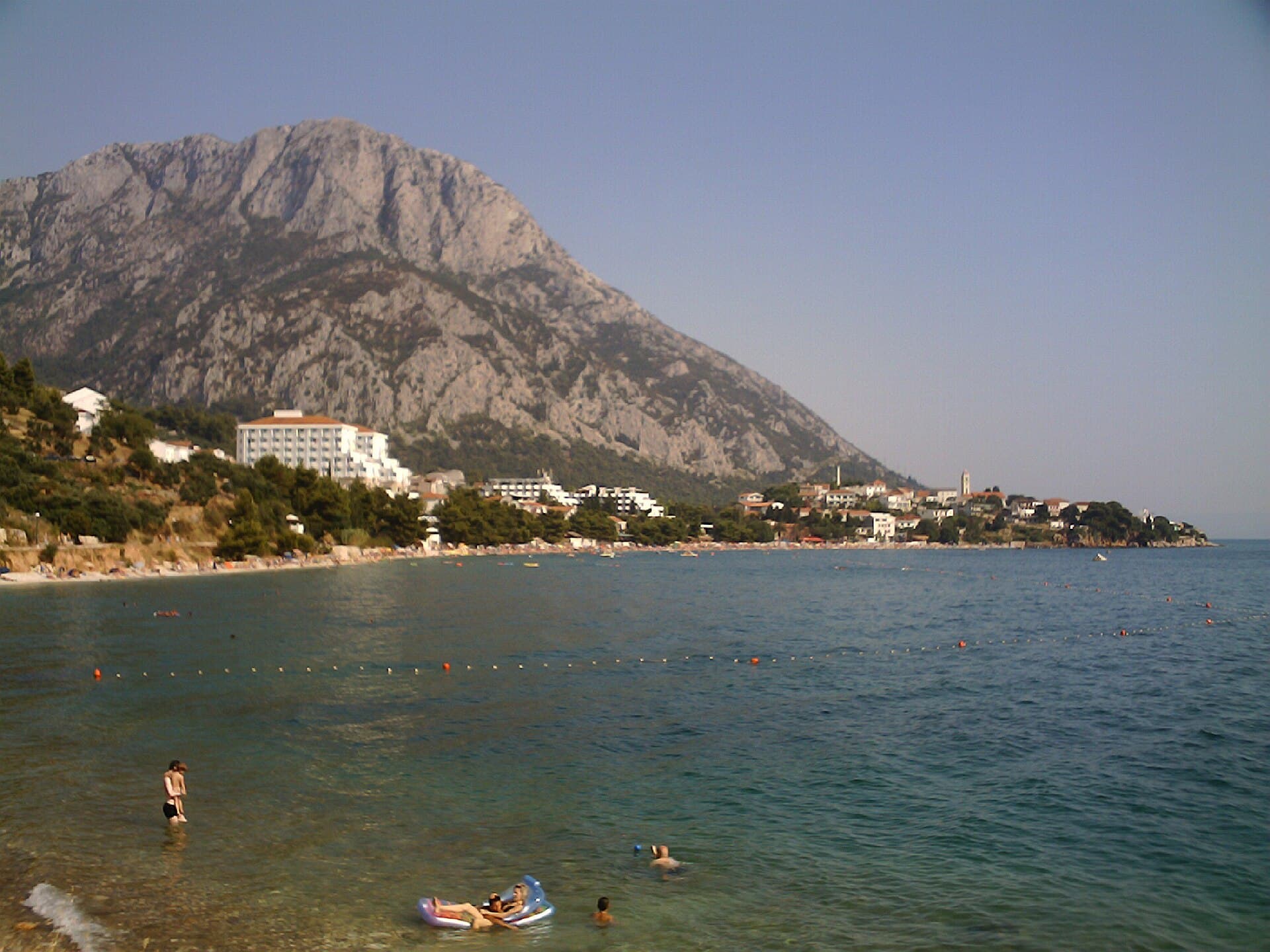
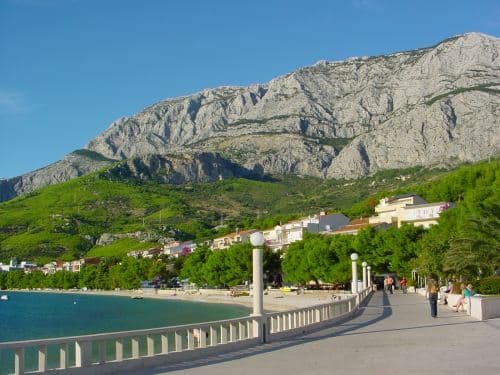
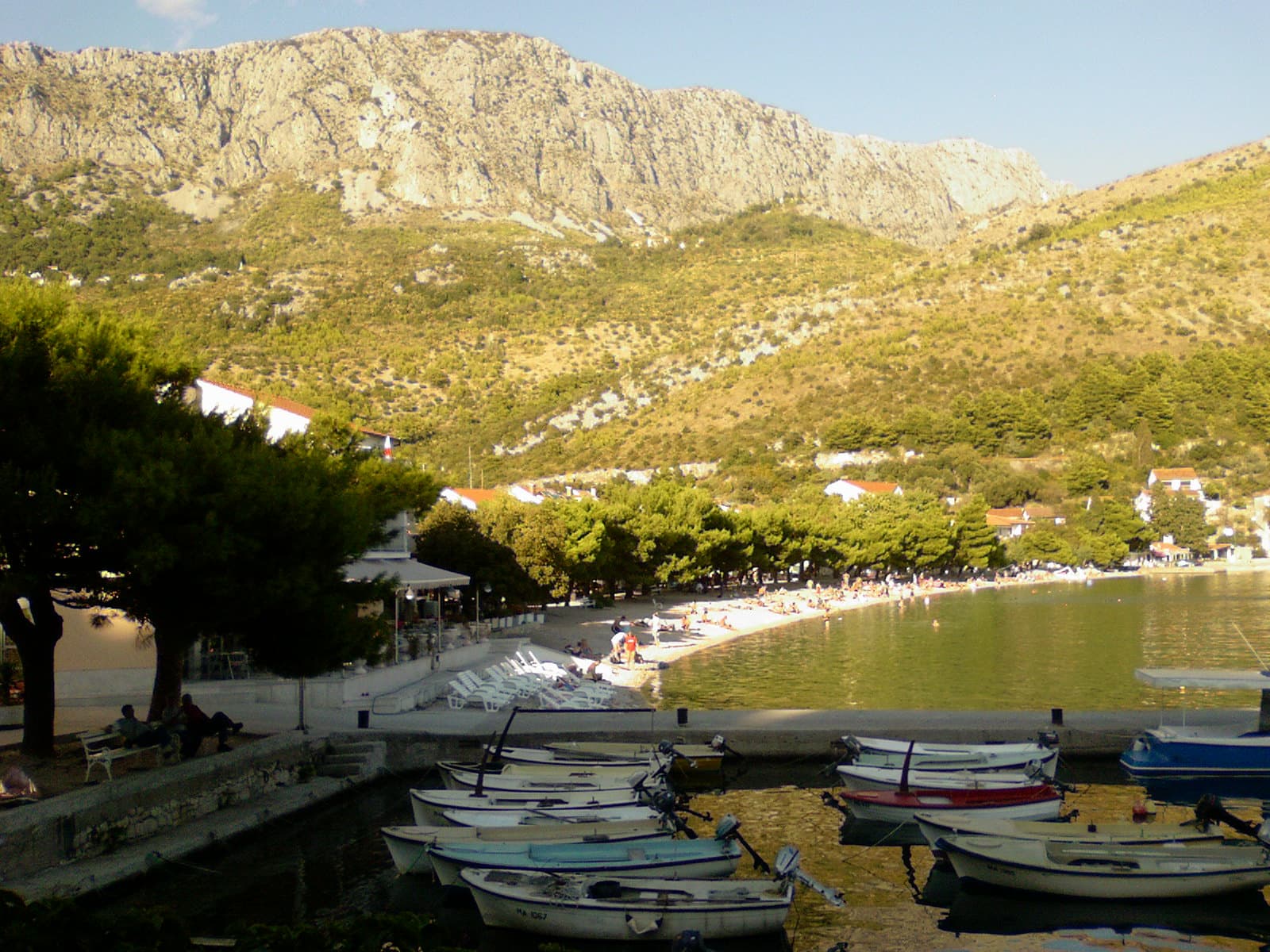
Drvenik occupies two coastal inlets on the Makarska Riviera, with Biokovo rising behind it and the Hvar Channel opening in front. Donja Vala contains the ferry landing, small harbour and a long pebble beach, while Gornja Vala is defined by an even longer pine-backed strand. Above the modern waterfront are the remains of the Gradina fortification, documented in the 15th century and burned in 1686. This combination of twin bays, an old hillside stronghold and a working ferry port gives Drvenik a character distinct from neighbouring Riviera resorts. Duba, Vira and Lučica add quieter swimming places beyond the two main beaches; Duba lies roughly two kilometres from the centre, while more remote Vira can be reached by road or boat. Drvenik is also a convenient gateway to eastern Hvar: Jadrolinija’s route 632 reaches Sućuraj in about 30 minutes. Waterfront walks, a climb towards Gradina and a ferry outing can therefore fit into a stay without lengthy road transfers.
Drvenik belongs to Gradac Municipality but functions as two clearly defined quarters: Donja Vala around the ferry landing and Gornja Vala farther west beside its long beach. The settlement is compressed between the Adriatic Highway, steep Biokovo slopes and the sea, so local life follows the shoreline rather than gathering around a large square. Ferries to Sućuraj give Donja Vala a transport rhythm absent from Drvenik’s smaller coves. Gornja Vala, by contrast, is centred on swimming and the natural shade of its pines. Gradina above the coast recalls an earlier period when settlement favoured defensible slopes. Four camps positioned directly beside the sea and beaches further explain why Drvenik’s visitor accommodation remains closely tied to the waterfront.
Stays nearby
 Apartment
Apartmeni Klenovica.eu
Klenovica
Klenovica, 291 km from Drvenik, Gradac
up to 4 guests · 1 bedroom
The host confirms the exact price for your dates and availability.
Things to see
Drvenik’s principal historical site is the fortified complex on Gradina hill. The stronghold appears in 15th-century records and was captured and burned by Ottoman forces in 1686. Its surviving fabric includes a defensive wall with firing slits and a multi-storey tower on the northern side, shaped to follow the hill’s terrain. At sea level, the defining landmarks are the two bays: Donja Vala with its ferry landing and harbour, and Gornja Vala with the settlement’s longest beach. Walking the coast between them reveals how strongly modern Drvenik faces the sea, while Gradina’s position above the highway explains the defensive logic of the older settlement. Sturdy footwear is more suitable for the ruins than ordinary beach shoes.
Beaches
Donja Vala has a long pebble beach extending between the ferry landing and the small-boat harbour, with shade along much of the shore. Gornja Vala is the longest beach in the Drvenik area and is particularly valued for natural pine cover. Lučica is a smaller, more intimate pebble cove, roughly a five-to-ten-minute easy walk from Gornja Vala towards Zaostrog. Duba lies about two kilometres from central Drvenik and is most easily approached by car or boat. Vira is the most distant of the coves presented by the local tourist board and can likewise be reached by road or sea. Swimmers choosing Donja Vala should expect vehicle activity around the ferry, whereas Gornja Vala has a quieter bathing layout.
Bathing water quality nearby
- Gornja Vala · 1.2 kmexcellent · season 2025
- Zaostrog - Plaža · 1.4 kmexcellent · season 2025
- D. Vala - Kod trajekta · 2.2 kmexcellent · season 2025
Source: European Environment Agency (EEA); data from Croatian authorities. · bathing water profile
Things to do
Start a day in Drvenik with a swim at Donja Vala, then walk on to Gornja Vala, the settlement’s other broad bay beneath Biokovo. From Gornja Vala, follow the promenade towards Zaostrog to Lučica Cove, a pebble beach roughly five to ten minutes away, with outdoor exercise equipment beside it. For a change of scene in the afternoon, climb to Gradina. Its remains belong to a fort first recorded in the 15th century and captured and burned by the Ottomans in 1686; the defensive wall, gun loops and tower position still follow the steep shape of the hillside above Drvenik.
Practical information
Practical information
Local visitor information is provided through the official Drvenik Tourist Board website, which separates beaches, sights, activities, accommodation and excursions into dedicated sections. Travellers heading to Hvar can buy the Drvenik–Sućuraj ticket in advance; Jadrolinija states that a ticket remains valid for another departure on the same route if its holder misses the intended sailing. The number of departures varies across the 2026 seasonal periods, so timings should be checked shortly before travel. Donja Vala carries more traffic because vehicles queue for the ferry, especially before departure, while Gornja Vala and Lučica suit a beach-only day better. Water and footwear suitable for rocky ground are sensible for the climb towards Gradina.
Parking
Municipal rules list public parking at Pijaca, beside the ferry landing, in Donja Vala, near the ice plant, at Porat, by the school, in front of Hotel Quercus and beside the children’s playground. Charges at most of these locations are seasonal, while the car park next to the ferry landing is excluded from the seasonal-only regime and operates through the year. Each paid facility must display its operating hours, maximum stay and fee, so the sign at the entrance is the decisive information on arrival. Ferry passengers should not treat ordinary parking as a vehicle queue; cars must follow the designated line for the Drvenik–Sućuraj sailing. Space around Gornja Vala and the beaches is constrained by the narrow coastal layout in summer.
Getting there and around
Drvenik stands on the Adriatic Highway between Makarska and Ploče, with the local road into Donja Vala leading to the ferry landing. Jadrolinija’s year-round route 632 links Drvenik with Sućuraj at Hvar’s eastern end, taking approximately 30 minutes. The 2026 schedule provides several daily departures, with its densest service between 26 June and 30 August. Motorists board in Donja Vala, making an early arrival prudent before the chosen sailing. A ticket purchased for this route remains usable later the same day if the intended departure is missed. Gornja Vala, Lučica, Duba and Vira are reached onward by local road or on foot beyond the ferry hub.
Frequently asked questions
How long is the Drvenik–Sućuraj ferry crossing?
Jadrolinija gives an approximate crossing time of 30 minutes for route 632.
Which beach is the longest in Drvenik?
Gornja Vala is the longest beach in the Drvenik area and has natural pine shade.
Can Duba Cove be reached by car?
Yes; the local tourist board recommends arriving by car or boat, and the cove is about two kilometres from the centre.
Where is Drvenik’s fortification?
The ruined fortified complex stands on Gradina hill above the coastal settlement.


Related guides

Split
In Split, the transition from ancient monument to ordinary street is almost imperceptible: entering the southern part of Diocletian’s Palace from the Riva leads towards the Peristyle, then…
Read the guide

Help improve this page
Spot something missing or wrong? Suggest a correction, add your photo or report a problem. Editors review every suggestion before it is published.
Photo credits
- Drvenik, Gradac — Robert Lommers · CC BY-SA 3.0 · Wikimedia Commons
- Zaostrog, Baška Voda — Mario Žamić · CC BY-SA 3.0 · Wikimedia Commons
- Podaca — Z. Blace · CC BY-SA 4.0 · Wikimedia Commons
- Brist, Gradac