Zaostrog
About this place
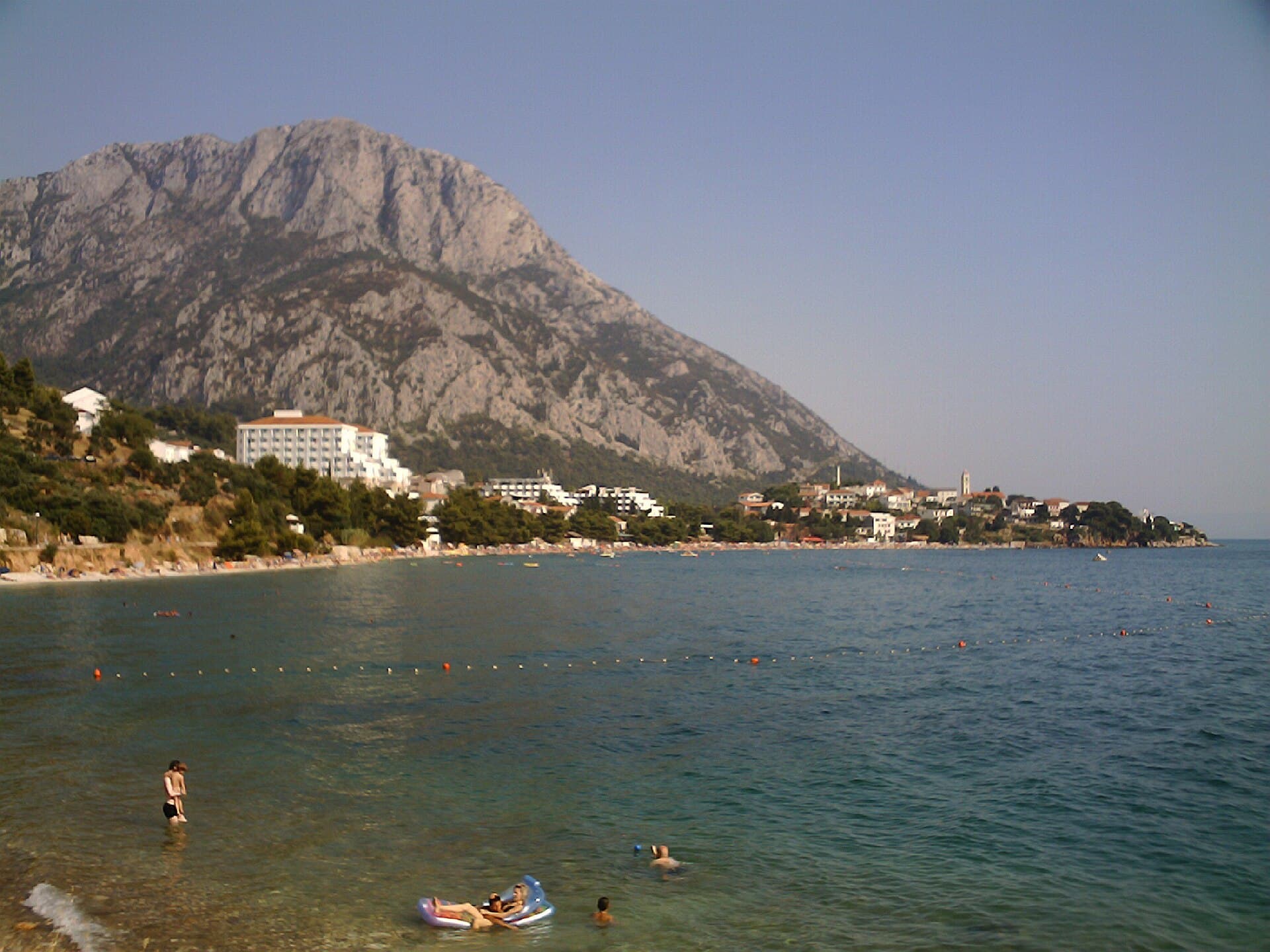
Zaostrog is a coastal village on the Makarska littoral within the Municipality of Gradac, best known for the Franciscan Monastery of St Mary and the strong connection between its old hillside settlement and the present waterfront. The village appears in written records in 1494, while a stone hand mill found on Viter hill points to much earlier human activity. Franciscans settled in the monastery in 1468; today the complex preserves a library of around 20,000 books, an archive, a permanent collection of works by Mladen Veža and a botanical garden with more than 250 plant species. Above the coast, the old settlement contains the churches of St Barbara and St Roch as well as traces of fortifications, while the population completed its move towards the sea after 1962. Modern Zaostrog forms part of the roughly fifteen-kilometre Gradac Riviera, a coast marked by pebbly beaches and vegetation. Several officially listed restaurants line Obala hrvatskih domoljuba, making it easy to combine heritage, swimming and a local meal.
Zaostrog has an unusually clear dual identity: the older settlement developed beneath Viter and Špašnik, while present-day life is concentrated along the sea. The first written mention dates from 1494, and a stone hand mill found on Viter shows that the area had been used much earlier. The upper village preserves traces of fortifications and the churches of St Barbara and St Roch, whereas coastal Zaostrog became dominant after residents completed their move down from the hillside following 1962. The Franciscan Monastery of St Mary links the two layers through its centuries-long role as a religious, educational and cultural centre. Today Zaostrog is one of four principal settlements of the Gradac Riviera, alongside Podaca, Brist and Gradac.
Stays nearby
 Apartment
Apartmeni Klenovica.eu
Klenovica
Klenovica, 292 km from Zaostrog
up to 4 guests · 1 bedroom
The host confirms the exact price for your dates and availability.
Things to see
The Franciscan Monastery of St Mary is Zaostrog’s principal landmark and one of the culturally richest monastic complexes on the Makarska coast. Franciscans took over the monastery in 1468, while an inscription above the church entrance from 1589 is written in Croatian using Bosančica script. The monastic library holds around 20,000 books, the complex preserves an archive and a permanent display of works by painter Mladen Veža, and its botanical garden contains more than 250 plant species. Above the coast, old Zaostrog retains the Gothic Church of St Barbara, the 17th-century Church of St Roch and traces of earlier fortifications. Together these sites span the village’s history from the medieval period to its modern relocation towards the sea.
Beaches
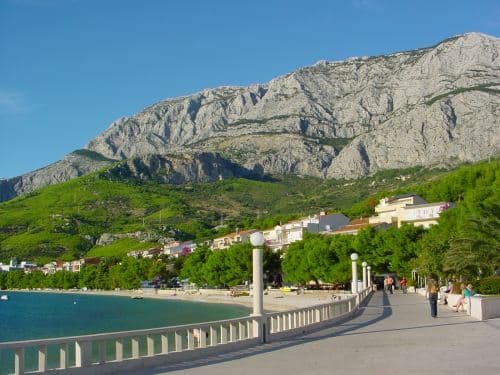
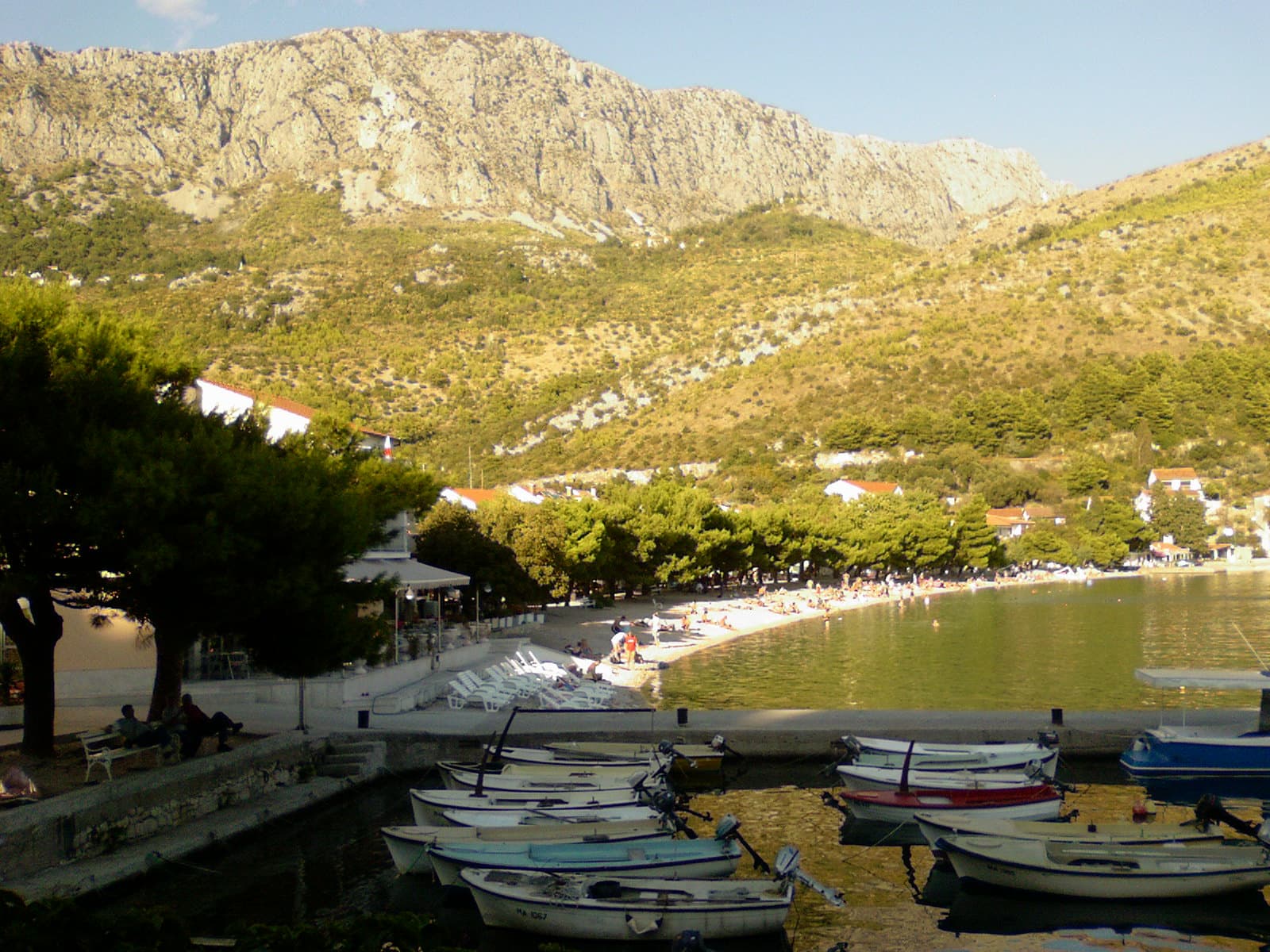
Zaostrog forms part of the Gradac Riviera, a coastal area joining Zaostrog, Podaca, Brist and Gradac along roughly fifteen kilometres of indented shoreline. The official Riviera description emphasises around ten kilometres of pebble beaches, so pebbles are the basic beach surface visitors should expect around Zaostrog as well. Sections of the coast are backed by evergreen vegetation, while mountain slopes rise quickly above the water in the characteristic landscape of the southern Makarska littoral. The official sources reviewed do not provide reliably separated names or current 2026 prices for individual beach services in Zaostrog, so those details are omitted. For swimming plans, it is more accurate to think of a sequence of local pebble stretches beside the village rather than one large sandy beach.
Bathing water quality nearby
- Zaostrog - Plaža · 427 mexcellent · season 2025
- Gornja Vala · 2.0 kmexcellent · season 2025
- Viskovića vala · 2.3 kmnot classified · season 2025
Source: European Environment Agency (EEA); data from Croatian authorities. · bathing water profile
Things to do
The strongest starting point in Zaostrog is the Franciscan Monastery of St Mary, where a library of around 20,000 volumes, an archive, works by Mladen Veža and a botanical garden of more than 250 species are gathered in one complex. From the monastery, continue uphill towards old Zaostrog and the churches of St Barbara and St Roch, where the contrast between the historic mountain-side village and today’s coast is most visible. Returning to the sea brings you back to the pebble shoreline of the Gradac Riviera, which extends for about fifteen kilometres in total. Finish along Obala hrvatskih domoljuba, where the official food listing includes Bracera, Viterska vila and Adriatic. The route combines heritage, walking, swimming and dinner without leaving Zaostrog.
Food and drink
The official Gradac Tourist Board food directory lists several specific venues in Zaostrog itself. Restaurant Bracera is at Obala hrvatskih domoljuba 14, while Restaurant Adriatic is at number 15 on the same street, making both convenient after a waterfront walk. Restaurant Viterska vila is also listed on Obala hrvatskih domoljuba, together with quicker options such as Delfin and Palma. The directory shows that the village’s main concentration of food and drink venues follows the coastal street between the swimming area and accommodation. The source does not provide sufficiently current 2026 menu details or prices, so this section relies only on verified names and locations rather than unconfirmed signature dishes or price claims.
Frequently asked questions
What is Zaostrog best known for?
It is best known for the Franciscan Monastery of St Mary, which preserves a large library, an archive, an art collection and a botanical garden.
When did the Franciscans arrive at the monastery?
The Franciscans settled in the Zaostrog monastery in 1468.
What are the beaches around Zaostrog like?
Zaostrog is part of the Gradac Riviera, whose official description highlights long stretches of pebble beaches.
Which restaurants are officially listed in Zaostrog?
The Tourist Board directory lists, among others, Bracera, Viterska vila and Adriatic along Obala hrvatskih domoljuba.
Nearby
Drvenik, Gradac
Village · Dalmatia – Split

Related guides

Split
In Split, the transition from ancient monument to ordinary street is almost imperceptible: entering the southern part of Diocletian’s Palace from the Riva leads towards the Peristyle, then…
Read the guide

Help improve this page
Spot something missing or wrong? Suggest a correction, add your photo or report a problem. Editors review every suggestion before it is published.
Photo credits
- Zaostrog, Baška Voda — Mario Žamić · CC BY-SA 3.0 · Wikimedia Commons
- Drvenik, Gradac — Robert Lommers · CC BY-SA 3.0 · Wikimedia Commons
- Podaca — Z. Blace · CC BY-SA 4.0 · Wikimedia Commons
- Brist, Gradac