Brač
About this place
Brač is an island where a seaside stay connects naturally with stone, work and the inland landscape. Bol and Zlatni Rat are only one part of that whole. Škrip introduces the island's past through the Island of Brač Museum, while Pučišća and its stonemasonry school show that stone is a living skill, not merely decoration on old facades. Vidova Gora provides another perspective on the southern slope and sea, requiring a separately prepared outing. Northern coastal settlements, southern Bol and inland villages should therefore not be compressed into one hurried circuit. The island suits travellers wanting more than a single beach, but works equally well with one base and a few accessible excursions. Stay near the arrival area on the first day, then connect museum themes with the coast and leave a more demanding active day separate. Compare actual routes between port, accommodation and chosen destinations. A short straight-line distance across the island says little about road travel, climbing or the practical return. Explore Brač in coherent areas, allowing each place time and context.
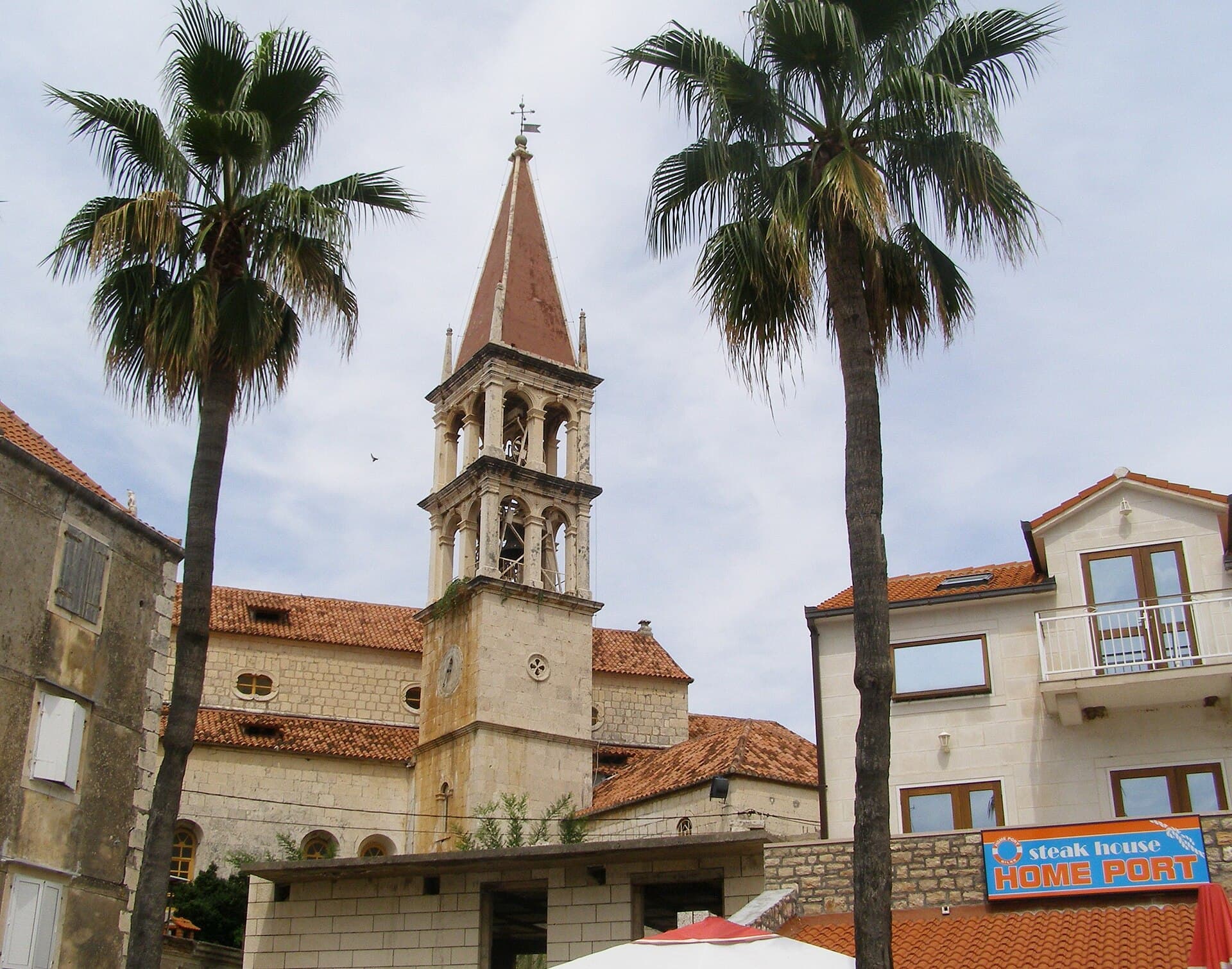
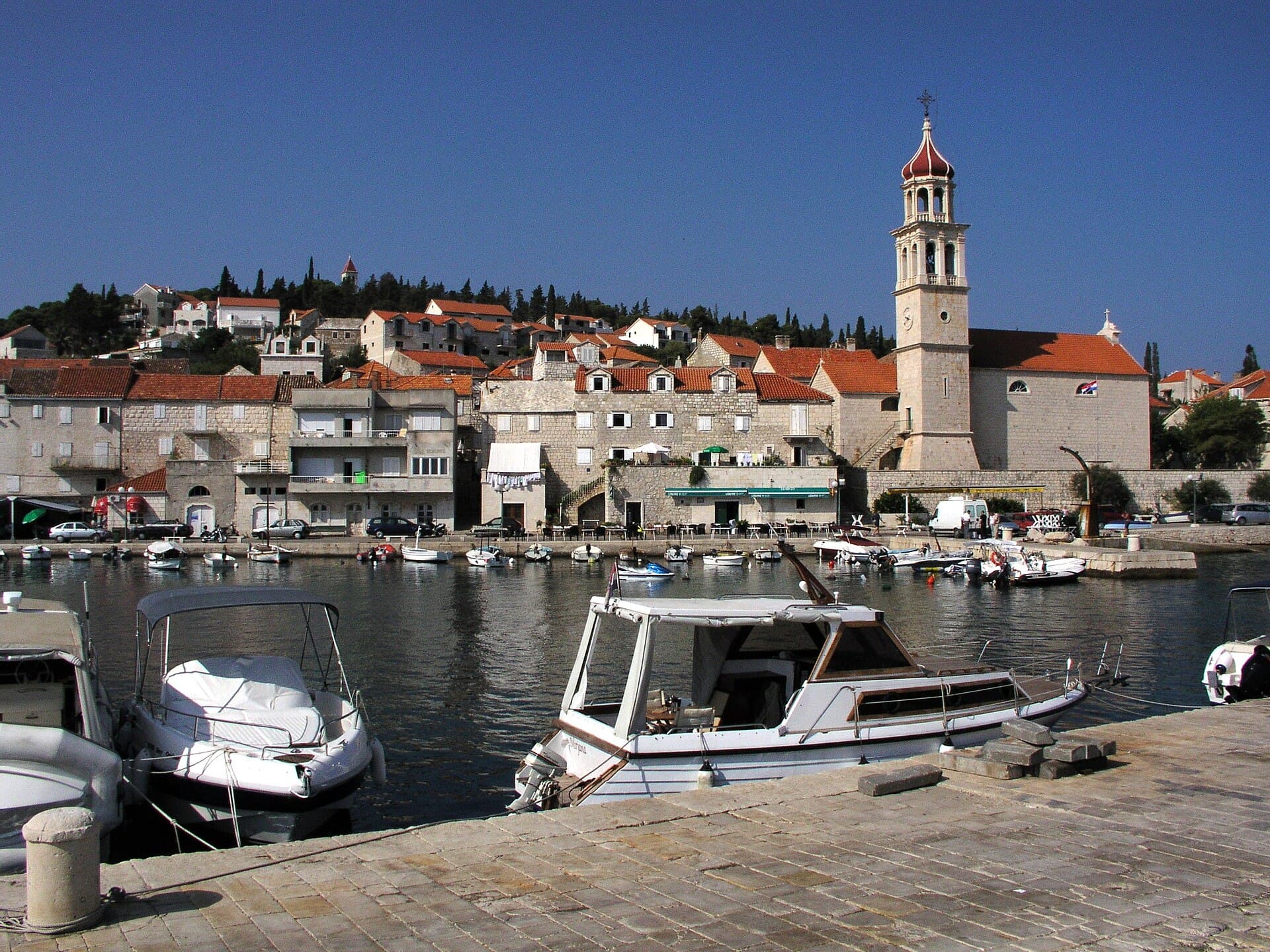
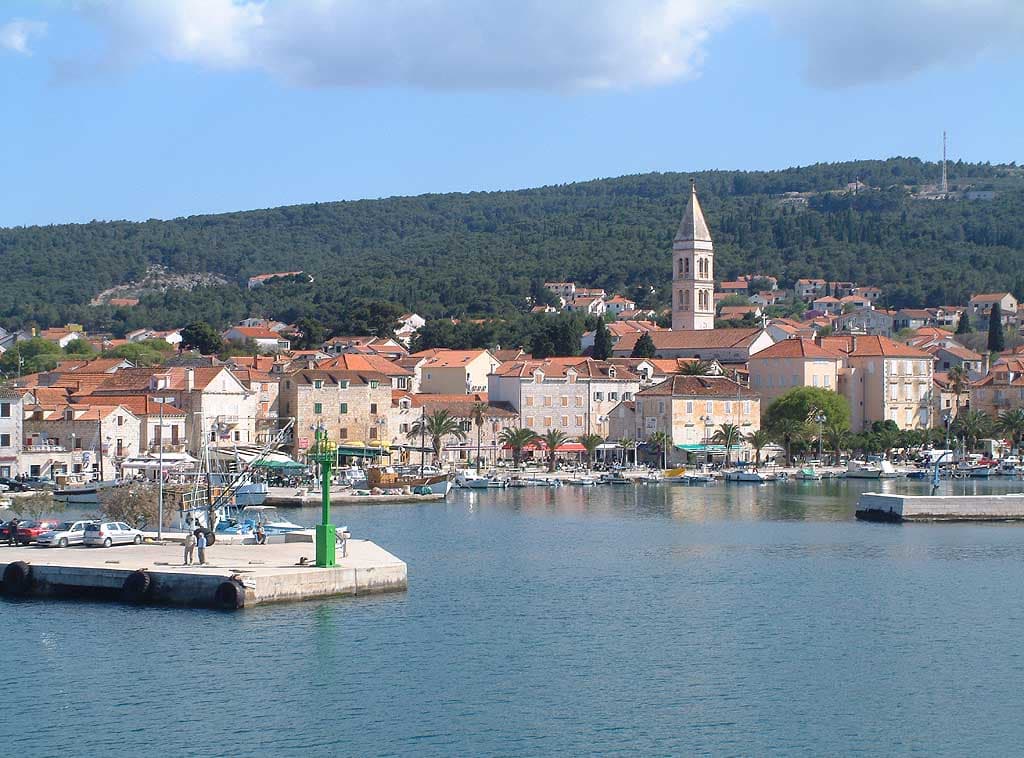
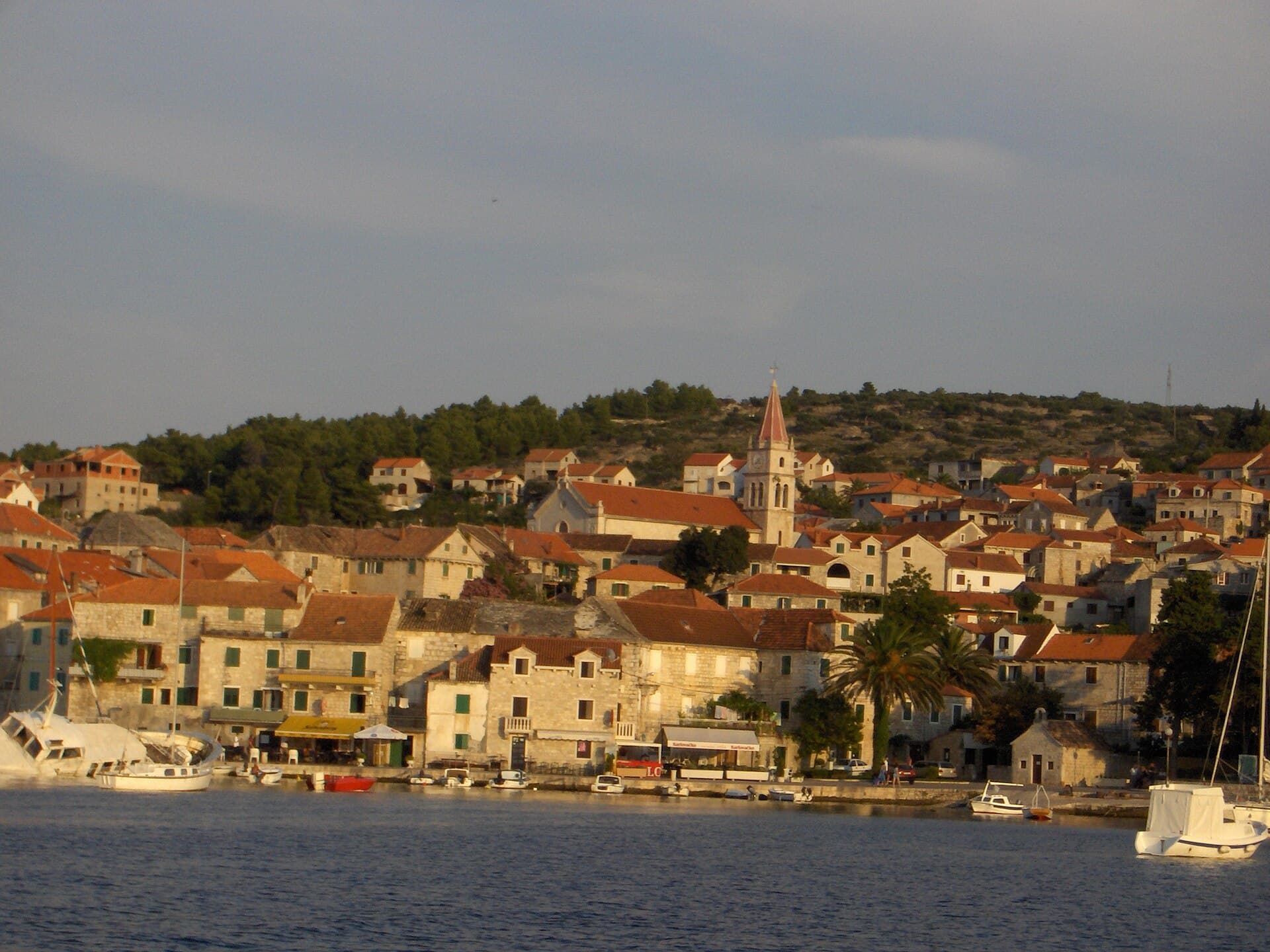
The Brač Channel separates the island's northern shore from the mainland, while its southern coast faces Hvar across the Hvar Channel. Supetar, Postira and Pučišća belong to the northern chain of harbours; Bol occupies the opposite shore beneath Vidova gora. Inland, the landscape opens into olive groves, grazing land and fields around Nerežišća rather than a continuous strip of resorts. Dol, two kilometres above Postira, has stone-roofed houses and cave recesses that give it a very different structure from the waterfront settlements. To understand Brač, compare these settings: the northern ports, the stoneworking landscape around Pučišća and the high interior behind Bol.
Top places
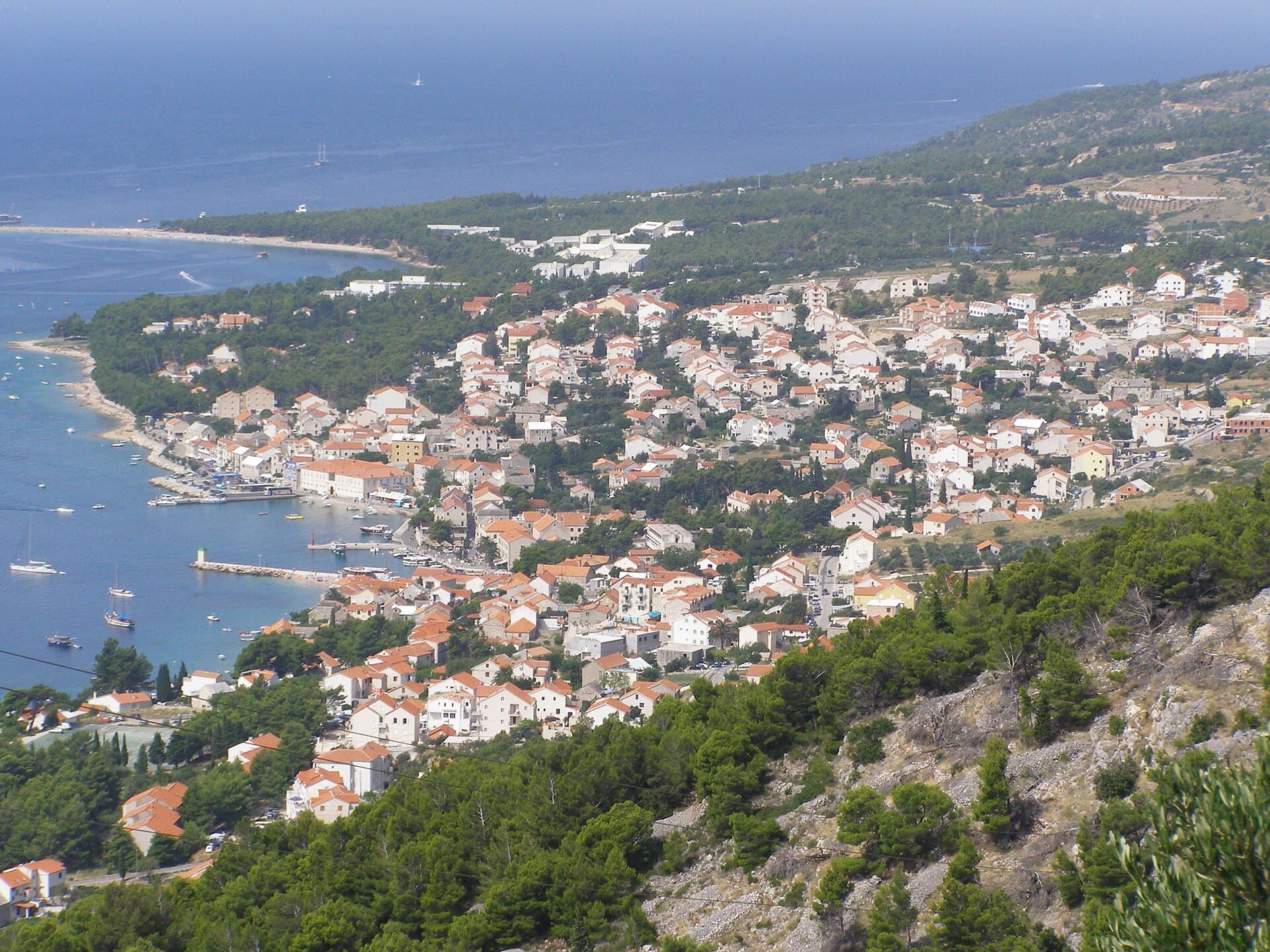
Bol
Village · Brač
Stays
No stays listed here yet
Things to see
At Škrip, the Radojković tower is part of the museum experience itself: its structure combines a Roman mausoleum with later defensive building, and it houses the Island of Brač Museum. Nearby, the Olive Oil Museum preserves a mill, press and equipment once used to process the island's harvest. Pučišća reveals another aspect of working with Brač stone: its Stonemasonry School still trains students, while the settlement's towers recall the harbour's defensive role. They include the Žuvetić tower, built in 1467. Škrip brings archaeology together with household production; Pučišća connects historic architecture with a craft that remains a living part of island education.
Beaches
Zlatni rat near Bol is a pebble cape, not a sandy beach; the sea and wind shape its distinctive tip. For sand on Brač's northern side, Lovrečina lies east of Postira beside the remains of an early Christian complex. Postira's Molo Lozna has a pebble shore closer to the settlement, making it a different outing from Lovrečina. Around Supetar, Vrilo combines pebbles, pine trees and proximity to the town centre. Choosing between Zlatni rat and Lovrečina also means choosing between opposite sides of the island: the road journey from Bol crosses the interior. Beaches around Supetar fit more naturally into a stay near the northern ferry port.

Things to do
Let the first day on Brač follow your arrival port and accommodation area. For a mainland day trip, choose one coherent combination, such as Škrip's museum heritage and nearby coastline, instead of linking all corners of the island. With three days, dedicate one to the base, another to stoneworking and museum themes, and a third to the southern coast or a prepared Vidova Gora outing. The stonemasonry school in Pučišća is an educational institution: classrooms and workshops are not open for unannounced entry during teaching. Arrange visits under the published conditions. Škrip's museum provides useful context for later sites by connecting archaeology, everyday life and island occupations. On an active day, do not transfer expectations from flat waterfront walking to a hillside route. Choose the path, check weather and organise water beforehand. Without a car, the daily number of destinations must follow real transport connections. Treat the return sailing as a firm limit and leave a margin for reaching the port, so each experience is not overshadowed by rushing to the next.
Activities
Postira's cycling routes offer a choice between a lower coastal circuit and a longer ride into Brač's uplands. Profunda covers 31.8 kilometres through Postira, Dol, the pastoral settlement of Gažul, Pražnica and Lovrečina. The shorter Macići i Vivers route runs for 19.6 kilometres via Mirje, Dol, Škrip and Splitska. Walkers seeking views towards Bol can choose Vidova gora, whose summit area has hiking routes and road access from the island's interior. The circuit through Gažul involves climbing inland; it is not simply a waterfront ride between Postira's beaches. Likewise, a short walk near the Vidova gora viewpoint should not be confused with hiking up from Bol.
Day trips
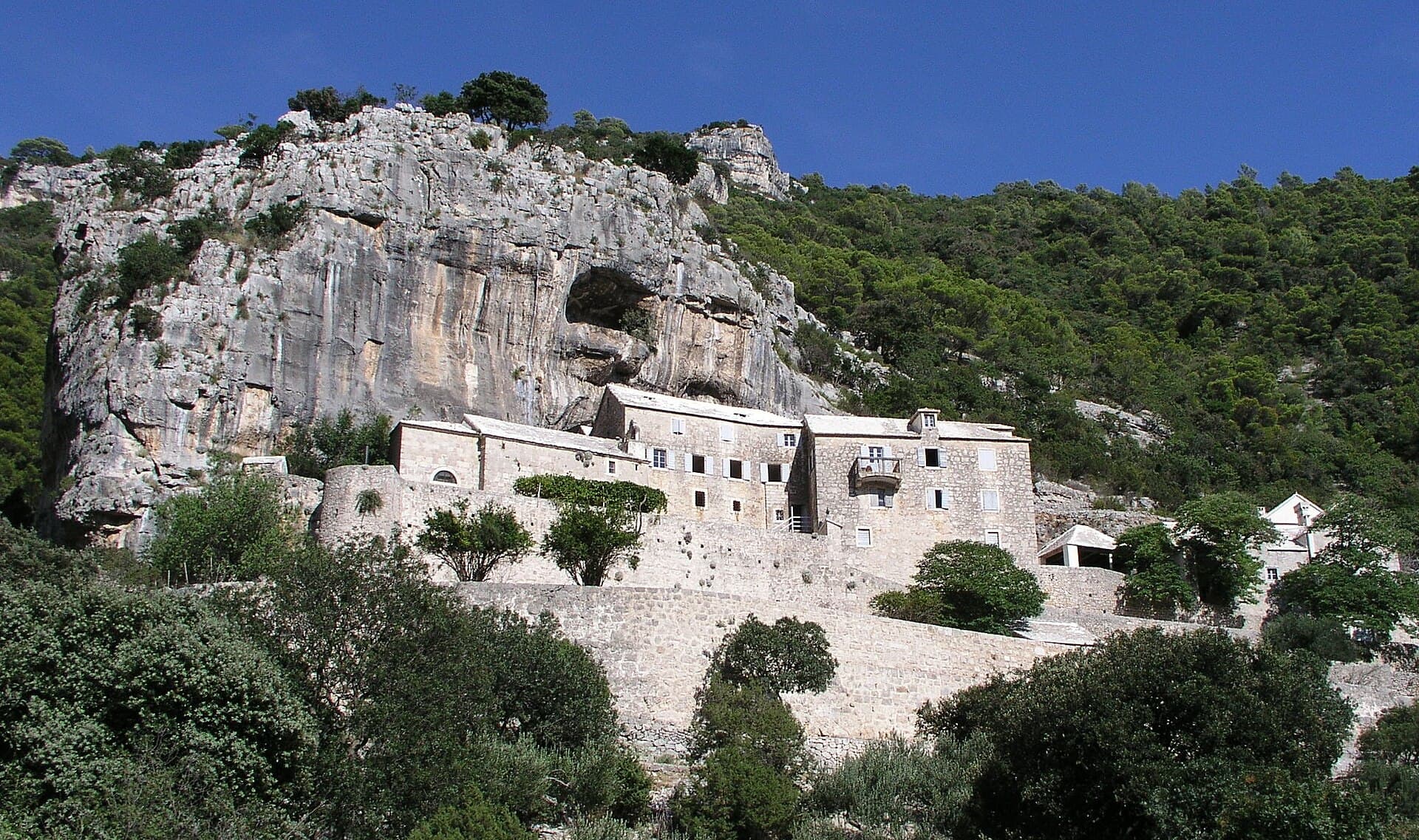
Blaca occupies an isolated setting on southern Brač beneath the Ljubitovica cave, rather than a waterfront site reached directly from a ferry port. Priests from Poljica established the hermitage in the sixteenth century, gradually adding residential and agricultural buildings around its church. A particularly distinctive legacy is that of priest and astronomer Nikola Miličević, who observed the stars here and assembled a substantial library. The museum also preserves Glagolitic missals and a small printing press. Miličević's observations at Blaca began in 1926, using a 175-millimetre refractor and additional telescopes. Corridors and stairways connect the hermitage buildings, reflecting construction on the steep cliffs below Ljubitovica.
Food and drink
Brač's vitalac links island sheep farming with local cooking: it is made with lamb offal, rather than being another name for roast lamb. Dol has a sweet speciality of its own, hrapoćuša cake, while Postira's food traditions include salted anchovies and sardines. In Škrip, an olive-oil tasting can accompany a visit to the Olive Oil Museum, where the Cukrov family presents the old oil mill alongside island products. Seeing the press and mill gives a Škrip tasting a connection to production that a bottle alone cannot convey. Together, vitalac, Dol's cake and oil from Brač's groves reveal a broader island food culture than a seafood-only meal in Bol.
Towns
All other placesShow all 14Hide list
Practical information
Practical information
Drivers can reach Brač through Supetar from Split or through Sumartin from Makarska; the choice changes the onward journey towards Bol, Pučišća and the western settlements. For Split-Supetar in 2026, Jadrolinija states that a ticket can also be used on another departure that day. Makarska-Sumartin instead uses tickets tied to a reserved departure, so the two Brač routes should not be treated as having identical boarding rules. In Škrip, distinguish the Island of Brač Museum from the Olive Oil Museum: they have separate collections. Blaca is a third, geographically isolated museum, reached on foot and subject to its own access instructions from the Brač Cultural Centre.
Parking
Supetar's public parking is managed by Komunalno društvo Grad; arriving at this ferry port does not bring you into an island-wide Brač parking system. Supetar's Vrilo beach has parking spaces associated with its accessible bathing area, alongside a ramp and equipment for entering the sea. For a family visit to Vrilo, use the beach approach rather than the queue for the Split-Supetar ferry. Leaving a car near Supetar is also not equivalent to parking for Zlatni rat: Bol lies across the island.
Getting there and around
Split-Supetar is ferry route 631, with Jadrolinija listing a crossing of about 50 minutes for 2026. Route 638, Makarska-Sumartin, reaches Brač's eastern end and takes approximately one hour. Supetar is therefore the road-entry point for the northern coast and western part of the island, while Sumartin provides a separate approach from the Makarska coast. Neither of these car-ferry services lands in Bol: an onward road journey is required. Brač Airport is inland above Bol, not beside Supetar's ferry terminal. When choosing transport, distinguish between the island as a whole, the port of Supetar and the southern destination of Bol.
Frequently asked questions
Is Brač the same as Bol?
No. Bol is one settlement on the island's southern side.
Where can I learn about island history?
The Island of Brač Museum is in Škrip.
Can I enter the stonemasonry school at any time?
No. Follow the institution's visitor arrangements and teaching schedule.
Does Vidova Gora require its own plan?
Yes. Choose access and route according to fitness and weather.
Can I casually see the whole island between ferries?
Related guides
Supetar
Supetar is Brač’s largest town and administrative centre, yet its daily tempo is defined above all by the harbour, reached from Split after a ferry crossing of roughly 50 minutes. Stone…
Read the guide
Help improve this page
Spot something missing or wrong? Suggest a correction, add your photo or report a problem. Editors review every suggestion before it is published.