Susak
About this place
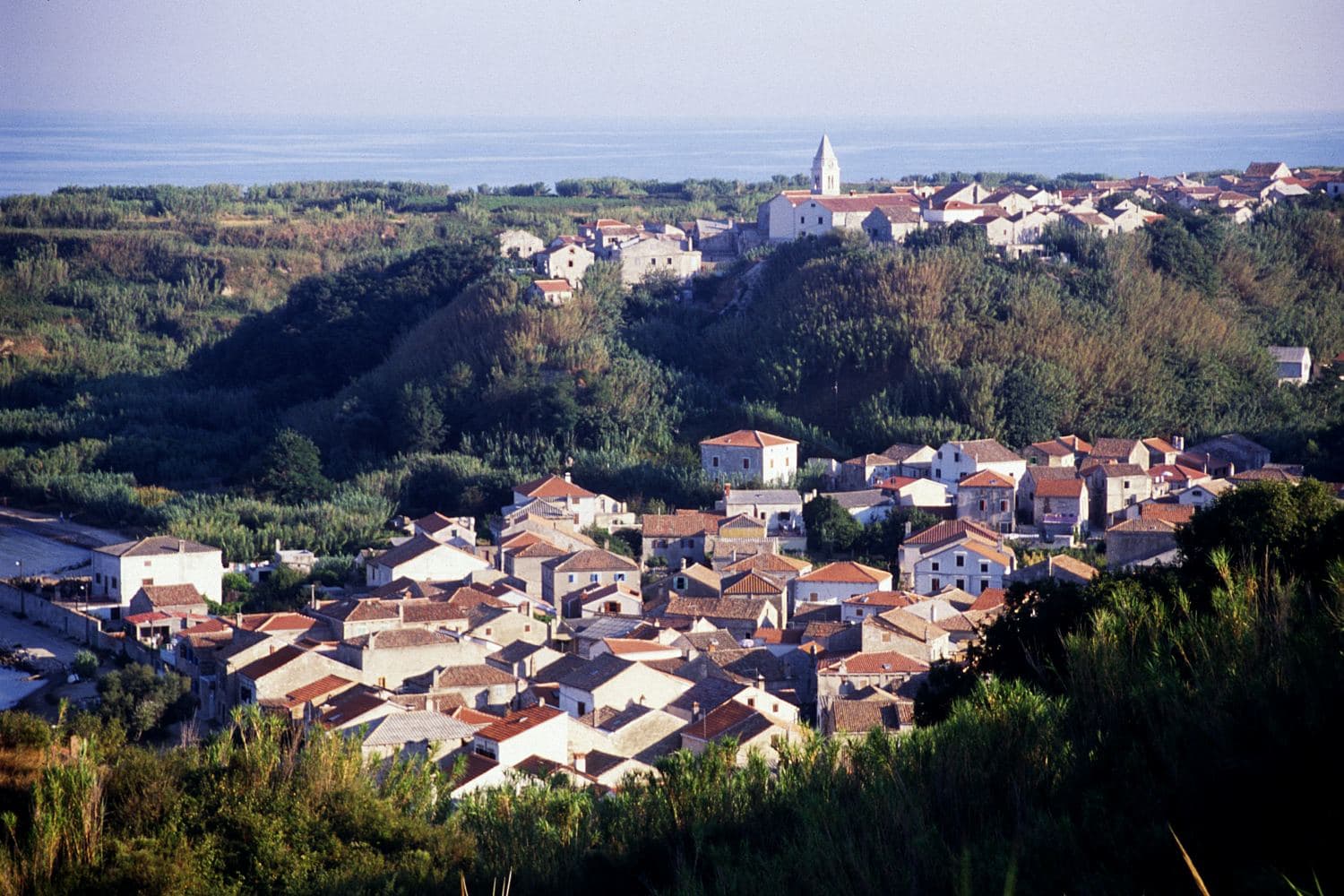
Susak is an unusual sand-covered island west of Lošinj and administratively part of the Town of Mali Lošinj. Thick layers of yellowish sand lie over limestone, while reeds planted around former vineyards and fields have long helped bind the loose soil. Its settlement has two distinct levels: Donje Selo beside the harbour and Spiaža beach, and Gornje Selo on the hill, linked by steps built in 1906. At 98 metres, the island’s highest point, Garba, carries a lighthouse dating from 1885. Roughly eight kilometres of sandy walking trails lead to Bok Bay, Cape Arat, vineyards, the cemetery and St Nicholas’ Church, which contains the Romanesque crucifix islanders call Veli Bouh. Ordinary car traffic is absent; tractors and wheelbarrows serve local needs, while visitors explore on foot. Shallow, sandy Spiaža is the easiest beach to reach from the harbour. Susak’s distinctive dialect, vivid short women’s costume and Emigrants’ Day on the final Sunday of July maintain a close link with the island’s large expatriate community in Hoboken, New Jersey.
Susak consists of a rocky base buried beneath deep layers of fine wind-deposited sand. Islanders planted reeds around cultivated terraces so their roots would help stabilise the soil against erosion. Donje Selo developed beside the harbour, while older Gornje Selo occupies the hill around St Nicholas’ Church; steps have linked the two since 1906. Conventional cars are absent, so sandy paths, vineyards and coves are explored on foot, with tractors and wheelbarrows still used for practical local transport.
Stays nearby
 Apartment
Apartmeni Klenovica.eu
Klenovica
79 km from Susak
up to 4 guests · 1 bedroom
The host confirms the exact price for your dates and availability.
Things to see
The Garba lighthouse was built in 1885 on the island’s 98-metre summit; it is automated and its interior is not open to visitors. St Nicholas’ Church in Gornje Selo contains the Romanesque Veli Bouh crucifix and occupies the site of the former Benedictine abbey. At Cape Arat, the Annunciation chapel allowed islanders to fulfil vows when rough seas prevented them from reaching the church of the same dedication at Čikat. The characteristic steps linking Susak’s upper and lower settlements date from 1906.

Beaches
Spiaža lies directly beside Donje Selo and the harbour, making it Susak’s easiest beach to reach. Fine sand continues into a shallow seabed, so deeper water is reached gradually. Bok is the island’s other major sandy bay, approached on foot across the interior; an early twentieth-century climatic bathing resort once operated there. No car road links the two bays: reaching Bok involves walking over sandy terrain, so carry water, use sun protection and wear footwear suited to a loose surface.
Bathing water quality nearby
- Glavna plaža - Susak · 672 mexcellent · season 2025
- Uvala Bok · 1.1 kmexcellent · season 2025
Source: European Environment Agency (EEA); data from Croatian authorities. · bathing water profile
Things to do
From the harbour, walk through Donje Selo and climb the steps to Gornje Selo and the parish church of St Nicholas. Inside is the Romanesque crucifix locally known as Veli Bouh. Continue towards Garba, the lighthouse and Susak’s highest point at 98 metres. For the return, follow the route past the cemetery towards Gornje Selo; the Mali Lošinj Tourist Board map marks the island’s footpaths, viewpoints and starting points. It is a satisfying walk that links the harbour, Susak’s older settlement and Garba’s sandy landscape.
Practical information
Practical information
The Mali Lošinj Tourist Board provides information on +385 51 231 884 and at [email protected]. Because Susak has no conventional car traffic, luggage should be manageable on foot from the harbour, particularly when staying in Gornje Selo. The island has roughly eight kilometres of trails over sandy ground, making water and sun protection essential for the circuit towards Garba, Bok and Arat. Check the return sailing for 2026 before leaving the waterfront.
Frequently asked questions
Are there cars on Susak?
Susak has no conventional car traffic; tractors and wheelbarrows are used for local transport.
How high is Garba?
Garba is Susak’s highest point at 98 metres and carries the island lighthouse.
Can visitors enter the lighthouse?
No. The lighthouse is automated and its interior is not open to visitors.
When is Emigrants’ Day?
Susak celebrates Emigrants’ Day on the final Sunday of July, when many expatriate islanders return.
What is Veli Bouh?
Nearby

Ćunski
Village · Lošinj
Related guides
Rab
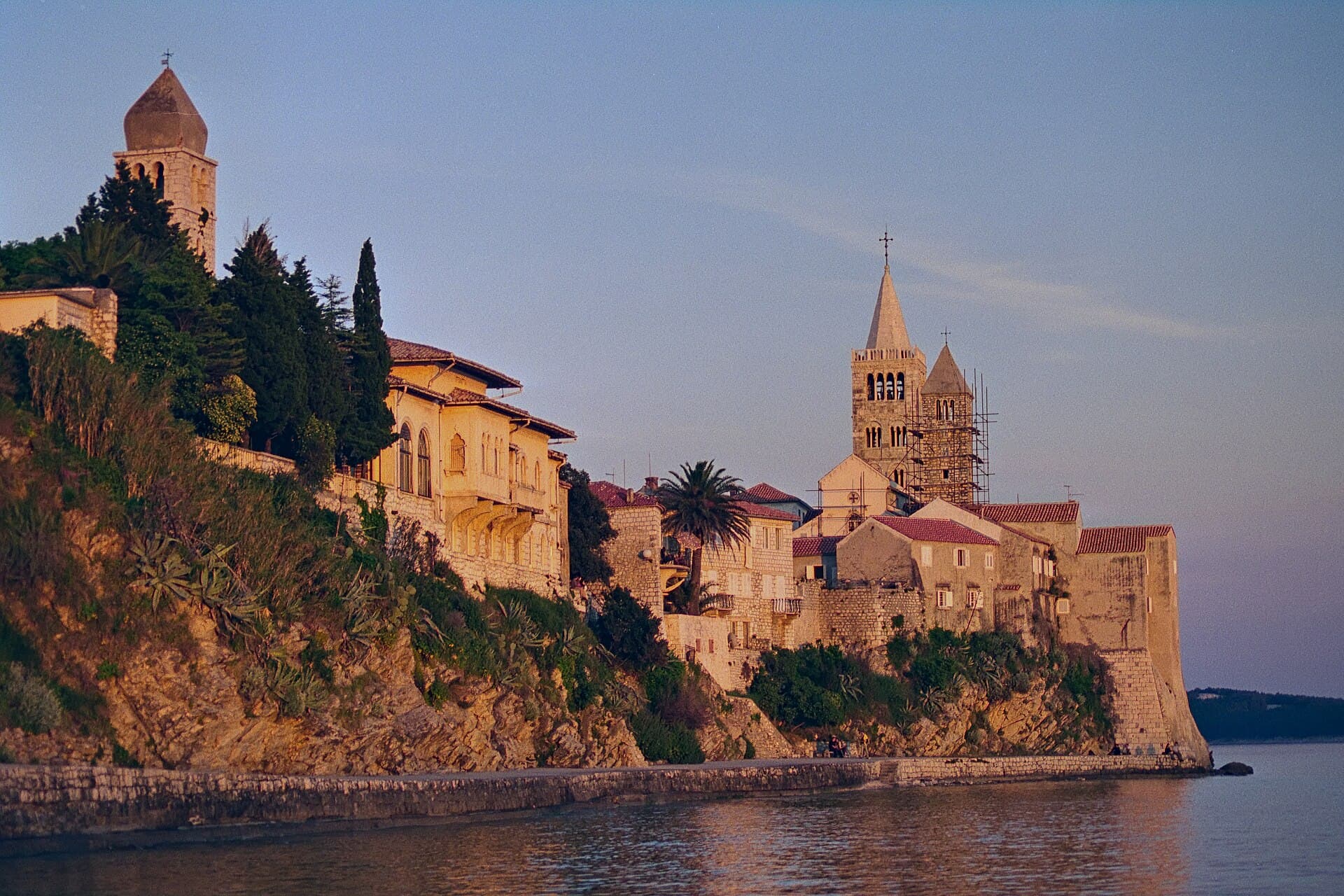
Rab's old town has a clear silhouette, but it rewards more than a postcard view. Its four towers mark distinct religious sites: the Assumption of Mary, St John the Evangelist, St Andrew and…
Read the guide
Help improve this page
Spot something missing or wrong? Suggest a correction, add your photo or report a problem. Editors review every suggestion before it is published.
Photo credits
- Susak — Roman Klementschitz, Vienna, Austria · CC BY 2.0 · Wikimedia Commons
- Ćunski — August Dominus · CC BY-SA 4.0 · Wikimedia Commons
- Mali Lošinj — K. Korlevic · Public domain · Wikimedia Commons
- Susak Lighthouse — Guba Zoky Rabko · CC BY-SA 3.0 · Wikimedia Commons
- Apartmeni Klenovica.eu — Apartmani Klenovica.eu · courtesy of the property owner
- Rab