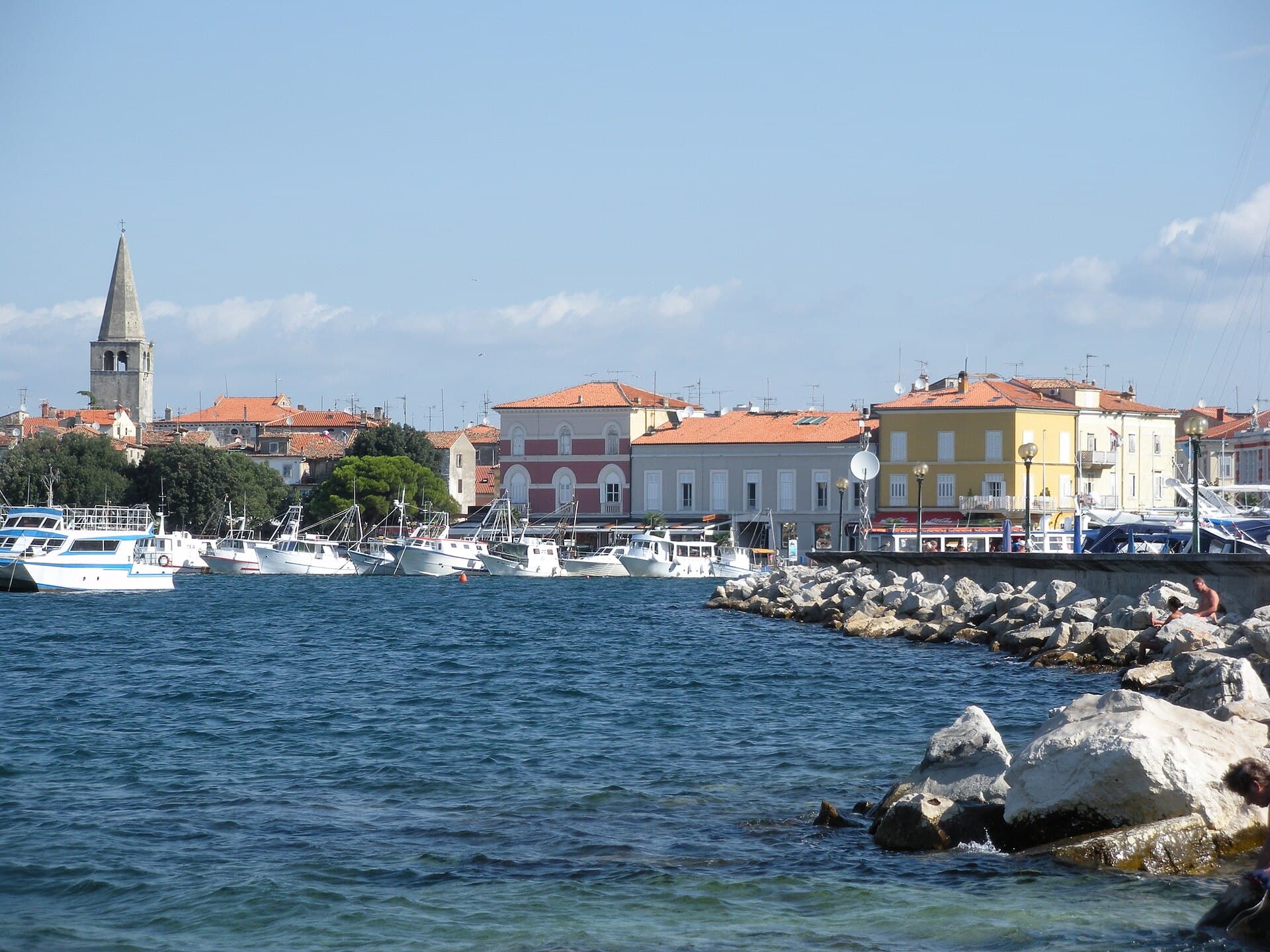
Raša
About this place
Raša is the youngest planned town in Istria and one of Croatia’s most complete examples of 1930s modernist mining urbanism. The new settlement was built in 1936–1937 to a design by Italian architect Gustavo Pulitzer Finali for miners working in the Labin coalfield. Its central square is organised around St Barbara’s Church, whose form evokes an overturned mining wagon, while the bell tower recalls a miner’s lamp. That architecture explains the town’s relationship with coal more clearly than any generic monument could. Centar Arsia, a small mining museum, continues the story through objects and interpretation of miners’ lives. Raša lies only three kilometres southwest of Labin, making the planned town easy to combine with Labin’s hilltop old centre and the mining heritage of Podlabin. Toward the sea, the municipality reaches Raša Bay and coastal places such as Sveta Marina. The surrounding landscape therefore combines industrial history, the Raša valley and eastern Istria’s coast.
Raša is not a conventional seaside town: it began as a mining centre in the Krapan stream valley, while the municipality reaches the coast at Trget, Tunarica, Koromačno, Ravni and Sveta Marina. Built between 10 March 1936 and 10 April 1937, its parallel workers’ streets, central square and industrial legacy form an unusually complete piece of planned urbanism. The sea is not visible from town as it is from neighbouring Labin, yet Raša’s mining story continues towards Raša Bay, once important for shipping coal. That combination of a purpose-built town, a long inlet and the steep eastern Istrian shore sets Raša apart from the peninsula’s older hilltop settlements.
Stays nearby
 Apartment
Apartmeni Klenovica.eu
Klenovica
60 km from Raša
up to 4 guests · 1 bedroom
The host confirms the exact price for your dates and availability.
Things to see
Raša’s central square and St Barbara’s Church form a unique ensemble of Croatian modern architecture. The church was begun in 1937 and incorporates mining symbolism: its form recalls an overturned coal wagon, while the bell tower resembles a miner’s lamp. Gustavo Pulitzer Finali designed the town as part of a new mining settlement built in 1936–1937. Centar Arsia, the small mining museum, adds an interior perspective through equipment and interpretation of miners’ work and everyday life. To understand Raša properly, look beyond a single building to the complete urban plan, because the housing streets, square and public architecture together form the monument.
Beaches
Raša’s beaches lie along the municipality’s indented coast rather than beside the inland town. Trget has Proveži, Get, Biljino and Rupa, while Tunarica occupies a sheltered cove on the Ubas peninsula. Around Koromačno, the official beach list includes Prešecine, Pripanji, Dobro and Vošćice; farther north are Jadrina near Drenje, Huboka by Sveta Marina and the shore below Ravni. At Ravni, a walkway descends from the parking area above the harbour past paved bathing terraces and small pebble coves; beyond the stone wall is a larger strand with a dog-friendly section. Sveta Marina combines natural pebbles with a campsite and a dedicated diving centre.
Things to do
Begin on Raša’s main square, where the relationship between workers’ housing, civic buildings and St Barbara’s Church is easiest to read, then continue the mining theme at the Arsia interpretation centre. From town, descend to Trget, the fishing settlement on Raša Bay, or carry on to Tunarica on the wooded Ubas peninsula. For a more active finale, follow the official Labin–Raša cycling route: it covers 17 kilometres, combining 10.5 kilometres of asphalt with 6.5 kilometres of gravel and roughly 150 metres of climbing. Alternatively, head to Ravni, where a path above the little harbour links paved sunbathing terraces, pebble coves and a recognised snorkelling entry point.
Food and drink
For a fish-focused meal, leave Raša town for the shores of Raša Bay: the tourist board lists Nando and Martin Pescador in Trget. Koromačno has both Ubaš tavern and Ubaš fast food, while Tunarica is home to Tuna Bay Grill. Farther up the coast, Ravni has Konoba Ulika and Bistro Ravni; Sveta Marina offers Pizzeria Marino, Bistro Giardin, Midas restaurant-pizzeria and Bistro Punta. Konoba Poštarić is in Drenje. Dining options therefore follow the municipality’s coastal geography, and lunch by the water generally involves a drive from central Raša to Trget, Tunarica, Ravni or Sveta Marina.
Practical information
Practical information
The Raša Municipality Tourist Board is based at Nikole Tesle 1 in Raša, and its website brings together information on beaches, villages, cycling routes, diving and mining tours. Planning requires a clear distinction between Raša town and the much larger municipality: swimming spots and most seasonal coastal dining are in Trget, Tunarica, Koromačno, Ravni, Drenje and Sveta Marina. Sveta Marina is the key diving base, with cylinder filling, courses, equipment hire and boat excursions available through its centre. At Ravni, the official snorkelling guidance notes that currents in local waters can be strong, making regular checks of one’s position relative to shore particularly important.
Frequently asked questions
When was modern Raša built?
The planned mining town was built in 1936–1937 to a design by Gustavo Pulitzer Finali.
Why does St Barbara’s Church look unlike a conventional church?
Its architecture deliberately uses mining imagery: the building evokes a coal wagon and the bell tower a miner’s lamp.
What is Centar Arsia?
Centar Arsia is Raša’s small mining museum, interpreting equipment, work and miners’ everyday lives.
How far is Labin from Raša?
Raša lies about three kilometres southwest of Labin.
Related guides

Novigrad
Novigrad-Cittanova developed on Istria’s north-western coast near the mouth of the Mirna, in a maritime setting that shaped centuries of fishing and trade. The historic centre still…
Read the guide
Help improve this page
Spot something missing or wrong? Suggest a correction, add your photo or report a problem. Editors review every suggestion before it is published.
Photo credits
- Raša — Alessandro Vecchi · CC BY-SA 3.0 · Wikimedia Commons
- Vinež — Lan G. · CC BY-SA 4.0 · Wikimedia Commons
- Apartmeni Klenovica.eu — Apartmani Klenovica.eu · courtesy of the property owner
- Novigrad — Sl-Ziga · Public domain · Wikimedia Commons
- Pula — Orlovic · CC BY-SA 3.0 · Wikimedia Commons
- Funtana — Tanya Dedyukhina · CC BY 3.0