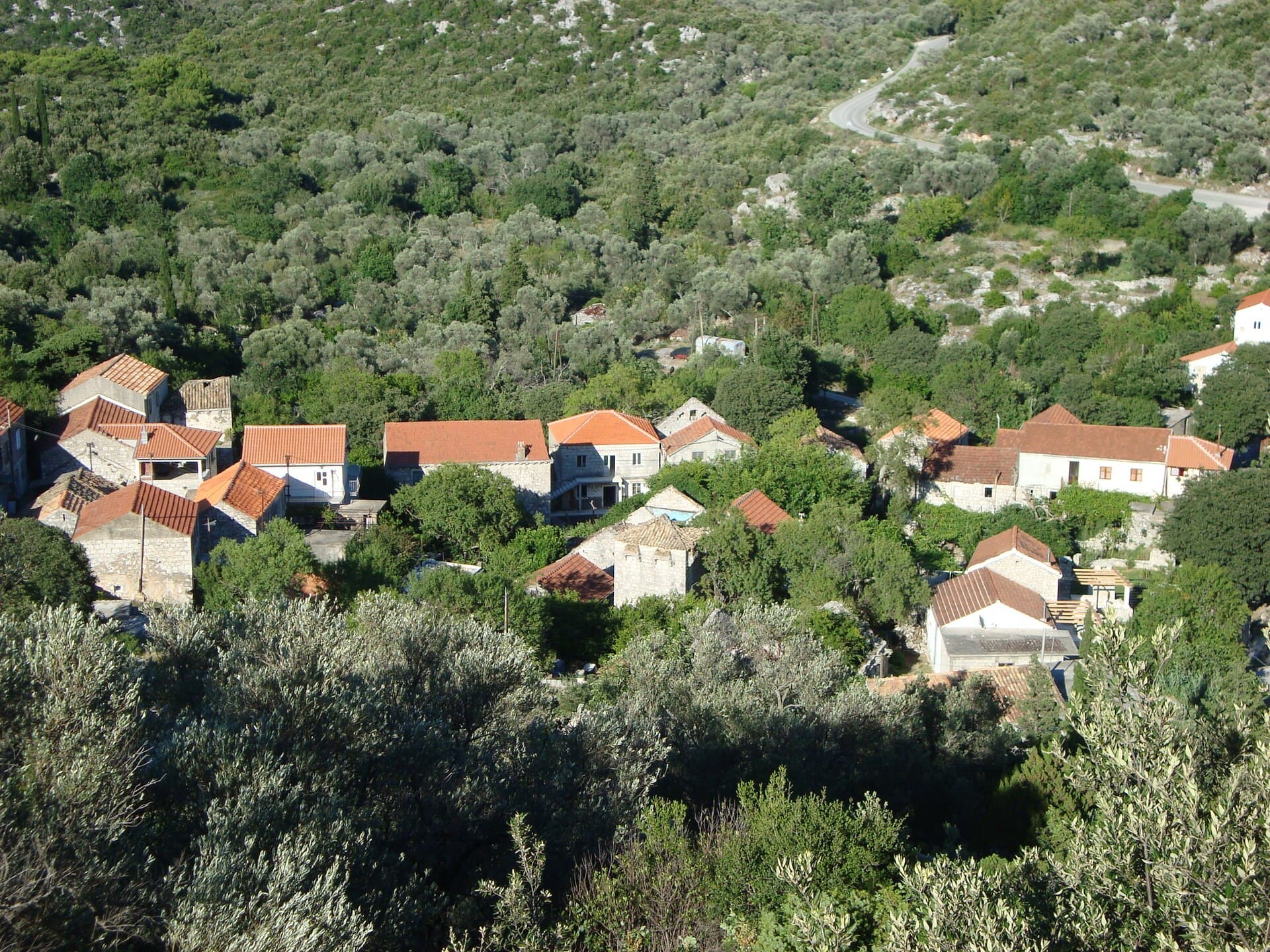
Korita
At a glance
Korita
Larger towns nearby
Stays nearby
 Apartment
Apartmeni Klenovica.eu
Klenovica
Klenovica, 351 km from Korita
up to 4 guests · 1 bedroom
The host confirms the exact price for your dates and availability.
Things to see
The tower in the centre of Korita is the clearest remnant of the period when villagers watched the sea for pirate raids. Ruins of a 1st-century villa rustica carry the story back to Roman times, while the remains of the 5th-century Church of St Paul represent Mljet’s early Christian layer. Among the smaller sacred buildings, the Church of St Elijah honours Korita’s patron saint. Also look for the natural rock hollows that once held water: modest in appearance, they are essential to understanding both the village name and how residents adapted to Mljet’s karst landscape.
Beaches
Korita lies inland, so swimming means travelling to Saplunara, historically the harbour used by Korita’s residents. Saplunara is known for sandy beaches, while rockier sea access can be found on the opposite side of its coastal area. The sandy shallows suit relaxed bathing, whereas the rocky stretches appeal to swimmers seeking quicker access to deeper water. Because no continuous seaside promenade links Korita’s old core with these beaches, road transport is more practical when carrying towels and beach gear. A swim should therefore be planned as a separate outing from the village rather than a short walk from accommodation.
Things to do
Begin at the rainwater hollows that gave Korita its name, then walk through the old core to the defensive tower. Continue to the remains of the 5th-century Church of St Paul and the 1st-century Roman villa rustica, evidence that this landscape was occupied long before the present village emerged. In the afternoon, head down to Saplunara, the harbour developed by Korita’s residents after the Second World War, and choose between its sandy coves and rockier stretches. For a full island day, continue from Korita along the D120 towards Sobra and western Mljet.
Food and drink
The nearest documented dining options are concentrated in Saplunara, where the Mljet tourist board lists Stermasi restaurant, MS fast food and the Hippokampus beach bar. That pattern reflects the two settlements’ history: Korita is the old inland village, while Saplunara developed as its harbour and coastal visitor centre. It therefore makes sense to combine a swim in Saplunara with dinner there rather than return to Korita expecting a restaurant in the historic core. Farther west, the official island listing includes additional taverns in Okuklje, Prožurska Luka and Sobra, along the road towards the ferry port.
Practical information
Practical information
The Municipality of Mljet Tourist Board is based at Zabrježe 2 in Babino Polje, so official island information is not collected in Korita itself. When staying in eastern Mljet, arrange groceries, meals and transport in advance because services are spread among Korita, Saplunara, Sobra and other settlements. Korita lies outside Mljet National Park; a park ticket becomes relevant only when visiting the protected western area around the Great and Small Lakes. The feast of St Elijah on 20 July is Korita’s principal local date, honouring the village patron.
Getting there and around
Drivers reach Korita through Mljet’s road network linked to the D120, which connects Saplunara, Sobra and Pomena. In 2026, Jadrolinija’s year-round car-ferry route 832 links Prapratno with Sobra in about 45 minutes. Travellers without a car can also reach Sobra from Dubrovnik on TP Line’s fast route 9807, subject to its 2026 timetable. The local bus between Saplunara and Sobra runs through Korita, Maranovići and Prožura, although departures should be matched carefully to the arrival date because the island schedule varies.
Frequently asked questions
Why is the village called Korita?
The name comes from natural hollows in the rock where rainwater collected, and they can still be seen in the village.
Does Korita have its own beach?
Korita is inland; swimming is at nearby Saplunara, which developed as the harbour of Korita’s residents.
What does Korita’s tower represent?
The tower recalls the village’s defensive role and its watch over the sea during periods of pirate raids.
How long is the ferry to Mljet?
Jadrolinija’s Prapratno–Sobra crossing takes about 45 minutes under the 2026 schedule.

Related guides

Dubrovnik
Dubrovnik’s historic centre is organised around Stradun, yet its character changes within a few steps of that main street. At the western end beside Pile stand the Large Onofrio Fountain,…
Read the guide

Help improve this page
Spot something missing or wrong? Suggest a correction, add your photo or report a problem. Editors review every suggestion before it is published.
Photo credits
- Korita, Saplunara — Jaganjac · CC BY-SA 3.0 · Wikimedia Commons
- Broce — Quahadi Añtó 08:29, 19 February 2015 (UTC) · CC BY-SA 3.0 · Wikimedia Commons
- Ston Municipality — Carsten Steger · CC BY-SA 4.0 · Wikimedia Commons
- Zamaslina — Quahadi Añtó 06:53, 21 December 2012 (UTC) · CC BY-SA 3.0


