
Goveđari
About this place
Goveđari is a historic inland village within Mljet National Park, positioned between the wooded shores of Veliko jezero, Pomena and Polače. The settlement began with an agreement dated 8 April 1793, when Benedictine monks permitted families from Babino Polje to settle above Pomijenta field and work monastic land. Cattle husbandry gave Goveđari its name, while its well-preserved stone fabric led the Park’s spatial plan to classify it as an ethnographic village. It is the only National Park settlement not directly on the sea, although village paths and the road towards Vrbovica quickly lead down to Veliko jezero. The 1927 Church of St Nicholas stands in pinewoods on the route towards Babine Kuće, and old threshing floors and animal enclosures survive along the approach. A stay in Goveđari naturally extends to walks around Veliko and Malo jezero, a solar-boat trip to the Benedictine monastery on St Mary’s islet and swimming at Mali most. The Pomena–Sobra bus links the village with island ferries and catamarans, while visitor parking is provided at Vrbovica.
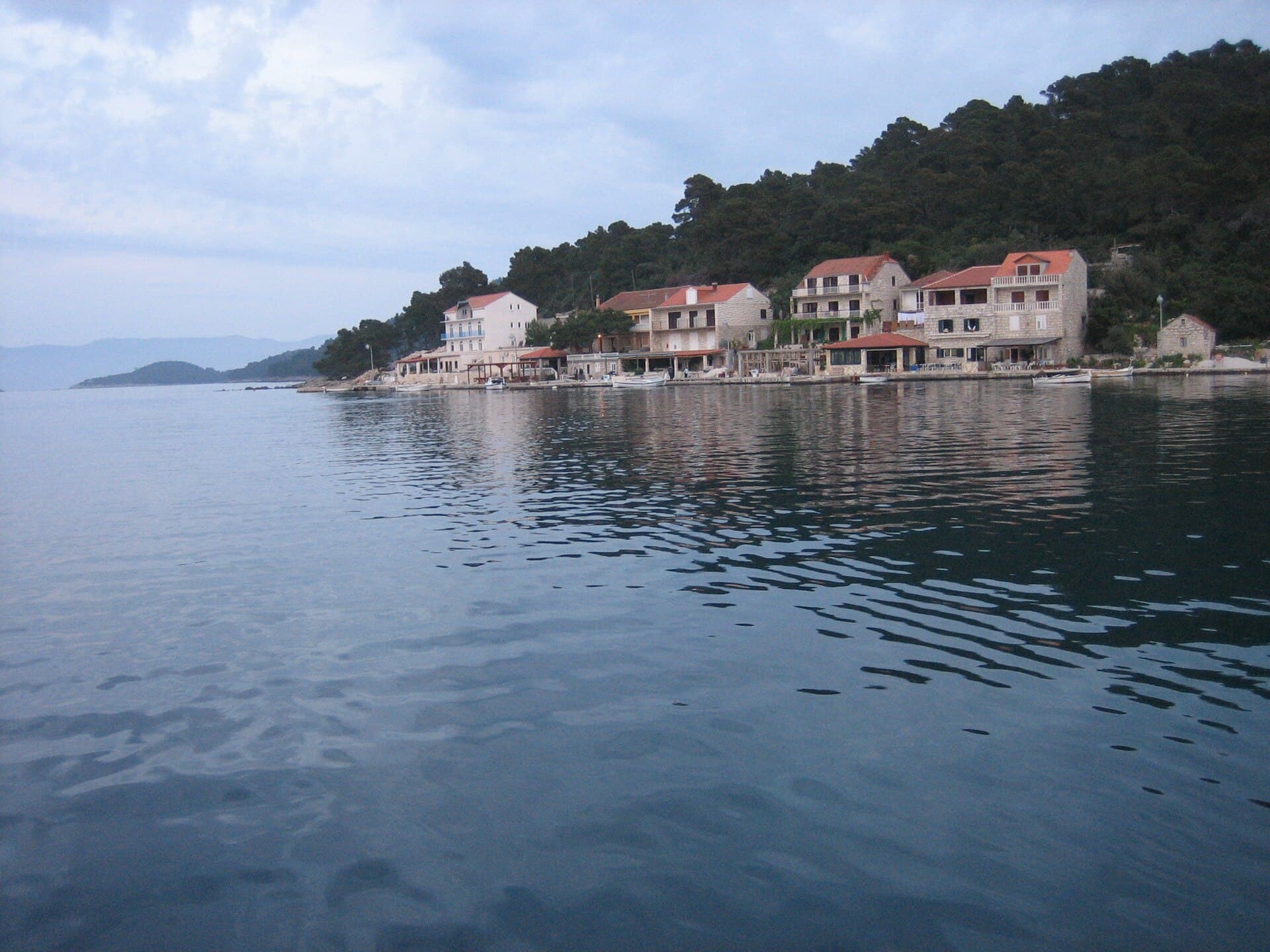
Goveđari did not develop as a fishing harbour but as a planned agricultural settlement on Benedictine land. Under an agreement dated 8 April 1793, the Basto and Milić families were allowed to settle above Pomijenta field; the Hajdić, Stražičić, Matana and Sršen families soon followed. The village name is linked to the cattle raised by the first residents for the monastery on St Mary’s islet. Its well-preserved stone houses and agricultural setting prompted the National Park plan to classify Goveđari as an ethnographic village. Unlike Pomena, Polače and Babine Kuće, Goveđari does not stand directly on the coast, so its atmosphere is shaped by a karst field, old village paths and pinewoods above the Mljet lakes.
Stays nearby
 Apartment
Apartmeni Klenovica.eu
Klenovica
Klenovica, 327 km from Goveđari
up to 4 guests · 1 bedroom
The host confirms the exact price for your dates and availability.
Things to see
The village core is Goveđari’s principal attraction, preserving the form of the farming settlement established by the 1793 agreement. Traditional threshing floors and enclosures once used for livestock and poultry remain visible near the edge of the village and along the path towards Babine Kuće. St Nicholas was built in pinewoods in 1927, while the parish founded in 1897 shares its boundaries with the National Park’s cadastral area. Below the village at Velika loza are two traditional water-collection structures. A short descent to the lakes reaches the area’s major cultural landmark: St Mary’s islet, with the Romanesque core of a Benedictine monastery built between 1177 and 1198.
Beaches
Goveđari has no beach within the village because it lies inland, but swimming places on the Mljet lakes are readily reached by descending towards Vrbovica and Mali most. Mali most has a pebble beach that the National Park specifically identifies as suitable for families with young children. Most other lake access points are rocky, including prepared shoreline areas beside Veliko jezero and Pristanište. In summer, Malo jezero typically reaches 26–29°C, while Veliko jezero is usually 24–26°C. Swimming is permitted in the lakes, but scuba diving and fishing there are prohibited under National Park rules.
Bathing water quality nearby
- Kod mosta · 906 mexcellent · season 2025
- Skalinada · 1.2 kmexcellent · season 2025
- Polače · 1.4 kmexcellent · season 2025
- Ht. Odisej · 1.9 kmexcellent · season 2025
Source: European Environment Agency (EEA); data from Croatian authorities. · bathing water profile
Things to do
Begin with a walk through Goveđari’s stone core, noticing the threshing floors and former pens for goats, donkeys and pigs along the route towards St Nicholas. The 1927 church stands in pinewoods halfway to Babine Kuće. Continue downhill towards Vrbovica and Pristanište, where the Branimir Gušić promenade follows Veliko jezero. The 2026 National Park ticket includes marked trails around both lakes, transport on the electric road train and a return solar-boat trip to St Mary’s islet. Finish the day with a swim at Mali most or a marked ascent towards the Montokuc viewpoint.
Practical information
Parking
The principal parking area for Goveđari and the Mljet lakes is at Vrbovica, below the village and beside the road approach to Veliko jezero. Under the National Park’s 2026 price list, Vrbovica parking is included in the ticket for day visitors and guests staying around the lakes whose private accommodation has no space of its own. From Vrbovica, exploration continues on foot, by bicycle or by electric road train towards Pristanište, Mali most and the boat to St Mary’s. Rather than looking for an improvised space among the stone houses of Goveđari’s narrow historic core, drivers should leave their vehicle in the designated Vrbovica area.
Getting there and around
Goveđari is served by the island bus between Pomena and Sobra, timed to support ferry and catamaran connections. From Dubrovnik, passengers can use boat services to Sobra, Polače or seasonally Pomena, then continue by bus, taxi or rental vehicle. In the 2026 system, TP Line route 9807 links Dubrovnik, Šipanska Luka, Sobra, Polače, Korčula and Lastovo according to its seasonal schedule. Drivers reach Goveđari from Sobra ferry port by following the island road westwards. Within the National Park, onward travel towards the lakes is provided by the electric road train, walking routes and bicycle rental at Vrbovica.
Frequently asked questions
Is Goveđari on the coast?
No. Goveđari is the only settlement in Mljet National Park that does not stand directly on the sea.
When was Goveđari founded?
The settlement was founded through an agreement dated 8 April 1793 between the Benedictines and the first resident families.
Where should visitors park for the lakes?
Visitor parking is at Vrbovica and was included with the relevant National Park ticket in 2026.
Which swimming spot is best for young children?
The National Park identifies the pebble beach at Mali most as the most suitable option for families with young children.

Related guides

Dubrovnik
Dubrovnik’s historic centre is organised around Stradun, yet its character changes within a few steps of that main street. At the western end beside Pile stand the Large Onofrio Fountain,…
Read the guide

Help improve this page
Spot something missing or wrong? Suggest a correction, add your photo or report a problem. Editors review every suggestion before it is published.
Photo credits
- Goveđari — Jaganjac · CC BY-SA 3.0 · Wikimedia Commons
- Pomena — Martin Ortmann · CC BY-SA 2.5 · Wikimedia Commons
- Polače — Luka Krstulović · CC BY-SA 2.5 · Wikimedia Commons
- Žuljana — F.Krikava, Znojmo · CC BY-SA 3.0 · Wikimedia Commons
- Apartmeni Klenovica.eu — Apartmani Klenovica.eu · courtesy of the property owner


