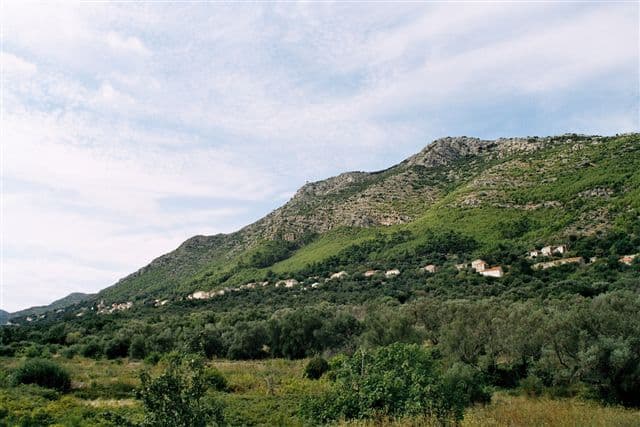
Polače
About this place
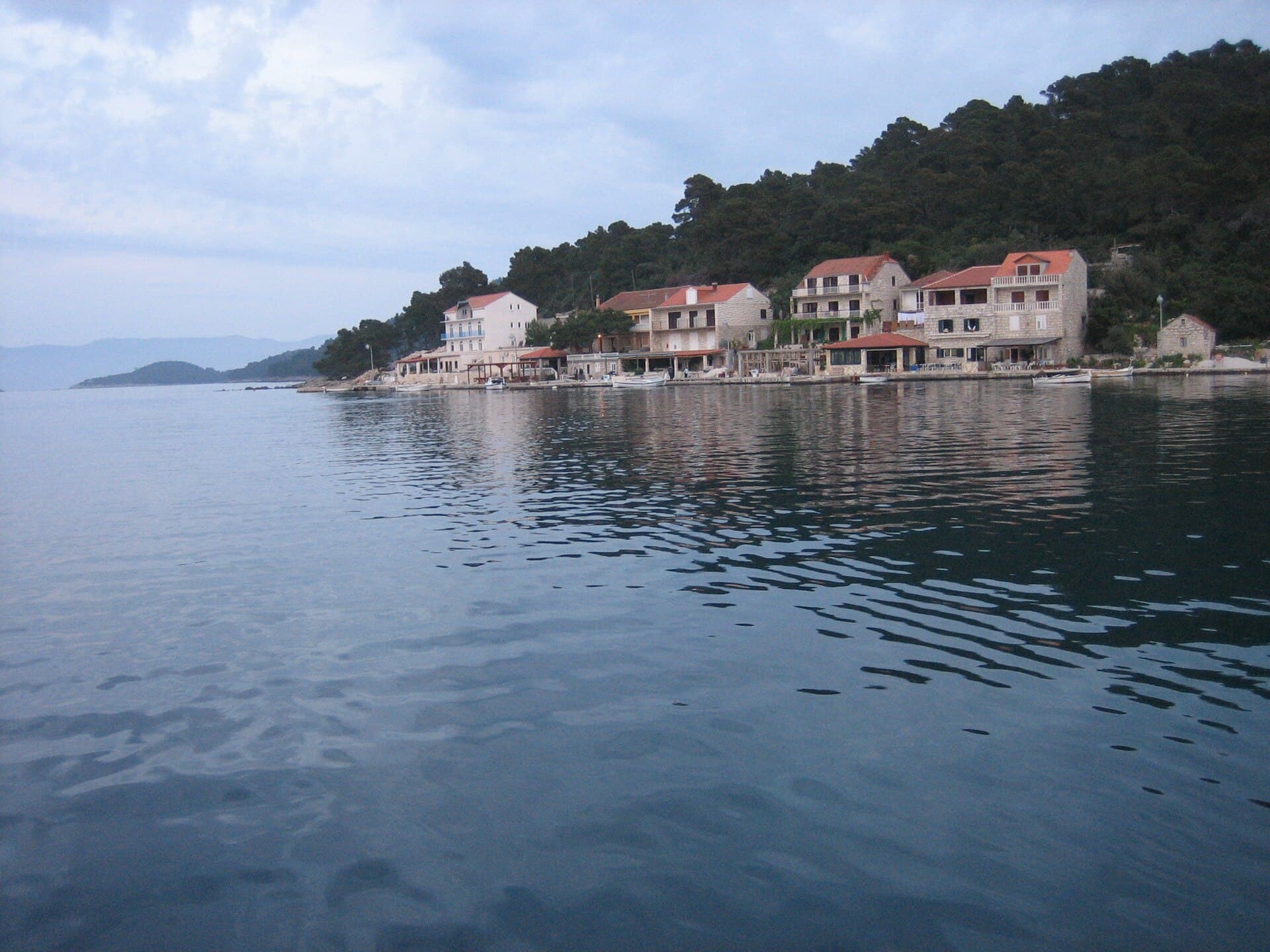
In Polače, everyday island life unfolds against the walls of a late-antique palace: houses and restaurants grew beside the monumental Roman complex that gave the village its name. The palace, baths, Roman country buildings and a fifth- or sixth-century early Christian church form an unusually concentrated archaeological ensemble beside the waterfront. The village lies inside Mljet National Park, occupying a broad, sheltered harbour screened by the islets of Tajnik, Ovrata, Kobrava and Moračnik. Polače is also one of the park’s three official entrances, making the quay a natural starting point for the Great and Small Lakes and the islet of St Mary. Swimming is available at the local pebble beach, with further bathing spots and wooded paths around the lakes. Arriving without a car is especially convenient when the seasonal fast ferry calls directly at Polače; road D120 connects the village with Sobra and eastern Mljet. This combination of harbour, ancient remains and immediate park access makes Polače more than an overnight base—the visit begins almost as soon as passengers step ashore.
Polače draws its identity from two very specific features: a secure natural harbour and a late-antique complex absorbed into the modern village. The national park traces activity here to Illyrian and Greek times, while the palace, baths and early Christian church provide the clearest Roman and late-antique remains. Tajnik, Ovrata, Kobrava and Moračnik close the view from the waterfront and give the bay additional shelter. Although the present settlement expanded rapidly along the shore in the second half of the 20th century, its massive ancient walls still define the first impression of Polače.
Stays nearby
 Apartment
Apartmeni Klenovica.eu
Klenovica
Klenovica, 328 km from Polače
up to 4 guests · 1 bedroom
The host confirms the exact price for your dates and availability.
Things to see
The principal landmark is the Roman palace whose walls became part of Polače itself; the park authority dates the antique residential complex to around the end of the fifth century. Nearby are remains of baths, Roman rural buildings and a fifth- or sixth-century early Christian church. This archaeological landscape is not isolated behind a fence but appears among homes and beside the quay. The bay and its views of Tajnik, Ovrata, Kobrava and Moračnik form the monuments’ natural setting, allowing visitors to understand the harbour’s history alongside its exceptionally sheltered position.
 National park
Beaches
Polače itself has a pebble beach, specifically listed by the national park among the bathing places inside the protected area. Some accommodation at the end of the village provides concrete access to the sea, with the local pebble shore roughly 50 metres away. For a different swim, continue towards Mali Most, where the park also identifies a pebble beach. The Polače inlet is screened by Tajnik, Ovrata, Kobrava and Moračnik, though swimming shoes remain useful along its rockier edges.
Bathing water quality nearby
- Polače · 502 mexcellent · season 2025
- Kod mosta · 2.6 kmexcellent · season 2025
- Skalinada · 2.9 kmexcellent · season 2025
Source: European Environment Agency (EEA); data from Croatian authorities. · bathing water profile
Food and drink
Restaurants line the Polače waterfront near the palace walls, pairing lunch with views of the harbour and ancient complex. The national park confirms that the village has several restaurants and that hospitality and tourism are principal local occupations. Tourist-board accommodation data place a restaurant about 50 metres from lodgings at the end of the village and the centre of Polače less than 200 metres farther on. A car is therefore unnecessary for dinner by the water, although seasonal opening should be checked directly before visiting.
Practical information
Practical information
Polače is an official entrance to Mljet National Park, alongside Pomena and Vrbovica. According to park information available in 2026, entrances normally operate from 8 a.m. to 8 p.m. during the visitor season, while visits from early November to late April require advance arrangement. The village has a shop, cash machine and bus stop, but local tourist data place the nearest pharmacy about 17 kilometres away and a filling station roughly 26 kilometres away. Medicines and fuel are therefore best arranged before an extended stay in western Mljet.
Getting there and around
In 2026, seasonal state fast-boat route 9807 links Polače with Ubli, Korčula, Sobra, Šipanska Luka and Dubrovnik, allowing passengers to arrive without a road transfer. The national park also lists catamarans from Dubrovnik and services on the Split–Brač–Hvar–Korčula–Mljet–Dubrovnik corridor, while the vehicle ferry operates between Prapratno and Sobra. From Sobra, island road D120 continues to Polače. As ports of call vary by route and season, tickets should be matched to the exact 2026 travel date.
Frequently asked questions
Can I reach Polače directly by boat?
Yes. In 2026, seasonal state fast-boat route 9807 calls at Polače while sailing between Ubli and Dubrovnik via Korčula, Sobra and Šipanska Luka.
Is there a beach in the village?
Yes. The national park lists a pebble beach in Polače, while some waterfront houses also provide concrete access to the sea.
Is Polače inside Mljet National Park?
Yes. Polače is one of the settlements inside the park and one of its three official entrances.
Does Polače have a pharmacy?
Not in the village itself; local tourist-board accommodation data place the nearest pharmacy roughly 17 kilometres from Polače.

Related guides

Dubrovnik
Dubrovnik’s historic centre is organised around Stradun, yet its character changes within a few steps of that main street. At the western end beside Pile stand the Large Onofrio Fountain,…
Read the guide

Help improve this page
Spot something missing or wrong? Suggest a correction, add your photo or report a problem. Editors review every suggestion before it is published.
Photo credits
- Polače — Luka Krstulović · CC BY-SA 2.5 · Wikimedia Commons
- Goveđari, Babino Polje — Jaganjac · CC BY-SA 3.0 · Wikimedia Commons
- Pomena — Martin Ortmann · CC BY-SA 2.5 · Wikimedia Commons
- Žuljana — F.Krikava, Znojmo · CC BY-SA 3.0 · Wikimedia Commons