About this place
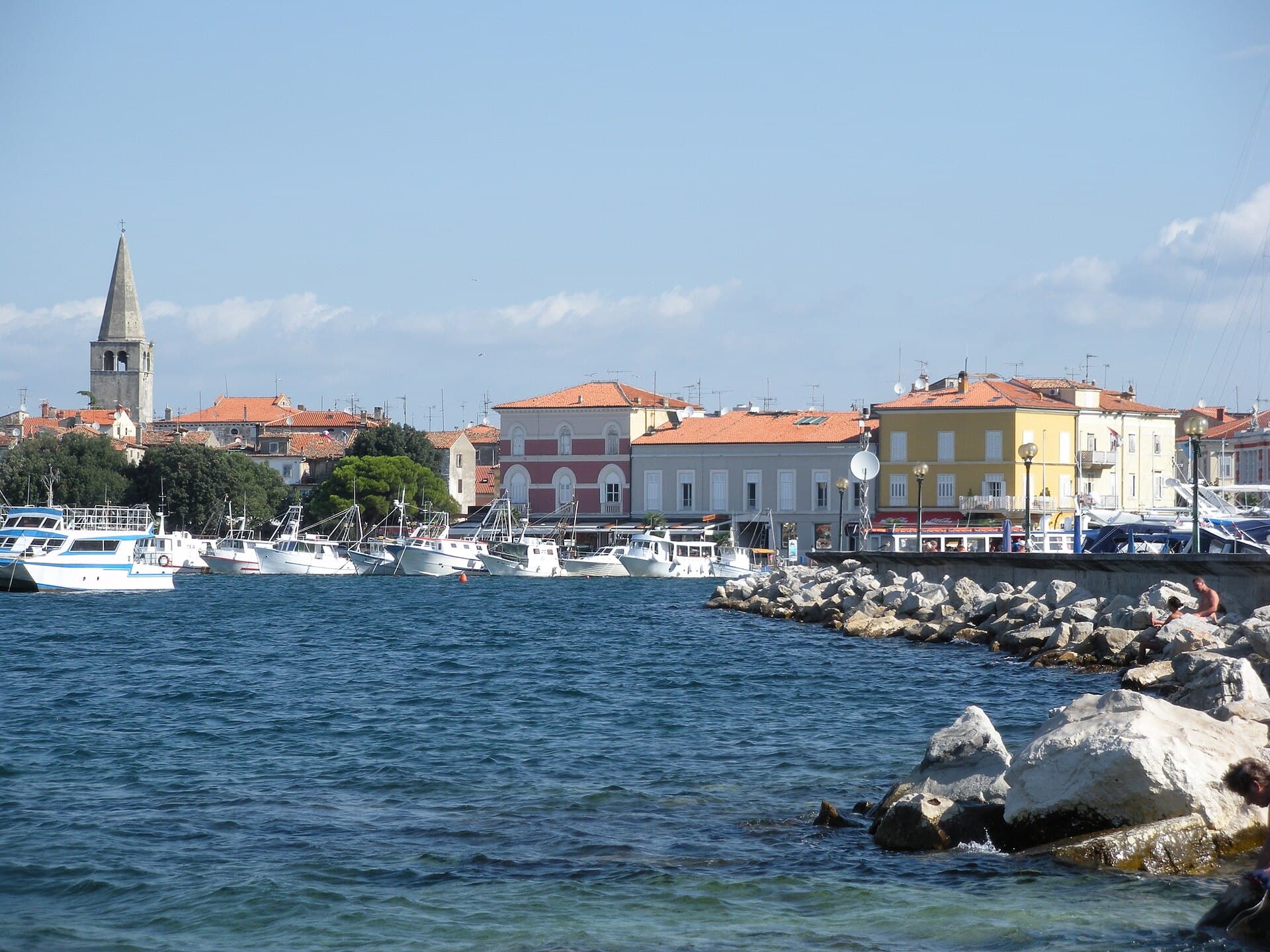
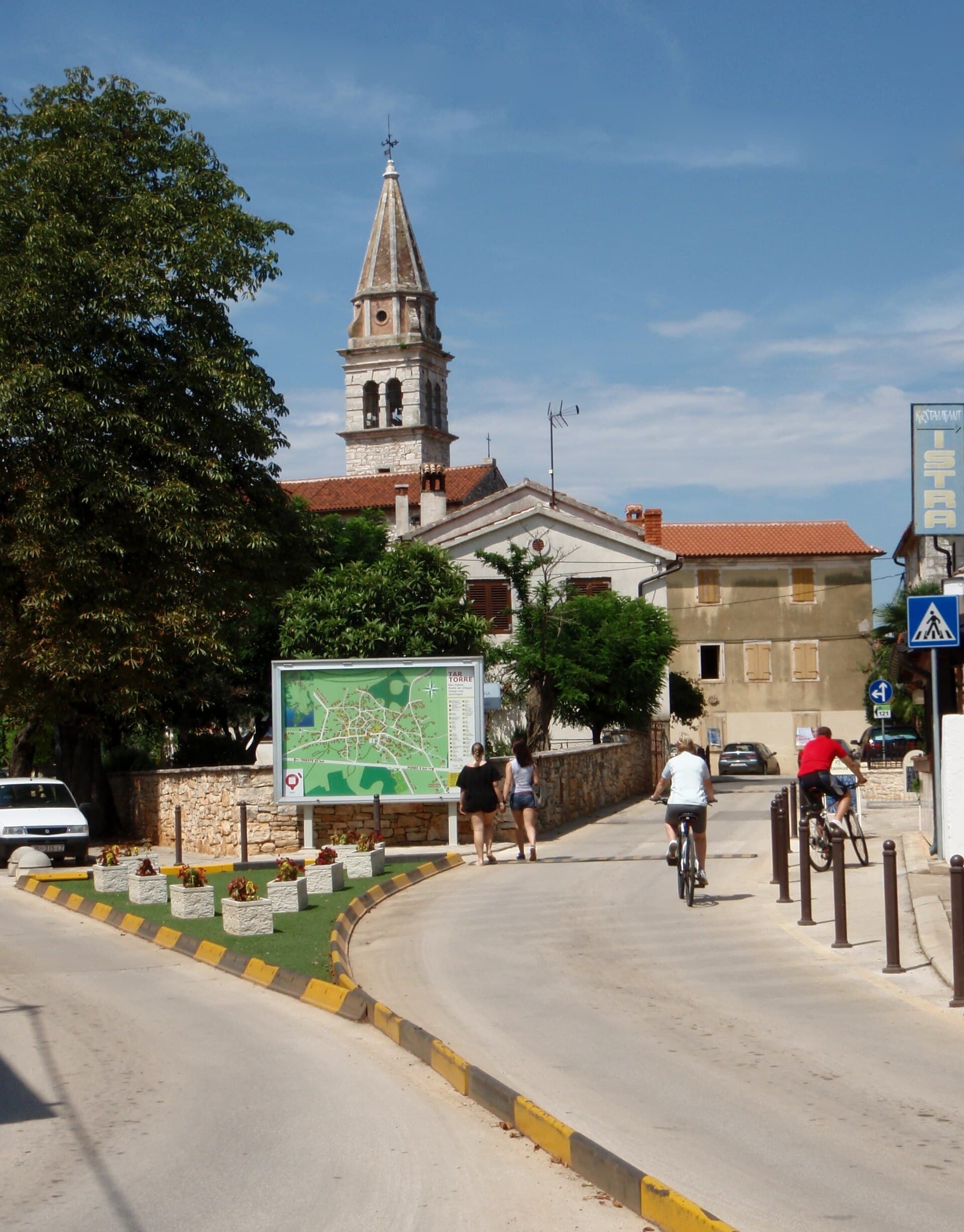
Vabriga occupies a fertile plateau between Poreč and Novigrad, overlooking the fishing cove of Santa Marina and the olive groves that define the Tar-Vabriga area. It is not a conventional resort built directly along a beach: its appeal comes from stone houses, the small Church of St Anthony, local taverns and quick access downhill to the sea. The From Olives to Olive Oil walking route passes through Vabriga beside the church and groves, linking the village with Lanterna and Santa Marina. A longer option is the 9.5–11.2-kilometre Roman Villas trail, which reaches archaeological remains near the coves before returning through the Larun landscape. Santa Marina contains a working harbour and the Fisherman’s House interpretation centre, while swimming is concentrated around Santa Marina, Tarska Vala and the developed shores of the Lanterna peninsula. Local dining draws on fish landed around the cove and oil produced from nearby olives; Al Penon serves seafood directly beside Santa Marina. Vabriga consequently works well for travellers who want village lanes, olive-country walks and coastal outings within easy reach of both Poreč and Novigrad, without staying in either town.
Vabriga forms the inland half of Tar-Vabriga’s coastal landscape: the village stands above Santa Marina, while the Poreč–Novigrad road separates it from neighbouring Tar. Its identity joins the fishing culture of the cove with olive growing on the plateau, a relationship reflected on the official map through the harbour, oil mill, Fisherman’s House and local-produce shop. Istarska Street crosses the village core, and the Santa Marina road descends towards the water. The small Church of St Anthony, dating from the 16th or 17th century, provides a historic waypoint on walking routes through Vabriga.
Stays nearby
 Apartment
Apartmeni Klenovica.eu
Klenovica
99 km from Vabriga
up to 4 guests · 1 bedroom
The host confirms the exact price for your dates and availability.
Things to see
The principal historic building within Vabriga is the small Church of St Anthony, dated to the 16th or 17th century and incorporated into the Roman Villas walking route. Down by the coast, Santa Marina’s fishing harbour and the Fisherman’s House interpret local life at sea. In the Larun area between Vabriga and the shoreline, the marked trail passes archaeological remains associated with Roman villas and their productive estate landscape. The official local map also identifies Vabriga’s Church of the Immaculate Conception and the Giovanni Palma Italian Community building.
Beaches
For a swim from Vabriga, head down to Santa Marina: a 300-metre local beach with a pebbly, rocky shore, reached by paved road or track. The 2018 county survey recorded parking there but no on-beach recreation facilities. On the Lanterna peninsula near Tarska Vala, Valamar lists pebble-and-rock beaches alongside the sandy Adria Sandy Family Beach. Crnika Beach adds paved, pebbly and rocky sections, with showers, a playground and water-sports facilities.
Bathing water quality nearby
- AC Lanterna - Plaža Valeta · 2.1 kmexcellent · season 2025
- Červar - Puntica Larun · 2.1 kmexcellent · season 2025
- TN Solaris - Plaža Valetica · 2.1 kmexcellent · season 2025
- Tarska vala · 2.2 kmexcellent · season 2025
- Červar - Porat · 2.3 kmexcellent · season 2025
- TN Solaris - Plaža Galeb · 2.6 kmexcellent · season 2025
Source: European Environment Agency (EEA); data from Croatian authorities.
Things to do
A Vabriga visit can begin at the Church of St Anthony, continue downhill to Santa Marina’s fishing harbour and finish with a swim along the Lanterna peninsula. For a half-day outing, follow the Roman Villas trail from the bus-stop area through gravel tracks, olive groves and the Larun landscape; the complete circuit measures 9.5–11.2 kilometres. The shorter From Olives to Olive Oil route passes stables, pine woodland, a large plantation, Santa Marina and Vabriga’s village core. At the harbour, a visit to the Fisherman’s House can be paired with locally landed fish at the waterfront Al Penon restaurant.
Food and drink
Vabriga’s food culture connects olive oil from the plateau with fish landed at Santa Marina. The official tourism portal particularly promotes tastings with local oil producers and walks among the old groves of Tar and Vabriga. At Santa Marina 2, Al Penon serves Adriatic fish and Istrian dishes beside the harbour, stating that its catch comes from nearby fishermen. A meal can be combined with the Fisherman’s House interpretation centre, as Al Penon offers dining guests a discount on its admission ticket.
Practical information
Practical information
The Tar-Vabriga tourist office is at Istarska 8/A in Tar, immediately beside Vabriga, and can be reached at +385 52 443 250 or [email protected]. The official map marks a doctor, pharmacy, cash machine, petrol station and La Botega local-produce shop across the joined Tar and Vabriga settlement area. Walkers can use the bus stop identified as the starting point of the Roman Villas route. The Fisherman’s House and harbour are downhill at Santa Marina, so the return to Vabriga involves climbing back towards the plateau.
Getting there and around
Vabriga sits beside the regional Poreč–Novigrad road, giving it straightforward road access along western Istria. A local road descends to Santa Marina, while gravel and walking links continue towards Lanterna and Larun. From 27 June to 6 September 2025, a free seasonal shuttle connected Santa Marina, Vabriga, Tar, Valamar Camping Lanterna, Lanterna Resort and the Solaris naturist campsite. Its stops included Santa Marina harbour car park, Vabriga’s bus stop and the entrances to the major holiday complexes, establishing a useful summer pattern for travelling without a car.
Frequently asked questions
Where does the Roman Villas trail begin?
The circuit starts by the bus stop in the Tar-Vabriga area and passes Vabriga, Larun and the coast; it measures 9.5–11.2 kilometres.
Is Santa Marina connected with Vabriga?
Santa Marina is Vabriga’s fishing cove, reached by a local road and also linked to the village by a free seasonal shuttle in 2025.
Where can visitors eat fish by the harbour?
Al Penon at Santa Marina 2 serves Adriatic fish beside the cove and the Fisherman’s House.
Is there parking at Santa Marina?
Parking is marked beside Santa Marina harbour, where the local shuttle also stopped in 2025.
Nearby
Červar-Porat
Village · Istria

Related guides

Novigrad
Novigrad-Cittanova developed on Istria’s north-western coast near the mouth of the Mirna, in a maritime setting that shaped centuries of fishing and trade. The historic centre still…
Read the guide
Help improve this page
Spot something missing or wrong? Suggest a correction, add your photo or report a problem. Editors review every suggestion before it is published.
Photo credits
- Vabriga — Petar Milošević · CC BY-SA 4.0 · Wikimedia Commons
- Červar-Porat, Novigrad — Sl-Ziga · Public domain · Wikimedia Commons
- Antenal — Petar Milošević · CC BY-SA 3.0 · Wikimedia Commons
- Apartmeni Klenovica.eu — Apartmani Klenovica.eu · courtesy of the property owner
- Pula — Orlovic · CC BY-SA 3.0 · Wikimedia Commons