Ljubač, Ražanac
About this place
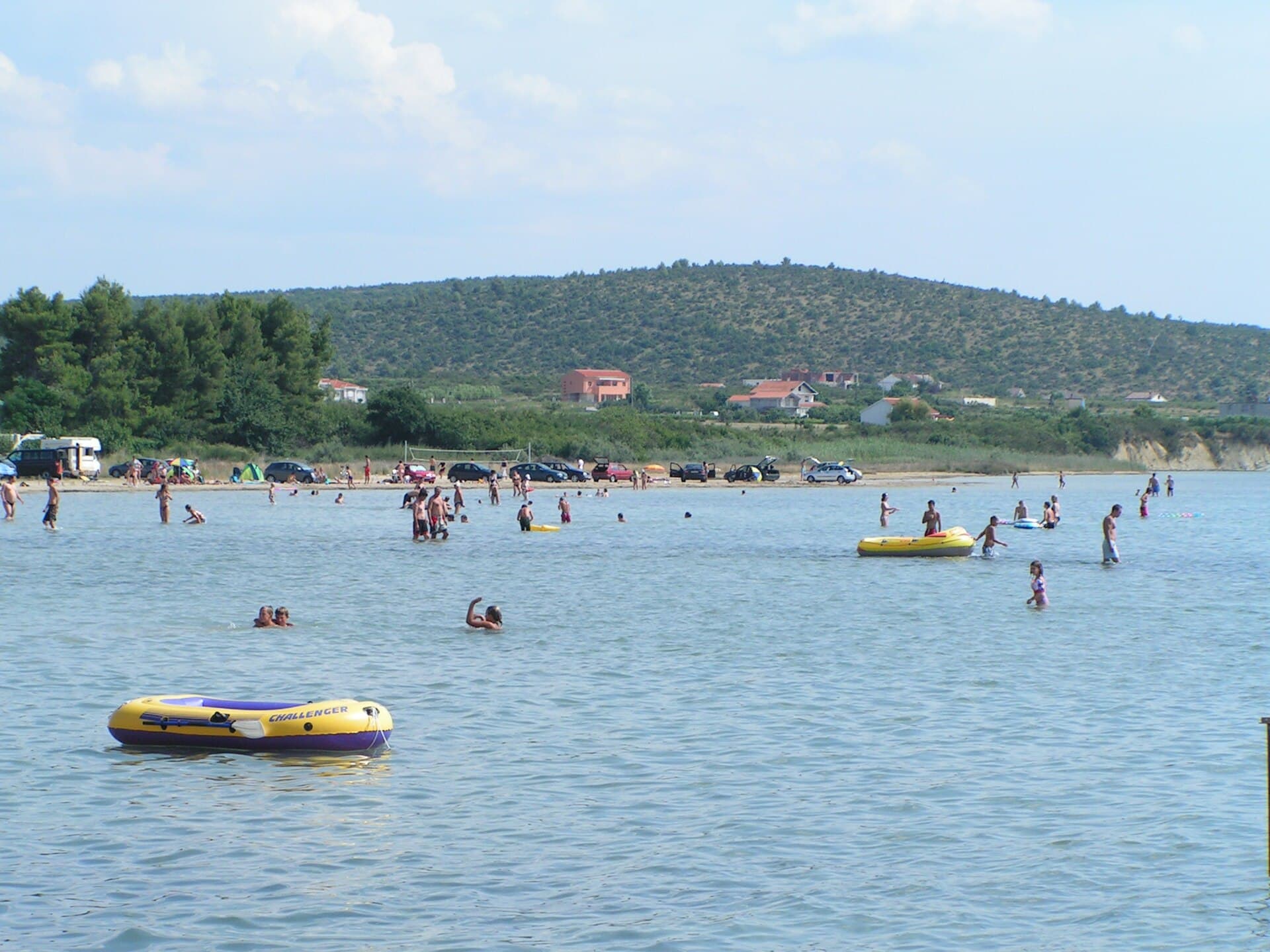
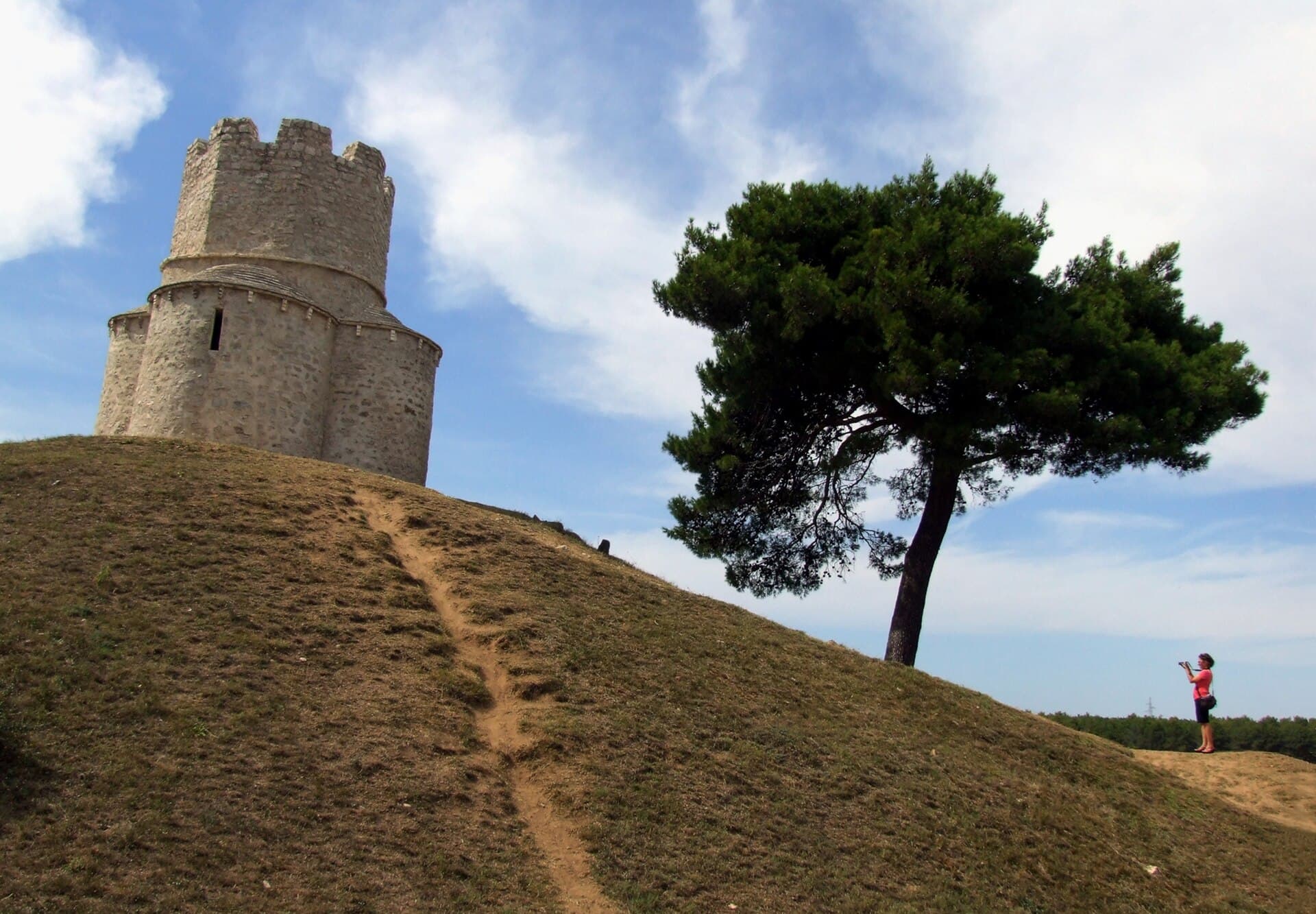
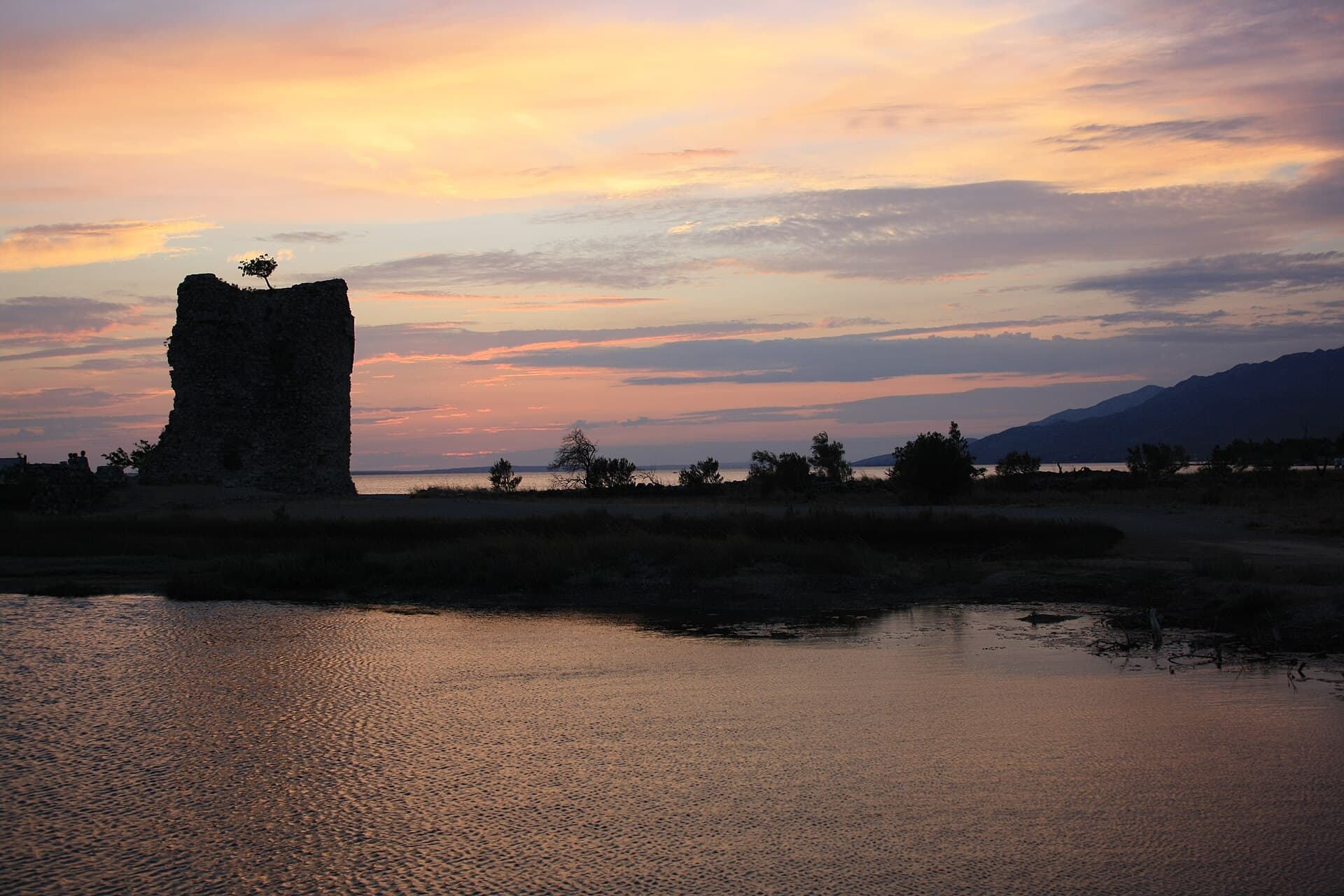
Ljubač stands at the northwestern edge of Ravni Kotari, beside a shallow bay and the fertile Ljubač field in the Municipality of Ražanac. The historic core of the present village occupies ground above a sea cliff, with narrow lanes and tightly grouped houses, while the wider settlement reaches towards Ljubački Stanovi, Stojići and Grubani. Above the bay rises Ljubljana, or Castrum Liube, a layered archaeological site associated with the former medieval town. Documentary references begin in 1205, and Ljubač later held a strategic defensive role during Ottoman–Venetian conflict; the old fortified settlement was destroyed in the 17th century. Today the village is best known for sandy beaches and unusually shallow water that remains child-friendly far from shore. The centre contains St Martin’s parish church, built in 1712 and enlarged in 1812, while Ljubački Stanovi has the Church of St John the Baptist. Ljubač’s identity comes from this combination of sandy shallows, defensive settlement form and an exceptionally rich archaeological landscape.
Ljubač belongs to the Municipality of Ražanac and occupies the edge of Ravni Kotari beside a bay sheltered from the open Adriatic. The old core of the present settlement is roughly 200 metres long and sits above a sea cliff, with narrow passages and houses packed together in a defensive pattern. That form reflects resettlement after the medieval town was destroyed during the 17th century. Below the village lies a shallow sandy shoreline, while the fertile Ljubač field extends inland with evidence of long agricultural use. Hillforts and burial mounds occupy surrounding elevations, with the Ljubljana site above the village standing out as the most complex location. Ljubač therefore belongs equally to a marine bay, an archaeological landscape and the cultivated hinterland of northern Dalmatia.
Things to see
Church of Holy Cross
Landmark · Nin
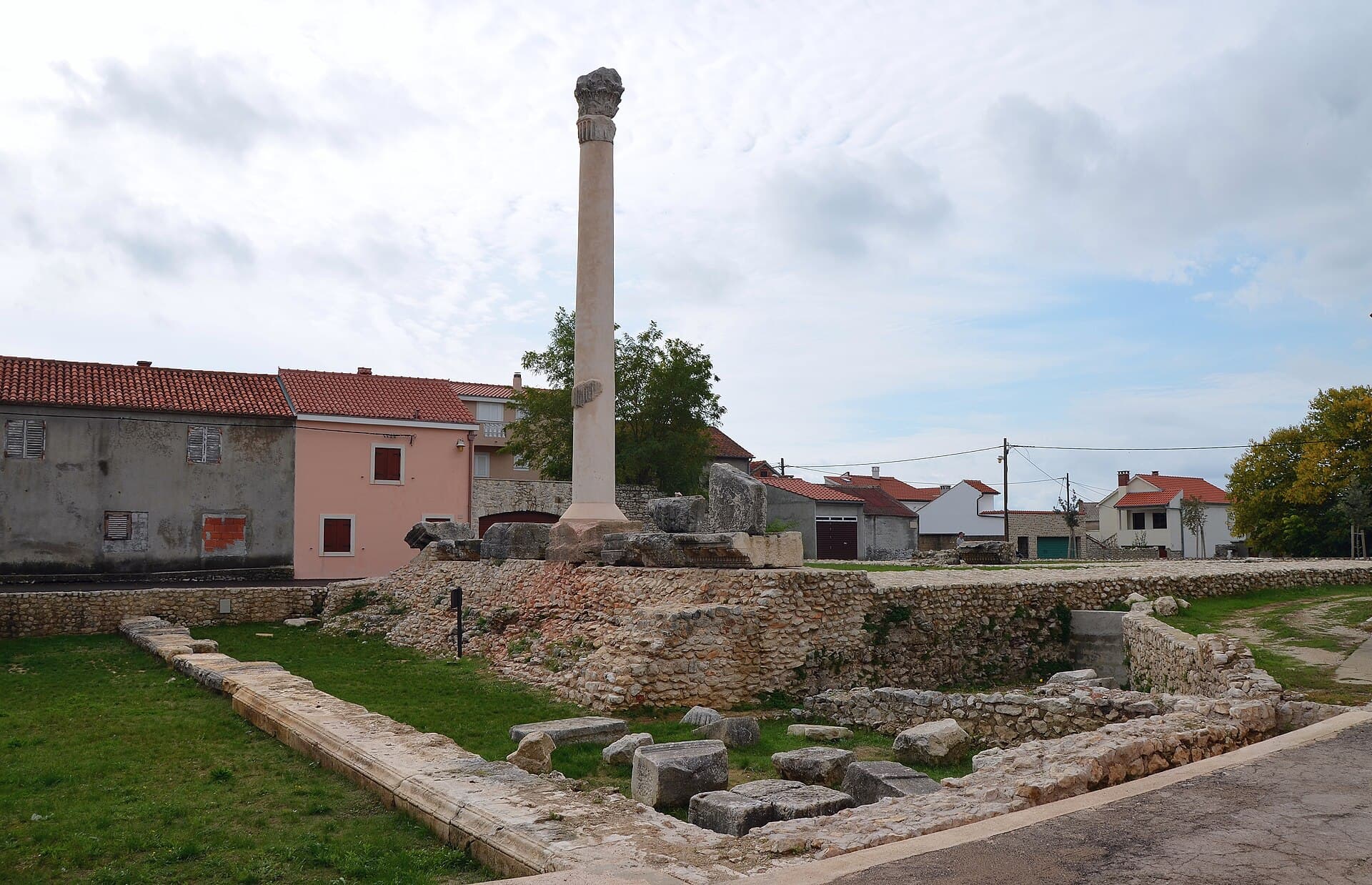
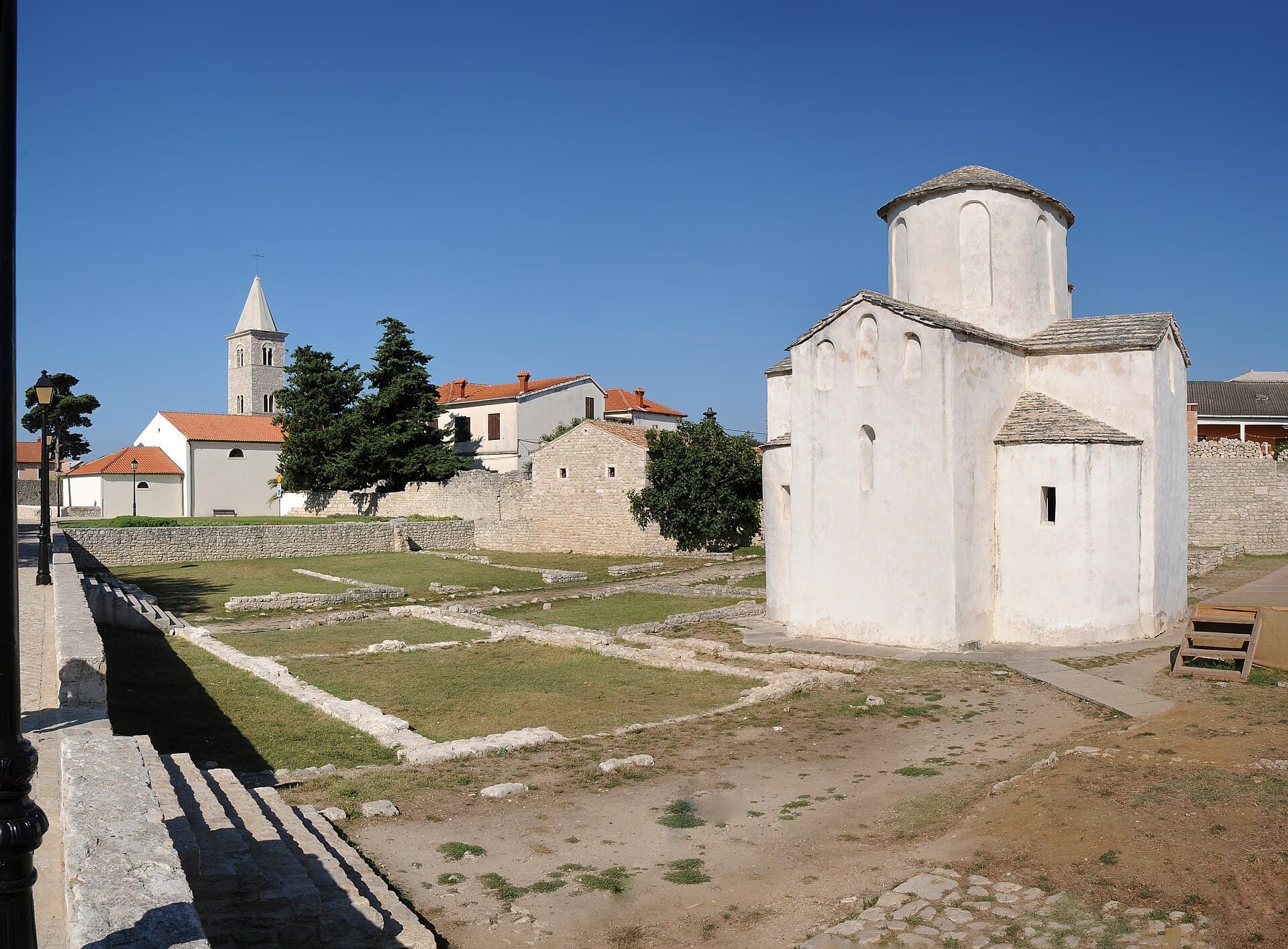
Croatian Pre-Romanesque Catholic church in Nin
9 km from Ljubač, Ražanac
Beaches
Ljubač’s beaches are distinguished by sand and exceptionally shallow water; the local tourist board notes that in some stretches the sea remains no more than knee-deep even around a hundred metres from shore. This makes the bay particularly suitable for families with small children, though adult swimmers must expect a longer wade before reaching depth. Tourism-board records identify the beach by Ljubač’s small harbour and the beach at Ljubački Stanovi as maintained public bathing areas where benches and waste bins have been installed. Other named beaches in the wider municipal coastal zone include Vlaški kraj, Puntica and Oseka. The sandy bottom and enclosed shallows warm noticeably in summer, creating a bathing experience quite different from the deeper, rockier shores elsewhere around Zadar.
Things to do
Begin a day in Ljubač on the sandy shore, where the shallows allow visitors to wade much farther out than at most beaches around Zadar. After swimming, climb into the historic core above the cliff and follow its narrow lanes to St Martin’s Church. For the archaeological chapter, continue towards Ljubljana, the Castrum Liube complex overlooking the village, observing the remains without moving stones or venturing onto unstable, unimproved edges. At Ljubački Stanovi, the Church of St John the Baptist was built in 1895 over an older church site, beside remains associated with St Mary Magdalene. Finish with a view across the bay, where the relationship between the former stronghold, the cultivated field and the shallow coast becomes especially clear.
Tours and activities
AdAd · partner offers: Viator, GetYourGuideThe partner handles booking, payment and support. StayBravo may earn a commission on bookings made through these links.How we choose offersWe choose offers based on the page you are viewing: the partner destination for this place or the nearest one (with its distance), and on a sight page only offers that mention it. We show offers rated at least 4.3 with at least 10 reviews, without multi-day tours or pure transfers, ordered by rating adjusted for the number of reviews and then by the partner’s order. We do not use data about you, and the commission does not affect the order.GetYourGuide offers are selected and ordered by GetYourGuide based on the name of the nearest larger town or national park; we do not influence their selection and do not use data about you.GetYourGuide · Nin
We show GetYourGuide offers once you allow their cookies.
Viator
Nearest destination: Zadar (17 km)
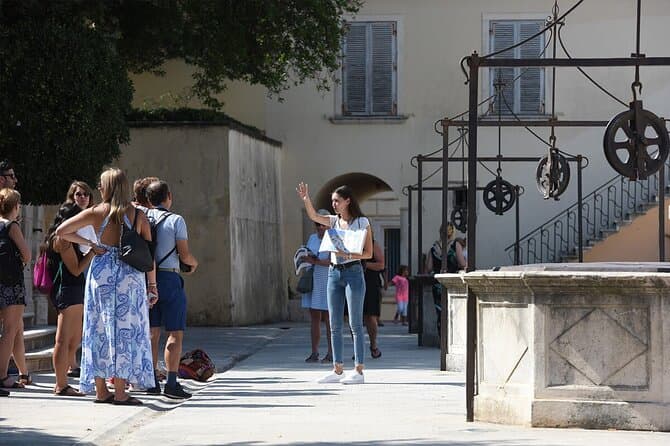
Zadar Highlights: Old Town, Sea Organ & Local Tastings (opens in a new tab)
A 2-hour small-group walk through Zadar's Old Town covering the city's top landmarks, the world-unique Sea Organ, and a tasting of local maraschino liqueur and cheese with a licensed local guide.
Rated 5 out of 5 · 478 reviews· 2 h
Free cancellation
from €20

Zadar: Luxury Island Boat Tour, Snorkeling & Unlimited Wine (opens in a new tab)
Embark on an unforgettable adventure and explore the wonderful islands that adorn our Adriatic Sea. You have two types of tour, 4 hour with 3 stops and 3 hour with 2 stops. Explore the crystal clear…
Rated 5 out of 5 · 1,393 reviews· 4 h
Free cancellation
from €47

From Zadar Plitvice Lakes Guided Day Tour with Tickets (opens in a new tab)
Discover the UNESCO-listed Plitvice Lakes with a passionate local guide and enjoy one of the easiest ways to visit Croatia’s most iconic national park from Zadar. Travel through the scenic Croatian…
Rated 4.9 out of 5 · 1,689 reviews· 10 h
Free cancellation
from €45

Zadar: Romantic Luxury Sunset Boat Tour with Aperol Spritz (opens in a new tab)
We will start our tour from the oldest harbor in Zadar, Foša. After that we will cruise by the Zadar seafront and famous Sea Organs where thousands of people come every night to see world famous…
Rated 5 out of 5 · 330 reviews· 1.3 h
Free cancellation
from €25
Zadar: Half Day Island Hopping Tour & Old Town Panoramic Cruise (opens in a new tab)
Step off the beaten path and discover the authentic soul of Dalmatia. On the islands, time moves slower and local traditions are still alive. Swim, snorkel, sunbathe, stroll through charming…
Rated 4.9 out of 5 · 418 reviews· 4 h
Free cancellation
from €19
Private Sailing Tours in Zadar Archipelago (opens in a new tab)
We are a family business with a vision of presenting the beautiful nature and history of Zadar and Island Ugljan, Croatia. Sail away with us and absorb the sea breezes and panoramic views over Zadar…
Rated 5 out of 5 · 135 reviews· 4 h
Free cancellation
from €450
Practical information
Getting there and around
Ljubač is connected to Zadar Bus Station by Liburnija suburban route 106. In the published timetable effective from 23 June 2022, weekday departures from Zadar are listed at 11:00, 14:30, 16:30 and 20:30, with buses leaving Ljubač at 05:15, 06:45, 12:50 and 16:50. Saturday service is limited to a 14:30 departure from Zadar and a 05:45 departure from Ljubač, while no journeys are shown on Sundays or public holidays. A single ticket for route 106 can be purchased in cash from the driver, at 1 Ante Starčevića Street in Zadar, or through the Zadar City app. Since Liburnija warns that schedules may change without notice, confirm the current departure before relying on the Saturday return from Ljubač.
Frequently asked questions
Why are Ljubač’s beaches suitable for children?
The beaches are sandy, and in places the water remains very shallow even around a hundred metres offshore.
When was Ljubač first recorded?
Ljubač first appears in a charter issued by Duke Andrew on 1 July 1205.
When was St Martin’s Church built?
St Martin’s parish church was built in 1712 and renovated and enlarged in 1812.
Nearby
Ljubač, Ražanac
Open in OpenStreetMap(opens in a new tab)straight-line distance
Related guides
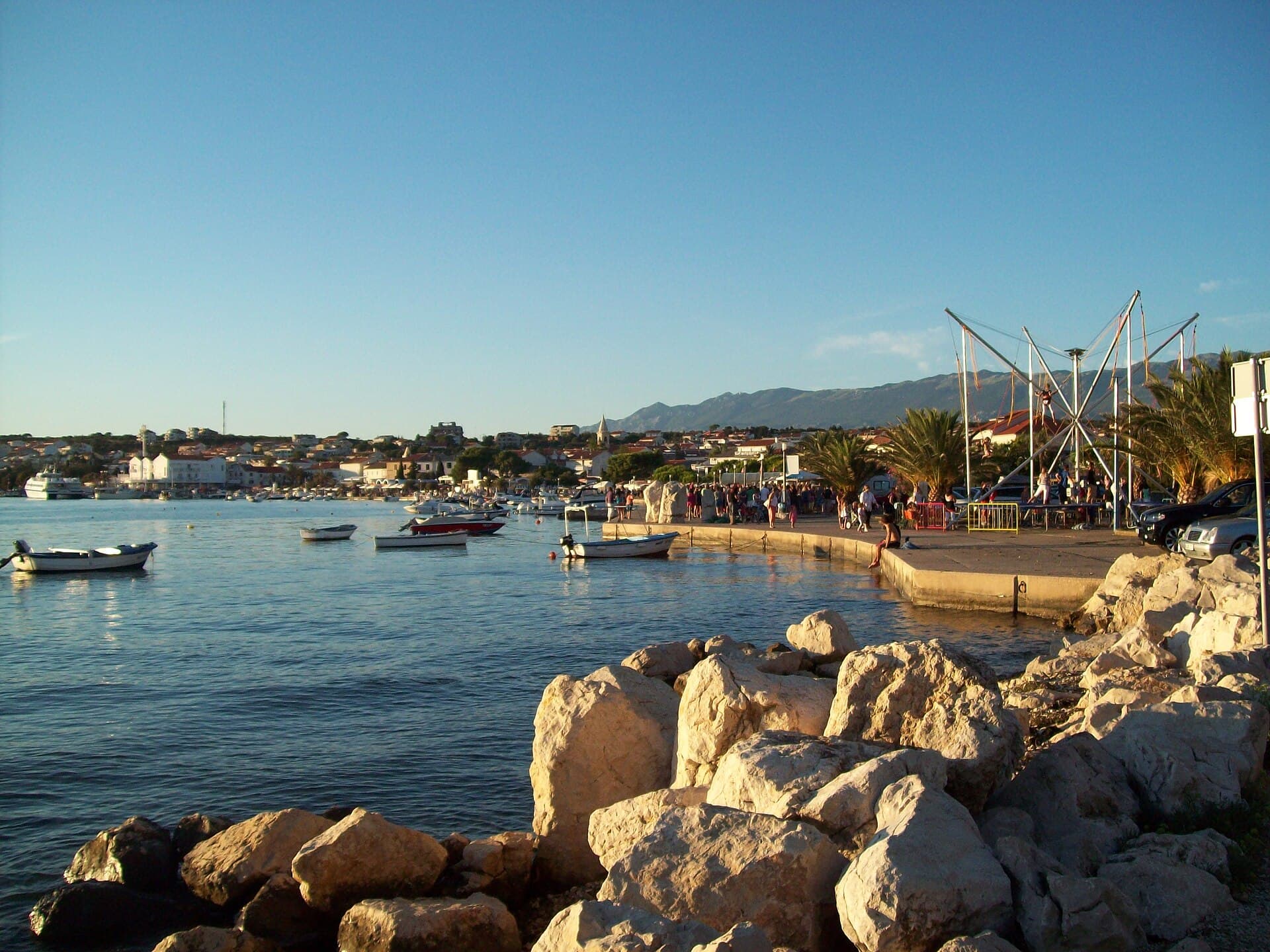
Novalja
Novalja curves around a bay on Pag’s western shore, with the waterfront, Trg Bazilike and streets around Mala crikva forming the centre. Landing places and restaurants line the water, while…
Read the guide
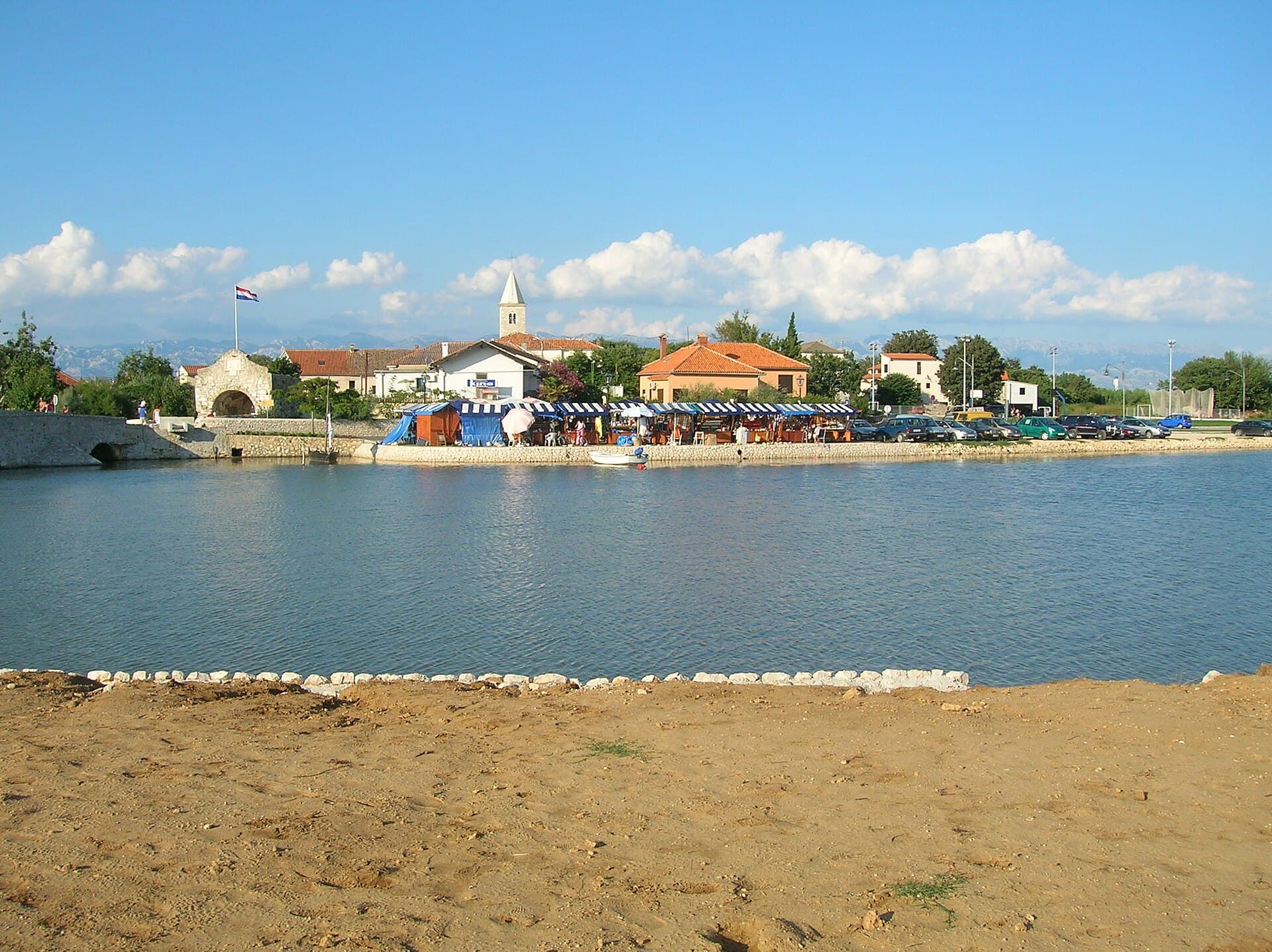
Nin
Nin’s historic centre occupies a low islet within a lagoon, connected to the mainland by bridges. Crossing into the centre creates a different first impression from arriving in nearby…
Read the guide
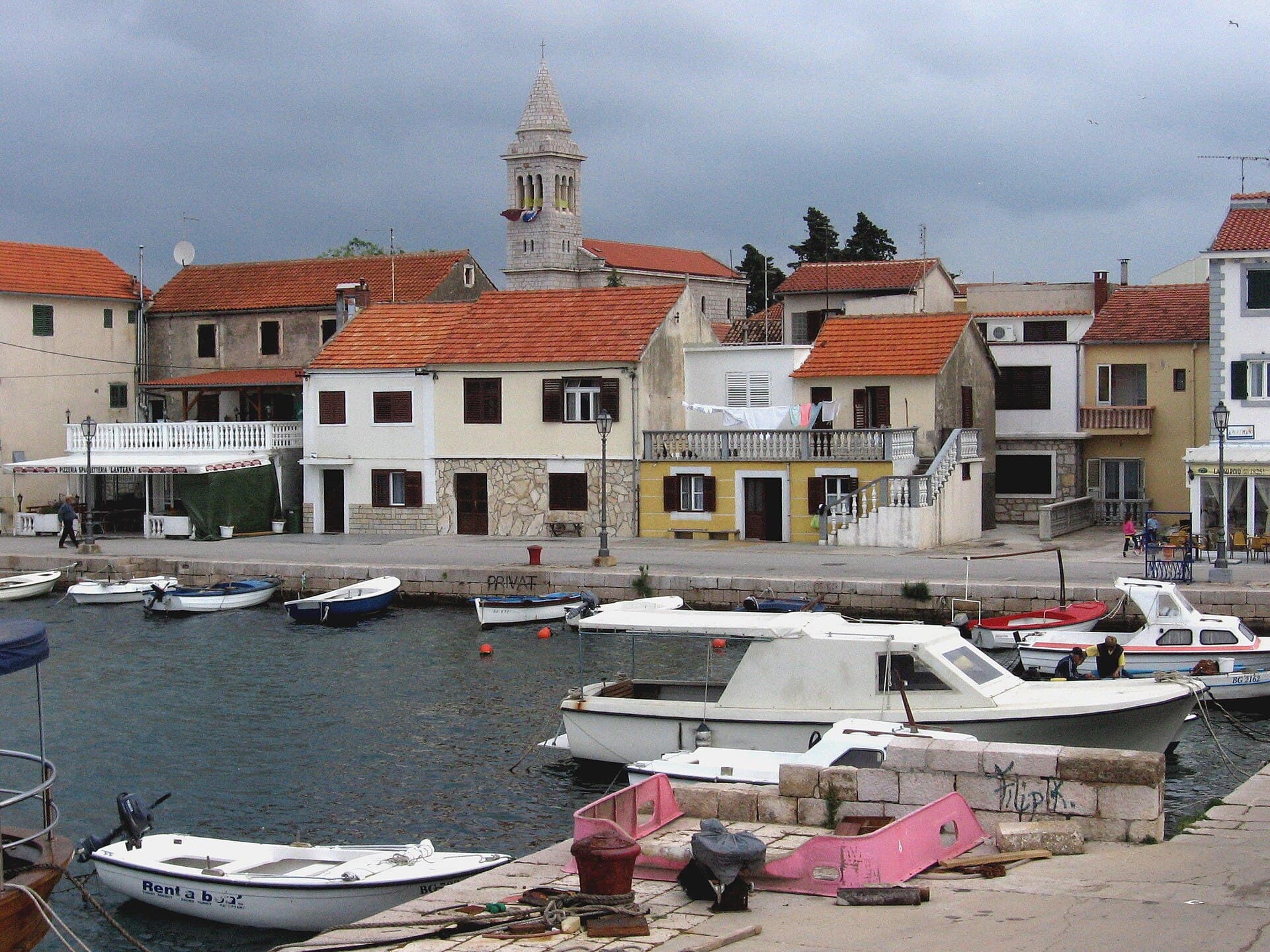
Pakoštane
Pakoštane occupies a narrow strip between the Adriatic and Lake Vrana, allowing visitors to move from a Dalmatian waterfront to the reeds of an ornithological reserve within minutes. The…
Read the guide
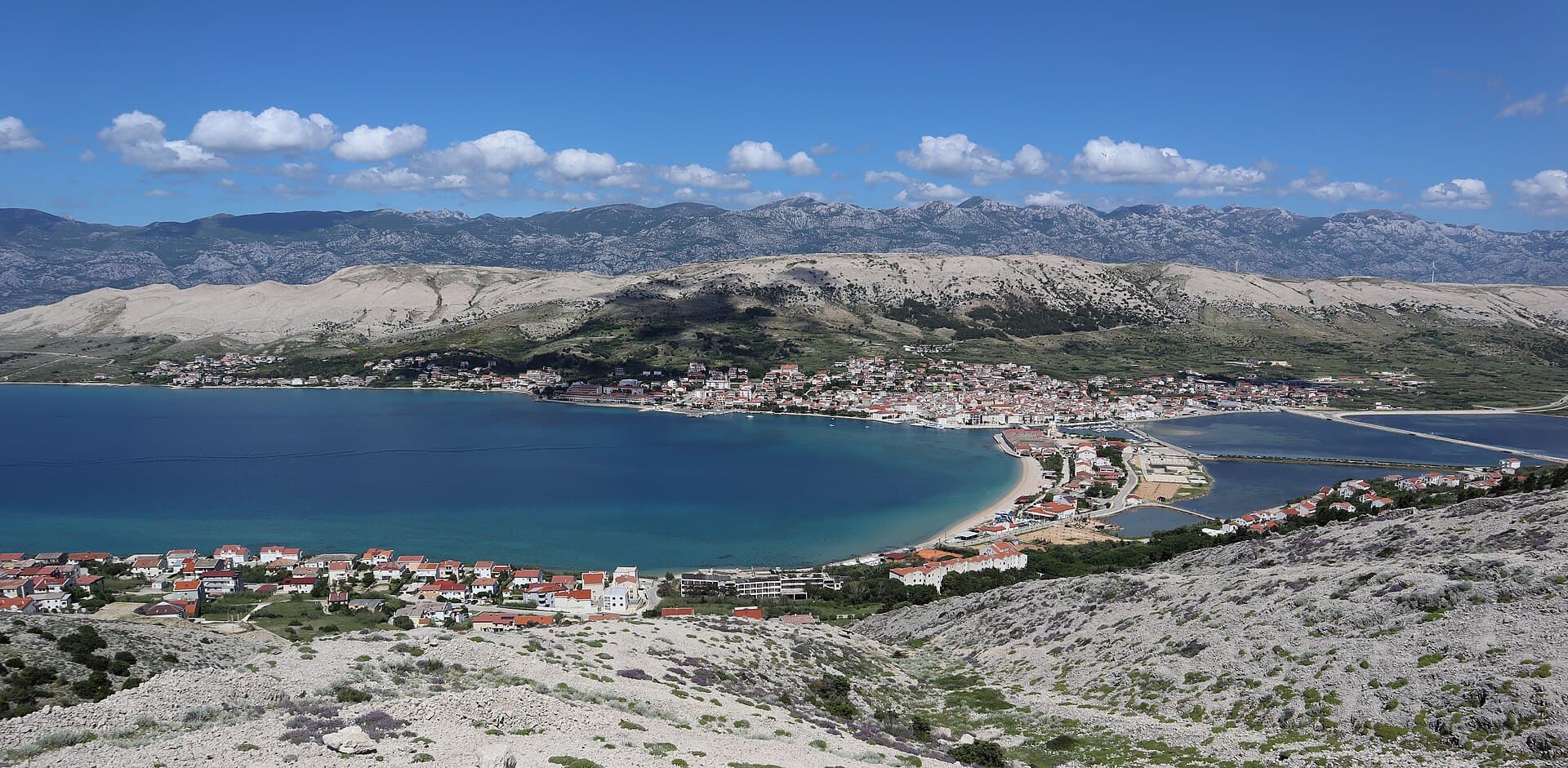
Pag
Pag is a planned stone town whose orderly street grid converges on Petar Krešimir IV Square, the Collegiate Church of the Assumption and the Rector’s Palace. The settlement moved to its…
Read the guide
Know Ljubač, Ražanac? Correct us
Tell us in your own words what is not accurate. We check right away.Do not enter personal data. Corrections are checked by the StayBravo AI assistant; changes to the description are approved by an editor. Use the form instead
Do you know Ljubač, Ražanac?
Help the guests who come after you.
Help us complete
Nothing is published without an editor’s review.Report illegal content
Photo credits: Ljubač, Ražanac — F.Krikava, Znojmo (CC BY-SA 3.0) · Rtina — ANDREJ NEUHERZ (CC BY-SA 3.0) · Ražanac, Church of St. Nicholas — Pudelek (Marcin Szala) (CC BY-SA 3.0) · Vrsi — AwOiSoAk KaOsIoWa (CC BY-SA 3.0) · Radovin — Z interactive (Public domain) · Aenona — Carole Raddato from FRANKFURT, Germany (CC BY-SA 2.0) · Church of Holy Cross — Böhringer Friedrich (CC BY-SA 2.5) · Večka kula — Sopina Ana (CC BY-SA 4.0) · Apartmani Rustica — Zdenko Dusevic (courtesy of the property owner) · Villa Slatki — Saša Slatki (courtesy of the property owner) · Novalja — JoeTimBlackMax (CC BY-SA 3.0) · Nin — Amphisbène (CC BY 2.5) · Pakoštane — Roman Klementschitz, Wien (CC BY-SA 3.0) · Pag — Palauenc05 (CC BY-SA 4.0)