Karanac
About this place
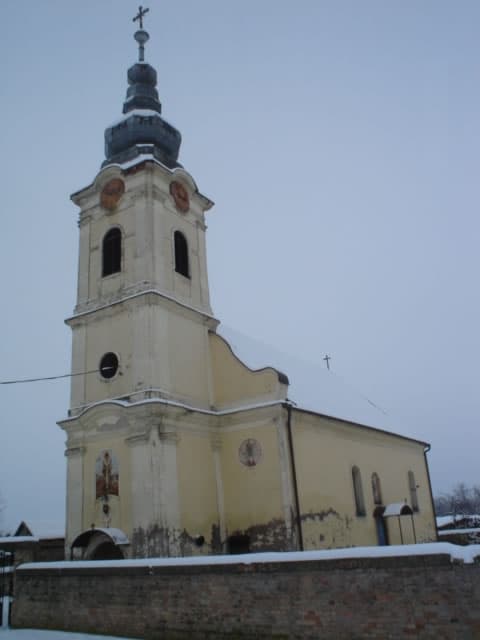
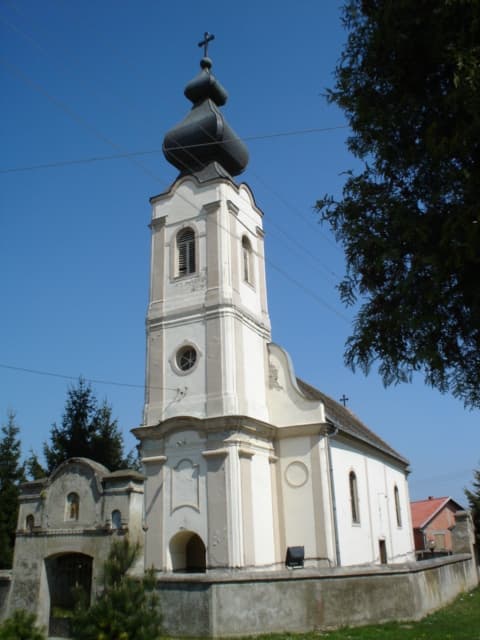
Karanac sits below the south-western slopes of Bansko Brdo in the municipality of Kneževi Vinogradi, yet it has forged its own identity as Baranja’s best-known heritage village. Its eight streets still weave homes, farmyards and family estates into the region’s vineyard landscape. The signature address is 99 Kolodvorska Street, home to the Street of Forgotten Times: seven old granaries containing weaving, carpentry, pottery and cooperage workshops, a barber’s shop and the tiny “Pod kruškom” tavern. A narrow-gauge railway carriage, mill, smithy and former icehouse extend the display, whose 847 objects entered Croatia’s Register of Cultural Property in September 2023. Karanac’s religious heritage is equally distinctive. The Catholic Church of St Donatus dates from 1830, while the protected Reformed church at 104 Kolodvorska Street was built between 1808 and 1816. St Donatus also preserves an organ made by Josef Angster in 1882 and installed in the choir loft in 1917. Karanac is therefore more than a visitor-oriented rustic setting: within a handful of neighbouring streets, it brings together Baranja’s crafts, multi-confessional heritage and living rural tourism.
Karanac draws its identity less from a single grand monument than from the village’s continuing relationship with Baranja farming and vernacular architecture. It is the second-largest settlement in the municipality of Kneževi Vinogradi and, unlike the municipality’s other villages, once belonged to the Darda estate. Vineyards historically occupied a significant share of its land, alongside meadows that supported livestock and crafts practised by coopers, shoemakers and woodturners. Today’s visitor economy grows directly from those local traditions: historic trades are interpreted in an ethnographic collection, Baranja recipes are served in village restaurants, and local wineries pour wines made with grapes from the slopes of Bansko Brdo.
Things to see
Begin at 99 Kolodvorska Street with the Street of Forgotten Times, a village museum whose 847 objects have been protected as cultural property since September 2023. Seven relocated granaries recreate weaving, carpentry, pottery and cooperage workshops, an old barber’s shop and a tavern; a mill, smithy, icehouse and narrow-gauge railway carriage complete the ensemble. Continue along Kolodvorska Street to number 104, where the protected Reformed church was built between 1808 and 1816. Karanac’s third landmark is the Catholic Church of St Donatus, dating from 1830. Its choir loft holds an organ made by Josef Angster in 1882 and installed here in 1917. Beyond the village centre lies Donje polje–Prosina, a protected archaeological site that adds an older layer to Karanac’s craft and religious heritage.


Esterhazy castle in Darda
Landmark · Darda
Esterházy Castle in Darda is a three-winged Baroque and Neoclassical residence by Lake Đola, shaped during the 18th and early 19th centuries.
15 km from Karanac
Stays
No stays listed here yet
Things to do
Begin at the Street of Forgotten Time, moving between seven old granaries that now contain carpentry, pottery, weaving and cooperage workshops, an old barbershop and the Pod Kruškom tavern. Follow the collection with lunch at Baranjska Kuća, then continue towards the vineyards on the southern side of Bansko Brdo. At Svijetli Dvori winery, tastings can introduce varieties such as Graševina, Sauvignon, Chardonnay and Cabernet Sauvignon; confirming a time beforehand is sensible. For a more active finish, Tri Mudraca arranges itineraries through vineyards and sunken wine lanes towards an abandoned basalt quarry, the Kamenjak viewpoint and the cellar streets of Zmajevac.
Food and drink
Baranjska Kuća at 99 Kolodvorska Street combines a meal with access to the Street of Forgotten Time, making fish paprikash or shepherd’s stew a natural follow-up to the collection. Its kitchen specialises in Baranja recipes, and some of its cornmeal is ground in the mill within the ethnographic complex. Tri Mudraca, at 27 Ive Lole Ribara Street, serves home-style dishes by advance arrangement only; its repertoire includes perkelt, goulash and paprikash, along with meat slowly cooked for several hours in a large wood-fired oven. To continue with wine, the Svijetli Dvori tasting room at 99a Kolodvorska pours Graševina, Sauvignon, Chardonnay, Yellow Muscat and Cabernet Sauvignon.
Tours and activities
AdAd · partner offers: GetYourGuideThe partner handles booking, payment and support. StayBravo may earn a commission on bookings made through these links.How we choose offersGetYourGuide offers are selected and ordered by GetYourGuide based on the name of the nearest larger town or national park; we do not influence their selection and do not use data about you.GetYourGuide · Osijek
We show GetYourGuide offers once you allow their cookies.
Practical information
Practical information
Local visitor information is provided by the Baranja Tourist Board, while municipal services are based at 3 Hrvatske Republike Street in Kneževi Vinogradi. A visit to the Street of Forgotten Time should be coordinated with Baranjska Kuća’s opening pattern; its published 2026 schedule shows the complex closed on Mondays, Tuesdays and Wednesdays. Tri Mudraca prepares meals and activities by prior arrangement, and booking a tasting at Svijetli Dvori before arrival is equally prudent. Karanac has only eight streets, yet its visitor addresses are divided mainly between Kolodvorska and Ive Lole Ribara streets, so saving the exact locations is useful before heading into the surrounding vineyards.
Getting there and around
Karanac lies within the municipality of Kneževi Vinogradi, between the Beli Manastir transport corridor and the wine villages of Bansko Brdo. Driving is the most practical option: approach via the D7 state road, then take the local connection into Karanac, with county and local roads continuing towards Kneževi Vinogradi. Arriva’s 2026 season-ticket tariff lists Karanac–Beli Manastir as a route, confirming a bus connection, though the actual departure should be checked for the intended date. Trains on the Osijek–Beli Manastir corridor do not enter Karanac, so the final section from Beli Manastir requires a bus, taxi or car.
Frequently asked questions
What is inside the Street of Forgotten Time?
Karanac’s collection includes seven granaries with craft workshops, a barbershop, tavern, mill, icehouse and an old narrow-gauge railway carriage.
Which wines can be tasted at Svijetli Dvori?
The Karanac winery produces Graševina, Sauvignon, Chardonnay, Yellow Muscat and Cabernet Sauvignon.
Which historic church stands in Karanac?
Karanac’s Roman Catholic Church of St Donatus dates from 1832.
Are organised off-road trips available from Karanac?
Tri Mudraca runs trips from Karanac through vineyards and sunken lanes towards the basalt quarry, Kamenjak, Batina and Zmajevac.
Where is the Street of Forgotten Time?
It is in the courtyard of Baranjska kuća, at Kolodvorska 99 in Karanac.
When did the collection become a cultural good?
It was entered in Croatia’s Register of Cultural Goods in September 2023.
When did Karanac’s collection begin?
The Street of Forgotten Time project began in 2004.
Nearby
Related guides

Osijek
Tvrđa and the centre around the main square are distinct starting points for understanding Osijek. The former emphasises the fortified historic quarter and Baroque architecture; the latter…
Read the guide

Vukovar
A cultural visit to Vukovar has several separate centres of gravity. Eltz Palace and the City Museum address the city and its inhabitants across different periods. Vučedol reaches much…
Read the guide

Stubičke Toplice
Stubičke Toplice derives almost its entire identity from thermal water and the Zagorje landscape. There is no large urban historic core; green spaces, bathing facilities and traces of the…
Read the guide
Slavonski Brod
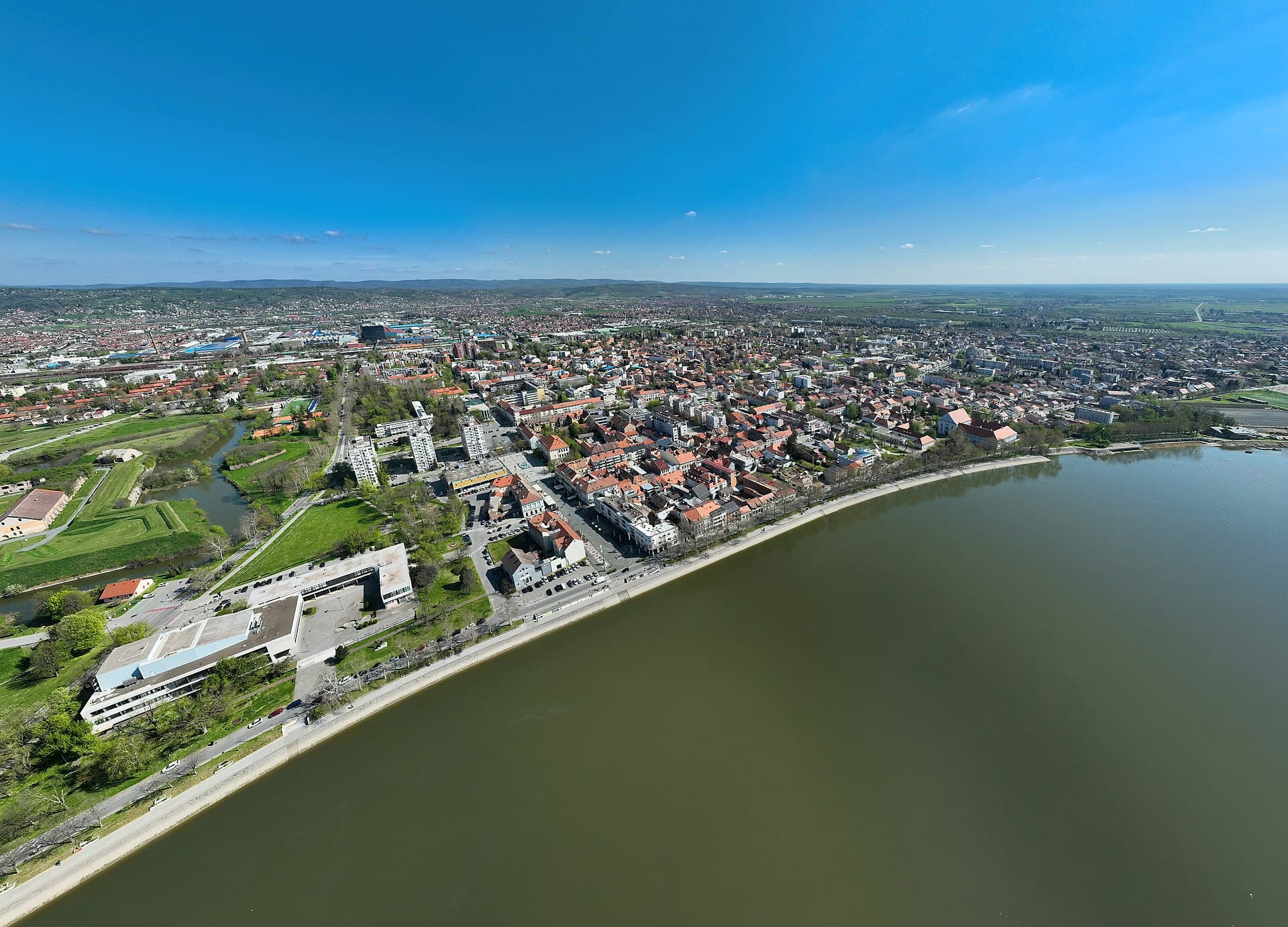
Slavonski Brod developed around one of the major crossings of the Sava, and that border and transport role left a strong mark on the city. Brod Fortress represents the eighteenth-century…
Read the guide
Know Karanac? Correct us
Tell us in your own words what is not accurate. We check right away.Do not enter personal data. Corrections are checked by the StayBravo AI assistant; changes to the description are approved by an editor. Use the form instead
Do you know Karanac?
Help the guests who come after you.
Help us complete
Nothing is published without an editor’s review.Report illegal content
Photo credits: Kotlina, Kneževi Vinogradi — Roland Puskaric (CC BY-SA 4.0) · Kozarac, Čeminac — Ivan Molnar (CC BY-SA 3.0) · Popovac — Wéber György (CC BY-SA 3.0) · Šećerana, Beli Manastir, Branjina — Belirac (CC BY-SA 3.0) · Suza, Kneževi Vinogradi — Flammard (CC BY-SA 3.0) · Church of St. George — Wéber György (CC BY-SA 3.0) · Church of St. Nicholas, Church of St. Peter and Paul — Ljubomir Damjanovic (CC BY-SA 3.0) · Esterhazy castle in Darda — Biljanabekic (CC BY-SA 2.5) · Osijek — Rp031 (CC BY-SA 4.0) · Vukovar — Bybbisch94, Christian Gebhardt (CC BY-SA 4.0) · Stubičke Toplice — MOs810 (CC BY-SA 4.0) · Slavonski Brod — Petar Milošević (CC BY-SA 4.0)