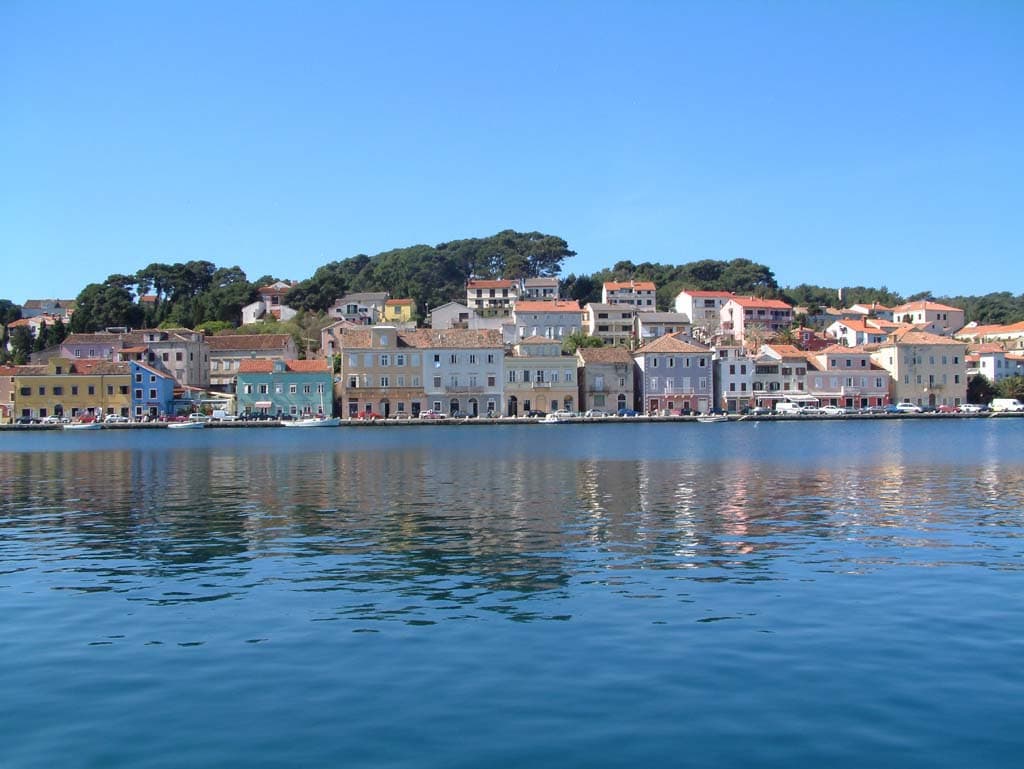
Martinšćica
About this place
Martinšćica is a sheltered west-coast settlement which the local tourist board describes as the second-largest place on Cres. It takes its name from St Martin’s Church above the shore and developed when inhabitants of the surrounding hills gradually moved down towards the sea. An older layer survives on St Christopher hill, where dry-stone ramparts mark a Bronze Age hillfort. On the waterfront stands the Church and Monastery of St Jerome: church construction began in 1479, friars moved into the unfinished monastery in 1482, and the complex was completed around 1520 before its consecration in 1525. It is now registered as protected cultural heritage. The bay contains a small harbour and local swimming places, while the larger Slatina beach area lies about one kilometre away. Martinšćica is served by the Cres–Martinšćica–Mali Lošinj bus route, and coastal line 9308 calls here between Rijeka, Cres and the smaller Kvarner islands. This position makes the village a quiet base between northern Cres and Lošinj.
Martinšćica developed in a sheltered bay on western Cres as people gradually moved down from older settlements on the surrounding heights. Its name comes from St Martin’s Church above the shore, while the waterfront Monastery of St Jerome gives the village much of its historical character. The Cres Tourist Board identifies Martinšćica as the island’s second-largest settlement, yet it retains the scale of a fishing village, with a small harbour, houses beside the water and short walking links to local swimming spots. Above the bay, St Christopher hill preserves dry-stone remains of a Bronze Age hillfort, demonstrating that this landscape was occupied long before the present coastal settlement took shape.
Stays
No stays listed here yet
Things to see
The Church and Monastery of St Jerome form Martinšćica’s most important architectural complex and are protected as cultural property under registration number Z-165. Blaž de Colombis initiated construction of the church in 1479, friars occupied the unfinished monastery in 1482, and work concluded around 1520; the church was consecrated in 1525. The monastery includes a small cloister with a cistern and a garden behind the building, all positioned immediately beside the sea. St Martin’s Church stands above the shore and gave the settlement its name. An even older landmark survives on St Christopher hill, where dry-stone ramparts identify a Bronze Age hillfort.
Beaches
Martinšćica has several swimming sections beside the village and small harbour, allowing visitors to reach the water from the centre without driving. The bay alternates between pebbles, stone platforms and small coves, while the larger Slatina beach area lies approximately one kilometre away. Beside Slatina, Tiha cove has white pebbles and a small campsite harbour. Martinšćica’s position on the western side of Cres gives these shores open Kvarner views and evening sun, while the surrounding headlands provide some shelter inside the main bay. The village waterfront works well for a short swim; Slatina is the more practical choice for visitors planning to spend most of the day beside the sea.
Bathing water quality nearby
- Martinšćica - Centar · 188 mexcellent · season 2025
- Martinšćica - Veli Žal · 415 mexcellent · season 2025
- Martinšćica - pod Štalicom · 830 mexcellent · season 2025
- Slatina - uvala Tiha · 841 mexcellent · season 2025
- Uvala Slatina · 1.2 kmexcellent · season 2025
- Rt uvale Slatina · 1.2 km
Things to do
Begin the morning at Martinšćica harbour and continue to the Church and Monastery of St Jerome, whose seaward outlook has remained unobstructed. Next, find St Martin’s Church, the landmark that gave both the village and bay their name, before returning downhill for a swim in the sheltered cove. A longer coastal walk leads towards Slatina and neighbouring Tiha, where pebbled sections alternate with small inlets. For an archaeological outing, climb towards St Christopher hill and the dry-stone remains of its Bronze Age hillfort. Finish the day back on Martinšćica’s waterfront, where the small harbour faces the sunset side of Cres.
Practical information
Practical information
Martinšćica provides basic village services, but larger shopping trips, medical needs and a broader choice of facilities generally require travel to Cres Town or Mali Lošinj. The centre is easy to explore on foot: the harbour, St Jerome’s monastery, St Martin’s Church and local swimming places occupy a compact area. Slatina is roughly one kilometre away, while the climb towards St Christopher requires sturdier footwear because of the rocky ground and dry-stone remains. Buses towards Cres and Mali Lošinj do not operate with urban frequency, so departures should be checked for the specific travel date. The coastal passenger service calling at Martinšćica is likewise not a daily year-round connection.
Frequently asked questions
Which church gave Martinšćica its name?
Both the village and its bay were named after St Martin’s Church above the shore.
When was St Jerome’s Church consecrated?
St Jerome’s Church was consecrated in 1525, after the complex had been completed around 1520.
Is there a bus to Mali Lošinj?
Yes. Martinšćica is served by Arriva’s route linking Cres with Mali Lošinj and Veli Lošinj.
Does a passenger ship call at Martinšćica?
Yes. Coastal route 9308 includes Martinšćica between Rijeka, Cres and the Kvarner islands on its way to Mali Lošinj.
Nearby

Miholašćica
Village · Cres

Related guides
Rab
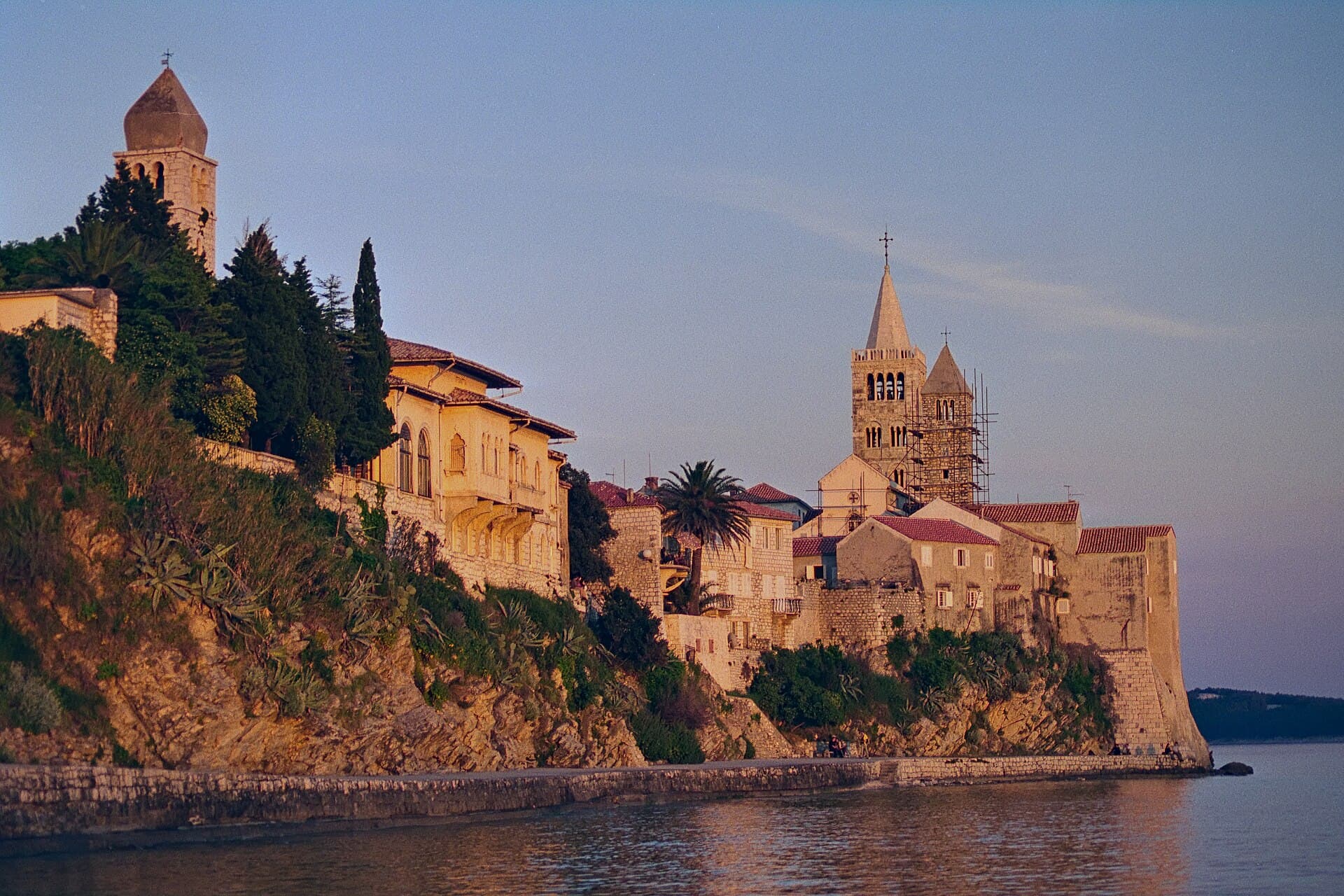
Rab's old town has a clear silhouette, but it rewards more than a postcard view. Its four towers mark distinct religious sites: the Assumption of Mary, St John the Evangelist, St Andrew and…
Read the guide
Help improve this page
Spot something missing or wrong? Suggest a correction, add your photo or report a problem. Editors review every suggestion before it is published.
Photo credits
- Martinšćica — dovsakd · CC BY-SA 3.0 · Wikimedia Commons
- Miholašćica — Jozsef Toth · CC BY 3.0 · Wikimedia Commons
- Grmov — nschuwi · CC BY 3.0 · Wikimedia Commons
- Stivan — Laxplayer630 at English Wikipedia · Public domain · Wikimedia Commons
- Vrana, Cres — Original uploader was Enea at hr.wikipedia · CC BY-SA 3.0