Rožat
About this place
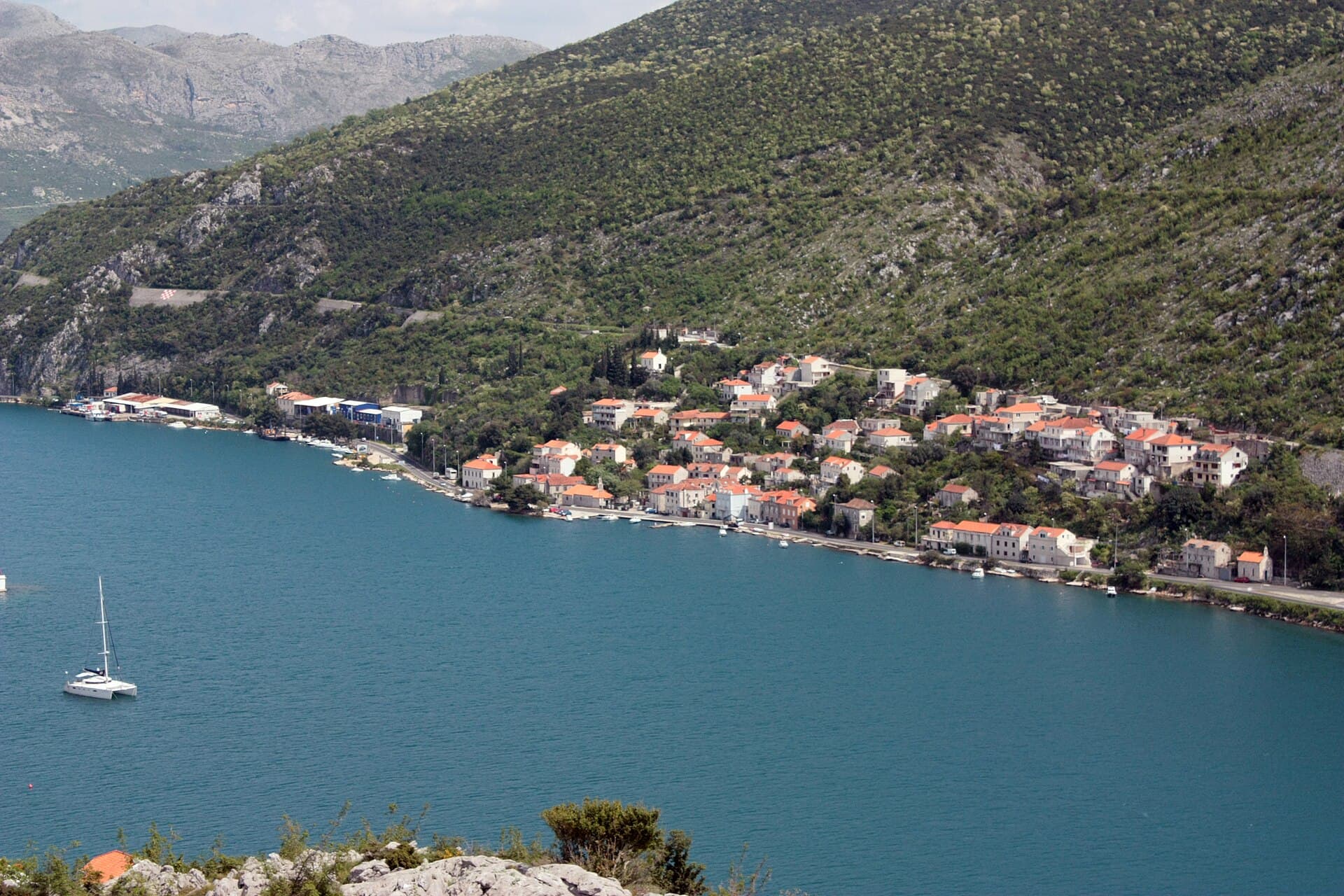
Rožat sits beside the Ombla in Dubrovnik’s suburban waterside district known as Rijeka dubrovačka. Its character comes from the river, Renaissance-era country-house landscape and the monastery complex on the waterfront, with the parish church of Our Lady of the Assumption standing above the settlement. Rožat’s parish is the oldest church community in Rijeka dubrovačka and can be traced to the period between 1295 and 1321; its Confraternity of St Mary preserved a register dating from 1321. The Franciscan Monastery of the Visitation was founded by the Bosnian Vicariate in 1393 as a house where friars could recover, receive care and obtain supplies. The earthquake of 1667 destroyed the earlier parish church, while the present building reflects later reconstruction; its bell tower was completed in 1894 and four bells were installed in 1923. Nearby, the Ombla spring feeds Dubrovnik’s principal water-supply system. Although Rožat belongs to the City of Dubrovnik, its riverside setting feels far removed from the Old Town, which remains accessible by local buses running towards Pile.
Rožat is not a conventional Adriatic village gathered around a seafront promenade; it follows the lower Ombla, where the river landscape opens into the Rijeka dubrovačka inlet. Its two religious landmarks occupy contrasting positions: the parish church of Our Lady of the Assumption stands above the houses, while the Franciscan Monastery of the Visitation lies close to the water. The parish church was first recorded in 1123, but the building lost in the 1667 earthquake was subsequently replaced. Founded in 1393, the monastery was also badly damaged by that earthquake and reconstructed while retaining elements of its earlier form. Rožat’s position near the Ombla spring carries practical importance because this source underpins the water supply of Dubrovnik and its surroundings.
Stays nearby
 Apartment
Apartmeni Klenovica.eu
Klenovica
Klenovica, 377 km from Rožat
up to 4 guests · 1 bedroom
The host confirms the exact price for your dates and availability.
Things to see

Beaches

Things to do
Begin at the Franciscan Monastery of the Visitation beside the Ombla, a foundation associated with the Bosnian Vicariate and the year 1393. Continue uphill to the parish church of Our Lady of the Assumption, a viewpoint that helps reveal how the old settlement fits between the water and the steep slopes of Rijeka dubrovačka. Look for the bell tower completed in 1894; its four bells, weighing 615 kilograms in total, were installed in 1923. Next, walk towards the Ombla spring beneath Golubov kamen, keeping outside the fenced waterworks and observing the sanitary-protection restrictions. To round off the visit, take a bus towards Pile and move directly from Rožat’s river scenery to Dubrovnik’s historic centre.
Practical information
Getting there and around
Rožat forms part of Dubrovnik’s urban bus network along the corridor between Mokošica and Pile. In the 2026 timetable, Libertas routes 1A and 1B link Mokošica with Pile, following the Rijeka dubrovačka corridor and serving the Rožat area. Pile is the terminus immediately outside the western entrance to Dubrovnik’s historic centre, making a car unnecessary for continuing an Old Town visit. By road, Rožat is approached through Komolac along the route beside the Ombla. ACI Marina Dubrovnik occupies neighbouring Komolac at the head of Rijeka dubrovačka, but it is a marina rather than a passenger-ferry terminal for Rožat.
Frequently asked questions
Which is the oldest parish community in Rijeka dubrovačka?
The parish of Our Lady of the Assumption in Rožat is regarded as the district’s oldest, with origins dated between 1295 and 1321.
When was the Franciscan monastery in Rožat founded?
The Bosnian Vicariate founded the Monastery of the Visitation of the Blessed Virgin Mary in 1393.
Can you travel from Rožat to Pile by bus?
Yes. Rožat lies on the urban corridor used by Libertas services running from the Mokošica direction to Pile.


Related guides

Dubrovnik
Dubrovnik’s historic centre is organised around Stradun, yet its character changes within a few steps of that main street. At the western end beside Pile stand the Large Onofrio Fountain,…
Read the guide

Help improve this page
Spot something missing or wrong? Suggest a correction, add your photo or report a problem. Editors review every suggestion before it is published.
Photo credits
- Rožat — Braco · CC BY-SA 3.0 · Wikimedia Commons
- Komolac, Prijevor — August Dominus · CC BY-SA 3.0 · Wikimedia Commons
- Knežica, Gornje Obuljeno, Donje Obuljeno, Čajkovica, Sustjepan,