About this place
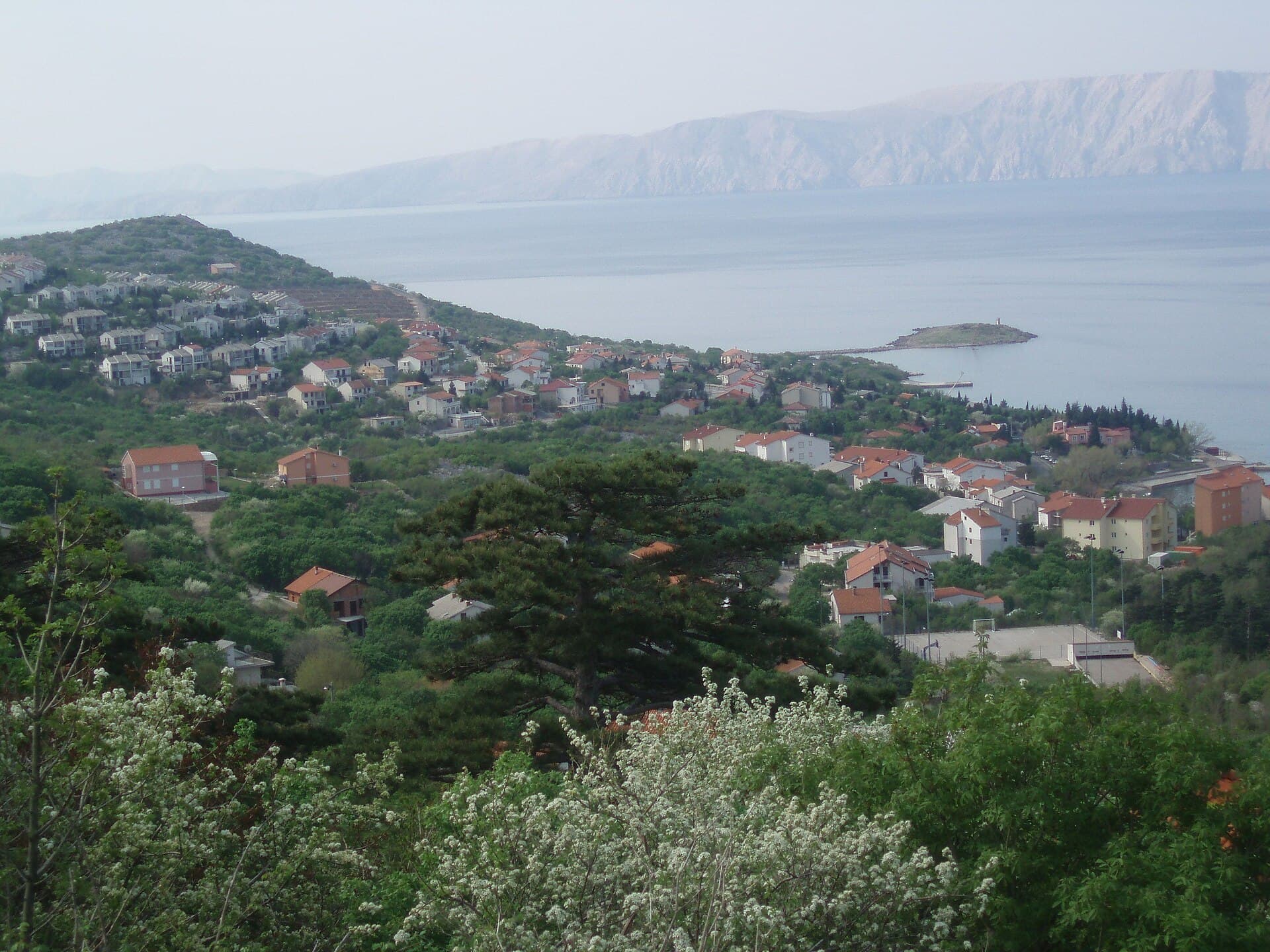
Klenovica is a small coastal settlement on the Novi Vinodolski Riviera, lying between Novi Vinodolski and Senj and centred on a harbour that still reveals its fishing character. A fisherman sculpture, unveiled in 1995, commemorates generations whose livelihoods depended on the sea, while eleven interpretation points along the waterfront recount local stories. The Fisherman’s House now combines a compact heritage display with a seasonal visitor-information desk. A characteristic walk follows the causeway towards the former islet of St Anthony and an old tuna lookout, a reminder of the community’s former tuna fishery. Submarine freshwater springs, particularly around Žrnovnica Cove, influence the coast and can make the water noticeably cooler than in more sheltered Kvarner bays. Above the shore are the hamlets of Cvitkovići, Kalanji, Miletići, Kula–Komadine and Žrnovnica, where dry-stone walls and old mill remains survive. Klenovica consequently suits travellers who want swimming, short walks and a fish meal tied to tangible maritime heritage rather than the pace of a large resort.
Klenovica belongs administratively to Novi Vinodolski, yet its small harbour and waterfront neighbourhood give it a distinct identity below the coastal highway. Fishing heritage here is more than visitor-facing decoration: the bronze fisherman and the Fisherman’s House commemorate crews who worked the Velebit Channel. One episode remains particularly important in local memory. During the stormy night of 4–5 July 1982, fishermen from Klenovica rescued 17 people at sea. Their courage in that operation and other rescues earned them the Vjesnik Blue Ribbon, giving the village’s maritime story a precise human dimension.
Stays
 Apartment
Apartmeni Klenovica.eu
Klenovica
up to 4 guests · 1 bedroom
The host confirms the exact price for your dates and availability.
Things to see
Klenovica’s clearest heritage ensemble stands beside the sea: the Fisherman’s House interpretation centre, the 1995 fisherman sculpture and eleven waterfront stations collectively explain life around the harbour. On St Anthony, an old tuna lookout survives from the organised tuna fishery and is reached along the causeway. St Margaret’s Church anchors the patron-saint celebration on 13 July, when an evening blessing of the sea, boats and fishing equipment directly joins religious observance with the village’s traditional livelihood. Inland, old mills and dry-stone walls scattered through Klenovica’s hamlets provide quieter evidence of how the community also used its rocky hinterland.
Beaches
Klenovica’s bathing shore is largely a mixture of pebbles, rock and paved sea entries, continuing from the centre towards the campsite and Smokvica. The section around St Anthony works well for combining a swim with the walk to the tuna lookout, whereas Žrnovnica Cove offers a more natural setting. Submarine freshwater springs are a defining feature of this coastline and may create distinctly cooler patches, especially noticeable during a longer swim. The waterfront route through the campsite lets visitors move between bathing spots without returning to the busy coastal highway; water shoes are useful on the stony shore and around uneven entries.
Bathing water quality nearby
- Klenovica plaža · 495 mexcellent · season 2025
- Smokvica · 1.8 kmexcellent · season 2025
- Povile - ispod bungalova na obali · 2.6 kmexcellent · season 2025
- Povile - iza bungalova · 2.8 kmexcellent · season 2025
Source: European Environment Agency (EEA); data from Croatian authorities. · bathing water profile
Things to do
Begin at the Fisherman’s House, whose compact display provides context for the working harbour immediately outside. Follow the waterfront past the fisherman sculpture and its interpretation points, then take the causeway to St Anthony and the surviving tuna lookout. On returning, the village’s pebble shoreline makes it easy to add a swim without driving elsewhere. For a longer outing, continue along the coast through Camping Klenovica towards Smokvica; the developed section of the coastal promenade reaches that neighbouring settlement. Finish on Ribarska obala, where several eateries cluster around the harbour and the view returns the day’s route to Klenovica’s fishing story.
Food and drink
Klenovica’s fishing character is most easily tasted beside its harbour. The official tourism listing includes Pod Orajom on Ribarska obala, Navigare in Zidinice, and the Adriatica and Stella Maris restaurants. Pod Orajom stands at Ribarska obala 11, making lunch there a natural continuation of a walk around the fishing waterfront. The local tourism organisation explicitly presents Klenovica as a place where fish travels directly from net to plate. For a non-seafood alternative, Pizzeria Filipo highlights dough fermented for 24 hours and pizzas baked in a wood-fired oven, alongside its own flatbreads and calzone.
Practical information
Practical information
Visitor information in Klenovica is provided at the Fisherman’s House, which became the seasonal desk of the Novi Vinodolski Tourist Board in 2024. That year it operated daily from 15 June to 15 September, 8:00–14:00, while the interpretation display also opened in the evening; those hours should not be assumed for 2026 without a current notice. More extensive assistance is available from the main tourist office at Kralja Tomislava 6 in Novi Vinodolski. Klenovica’s bathing places and restaurants cluster around the shore, whereas scheduled buses use the Klenovica–magistrala stop above the waterfront settlement.
Parking
The municipality’s official list includes a public car park on Ribarska obala, directly beside the part of Klenovica most visitors explore. Published parking conditions state that Ribarska obala is free from 1 October through 31 May; summer arrangements should be checked on the entrance signs because municipal tariffs can change. Klenovica also has designated street-parking areas in Zidinice and Stjepana Radića streets. Since access towards the small harbour is narrow and summer pressure is greater, it is practical to leave the car in a marked area and visit the waterfront, Fisherman’s House and St Anthony on foot.
Frequently asked questions
What can visitors see in the Fisherman’s House?
The Fisherman’s House contains an interpretation display about Klenovica’s fishing heritage and also accommodated the seasonal visitor-information desk in 2024.
Why is St Anthony important to Klenovica?
A causeway leads to the former islet, where an old tuna lookout recalls Klenovica’s traditional tuna fishery.
When does Klenovica celebrate St Margaret?
The village celebrates its patron saint on 13 July with Mass in St Margaret’s Church and the traditional blessing of the sea, boats and fishermen.
Can Klenovica be reached by bus from Novi Vinodolski?
Yes; buses stop on the highway above the village, and a published journey example takes nine minutes from Novi Vinodolski.
Nearby

Povile
Village · Kvarner

Related guides
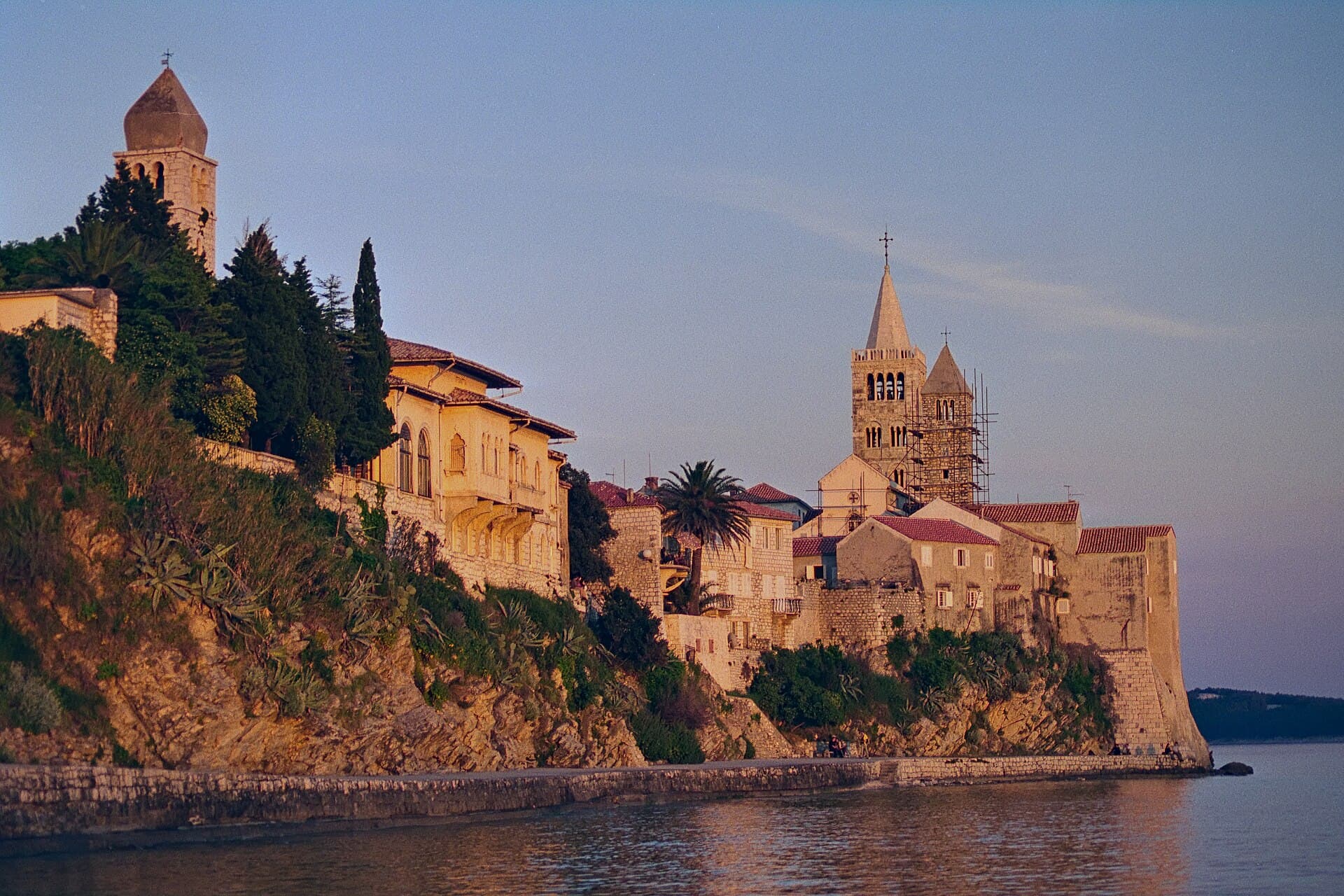
Rab
Rab's old town has a clear silhouette, but it rewards more than a postcard view. Its four towers mark distinct religious sites: the Assumption of Mary, St John the Evangelist, St Andrew and…
Read the guide
Help improve this page
Spot something missing or wrong? Suggest a correction, add your photo or report a problem. Editors review every suggestion before it is published.
Photo credits
- Klenovica — Original uploader was Zeljko at hr.wikipedia · CC BY-SA 3.0 · Wikimedia Commons
- Povile, Ledenice, Novi Vinodolski — Michal Klajban · CC BY-SA 3.0 · Wikimedia Commons
- Bater — Андрей Романенко · CC BY-SA 4.0 · Wikimedia Commons
- Novi Vinodolski — piet theisohn from Leverkusen, Germany