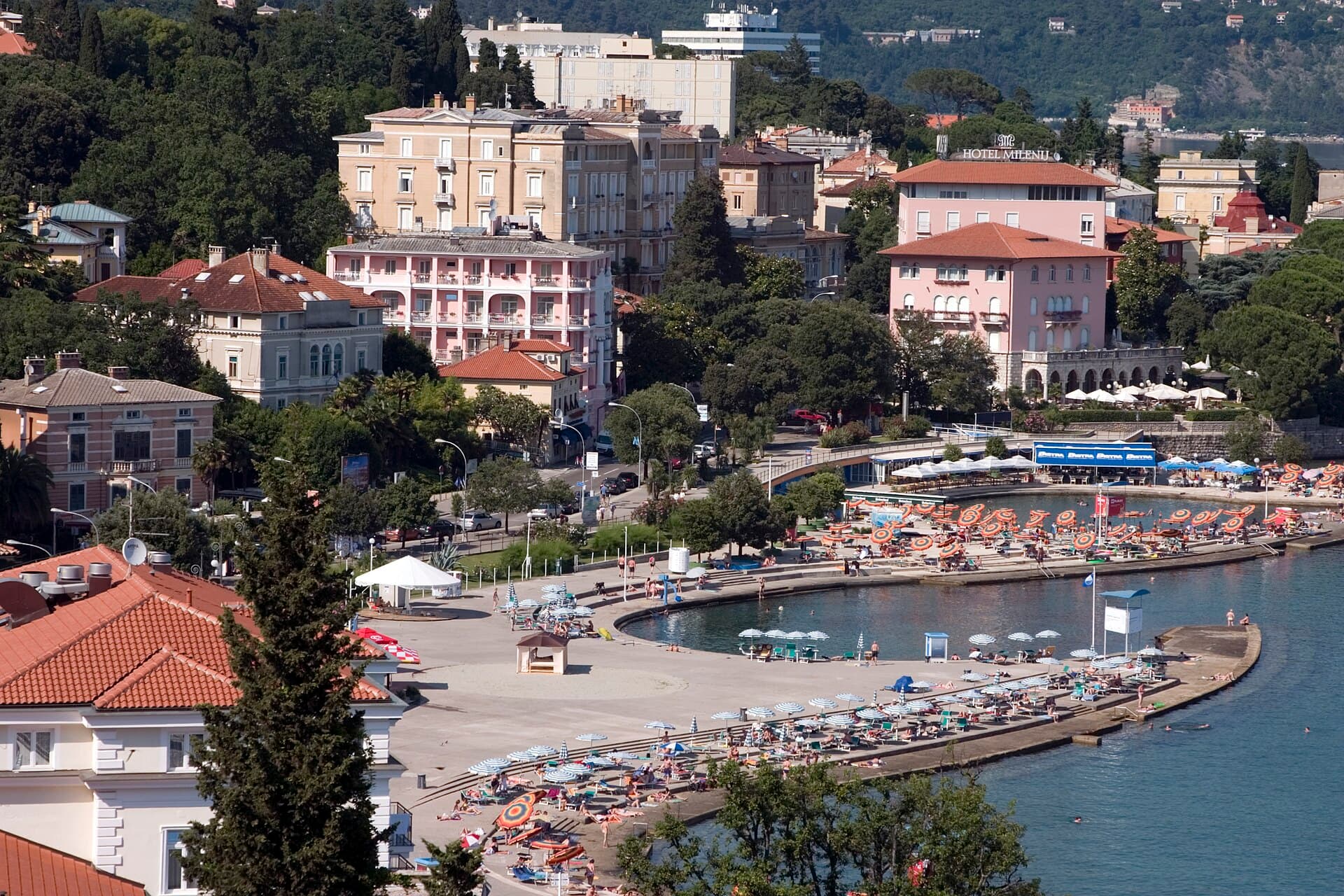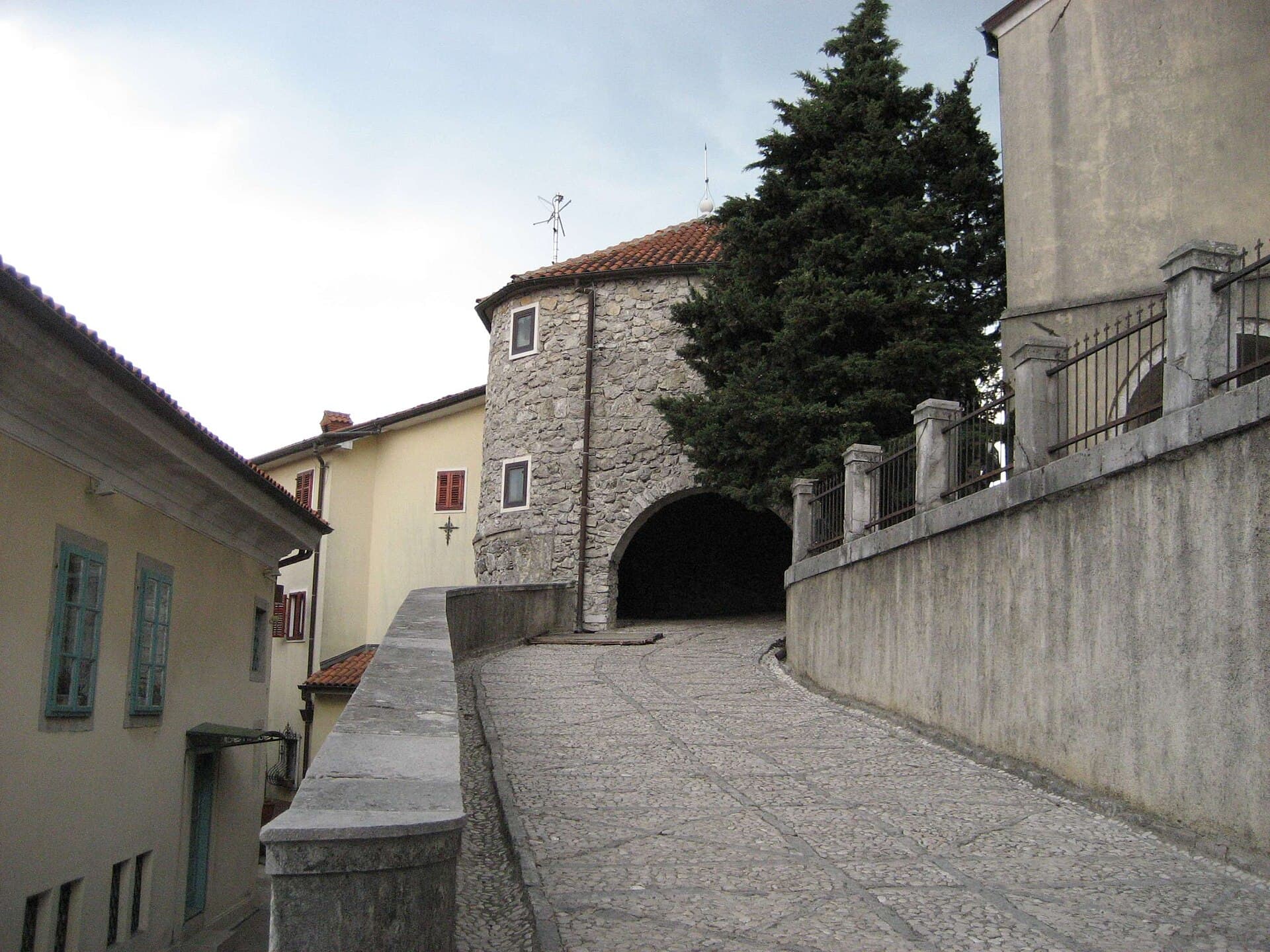
Kastav
About this place
Kastav stands 378 metres above sea level, ten kilometres northwest of Rijeka, looking out towards Kvarner Bay and Mount Učka. Its old town still follows the compact medieval plan, framed by surviving stretches of walls and towers built between the 9th and 16th centuries. Start at Fortica, the former square outside the town gate with its bastions, then continue to the Town Loggia, built in 1571 and restored in 1825. Lokvina square holds a cistern inscribed in 1666, the 15th-century Gothic Church of the Holy Trinity and the former captain’s residence. The parish church of St Helen the Crusader is distinguished by its separate bell tower, 17th-century choir stalls, and 18th-century Baroque altars and font. Crekvina, the roofless remains of an unfinished 18th-century Jesuit church, gives Kastav one of its defining silhouettes. In the Middle Ages, Kastav was the seat of the Kastav lordship; its 1400 statute reflects the town’s long civic and legal tradition.
Kastav is not a seaside resort but a historic hill town overlooking the Kvarner coast. Its centre is enclosed by roughly 750 metres of walls, conceived as an outer defensive ring and an inner stronghold around St Helen of the Cross. Six of the former seven outer towers survive, while houses gradually absorbed sections of the southern rampart. Lokvina Square remembers both the pond once used to collect rainwater and the 1666 revolt in which townspeople drowned the oppressive captain Morelli. Kastav’s identity is further shaped by its Chakavian dialect, the legacy of its Croatian reading room and summer performances staged within Crekvina’s monumental stone shell.
Stays nearby
 Apartment
Apartmeni Klenovica.eu
Klenovica
49 km from Kastav
up to 4 guests · 1 bedroom
The host confirms the exact price for your dates and availability.
Things to see
Crekvina is Kastav’s most dramatic monument: the bare walls of a vast Church of the Assumption, begun by the Jesuits in the 17th and 18th centuries, now frame concerts and theatre. The Town Loggia of 1571 ranks as the largest and one of the best-preserved structures of its kind in Kvarner. Lokvina contains Kaštel, where the Kastav area’s first public elementary school opened in 1770, the small Holy Trinity church and a cistern installed after the old pond was covered. Formerly a defensive position, Fortica now serves as a viewpoint over Kvarner and Mount Učka. The southern edge of the historic centre provides the clearest views of the surviving walls and towers.
Beaches
Bathing water quality nearby
- Preluk - zapad · 2.5 kmexcellent · season 2025
- ispod hotela Navis · 2.6 kmexcellent · season 2025
- Preluk - istok · 2.6 kmexcellent · season 2025
- Bivio - Kostanj, plaža za invalide · 2.7 kmexcellent · season 2025
- Preluk - sredina · 2.7 kmexcellent · season 2025
- Bivio - Rekreacijski centar · 2.9 kmexcellent · season 2025
Source: European Environment Agency (EEA); data from Croatian authorities. · bathing water profile
Things to do
Begin at Volta, Kastav’s main gate, and follow Spinčićeva Street to the Town Loggia, built in 1571. After taking in the Kvarner panorama from Fortica, continue to St Helen of the Cross, whose 32-metre bell tower dominates the old town. Descend to Lokvina to see the cistern and Kaštel, then visit Osojnak’s Coppersmith Workshop, preserved from the working space of Kastav’s last local coppersmith, Milko Osojnak. Complete the architectural circuit at Crekvina, an unfinished Jesuit church now used as an open-air stage. A trail leaves directly from its ruins for Loza and Lužina, allowing the old-town walk to continue beneath the forest canopy.
Food and drink
Kastav’s dining address most closely tied to the old town is Kukuriku, a restaurant and boutique hotel on Lokvina Square. Its position makes lunch easy to place between visits to Kaštel, the cistern and Crekvina, without retrieving a car outside the walls. Kukuriku presents its food as a distinctive Kvarner-inspired gastronomic and wine experience, making it better suited to an unhurried meal than a quick walking-tour stop. Kastav’s visitor brochure lists additional restaurants, taverns and bistros across the wider town, yet Lokvina remains the natural dining point on the historic circuit. Booking Kukuriku directly is sensible for dinner, particularly on evenings when Crekvina hosts a performance nearby.
Practical information
Practical information
Kastav’s tourist office stands at Trg Matka Laginje 5 beside the historic centre, with +385 51 691 425 published as its contact number. Footwear suitable for stone slopes is useful because Lokvina, Fortica, St Helen’s and Crekvina are linked by inclined lanes and steps. Continuing through Loza and Lužina calls for sturdier shoes than the short urban circuit, especially after rain. A summer visit can be matched with performances at the Crekvina stage, while Fortica’s view is most rewarding in clear weather. The old town is compact enough for its principal landmarks to be covered entirely on foot once visitors reach its edge.
Parking
Kastav’s visitor map marks parking areas outside the narrowest stone lanes, so the practical choice is to leave the car at the edge of the centre and walk through Volta towards Lokvina. Stari put is one officially identified parking area near the old-town zone, while major events also use spaces around Šporova jama, Belveder Square and the school grounds. Streets within the walls are narrow and unsuitable for searching for a space during performances at Crekvina. Kastav events can bring temporary traffic arrangements, making signs on the approach more reliable than a habitual route. The published visitor map does not set out one year-round hourly price applying to every marked parking area.
Getting there and around
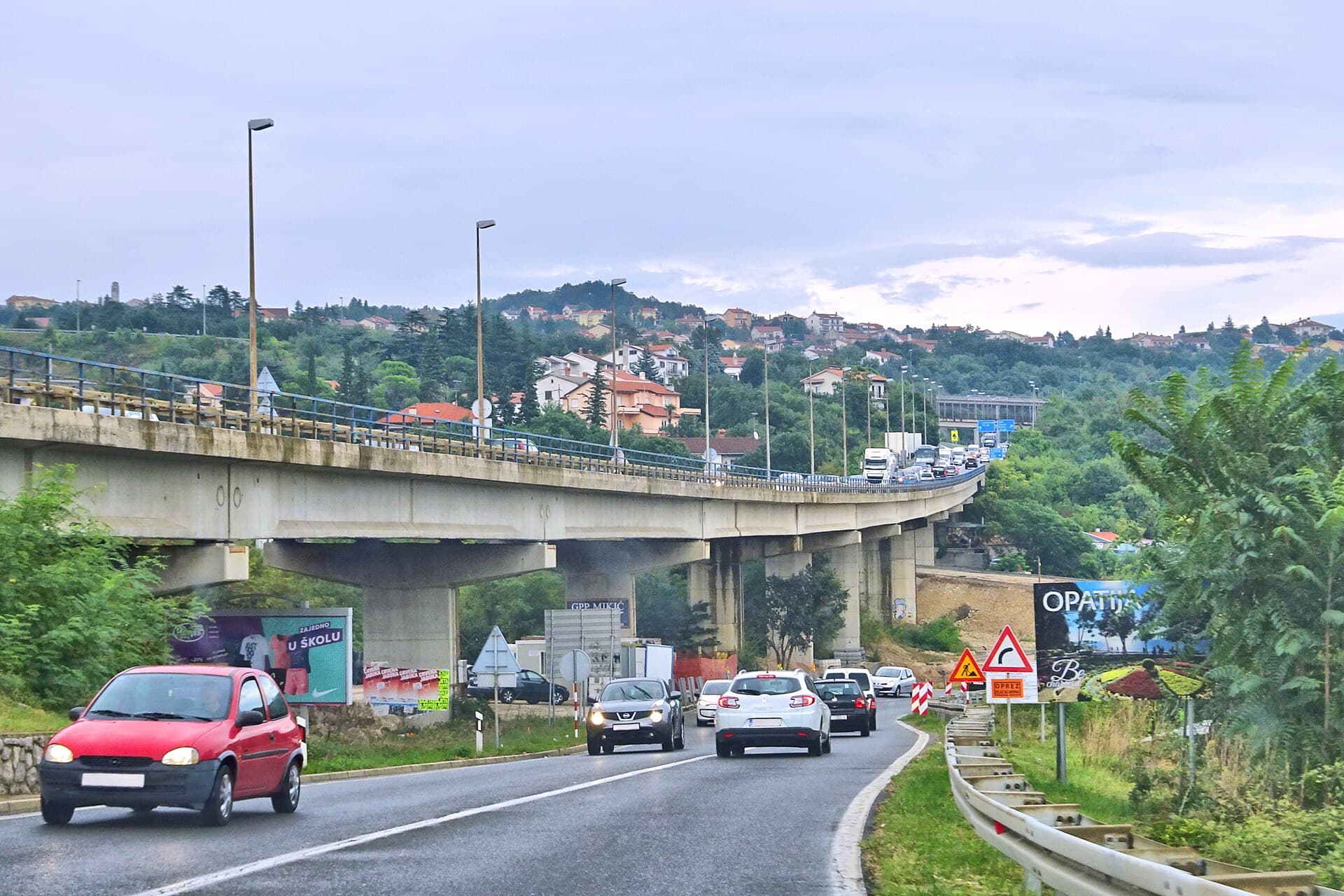
Kastav is reached by road through the Rijeka-zapad motorway junction, also identified with Kastav in the town’s visitor material. Autotrolej routes 18, 18B and 18C link Rijeka, Spinčići, Kastav, Brnčići and Viškovo, providing a car-free approach from Rijeka. Routes 34 and 37 serve the Matulji side of the area, with route 37 running from Opatija’s Slatina stop towards Kastav. As individual variants can follow different alignments and school or seasonal schedules, travellers should consult the operator’s current timetable for their date. Rijeka is the nearest major transport hub, while Rijeka Airport lies across the bay on the island of Krk.
Frequently asked questions
Where is the best view of Kvarner in Kastav?
Fortica is Kastav’s old-town viewpoint over the Bay of Kvarner and Mount Učka.
What is Crekvina?
Crekvina is the ruin of a large Jesuit Church of the Assumption, now used as a promenade and summer stage.
Can you walk directly into the forest from Kastav?
A path leaves Crekvina for Loza and continues through Lužina towards Klana.
What can visitors see in Osojnak’s workshop?
The preserved workshop contains the hearth, bellows, anvil, tools and objects of Kastav coppersmith Milko Osojnak.

Related guides
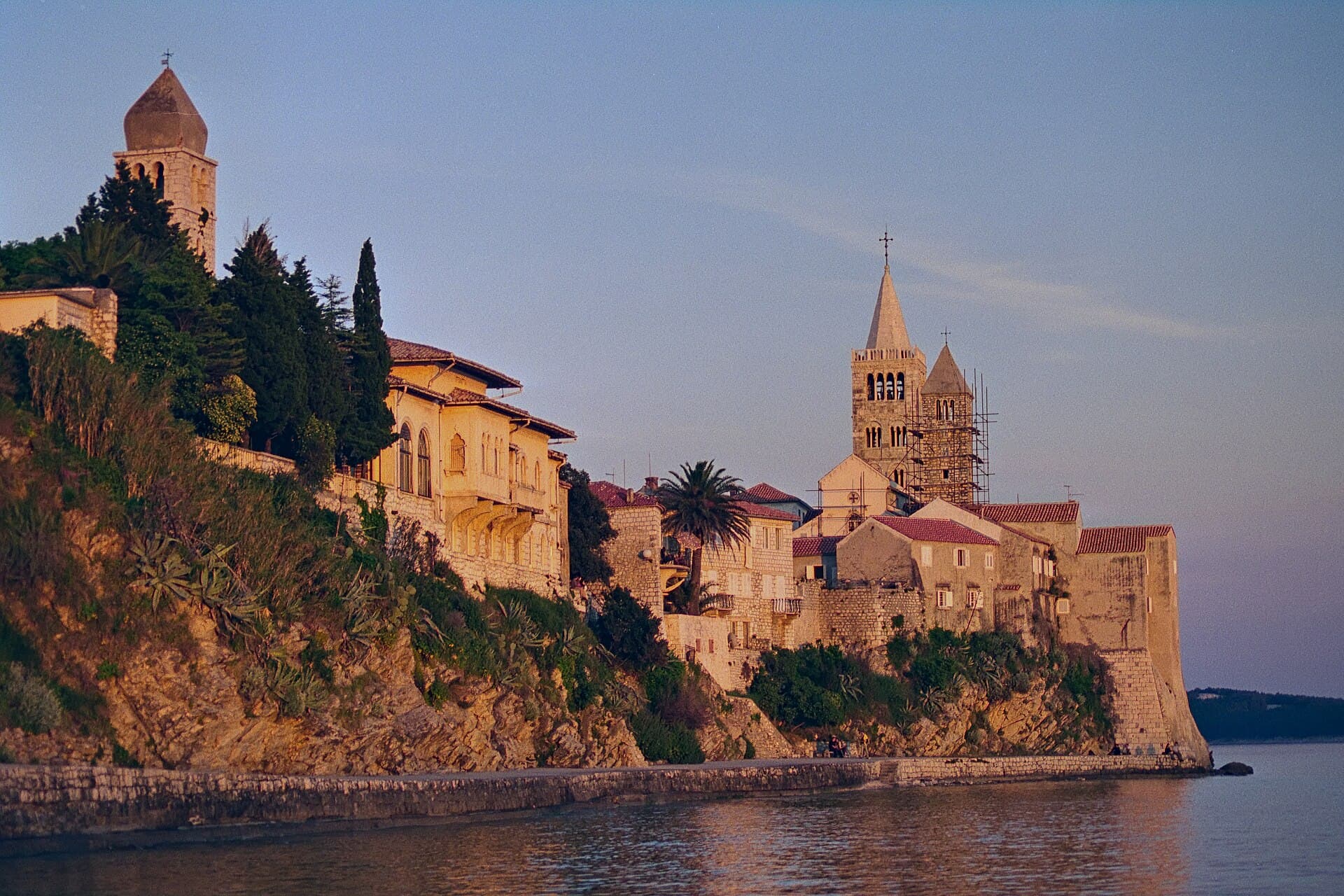
Rab
Rab's old town has a clear silhouette, but it rewards more than a postcard view. Its four towers mark distinct religious sites: the Assumption of Mary, St John the Evangelist, St Andrew and…
Read the guide
Help improve this page
Spot something missing or wrong? Suggest a correction, add your photo or report a problem. Editors review every suggestion before it is published.
Photo credits
- Kastav — Modzzak · CC BY-SA 3.0 · Wikimedia Commons
- Viškovo — Roberta F. · CC BY-SA 3.0 · Wikimedia Commons
- Matulji — User:P199 · CC BY-SA 4.0 · Wikimedia Commons
- Jurdani — Kiki273 · CC BY-SA 3.0 · Wikimedia Commons
- Apartmeni Klenovica.eu — Apartmani Klenovica.eu · courtesy of the property owner
- Rab