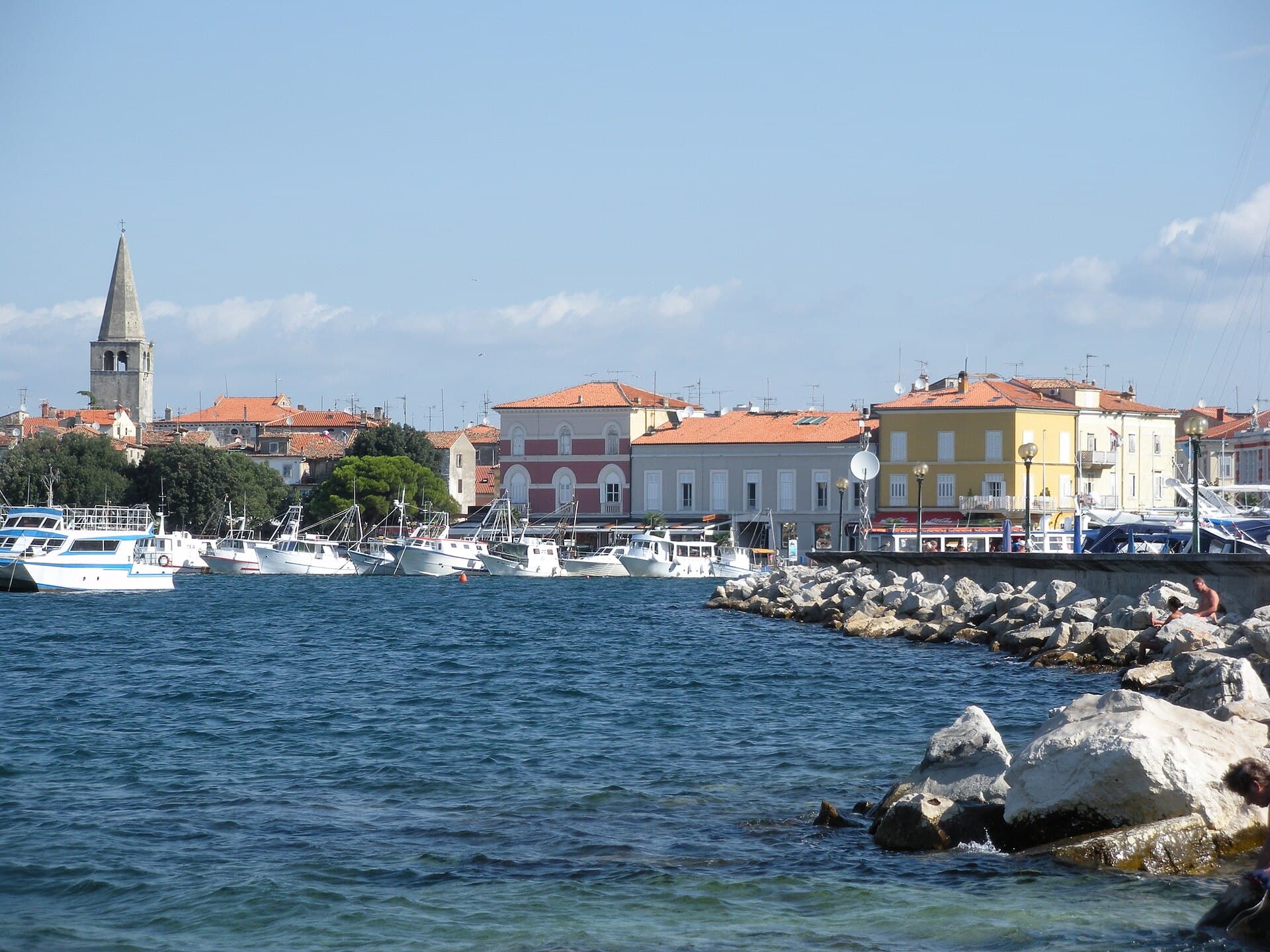
Žminj
About this place
Žminj stands in central Istria at an old road junction that has linked different parts of the peninsula for centuries. Its core preserves fragments of 15th-century fortifications, including a round tower and part of the former defensive complex. The parish Church of St Michael, built in 1625, occupies the site of an older church, while several smaller churches preserve important frescoes. A Calvary below the settlement dates from 1720. The Church of the Holy Trinity was painted in 1471, and the Church of St Anthony the Abbot dates from 1381. Žminj is also associated with Bartulja, a major folk celebration held around the feast of St Bartholomew in late August. Its inland position makes the town a useful base for trips towards Rovinj, Pazin and surrounding villages without depending on the busy coast. A first visit works best as a compact walk through the historic core followed by an exploration of the rural landscape of central Istria.
Žminj is not a place built around one major sight but around the layers of central Istria that remain visible in its compact centre and surrounding countryside. Historic squares, stone houses and small religious details form the core, while village roads, fields and rural scenery begin almost immediately beyond it. The town’s identity is particularly clear during events centred on local food and customs: Bartulja is linked with the feast of St Bartholomew, while the pasta festival focuses on Istrian pasta and regional recipes. These traditions give Žminj a different rhythm from coastal towns, with visits more often shaped by fairs, local cooking and short inland excursions. For travellers crossing Istria by car, Žminj works well as a stop between larger destinations, yet the centre has enough character for several unhurried hours on its own.
Stays nearby
 Apartment
Apartmeni Klenovica.eu
Klenovica
73 km from Žminj
up to 4 guests · 1 bedroom
The host confirms the exact price for your dates and availability.
Things to see
A focused walk through Žminj begins at the parish Church of St Michael and the surviving remains of the former fortifications. The preserved tower helps explain the 15th-century fortified settlement, while nearby small churches reveal an older layer of local art. The Church of the Holy Trinity preserves frescoes dated to 1471, and the Church of St Anthony the Abbot dates from 1381. The Calvary from 1720 stands on the approach below the town. If a visit falls in late August, Bartulja around St Bartholomew's feast demonstrates a living tradition rather than a museum display. This compact circuit can be completed on foot before continuing into the villages of the Žminj countryside.
Things to do
In Žminj, the most rewarding plan combines a short walk through the centre with a food or event-related reason to visit. After exploring the central streets, visitors can look for the Calvary dated 1720 and smaller religious sites that the official Istria portal links with local history. If the trip falls in late August, Bartulja turns the town into a major local gathering; the 2026 edition took place on 29 August. The pasta festival offers a different focus, placing Istrian pasta and regional recipes at the centre of the programme and suiting travellers who want to understand inland Istria through food as well as architecture. Outside event dates, Žminj remains a good half-day stop to combine with a drive through the surrounding villages of central Istria.
Practical information
Practical information
Planning a visit to Žminj around its event calendar is particularly useful because several of the town’s most distinctive experiences happen on specific dates. The official Istria portal lists the 2026 Bartulja gathering for 29 August, while regional tourism recommendations also highlight the pasta festival as an important food event. Distances within the centre are short, so the historic core is best explored on foot, with a car becoming more useful for arrival and for continuing through surrounding villages. As Žminj is an inland destination, the day is better built around walking, food and central-Istrian scenery rather than beach time. A few hours are sufficient for an ordinary visit, while Bartulja or a gastronomy event justifies a longer stay because of the programme and larger crowds.
Frequently asked questions
What remains of Žminj's fortifications?
Parts of the 15th-century defences survive, including a round tower and a section of the fortified complex.
When was the Church of the Holy Trinity in Žminj painted?
The frescoes in the Church of the Holy Trinity are dated to 1471.
What date is associated with the Žminj Calvary?
The Calvary at the crossroads below the town dates from 1720.
Which feast is Bartulja in Žminj connected with?
Bartulja is linked to the feast of St Bartholomew and is traditionally held in late August.
Nearby
Related guides

Novigrad
Novigrad-Cittanova developed on Istria’s north-western coast near the mouth of the Mirna, in a maritime setting that shaped centuries of fishing and trade. The historic centre still…
Read the guide
Help improve this page
Spot something missing or wrong? Suggest a correction, add your photo or report a problem. Editors review every suggestion before it is published.
Photo credits
- Žminj — Croq · CC BY-SA 3.0 · Wikimedia Commons
- Apartmeni Klenovica.eu — Apartmani Klenovica.eu · courtesy of the property owner
- Novigrad — Sl-Ziga · Public domain · Wikimedia Commons
- Pula — Orlovic · CC BY-SA 3.0 · Wikimedia Commons
- Funtana — Tanya Dedyukhina · CC BY 3.0 · Wikimedia Commons
- Poreč