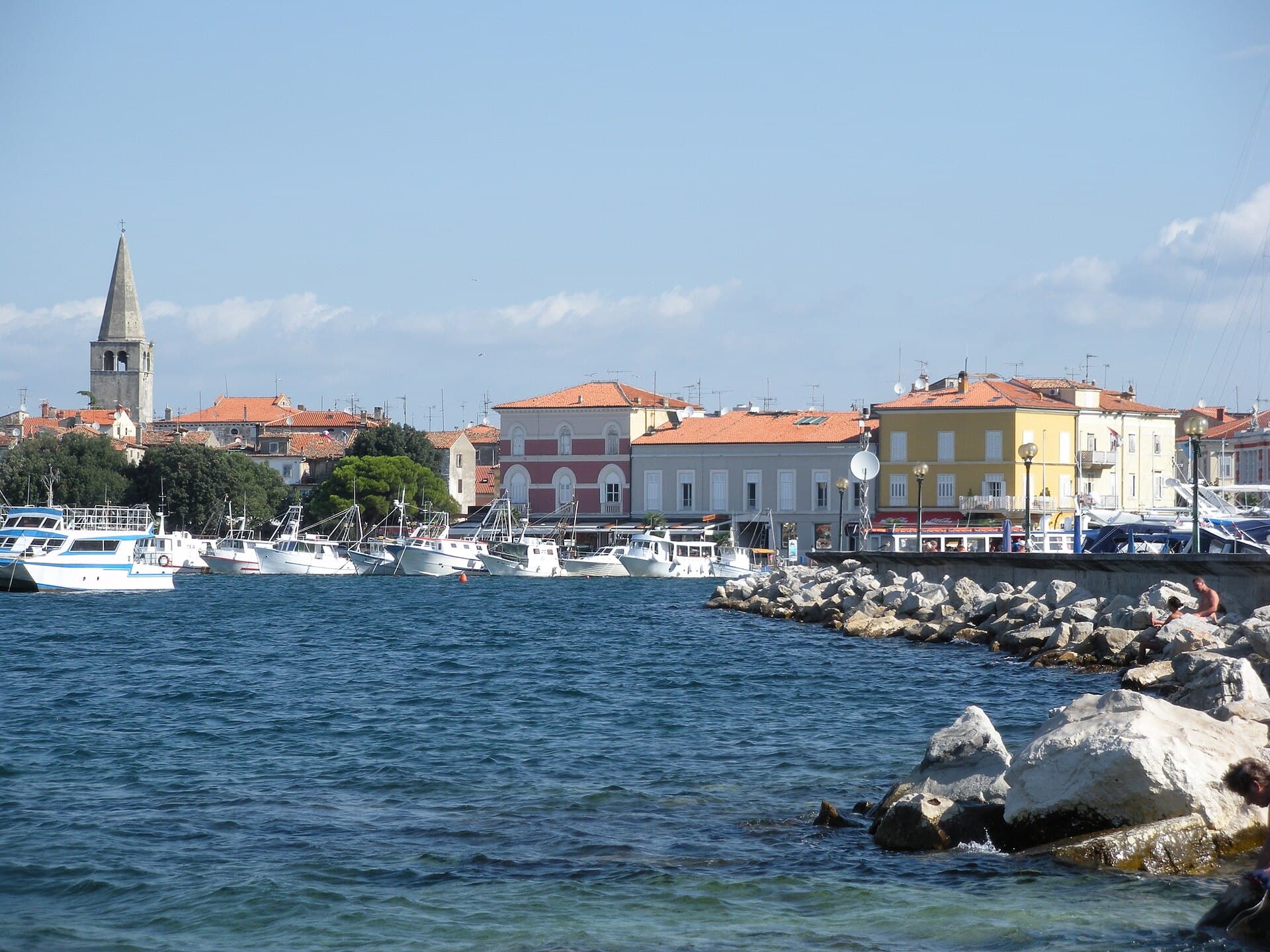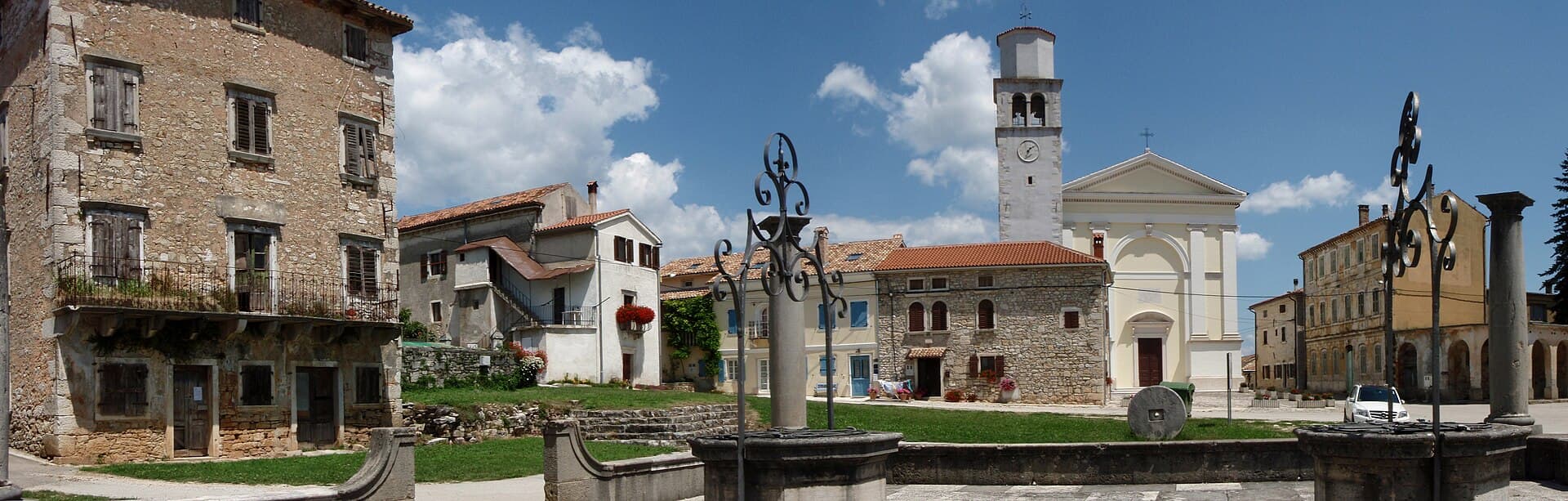
Vižinada
About this place
Vižinada stands on a hill in north-western inland Istria above the Mirna valley and a landscape of vineyards. The village is known for broad views towards Motovun and surrounding hills, as well as for the route of the former Parenzana narrow-gauge railway. Parenzana once linked Trieste and Poreč over 123.1 kilometres, and sections of the route are now used by cyclists and walkers. Vižinada's landmarks include the Church of St Barnabas with frescoes, while the village is also associated with ballerina Carlotta Grisi, born here in 1819. Vineyards and olive groves directly surround the settlement, making it easy to connect cultural sightseeing with local wine and olive oil. Motovun is both visible and close by road, while Grožnjan and Poreč can be added to a wider itinerary. Vižinada lacks the monumentality of larger Istrian towns, but its combination of viewpoints, Parenzana and sacred heritage gives it a clear identity. It particularly suits cyclists and travellers exploring the interior slowly between the Mirna valley and the western coast.
Vižinada is a small Istrian hilltop settlement opening naturally toward vineyards, the Mirna valley and the rolling landscape of north-western Istria. Its tourism identity is not based on a long list of monumental buildings but on location, views and the former Parenzana railway. The municipality highlights agriculture, vineyards, olive groves and cycling and walking opportunities, while the regional tourism organisation links Vižinada with Carlotta Grisi, the Church of St Mary and the railway heritage. Because the historic core is small, the village works best as a starting point for movement through the landscape rather than as a full-day urban destination. Within only a few kilometres, visitors move from stone houses into vineyards and onto the old railway route, giving Vižinada a quieter character than the larger Istrian coastal towns.
Stays nearby
 Apartment
Apartmeni Klenovica.eu
Klenovica
88 km from Vižinada
up to 4 guests · 1 bedroom
The host confirms the exact price for your dates and availability.
Things to see
Parenzana is the most practical way to connect Vižinada with its surrounding landscape. The former narrow-gauge railway opened in the early 20th century and linked Trieste with Poreč across Istrian hills, tunnels and viaducts. Today the marked route passes through vineyards and olive groves and is used for cycling and walking. In Vižinada itself, the Church of St Barnabas preserves frescoes, while local streets recall Carlotta Grisi, the ballerina born in the village. Views towards Motovun further connect the settlement with the Mirna valley. A short stay can combine a walk through the centre with one section of Parenzana, while more serious cyclists can continue towards other stations on the former railway line.
Things to do
The best plan for Vižinada begins with a short walk through the centre and its viewpoints before moving onto the Parenzana. The former narrow-gauge railway linked Trieste and Poreč over a total length of 123.1 kilometres, operated from 1902 to 1935, and much of the route is now used for cycling and walking. The regional tourism organisation notes that around 78 kilometres of the former railway run through Croatia, with tunnels and viaducts adding a strong historical dimension to the trail. From Vižinada, it therefore makes more sense to spend substantial time cycling or walking than searching for a long list of attractions inside the village itself. The day can finish with a visit to a local wine or olive-oil producer, ideally arranged in advance.
Practical information
Practical information
Vižinada is a small municipal destination where much of the visitor experience is tied to landscape, agricultural producers and the Parenzana route. The municipality lies roughly ten kilometres from Poreč, making it practical for travellers staying on the coast who want several hours in inland Istria. Cyclists should expect gravel sections, tunnels and changes in gradient on the old railway alignment, so a light and basic repair equipment are more useful than urban cycling accessories. In 2026, local event dates and tasting opportunities with producers should be confirmed before arrival because much of the offer is not organised as a permanently staffed town attraction. The regional tourism portal and the municipal website are the best starting points for current information.
Getting there and around
Vižinada lies roughly ten kilometres by road from Poreč and occupies a position that links the western coast naturally with inland Istria. A car remains the most flexible way to reach villages, vineyards and smaller sites, but the Parenzana provides a rare opportunity to explore part of the area by bicycle without relying entirely on roads. The village core itself is easily walkable, and cyclists can continue directly from it toward other points on the former railway. The tourism sources do not provide one consolidated current public-transport timetable, so travellers without a car in 2026 should check specific bus services before arrival. Cyclists should also plan the return leg carefully, because distances on the Parenzana can become much longer than expected once the route becomes the main attraction.
Frequently asked questions
What is Parenzana near Vižinada?
Parenzana follows the former Trieste–Poreč narrow-gauge railway and is now used by cyclists and walkers.
How long was the historic Parenzana railway?
The historic narrow-gauge railway was 123.1 kilometres long.
Which ballerina was born in Vižinada?
Carlotta Grisi, the celebrated ballerina associated with Giselle, was born in Vižinada in 1819.
Where can frescoes be seen in Vižinada?
The Church of St Barnabas in Vižinada is known for its preserved wall paintings.

Related guides

Novigrad
Novigrad-Cittanova developed on Istria’s north-western coast near the mouth of the Mirna, in a maritime setting that shaped centuries of fishing and trade. The historic centre still…
Read the guide
Help improve this page
Spot something missing or wrong? Suggest a correction, add your photo or report a problem. Editors review every suggestion before it is published.
Photo credits
- Vižinada — Petar Milošević · CC BY-SA 4.0 · Wikimedia Commons
- Brkač — Zoran Kurelić Rabko · CC BY-SA 3.0 · Wikimedia Commons
- Apartmeni Klenovica.eu — Apartmani Klenovica.eu · courtesy of the property owner
- Novigrad — Sl-Ziga · Public domain · Wikimedia Commons
- Pula — Orlovic · CC BY-SA 3.0 · Wikimedia Commons
- Funtana