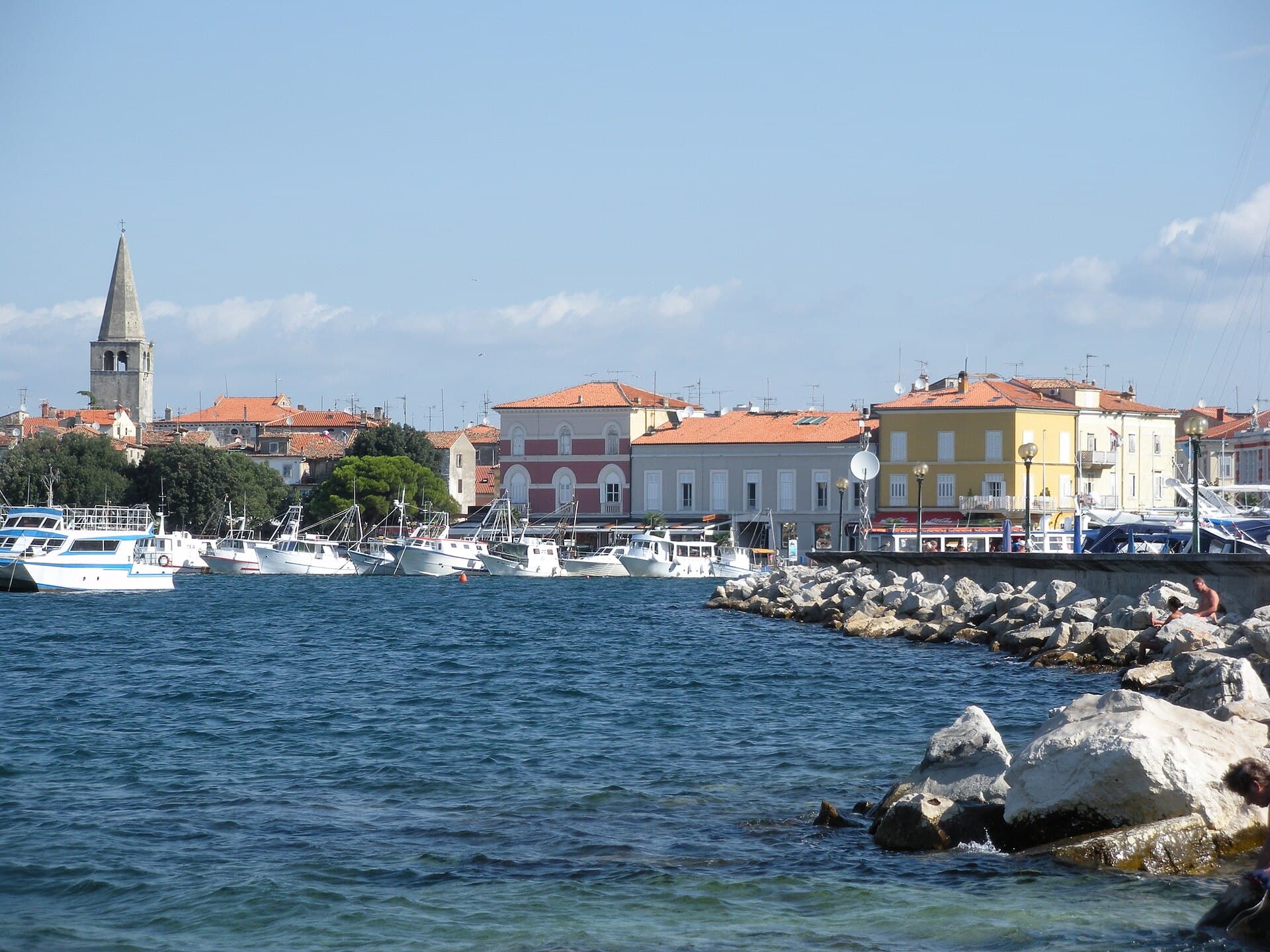
Grožnjan
About this place
Grožnjan is an Istrian hill town above the Mirna valley, distinguished by its stone centre, galleries and intensive music programme. Written records identify it as Castrum Grisinianum in 1102, while the surviving town gate leads towards a Renaissance loggia dating from 1587. Roman funerary stones displayed in the loggia and the former grain store above it recall the town’s administrative and commercial past. The parish church of Saints Vitus, Modestus and Crescentia stands beside a 36-metre bell tower built between 1603 and 1682. Modern Grožnjan revolves around artists’ studios and programmes run by Jeunesses Musicales Croatia, which turn its lanes and squares into summer performance spaces. In 2026, Jazz is Back! BP runs from 13 to 26 July, followed by the Ex Tempore art gathering from 24 to 27 September. Below the old centre, the Parenzana trail offers a 21-kilometre ride towards Livade through six tunnels and across four viaducts.
Grožnjan crowns a hill above vineyards, olive groves and the Mirna valley, occupying a position that once watched over the route to the river port of Baštija. Its medieval centre retains the intimate scale of stone lanes, a town gate, loggia and church square, yet the settlement’s modern identity is emphatically artistic. Music, visual-art, dance and drama workshops begin filling studios and halls from early May, while programmes run by Jeunesses Musicales Croatia animate summer evenings. Galleries and small exhibition spaces give Grožnjan a rhythm unlike that of nearby coastal towns. The bilingual name Grožnjan–Grisignana also reflects the Italian cultural presence characteristic of north-western Istria.
Stays nearby
 Apartment
Apartmeni Klenovica.eu
Klenovica
94 km from Grožnjan
up to 4 guests · 1 bedroom
The host confirms the exact price for your dates and availability.
Things to see
The 15th-century town gate opens into a centre dominated by the loggia of 1587, once the seat of Grožnjan’s court; the town’s grain store formerly occupied the level above. Four Roman funerary stones are displayed inside, while Grožnjan’s surviving statute dates from 1558. The parish church of Saints Vitus, Modestus and Crescentia is accompanied by a 36-metre bell tower constructed between 1603 and 1682. Outside the walls, the Church of Saints Cosmas and Damian dates from 1554 and contains an interior painted by Ivan Lovrenčić in 1988–89. On the edge of town, the 1598 Church of the Holy Spirit marks the way towards the cemetery and access points for the Parenzana trail.
Things to do
Enter through the 15th-century town gate and pause first at the Renaissance loggia of 1587, where four Roman funerary stones are displayed. Continue through the stone lanes to the parish church of Saints Vitus, Modestus and Crescentia and its 36-metre bell tower, then seek out the small Church of Saints Cosmas and Damian with modern wall paintings by Ivan Lovrenčić. Spend the afternoon exploring the galleries and studios behind Grožnjan’s reputation as a town of artists. Cyclists can start from the Parenzana rest area at Stanica and ride towards the Kalcini tunnel and Završje. In July 2026, end the day at a Jazz is Back! BP concert on the Belvedere terrace; late-September visitors can instead follow the Ex Tempore exhibitions.
Practical information
Practical information
The Grožnjan tourist board is based at Umberto Gorjan 3 and lists +385 52 776 131 and [email protected] as its contact details. The historic centre is explored on foot; cobbles, steps and narrow passages call for secure footwear, particularly when descending towards Stanica and the Parenzana. The busiest cultural season begins in May with summer academies and workshops, reaching its peak with July concerts and September’s Ex Tempore. Cyclists tackling the Parenzana should carry lights and use equipment suitable for gravel because the route towards Livade passes through six tunnels. Outside the principal festival dates, Grožnjan follows a noticeably quieter daily rhythm.
Frequently asked questions
When is Jazz is Back! in 2026?
The festival is scheduled for 13–26 July 2026, with concerts on the Belvedere terrace.
When is Ex Tempore in 2026?
The international art event runs from 24 to 27 September 2026.
How long is the Parenzana route to Livade?
The Grožnjan–Livade section is 21 kilometres long and includes six tunnels and four viaducts.
What can be seen in Grožnjan’s loggia?
The Renaissance loggia of 1587 contains four Roman funerary stones.
How tall is Grožnjan’s bell tower?
Nearby

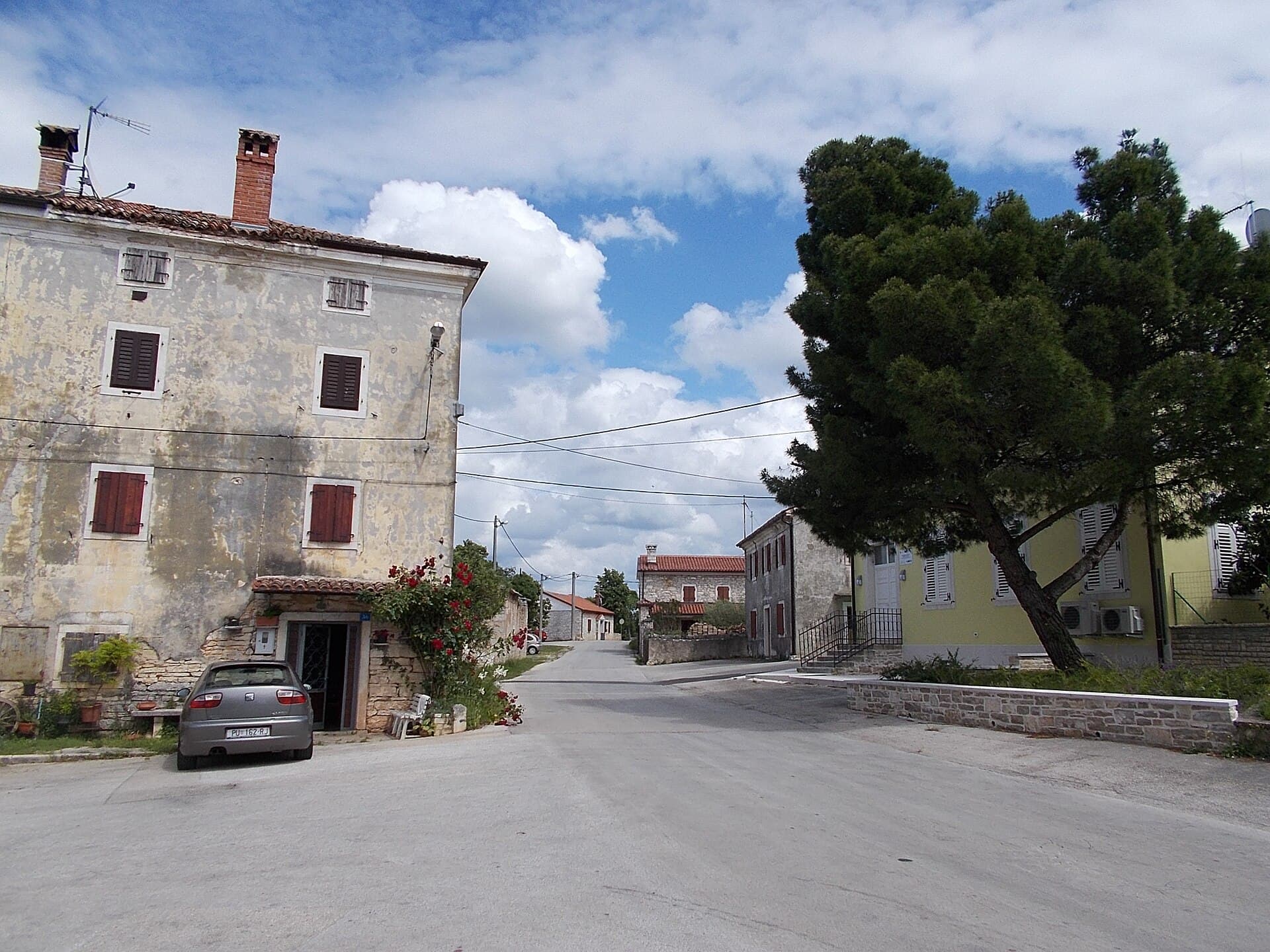
Martinčići
Village · Istria
Related guides
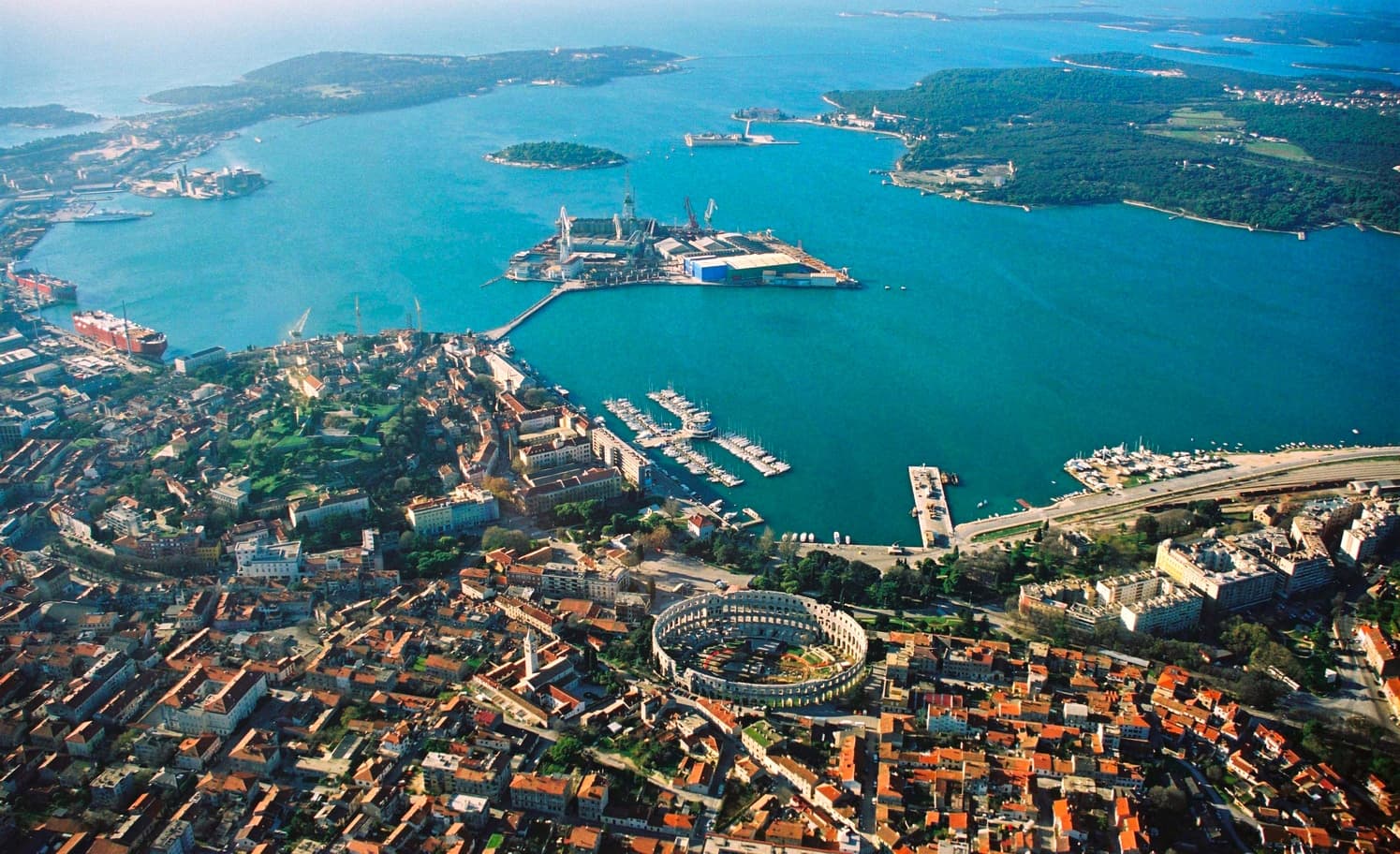
Pula
Central Pula offers two connected but different sightseeing strands. One follows public spaces and visible Roman monuments: the Arena, gates, Forum and temple. The other explores museum…
Read the guide

Help improve this page
Spot something missing or wrong? Suggest a correction, add your photo or report a problem. Editors review every suggestion before it is published.
Photo credits
- Grožnjan — Aconcagua (talk) · CC BY-SA 3.0 · Wikimedia Commons
- Martinčići, Marušići — Petar Milošević · CC BY 4.0 · Wikimedia Commons
- Triban, Buje — Szeder László · CC BY-SA 4.0 · Wikimedia Commons
- Apartmeni Klenovica.eu — Apartmani Klenovica.eu · courtesy of the property owner
- Pula