
Boljun
About this place
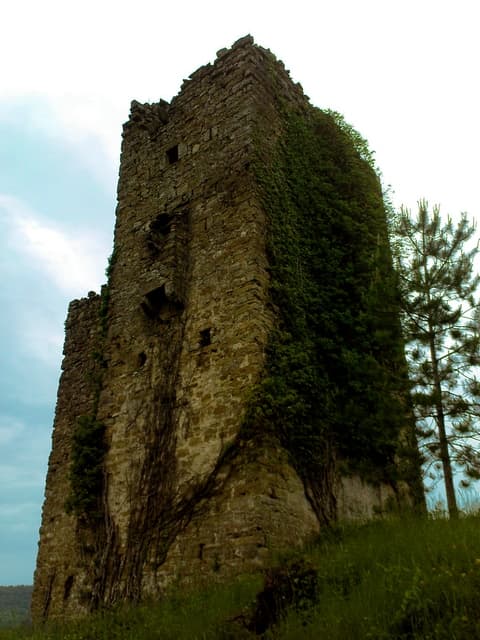
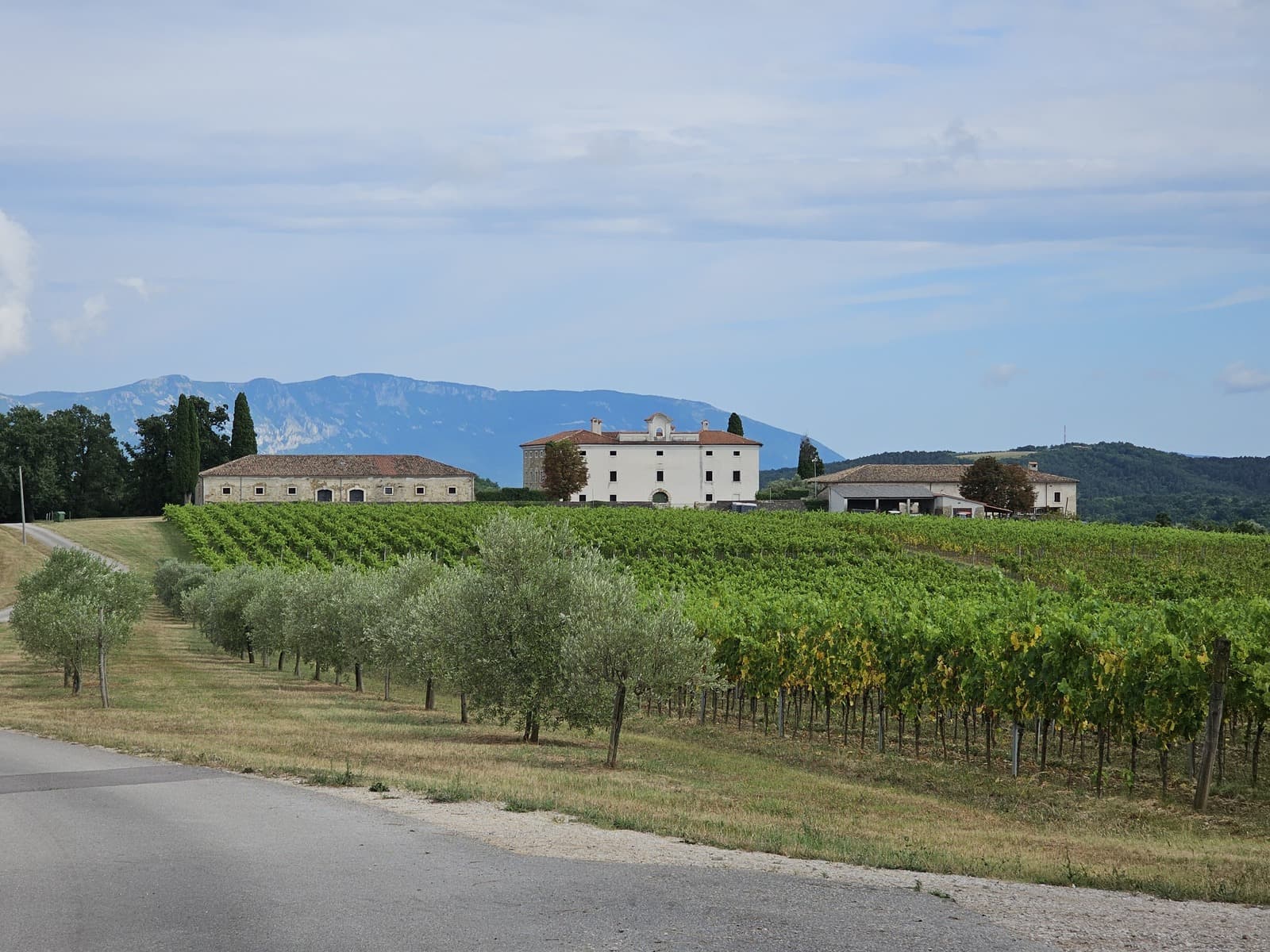
Boljun is a historic hill town in north-eastern Istria, overlooking the Boljunčica valley and the Učka massif. Part of the Municipality of Lupoglav, its stone-built core developed around a castle whose walls and towers were constructed and expanded between the 11th and 17th centuries. Boljun reached its height from the 15th to the late 17th century, when it had its own judges and governors and served as an important centre of Glagolitic literacy. Glagolitic traces remain visible in its churches and carved stones, including a 1543 inscription beside the Church of Saints Fabian and Sebastian and a bilingual Glagolitic-Latin inscription from 1641 on St George’s Church. Within the old core, highlights include the castle, communal loggia, governor’s stone table, Parish Church of St George and a bell tower bearing the date 1645. A five-minute descent leads to Studenac spring, the old washing place and the path towards ruined St Peter’s Church. Boljun is inland: swimming requires a drive across Učka towards the pebble beaches of Mošćenička Draga, and a car is the most practical way to reach the village itself.
Boljun is a stone-built hill town in the Municipality of Lupoglav, raised above the Boljunčica valley and facing Mount Učka. Its core developed around a medieval castle and flourished between the 15th and late 17th centuries, when Boljun had its own governors, judges and council. The settlement was a notable centre of Glagolitic literacy, documented by inscriptions carved in stone, parish and confraternity registers, and the Boljun Chronicle. Its main street follows the ridge, while the square, loggia, castle and Church of St George preserve the layout of a former miniature urban commune.
Things to see
 Nature park

Stays nearby
- Holiday home
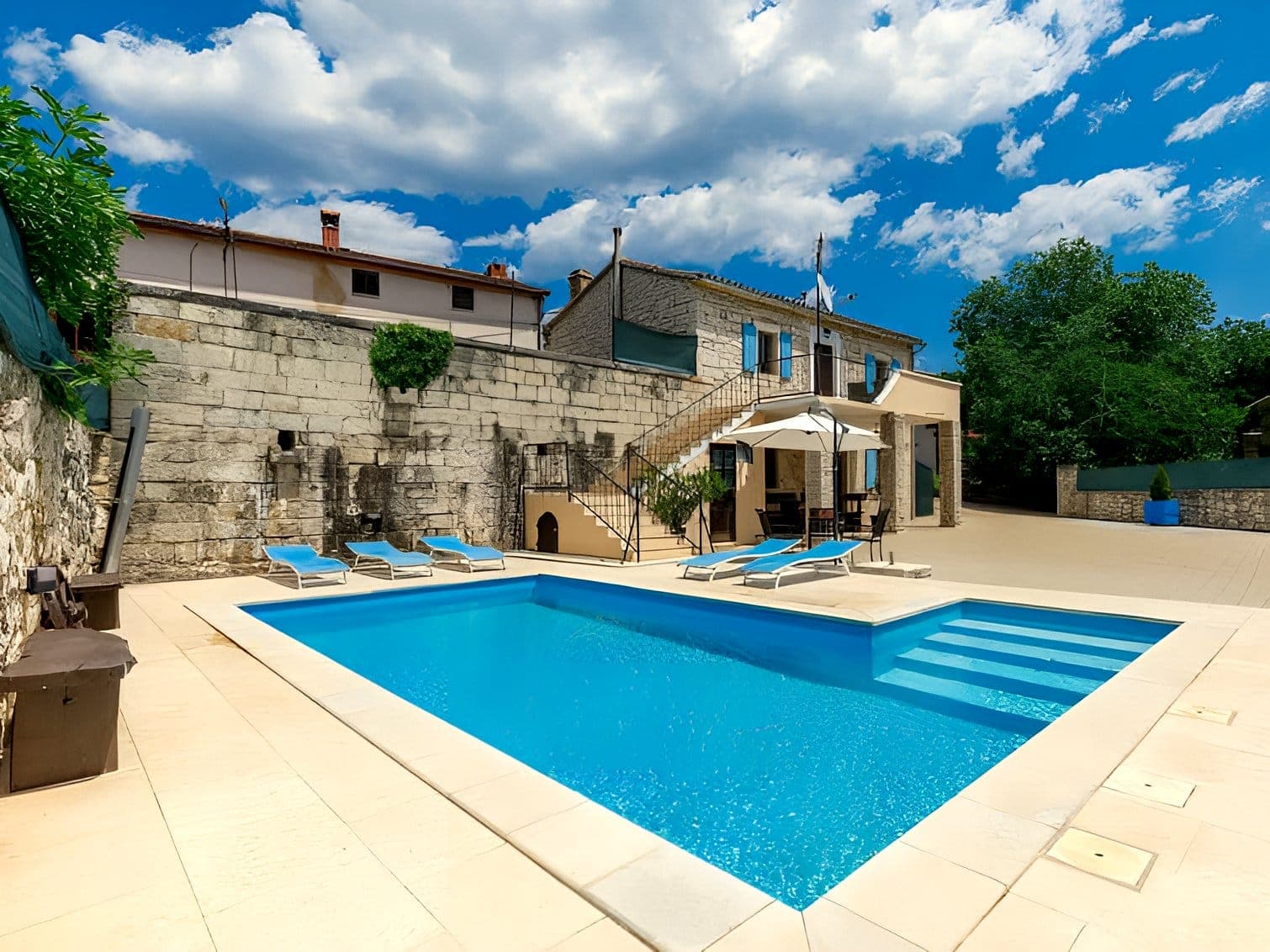 16 km from Boljun
Be the first to list here
Guests looking for this place only see stays nearby for now. No commission, and enquiries come straight to you.
List your accommodation
Beaches
Boljun has no beach of its own because its historic centre stands inland above the Boljunčica valley. For a day by the sea, drive across the Učka area towards Mošćenička Draga on the Kvarner coast. There, Sipar is a managed pebble beach approximately 400 metres long, formed from material carried by the local stream, and it continues south towards Sveti Ivan beach. The quieter coves of Uboka and Jelenšćica lie between Mošćenička Draga and Brseč and can be reached by boat or by footpaths descending from the Rijeka–Pula road. Returning to Boljun means crossing back from the coastal strip into Istria’s interior.
Things to do
Enter Boljun along the road past the 12th-century Church of Saints Fabian and Sebastian, where a Glagolitic inscription dated 1543 is built into the sacristy wall. In the old core, visit the castle, communal loggia and governor’s stone table before looking for original Glagolitic markings inside St George’s Church. A bilingual inscription left by the Glagolitic priest Bernard Velijan in 1641 survives on the church exterior, while the bell tower bears the date 1645. Afterwards, walk roughly 300 metres to the 1914 Calvary or descend for five minutes to Studenac spring and the old washing place before continuing towards ruined St Peter’s Church.
Tours and activities
AdAd · partner offers: Viator, GetYourGuideThe partner handles booking, payment and support. StayBravo may earn a commission on bookings made through these links.How we choose offersWe choose offers based on the page you are viewing: the partner destination for this place or the nearest one (with its distance), and on a sight page only offers that mention it. We show offers rated at least 4.3 with at least 10 reviews, without multi-day tours or pure transfers, ordered by rating adjusted for the number of reviews and then by the partner’s order. We do not use data about you, and the commission does not affect the order.GetYourGuide offers are selected and ordered by GetYourGuide based on the name of the nearest larger town or national park; we do not influence their selection and do not use data about you.Viator
Nearest destination: Central Croatia (19 km)
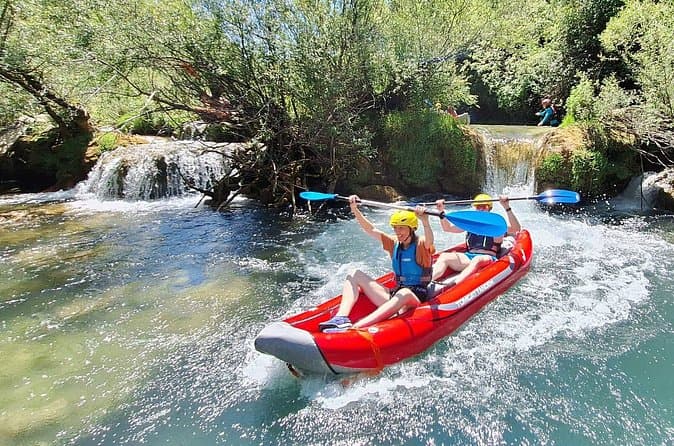
Mreznica Waterfalls Kayaking Adventure Near Plitvice Lakes (opens in a new tab)
Discover the hidden canyon of the Mreznica River, just 30 minutes from Plitvice Lakes. Unlike crowded tourist attractions, this kayaking adventure takes you through crystal-clear water, small…
Rated 5 out of 5 · 147 reviews· 4 h
Free cancellation
from €55
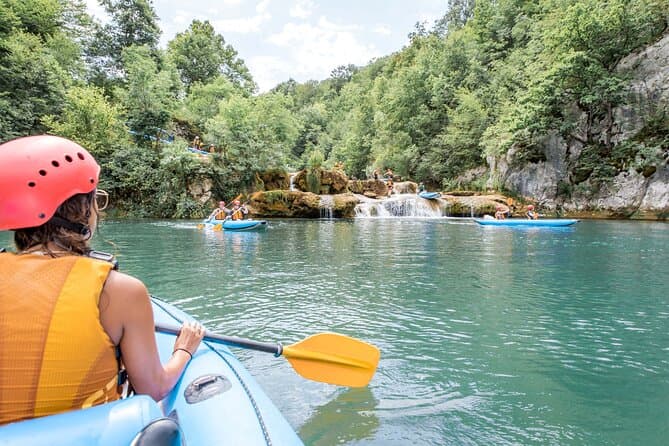
Kayaking at the Mreznica Canyon (opens in a new tab)
Get back to nature on a small-group Mrežnica Canyon kayaking tour (max 16 people vs standard 20+). Enjoy the upper canyon of Mreznica between Primislje and Trzic, the most beautiful part of the…
Rated 5 out of 5 · 184 reviews· 3 h
Free cancellation
from €50
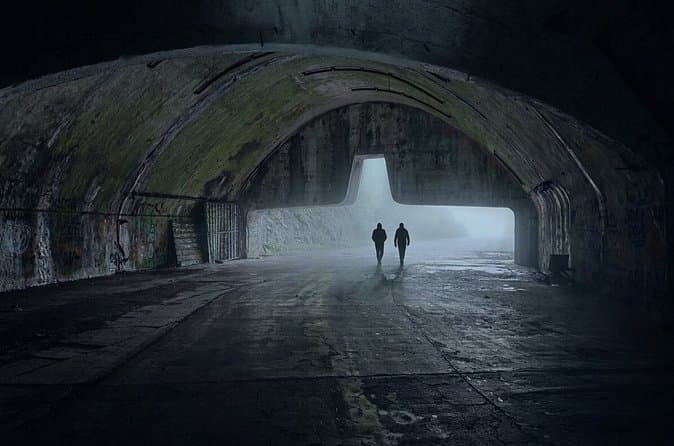
Zeljava Airbase: History and Adventure Tour/Plitvice (opens in a new tab)
Explore the abandoned military complex of Zeljava Airbase with a local guide. Discover its strategic role during the Cold War and its connection to the fall of Yugoslavia. Wander through massive…
Rated 5 out of 5 · 96 reviews· 2 h
Free cancellation
from €50
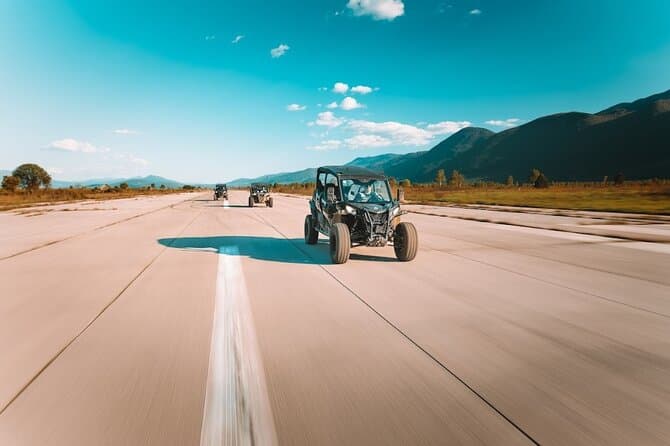
3,5 hours Guided Buggy Tour in Plitvice lakes (opens in a new tab)
If you like a combination of adrenaline and nature, then Inspiration Resort is the right place for you! We offer you an unforgettable adventure - guided tours on buggy vehicles in the surroundings…
Rated 5 out of 5 · 73 reviews· 3.5 h
Free cancellation
from €129
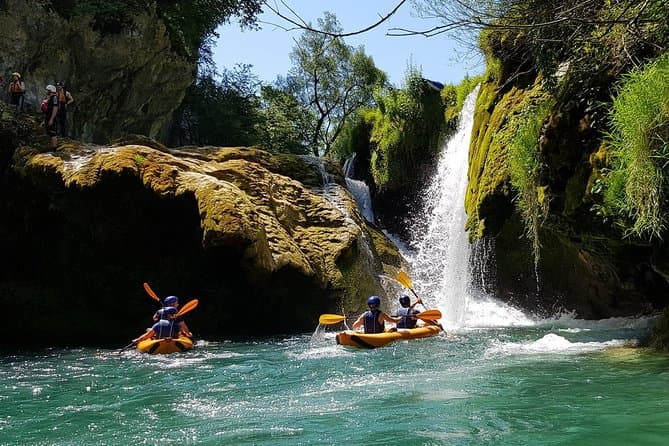
Kayaking Mrežnica river (opens in a new tab)
We’re passing through the most beautiful part of Mrežnica, length of 5 kilometers with abundance of magical places for swimming and recreation. You will pass in total 9 waterfalls and 3 rapids…
Rated 4.9 out of 5 · 171 reviews· 4 h
Free cancellation
from €65
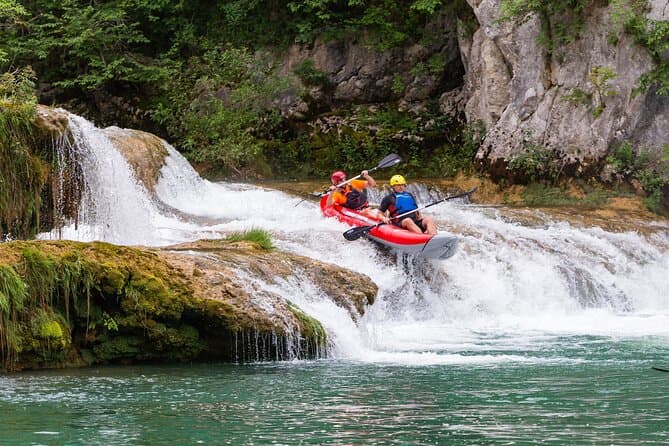
Kayaking in Mreznica Waterfalls near Slunj and Plitvice Lakes (opens in a new tab)
This is a unique opportunity to discover one of the most beautiful rivers in Croatia ho is hidden in the canyon and you can explore her only by kayaking. You'll be able to make amazing memories of…
Rated 5 out of 5 · 56 reviews· 3 h
Free cancellation
from €50
GetYourGuide · Opatija
We show GetYourGuide offers once you allow their cookies.
Practical information
Getting there and around
Drivers reach Boljun via county road Ž5046, which links the Paz–Boljun corridor with state road D500. D500 runs towards the Vranja interchange on the A8 motorway, making it the useful approach from Rijeka and the Učka Tunnel; travellers coming from central Istria can route through Pazin and Cerovlje. Boljun has no railway station: Lupoglav station lies on the local Lupoglav–Raša line, but the final journey to the hilltop old town requires road transport. The Lupoglav municipality describes its local-road network as dense but technically modest, so the last climb into Boljun calls for careful driving.
Frequently asked questions
Is Boljun on the coast?
No, Boljun is an inland historic settlement overlooking the Boljunčica valley and Učka; swimming requires a trip towards the Mošćenička Draga coast.
Where can Glagolitic inscriptions be seen in Boljun?
Inscriptions can be seen inside St George’s Church, on its exterior wall and beside the sacristy of the Church of Saints Fabian and Sebastian.
What lies close to Boljun’s old centre?
A Calvary built in 1914 stands about 300 metres from St George’s Church, while Studenac spring and the former washing place are a five-minute walk downhill.
Nearby
Boljun
Open in OpenStreetMap(opens in a new tab)straight-line distance
Related guides

Novigrad
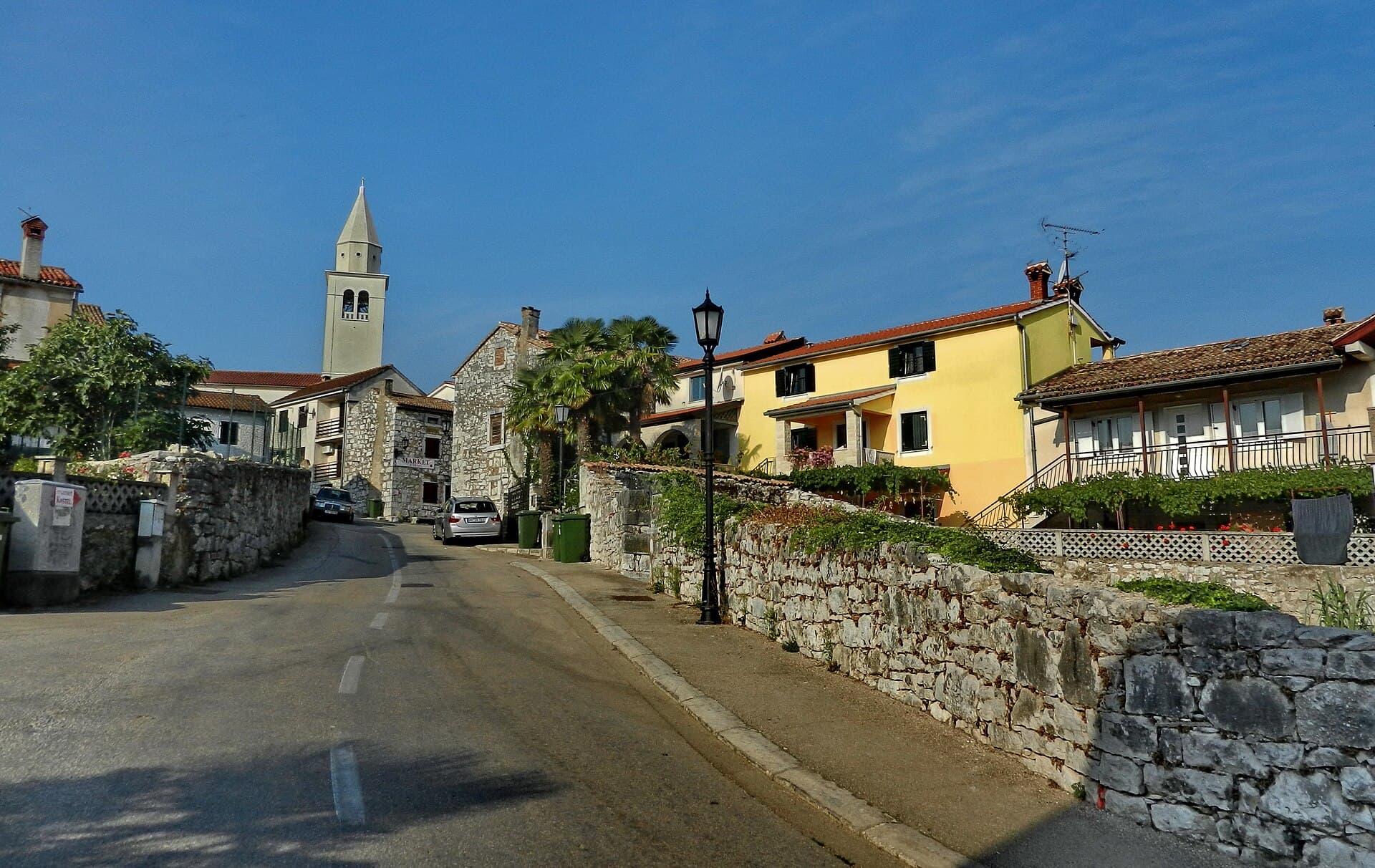
Novigrad-Cittanova developed on Istria’s north-western coast near the mouth of the Mirna, in a maritime setting that shaped centuries of fishing and trade. The historic centre still…
Read the guide
Funtana
Funtana sits on Istria’s west coast along the Poreč–Vrsar road, while its shoreline extends between Zelena Laguna and Valkanela. The local tourist board links the settlement with a long…
Read the guide
Pula
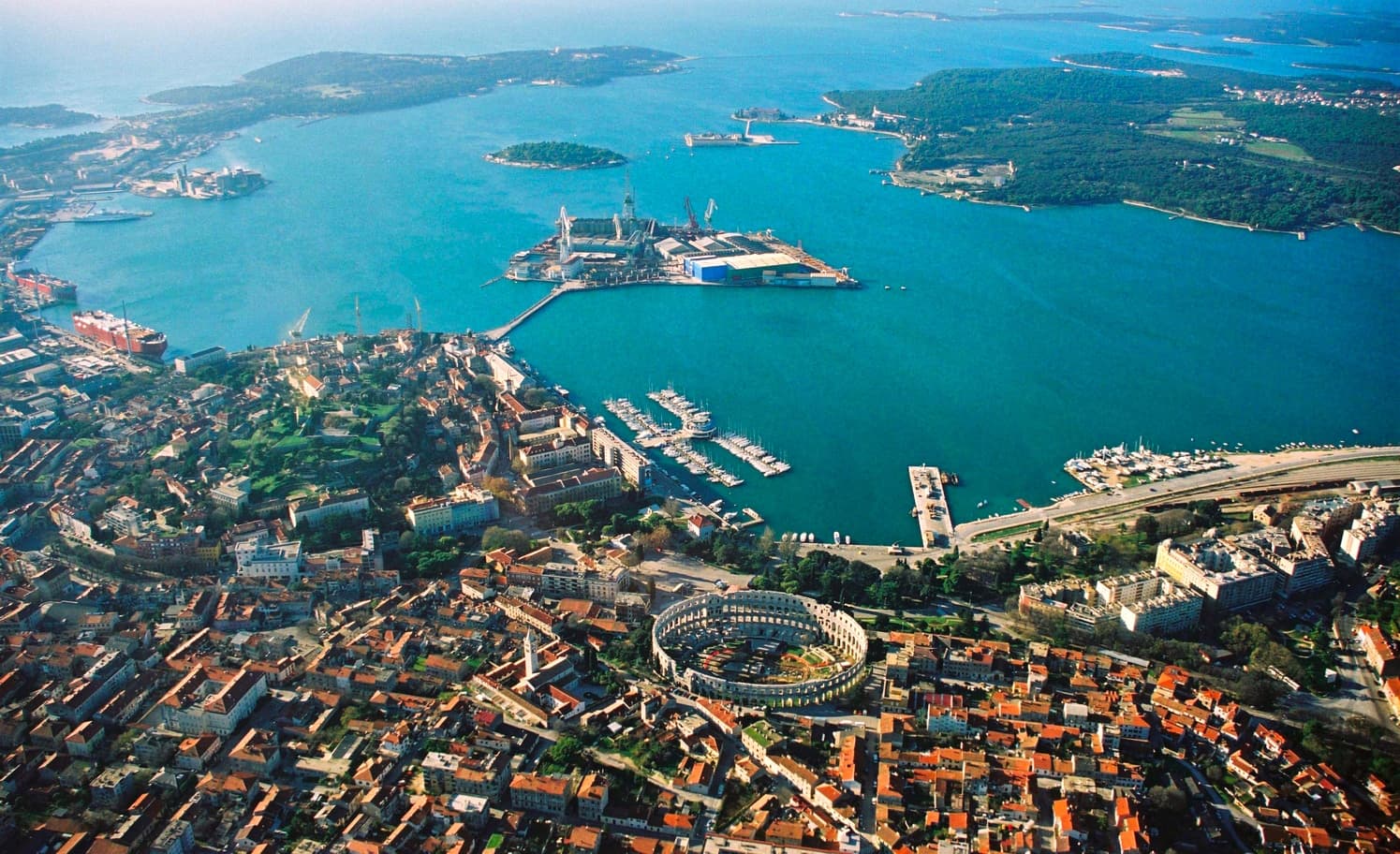
Central Pula offers two connected but different sightseeing strands. One follows public spaces and visible Roman monuments: the Arena, gates, Forum and temple. The other explores museum…
Read the guide
Poreč
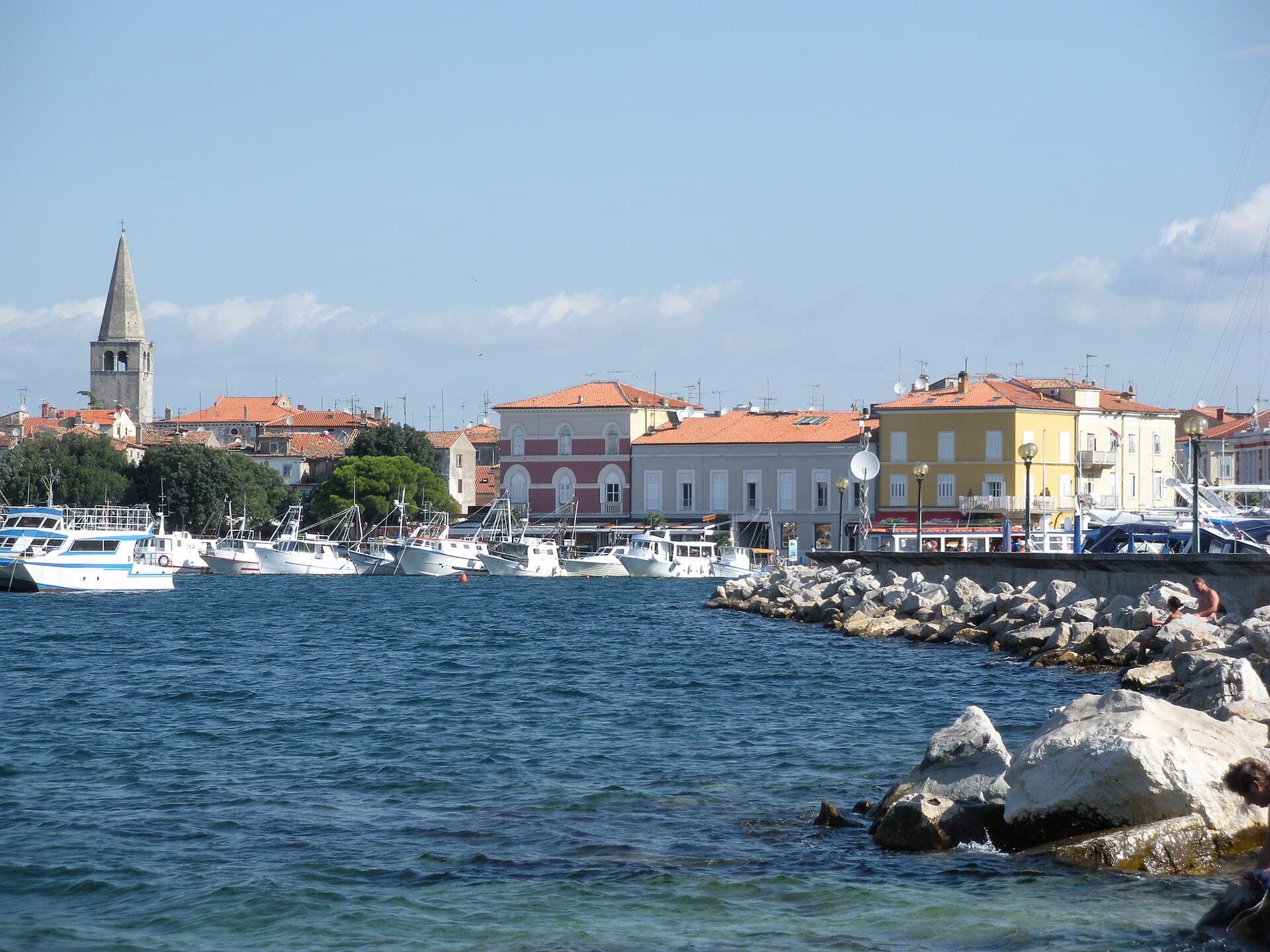
Organise the stay around the distinction between the centre and the wider holiday area. In the centre, a cultural visit can form part of a walk, while beaches, excursions and additional…
Read the guide
Know Boljun? Correct us
Tell us in your own words what is not accurate. We check right away.Do not enter personal data. Corrections are checked by the StayBravo AI assistant; changes to the description are approved by an editor. Use the form instead
Do you know Boljun?
Help the guests who come after you.
Help us complete
Nothing is published without an editor’s review.Report illegal content
Photo credits: Boljun — Dguendel (CC BY 3.0) · Boljunsko Polje — SIG SG 510 (CC0) · Paz — (GRAD) (CC BY-SA 3.0) · Vranja — The original uploader was Zeljko at Croatian Wikipedia. (CC BY-SA 3.0) · Borut — Cborna (CC BY-SA 4.0) · Šušnjevica — Iosif Popoviciu (Public domain) · Hum — Anton.ash (CC BY-SA 4.0) · Posert Castle — Dinko Gubic (CC BY-SA 3.0) · Belaj Castle — MSmateo (CC BY-SA 4.0) · Nature park Učka — Modzzak (CC BY-SA 3.0) · Zarečki krov — Christian Pietzsch (CC BY-SA 3.0) · Holiday House Šterna — Vjekoslav Simon (courtesy of the property owner) · Novigrad — Sl-Ziga (Public domain) · Funtana — Tanya Dedyukhina (CC BY 3.0) · Pula — Orlovic (CC BY-SA 3.0) · Poreč — Hobe / Holger Behr (Public domain)