Kožino
About this place
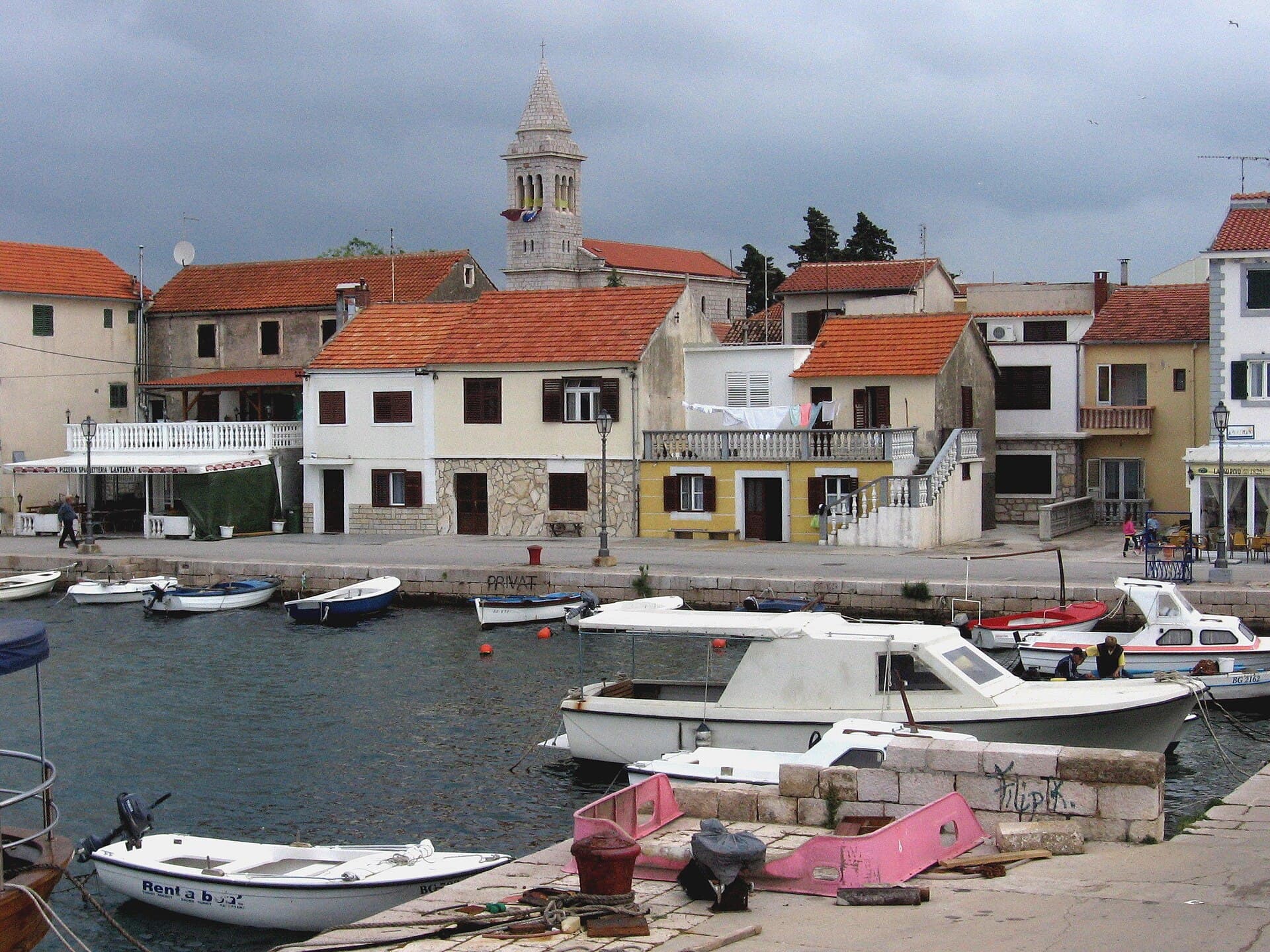
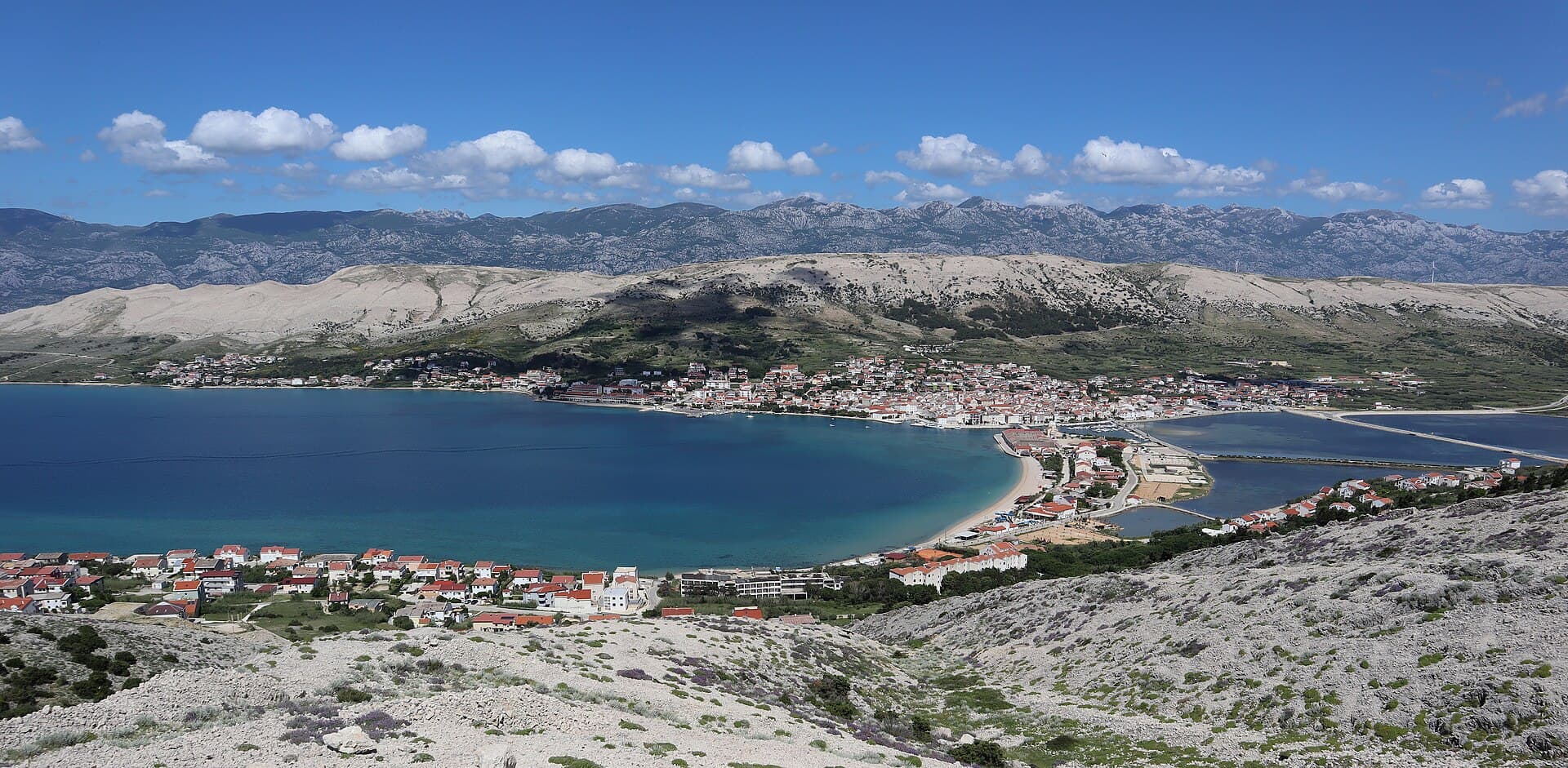
Kožino is a coastal settlement within the City of Zadar, roughly ten kilometres northwest of Zadar’s historic centre and between Diklo and Petrčane. Its character is quieter than that of a large Dalmatian resort: small coves, apartments and modern villas line the shore, while olive growing and vineyards still recall the village’s older rural identity. The local landmark is the 16th-century Church of St Michael, whose silhouette rises above the settlement. Rather than revolving around one broad beach, Kožino’s waterfront is divided among bathing areas such as Kožino Primorje, Peruštine and Bartul, rewarding visitors who explore the coast on foot. Peruštine has particular local significance because its pine wood is regarded as part of Kožino’s natural heritage and is being considered in municipal planning as a green recreation area. Kožino also works without a car: Liburnija’s route 132 links Zadar with Petrčane and serves several stops through the village. This setting makes it possible to swim close to one’s accommodation and still travel into central Zadar for an evening walk.
Although Kožino belongs to the City of Zadar, its low-rise waterfront and village scale feel distinct from the urban centre. The principal historic marker is the 16th-century Church of St Michael, while nearby olives and vines preserve a visible link with the settlement’s agricultural past. Accommodation now consists largely of apartments and villas spread between the main road and the sea. Peruštine pine wood carries special meaning for residents, and the City of Zadar, Zadar County and the local council have identified its long-term protection as one of Kožino’s development priorities.
Stays nearby
 Apartment
Apartmeni Klenovica.eu
Klenovica
Klenovica, 108 km from Kožino
up to 4 guests · 1 bedroom
The host confirms the exact price for your dates and availability.
Beaches
Kožino does not have one dominant municipal beach; its shore is divided into smaller bathing sections recorded under names including Kožino Primorje, Peruštine and Bartul. Peruštine stands out for the meeting of sea and pine wood, an area whose preservation features prominently in local planning. Bartul occupies the southern waterfront and is approached along Put svetog Bartula, whereas Kožino Primorje refers to bathing points nearer the central stretch of coast. Because access is dispersed among small lanes and coves, waterside footwear is useful and walking from nearby accommodation is often the simplest approach.
Bathing water quality nearby
- Peruštine · 1.0 kmnot classified · season 2025
- Kožino- primorje · 1.4 kmexcellent · season 2025
- Diklo-Sjever · 1.9 kmnot classified · season 2025
- Sv. Bartul · 2.2 kmnot classified · season 2025
- Diklovac - jug · 2.7 kmexcellent · season 2025
- Diklovac-Sjever · 2.9 kmnot classified · season 2025
Things to do
Begin exploring Kožino at St Michael’s Church, built in 1522 and altered in 1884; its main altar and two wooden reredoses are recorded cultural assets. Then head down to the waterfront and its beaches, looking across the Zadar Channel towards Ugljan. As Kožino lies roughly ten kilometres from Zadar, an evening in the city fits naturally into the day. The village’s olive groves and vineyards reveal the agricultural roots that still sit alongside its tourism economy.
Practical information
Getting there and around
Kožino lies about ten kilometres from Zadar on the coastal road towards Petrčane and Nin. Liburnija’s suburban route 132 connects Zadar bus station, Franje Tuđmana Street, Melada and Žmirići with Kožino, Petrčane and Punta Skala. Stops within the settlement include Kožino Magistrala and Kožino 1, 2, 3 and 4, so it is worth matching accommodation to the nearest stop before booking. As Liburnija states that the published timetable may change without notice, departures should be checked directly with the operator on the day of travel.
Frequently asked questions
What is Kožino’s main historic building?
The 16th-century Church of St Michael is the principal historic landmark in Kožino.
How far is Kožino from Zadar?
The Zadar Tourist Board places Kožino approximately ten kilometres from the city.
Does the bus stop inside Kožino?
Yes. Liburnija route 132 serves Kožino Magistrala and the numbered Kožino 1–4 stops.


Related guides
Novalja
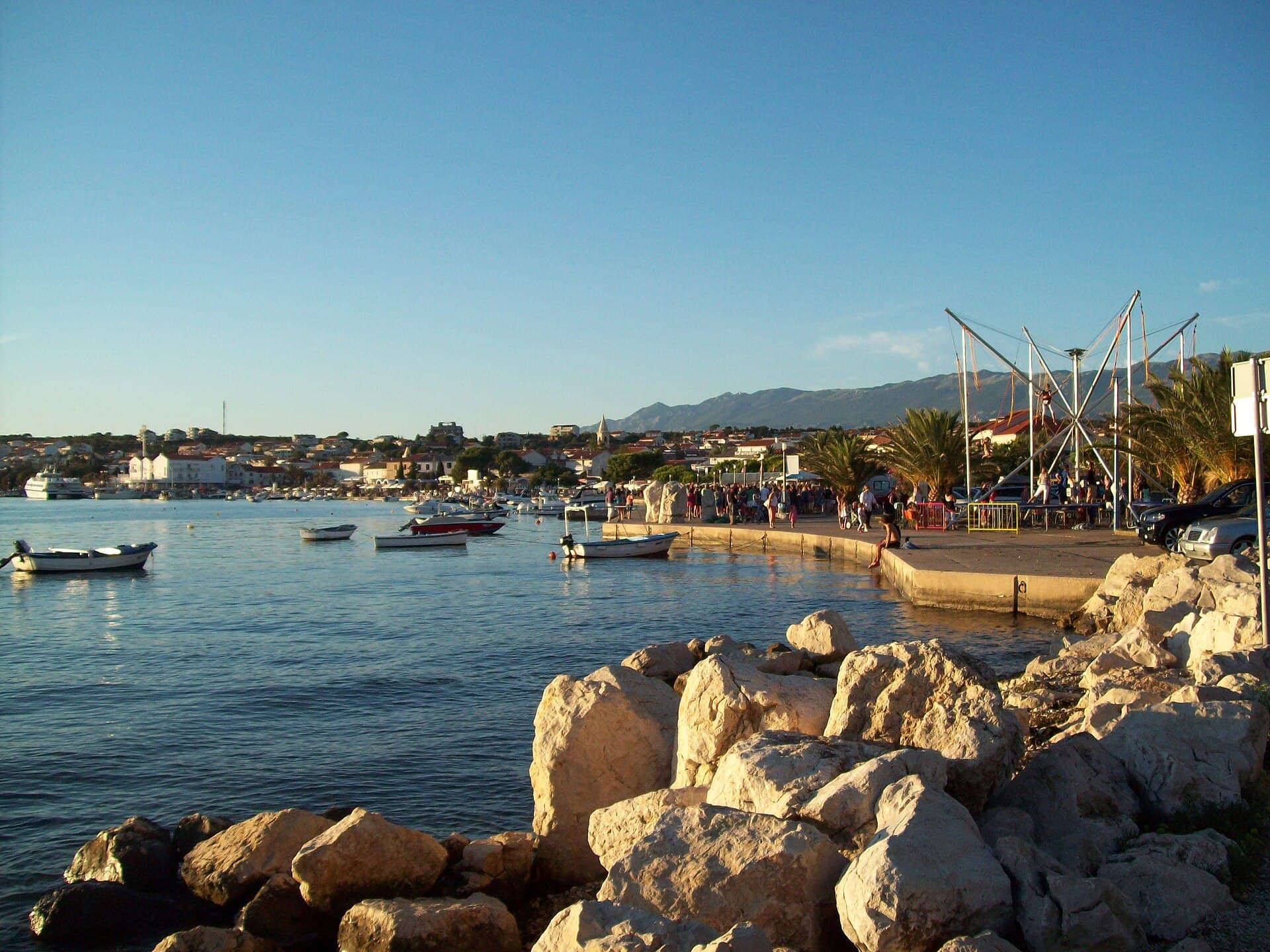
Novalja curves around a bay on Pag’s western shore, with the waterfront, Trg Bazilike and streets around Mala crikva forming the centre. Landing places and restaurants line the water, while…
Read the guide
Help improve this page
Spot something missing or wrong? Suggest a correction, add your photo or report a problem. Editors review every suggestion before it is published.
Photo credits
- Kožino — Miro247 · CC BY-SA 3.0 · Wikimedia Commons
- Petrčane — Markus Unger from Vienna, Austria · CC BY 2.0 · Wikimedia Commons
- Zadar — dronepicr · CC BY 2.0 · Wikimedia Commons
- Zaton — Böhringer Friedrich · CC BY-SA 2.5 · Wikimedia Commons