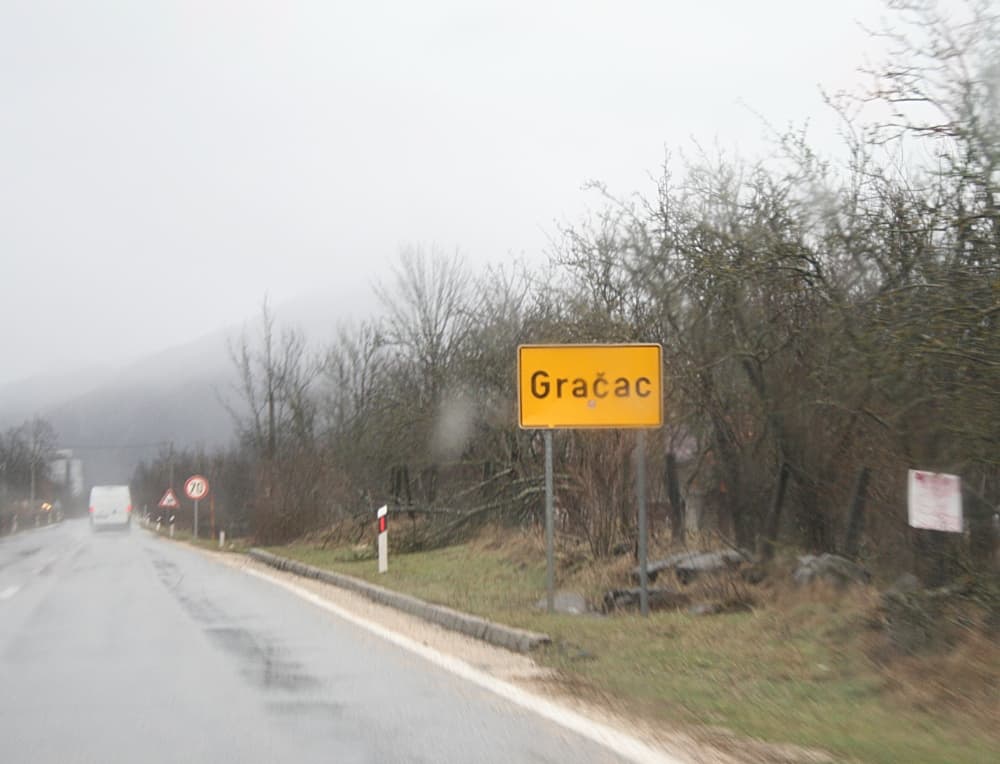
Gračac
About this place
Gračac stands 562 metres above sea level beside the sinking Otuča River, where a broad karst plain gives this administratively Dalmatian town a distinctly Lika character. Its identity was shaped by the roads towards Zadar, Gospić and Knin and by the Zagreb–Knin–Split railway. The compelling reason to stop lies four kilometres from the centre: Cerovac Caves, part of Velebit Nature Park on the north-eastern slope of Crnopac. Both the Upper and Lower caves have roughly 700 metres open to visitors, while year-round temperatures of about 8°C and 5°C make a warm layer useful even in midsummer. A guided visit to both caves takes around three hours, including the uphill walk from the visitor centre. Back in Gračac, follow the Otuča and look for Gradina, where remains of a medieval fort recall the old parish of Hotuča. For a quieter extension, head towards Lake Štikada, a reservoir fed by the Otuča, Ričica and Obsenica and frequented by anglers. Gračac consequently works best as a compact base for caves, karst water and the less-travelled southern Velebit hinterland.
Although Gračac belongs to Zadar County, its setting in southern Lika, 562-metre elevation and wide karst field give it an unmistakably inland appearance. The sinking Otuča River runs beside the settlement before disappearing into the karst system, while nearby Lake Štikada collects its water for the Velebit hydroelectric scheme. This is not a coastal-style old town: Gračac’s character comes from the junction of routes towards Zadar, Gospić and Knin and the Zagreb–Split railway. The recorded name Hotuča dates to 1302, and the remains at Gradina recall the medieval administrative centre that preceded Ottoman rule in the area.
Stays nearby
 Apartment
Apartmeni Klenovica.eu
Klenovica
Klenovica, 120 km from Gračac
up to 4 guests · 1 bedroom
The host confirms the exact price for your dates and availability.
Things to see

Things to do
Begin in central Gračac with a short walk beside the Otuča, then drive four kilometres along the Knin road to the Cerovac Caves visitor centre. The forest path climbs for about 15 minutes to the Lower Cave, with the Upper Cave roughly another ten minutes uphill. Allow around three hours for both show caves; a guide accompanies visitors along approximately 700 metres of prepared passage in each one. Closed shoes and an extra layer matter because temperatures remain near 5°C in the Lower Cave and 8°C in the Upper Cave. Finish beside the 334-hectare Lake Štikada, whose trout-rich reservoir is a particular draw for anglers.
Practical information
Getting there and around
Gračac lies on the road linking Zagreb and Karlovac with Zadar and on the Gospić–Knin axis, making a car the most useful option for exploring its scattered karst sights. Drivers approaching Cerovac Caves from the A1 motorway leave at Sveti Rok; Gračac is about 25 kilometres from the junction, with the cave centre another four kilometres along the Knin road. The town also has a station on the Zagreb–Knin–Split railway, although journeys should be checked against HŽ Passenger Transport’s applicable 2026 timetable. The Otuča is reachable on foot from central Gračac, whereas Lake Štikada and more remote southern Velebit locations are better approached by car or bicycle.
Frequently asked questions
How far are Cerovac Caves from Gračac?
The Cerovac Caves entrance is four kilometres from central Gračac, along the road towards Knin.
How long does visiting both caves take?
Allow about three hours for the Upper and Lower caves together, including the walks from the visitor centre and both guided tours.
Do I need warm clothing in the caves?
Yes; the Lower Cave remains near 5°C and the Upper Cave near 8°C throughout the year.


Related guides
Novalja
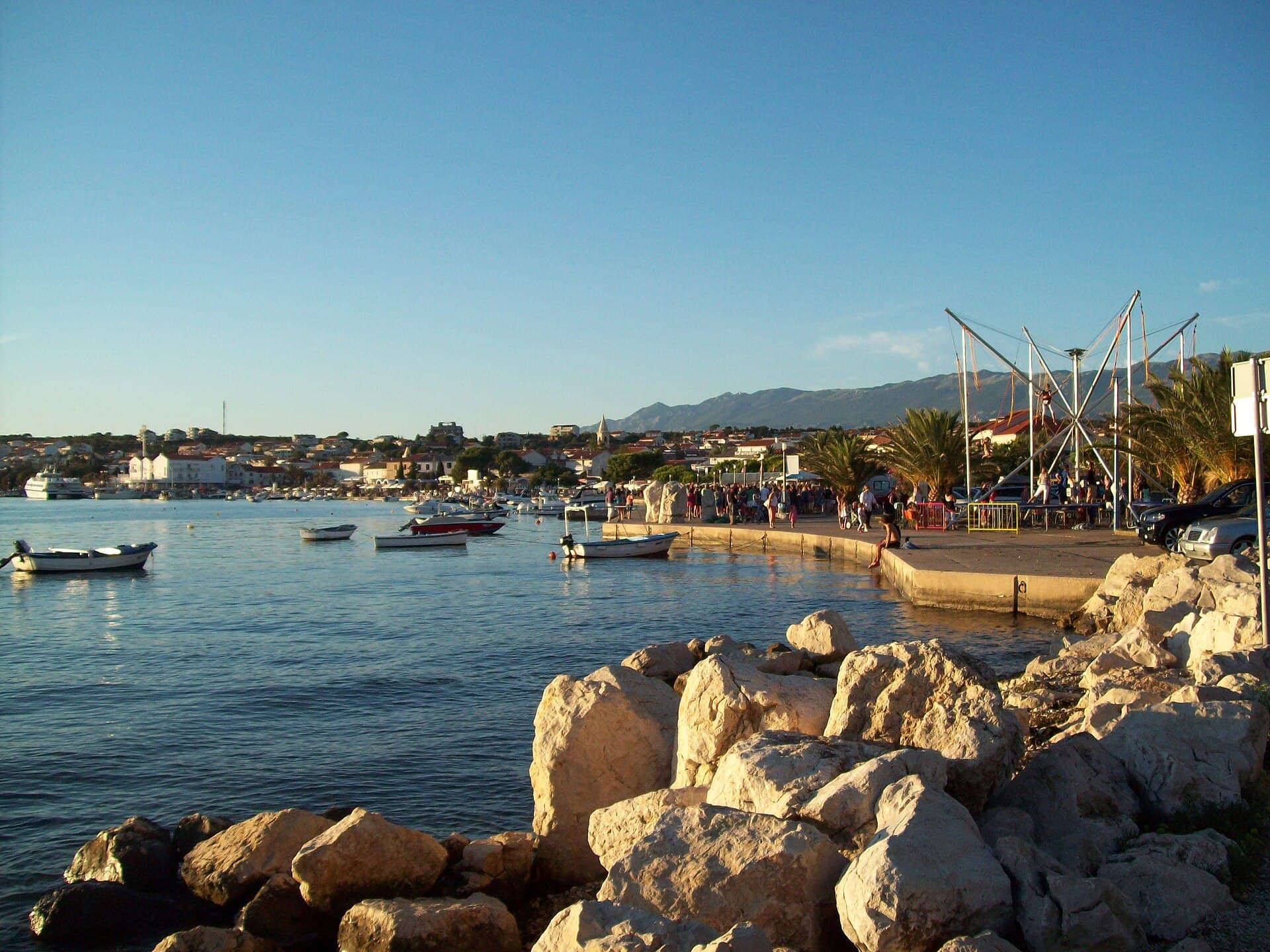
Novalja curves around a bay on Pag’s western shore, with the waterfront, Trg Bazilike and streets around Mala crikva forming the centre. Landing places and restaurants line the water, while…
Read the guide
Help improve this page
Spot something missing or wrong? Suggest a correction, add your photo or report a problem. Editors review every suggestion before it is published.
Photo credits
- Gračac, Ričice — SpeedyGonsales · CC BY-SA 2.5 · Wikimedia Commons
- Deringaj — Zmaj123 · CC BY-SA 3.0 · Wikimedia Commons
- Golubić — Sopina Ana · CC BY-SA 4.0 · Wikimedia Commons
- Krupa