About this place
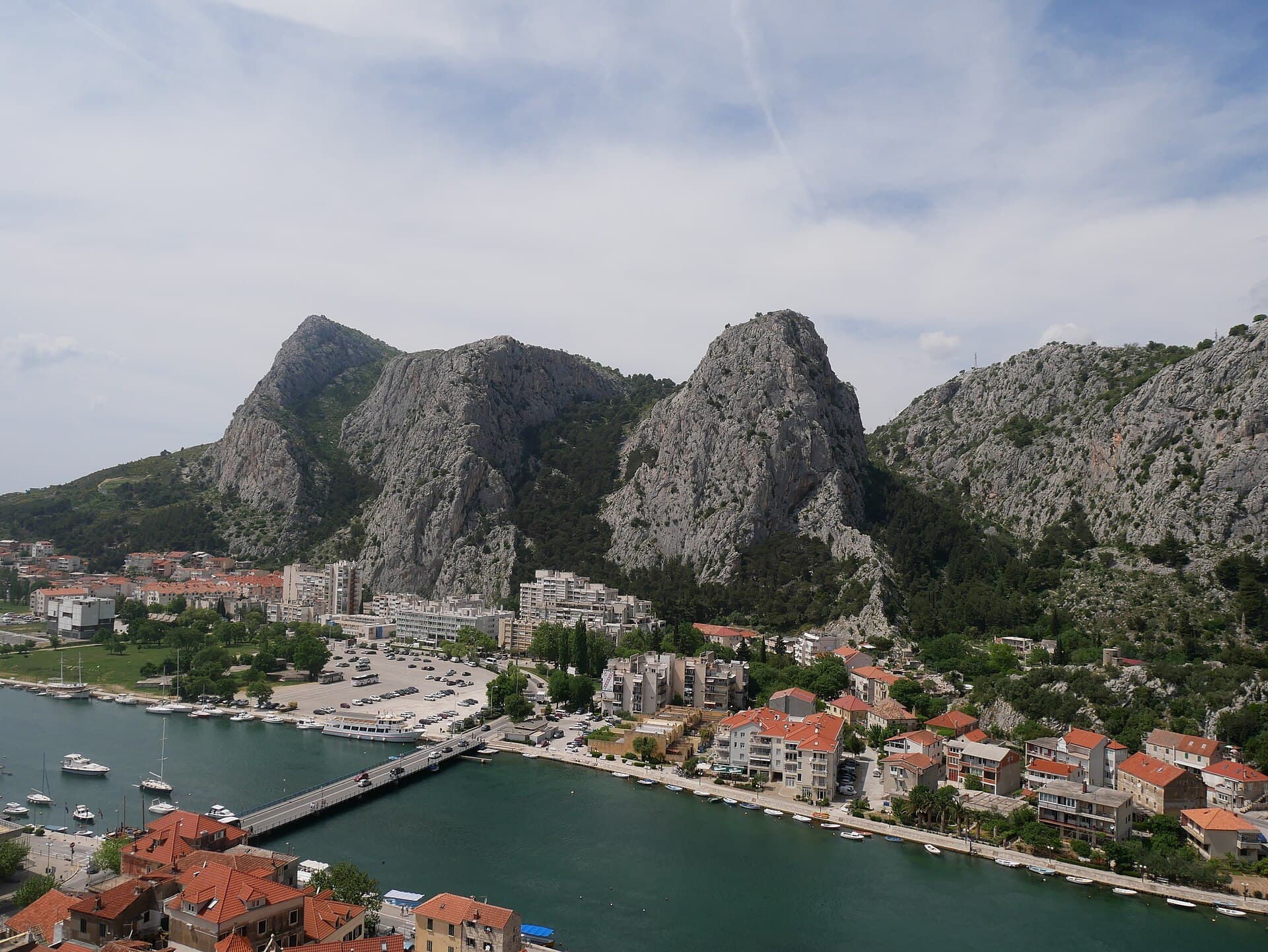
Dugi Rat lies on the coast between Split and Omiš, roughly five kilometres west of Omiš, but its story is not that of a typical Dalmatian resort. The settlement expanded strongly after a carbide and cyanamide factory opened in 1912, while industrial production at the complex ended in 2003. This industrial layer stands beside the very different landscape of the Dugi Rat Riviera, which includes Duće, Dugi Rat, Orij, Mali Rat, Sumpetar, Suhi Potok, Krilo and Bajnice. Duće is particularly known for an almost continuous belt of sandy beaches about four kilometres long, while farther west the coast changes to pebble coves and smaller settlements. The proximity of Omiš provides quick access to the Cetina River, its canyon and inland excursions without changing accommodation. Dugi Rat therefore works as a base between two landscapes: Omiš and the river to the east, and a chain of smaller former Poljica coastal settlements to the west. Understanding the town itself also means recognising its industrial past.
Stays nearby
 Apartment
Apartmeni Klenovica.eu
Klenovica
Klenovica, 233 km from Dugi Rat
up to 4 guests · 1 bedroom
The host confirms the exact price for your dates and availability.
Things to see
Dugi Rat’s most distinctive historical layer is tied to the industrial complex that shaped the modern settlement. A carbide and cyanamide factory was founded in 1912, drawing workers, infrastructure and new construction to the coast. Industrial production at the site ended in 2003, leaving the complex as a strong reminder of a century in which Dugi Rat developed differently from neighbouring seaside resorts. The parish Church of St Joseph is another local landmark. For an older cultural landscape, attention shifts to the settlements and former Poljica villages above the coast, because the history of this area is not concentrated only along today’s main road and beaches.

Crkva Porođenja BDM u Tugarama
Landmark · Dugi Rat
The Parish Church of the Nativity of the Blessed Virgin Mary in Tugare is an 18th-century church on the slopes of Poljica Mountain, marked by its massive bell tower.
Beaches
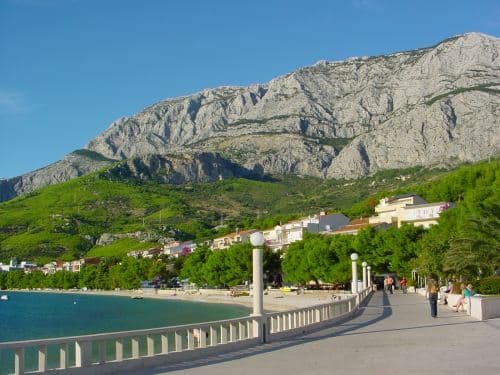
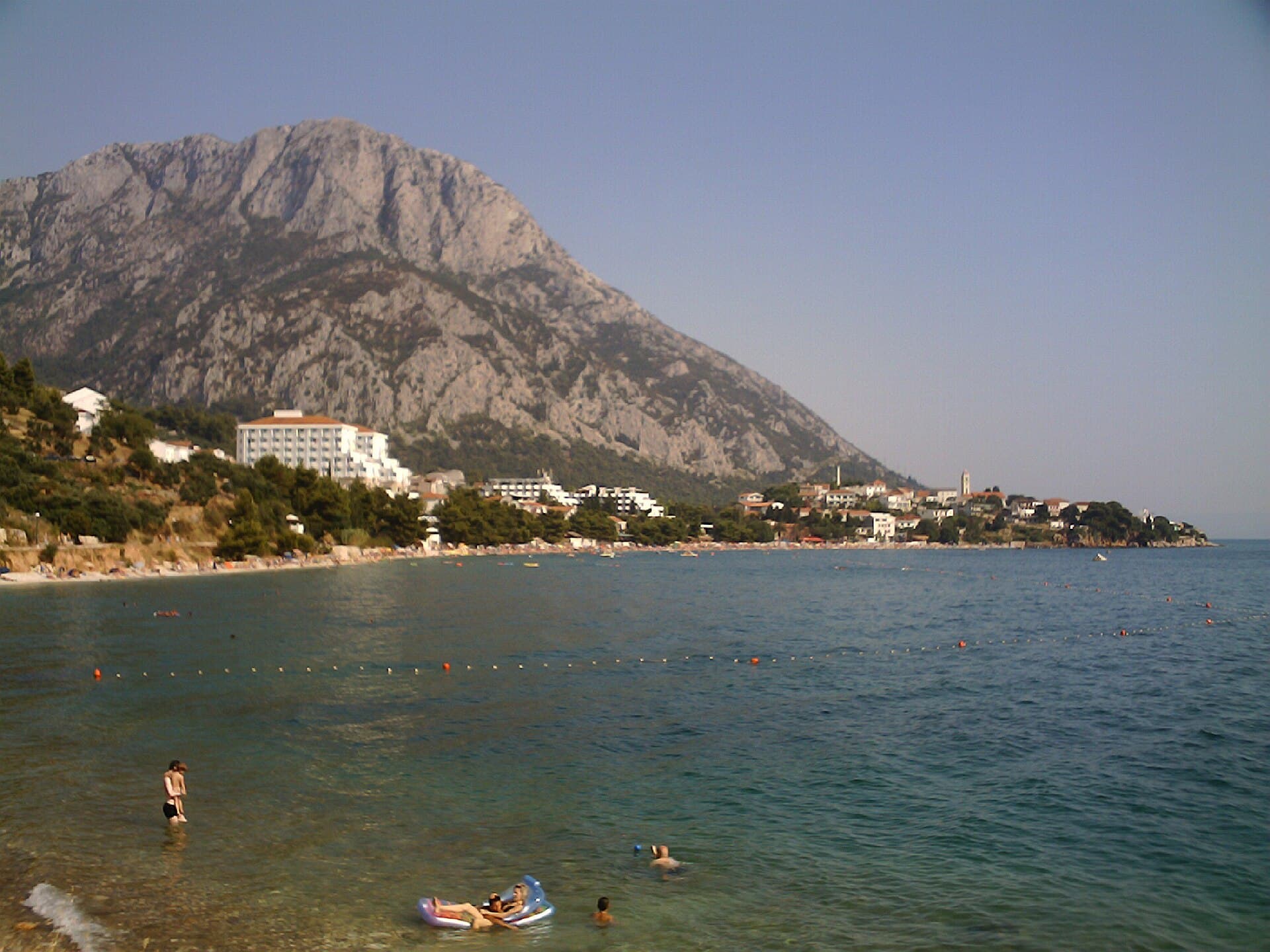
Dugi Rat Beach is mainly pebbly, with the official beach portal listing parking, swimming buoys, a café, showers and benches. Comparable facilities are available at Sumpetar and Krilo, while Dugi Rat Glavica and Duće Luka also include sports amenities. The greatest change in shoreline comes at Duće, where sandy beaches extend for about four kilometres and the shallower entry is particularly convenient for children’s play. The destination guide describes roughly three kilometres of beaches along the core Dugi Rat riviera, and bathing-water quality is monitored at individual points distributed along the municipal coastline.
Bathing water quality nearby
- Dugi Rat - Plaža · 174 mexcellent · season 2025
- Dugi Rat - Glavica · 957 mexcellent · season 2025
- Duće - Luka · 1.2 kmexcellent · season 2025
- Sumpetar · 1.3 kmexcellent · season 2025
- Hotel Plaža, Duće · 1.6 kmnot classified · season 2025
- Duće-Golubinka · 2.6 kmexcellent · season 2025
Practical information
Practical information
The main tourist office is at Poljička cesta 133 in Dugi Rat, with published office hours from 7 a.m. to 3 p.m. Seasonal information centres operate in Duće at Vavlje 2 and in Sumpetar on Poljička cesta bb. Because the Adriatic coastal road runs through a continuously built-up strip, use marked crossings when moving between accommodation and the beaches, particularly with children. Shopping, swimming and dinner can all be arranged along the same riviera, but visiting Stare Duće, Krug, Zeljovići or the slopes of Perun involves an uphill walk, suitable footwear or a short drive away from the coast.
Parking
The official beach portal marks parking at Bajnice, Krilo, Sumpetar, Dugi Rat Beach, Dugi Rat Glavica and Duće Luka. These areas are the most practical starting points for a swim, although spaces can fill quickly within the riviera’s narrow coastal strip in summer. In the village centre and beside the Adriatic highway, follow local signs carefully because parking bays alternate with bus stops, property entrances and pedestrian routes. For a beach visit, it is safer and more efficient to choose the designated parking attached to a specific bathing area than to search for an informal space beside the busy coastal road.
Getting there and around
Dugi Rat sits directly on the Adriatic coastal road between Split and Omiš, so arrival is entirely overland, with no bridge or ferry crossing. Omiš is the nearest urban centre to the south-east, while the north-western route continues through Podstrana towards Split. The same road links Dugi Rat with Duće, Sumpetar, Krilo and Bajnice, although summer congestion can make even short journeys along the riviera slow. Krilo Jesenice harbour provides the maritime connection, serving passenger vessels used for multi-day Adriatic cruises. The old Poljica villages above the coast are reached by local roads that branch steeply inland from the main highway.
Frequently asked questions
Which industrial development decisively shaped Dugi Rat?
The founding of a carbide and cyanamide factory in 1912 strongly accelerated the development of the modern settlement.
When did industrial production end at the Dugi Rat complex?
Industrial production at the Dugi Rat complex ended in 2003.
What makes Duće different from the rest of the Riviera?
Duće is known for an almost continuous belt of sandy beaches about four kilometres long.
How far is Omiš from Dugi Rat?
Omiš lies approximately five kilometres east of Dugi Rat.
Nearby

Duće, Omiš
Village · Dalmatia – Split

Related guides

Split
In Split, the transition from ancient monument to ordinary street is almost imperceptible: entering the southern part of Diocletian’s Palace from the Riva leads towards the Peristyle, then…
Read the guide

Help improve this page
Spot something missing or wrong? Suggest a correction, add your photo or report a problem. Editors review every suggestion before it is published.
Photo credits
- Dugi Rat — Falk2 · CC BY-SA 4.0 · Wikimedia Commons
- Duće, Omiš — Rl91 · CC BY-SA 3.0 · Wikimedia Commons
- Jesenice, Omiš — Linda 2409 · CC BY-SA 2.0 · Wikimedia Commons
- Omiš — Zvone00 · CC BY-SA 4.0 · Wikimedia Commons
- Crkva Porođenja BDM u Tugarama