Jesenice, Omiš
About this place
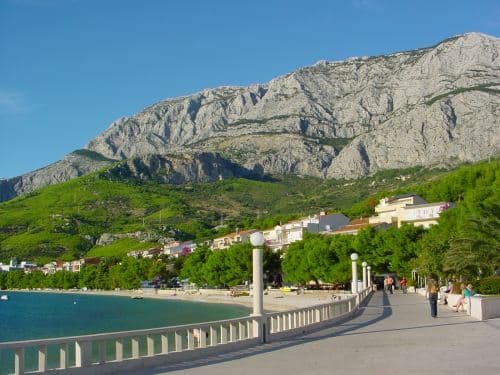
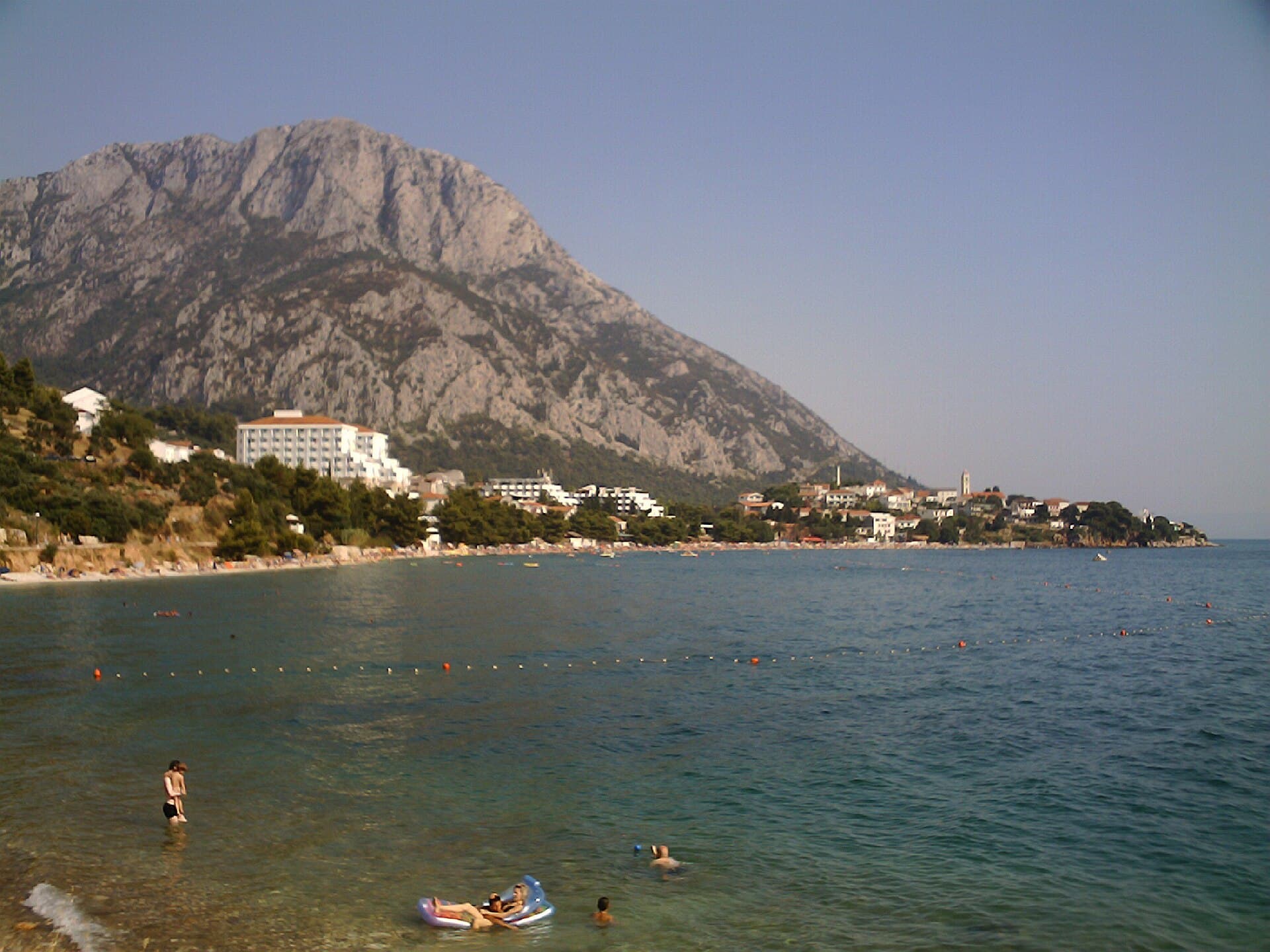
Jesenice is a long, narrow Dalmatian settlement between Split and Omiš, administered by the municipality of Dugi Rat and encompassing the coastal communities of Krilo, Bajnice, Orij and Suhi Potok. Its character is clearest in the contrast between old stone hamlets beneath Mount Mošnjica and harbour settlements strung along the Adriatic Highway. After the Split–Omiš road opened in 1856 and steamship calls began, local families increasingly turned to seafaring, trade and the transport of wine to Rijeka and Trieste. Krilo Jesenice is now instantly recognisable by its dense forest of masts and fleet of excursion vessels, while the historic settlement occupies the slopes above the sea. There is no single dominant town beach: swimming places sit in small coves, with municipal documents naming Krilo’s large beach, Močila at Suhi Potok and several beaches in Bajnice. Above the coast, seek out the 19th-century Church of St Roch, built where an earlier church was recorded in 1625, and the Church of the Immaculate Conception with its distinctive public clock.
Jesenice is not a compact seaside town but a settlement formed by Bajnice, Krilo, Orij and Suhi Potok, together with older hillside hamlets. Krilo is defined by its harbour basin and excursion vessels, whereas the stone houses of old Jesenice stand away from the coastal traffic beneath Mount Mošnjica. Maritime development accelerated after the Split–Omiš road opened in 1856 and steamships began using local landing places, encouraging families to trade and carry wine towards the northern Adriatic. Surviving architecture from that period includes Hotel Primorje and the Naranča and Ivanišević family houses, identified by the local tourist board as harmonious neo-style buildings around the former port.
Stays
No stays listed here yet
Beaches
Jesenice offers a chain of small swimming spots, with municipal records specifically naming Krilo’s large beach, Močila in Suhi Potok and several locations in Bajnice. These beaches are generally tucked between houses, small harbours and the Adriatic Highway, so access and parking differ from one cove to another. In Bajnice, recorded bathing areas include the shore below the shop and a spot west of the Omiš-bound bus stop; Suhi Potok also has a beach below the Zemunik houses. For a quieter swim, choose a small cove away from the working section of Krilo harbour, where numerous excursion vessels are berthed.
Bathing water quality nearby
- Bajnice · 349 mexcellent · season 2025
- Krilo · 371 mexcellent · season 2025
- Sumpetar · 2.5 kmexcellent · season 2025
- Sv. Martin · 2.9 kmexcellent · season 2025
Source: European Environment Agency (EEA); data from Croatian authorities. · bathing water profile
Things to do
Start the morning beside Krilo harbour, where Jesenice’s modern ship-owning tradition and varied excursion fleet are most visible. Continue along the coast towards Suhi Potok or Bajnice, stopping at small coves instead of searching for a single central beach. In the afternoon, climb to old Jesenice and the Church of St Roch, a single-nave stone building with a valuable wooden altar, erected in the 19th century over an earlier church site. Nearby, examine the Church of the Immaculate Conception, whose façade carries a public clock in place of a rose window, along with the stone houses and terraces that reveal the settlement’s older Poljica heritage.
Practical information
Getting there and around
Jesenice lies on the D8 state road along the coastal corridor between Split and Omiš, where summer traffic through Podstrana, Dugi Rat and Duće can considerably slow journeys. Promet route 60 links Split, Podstrana, Krilo Jesenice, Dugi Rat, Duće and Omiš; its 2026 timetable should be checked shortly before travel because seasonal revisions are possible. Stops are positioned along the highway through Krilo, Bajnice, Orij and Suhi Potok, while old Jesenice on the hillside requires a local-road connection or an uphill walk. Krilo Jesenice is about 15 kilometres from Split, although travel time depends heavily on conditions along the D8.
Frequently asked questions
Which communities make up Jesenice?
The settlement of Jesenice includes Bajnice, Krilo, Orij and Suhi Potok, together with older hillside hamlets.
Is there a bus between Jesenice, Split and Omiš?
Promet route 60 passes through Krilo Jesenice while operating between Split and Omiš.
What is Krilo harbour known for?
Krilo is known for its large excursion fleet and a long tradition of local ship-owning families.


Related guides

Split
In Split, the transition from ancient monument to ordinary street is almost imperceptible: entering the southern part of Diocletian’s Palace from the Riva leads towards the Peristyle, then…
Read the guide

Help improve this page
Spot something missing or wrong? Suggest a correction, add your photo or report a problem. Editors review every suggestion before it is published.
Photo credits
- Jesenice, Omiš — Linda 2409 · CC BY-SA 2.0 · Wikimedia Commons
- Podstrana — Romanm · CC BY-SA 4.0 · Wikimedia Commons
- Dugi Rat — Falk2 · CC BY-SA 4.0 · Wikimedia Commons
- Gornje Sitno — K. Korlević · Public domain · Wikimedia Commons
- Split