Podgorač
About this place
Podgorač is a Slavonian settlement in the western part of Osijek-Baranja County, positioned on the road corridor between Našice and Đakovo. Written sources first mention it in 1299, and by the late 14th century it had become a market settlement and the centre of an estate with a fortress known as Pogar or Pogarach. Ottoman forces captured the settlement around 1530, after which Podgorač served as the seat of a nahiye within the Sanjak of Požega. Following liberation in 1687, it entered the Našice estate, controlled by the Pejačević family from 1734. The principal landmark in the present-day centre is the parish church of St Nicholas, built in 1806 with Neoclassical features. The surrounding area preserves far older evidence: Ražište has yielded material associated with Linear Pottery, Sopot and Vinča cultures, while Breški documents an Early Bronze Age settlement. Podgorač consequently brings together prehistoric archaeology, the memory of a medieval market town and the religious heritage of rural Slavonia, with the D515 providing onward access to Našice and Đakovo.
Podgorač’s identity was shaped by its position on the edge of the Našice area and by several sharply contrasting historical periods. The medieval market settlement of Pogarach possessed a fortress and an estate administered by the Gorjanski family in the 15th century. After Ottoman rule, the village joined the Našice estate in the early 18th century, passing to the Pejačević family in 1734. During the 19th and early 20th centuries, Pavao Pejačević supported the construction of a school, municipal offices, parish house and the Croatian Reading Room completed in 1907. Today’s centre around the Church of St Nicholas therefore continues Podgorač’s long-standing role as a small administrative and social hub.
Things to see


Stays
No stays listed here yet
Things to do
Podgorač is best explored through traces from several eras. Begin at the parish church of St Nicholas, at 4a Hinka Juhna Street: the 1806 Classical single-nave church has a rounded sanctuary and a prominent façade tower. In the centre, look for references to sculptor Hinko Juhn, born here in 1891 and the namesake of the local primary school. Finish with the archaeological sites of Gaj, Crni panj and Bukvik, where evidence of Late Neolithic settlement has been found.
Tours and activities
AdAd · partner offers: GetYourGuideThe partner handles booking, payment and support. StayBravo may earn a commission on bookings made through these links.How we choose offersGetYourGuide offers are selected and ordered by GetYourGuide based on the name of the nearest larger town or national park; we do not influence their selection and do not use data about you.GetYourGuide · Đakovo
We show GetYourGuide offers once you allow their cookies.
Practical information
Getting there and around
Podgorač stands on the D515 state road, which links Našice on the D2 with Đakovo on the D7. This location makes a car the most practical way to explore both the village and the municipality’s scattered heritage sites. County road Ž4105 branches from Podgorač towards Budimci, Poganovci, Čepinski Martinci and Čepin, connecting the Church of St Nicholas with the Church of the Ascension in Budimci and St Elijah’s Church in Poganovci. Podgorač has no passenger railway station, so rail travel must be combined with road transport from the wider Našice area.
Frequently asked questions
When was Podgorač first recorded?
Podgorač first appears in written records in 1299.
When was the Church of St Nicholas built?
The parish church of St Nicholas was built in 1806 in the Neoclassical style.
Does the D515 road pass through Podgorač?
Yes. State road D515 links Našice and Đakovo and runs through the Municipality of Podgorač.
Nearby
Podgorač
Open in OpenStreetMap(opens in a new tab)straight-line distance
Related guides

Osijek
Tvrđa and the centre around the main square are distinct starting points for understanding Osijek. The former emphasises the fortified historic quarter and Baroque architecture; the latter…
Read the guide

Vukovar
A cultural visit to Vukovar has several separate centres of gravity. Eltz Palace and the City Museum address the city and its inhabitants across different periods. Vučedol reaches much…
Read the guide

Stubičke Toplice
Stubičke Toplice derives almost its entire identity from thermal water and the Zagorje landscape. There is no large urban historic core; green spaces, bathing facilities and traces of the…
Read the guide
Slavonski Brod
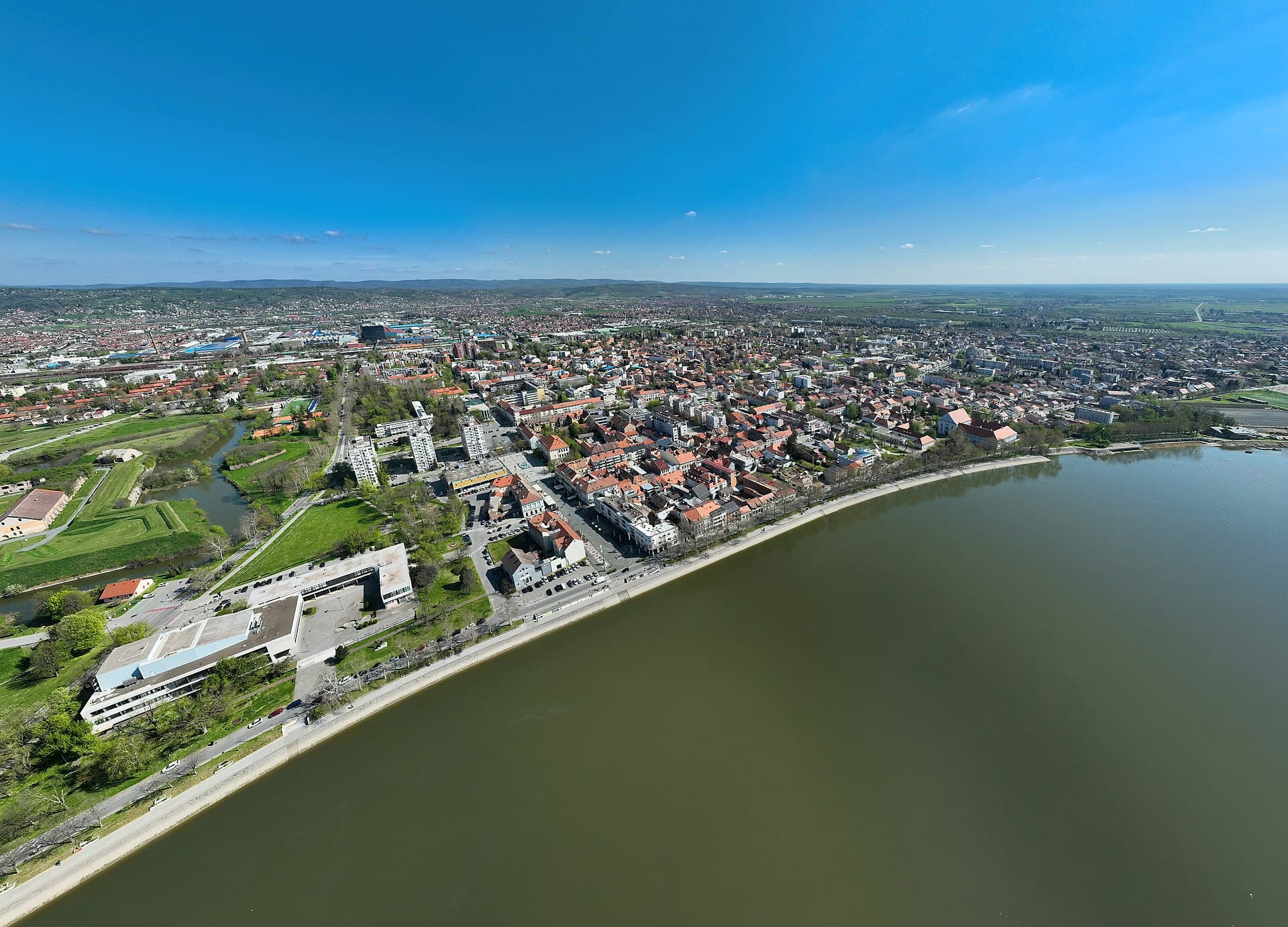
Slavonski Brod developed around one of the major crossings of the Sava, and that border and transport role left a strong mark on the city. Brod Fortress represents the eighteenth-century…
Read the guide
Know Podgorač? Correct us
Tell us in your own words what is not accurate. We check right away.Do not enter personal data. Corrections are checked by the StayBravo AI assistant; changes to the description are approved by an editor. Use the form instead
Do you know Podgorač?
Help the guests who come after you.
Help us complete
Nothing is published without an editor’s review.Report illegal content
Photo credits: Vukojevci, Kršinci, Markovac Našički — Frane Lovošević (CC BY-SA 3.0) · Pejačević Manor, Orahovica Monastery — Flammard (CC BY-SA 3.0) · Đakovo Cathedral — Author's own photo (CC BY 2.5) · Prandau-Normann Castle — Roko Poljak (CC BY-SA 4.0) · Osijek — Rp031 (CC BY-SA 4.0) · Vukovar — Bybbisch94, Christian Gebhardt (CC BY-SA 4.0) · Stubičke Toplice — MOs810 (CC BY-SA 4.0) · Slavonski Brod — Petar Milošević (CC BY-SA 4.0)