Kneževo, Popovac
About this place
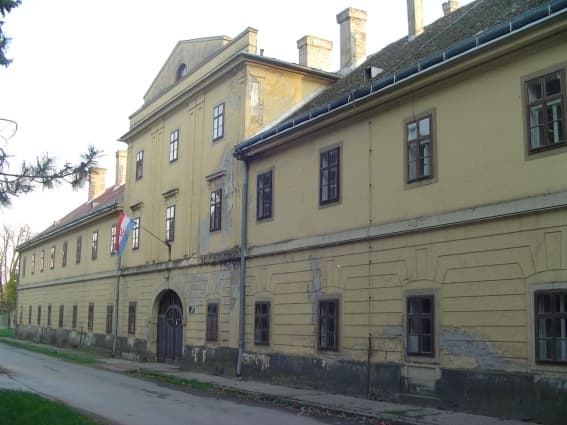
Kneževo is a planned Baranja settlement in the Municipality of Popovac, notable for the unusually urban layout inherited from its role as the administrative centre of the Belje estate. Its principal axis is formed by Friedrich Habsburg Castle, the formal approach and a broad park extending towards the village’s southern edge. The Belje administration moved here from Bilje in 1827, while tourism sources date the Classical-style castle to 1828. The long, single-storey building is dominated by a central two-storey projection; nearby stand former estate offices and service buildings, along with the 19th-century Chapel of St Hildegard. Unlike a typical compact Baranja village, Kneževo was organised around accommodation for officials and ceremonial coachmen, workshops and Belje’s production facilities. An 1856 church, a school, the former clinic and the site of the old Belje railway terminus reveal its former character as both a working and administrative settlement. The castle now houses the Belje company archive, making Kneževo best suited to an exterior walk through the historic core and its protected 19th-century park.
Kneževo differs from neighbouring Baranja villages through its orthogonal street plan and the axis formed by the castle, park and former Belje officials’ housing. The layout dates from the period when the settlement managed roughly fifteen of the estate’s agricultural outposts, prompting the development of workshops, offices and livestock facilities alongside homes. The Croatian Institute of History records that the Belje estate administration moved from Bilje to Kneževo in 1827. The castle is now protected cultural property, registered as Z-1648, and serves as the Belje archive. Its southern façade overlooks the extensive park, while the 19th-century Chapel of St Hildegard stands to the west.
Things to see

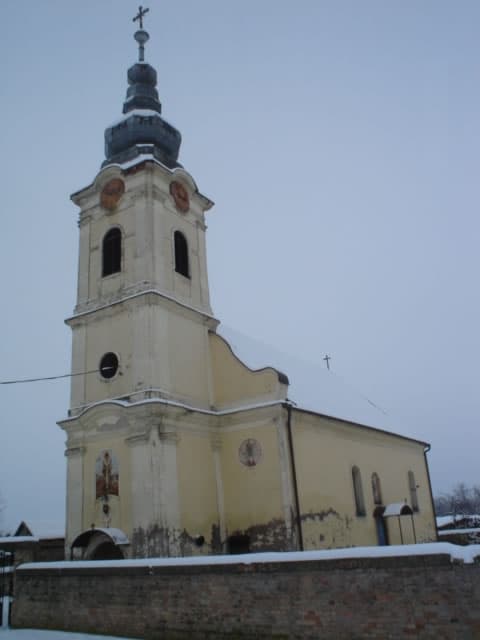
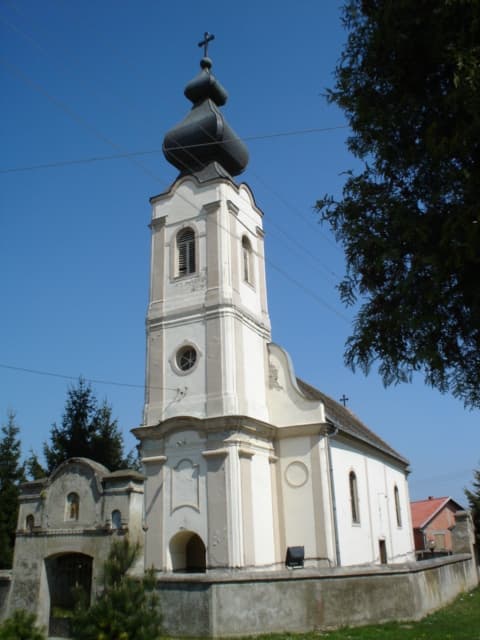
Church of St. Peter and Paul
Landmark · Majške Međe
church in Bolman, Croatia
20 km from Kneževo, Popovac

Esterhazy castle in Darda
Landmark · Darda
Esterházy Castle in Darda is a three-winged Baroque and Neoclassical residence by Lake Đola, shaped during the 18th and early 19th centuries.
25 km from Kneževo, Popovac
Stays
No stays listed here yet
Things to do
Base a visit to Kneževo around an exterior view of Belje Castle, built in 1828 as the estate’s economic headquarters. Note how its west façade faces the settlement while the east side opens towards the park; the long single-storey building is broken by a pronounced two-storey central section. Continue around the edge of the 19th-century park, protected as a horticultural monument. Kneževo is best understood as Belje’s former administrative centre: a pustara settlement of administrative, farm and workers’ residential buildings developed around the main Directorate.
Tours and activities
AdAd · partner offers: GetYourGuideThe partner handles booking, payment and support. StayBravo may earn a commission on bookings made through these links.How we choose offersGetYourGuide offers are selected and ordered by GetYourGuide based on the name of the nearest larger town or national park; we do not influence their selection and do not use data about you.GetYourGuide · Osijek
We show GetYourGuide offers once you allow their cookies.
Practical information
Getting there and around
Kneževo has no railway station, and Popovac Municipality’s spatial plan links the settlement’s business zone directly to the D7 state road. Beli Manastir is the most useful rail gateway: HŽPP’s timetable valid from 14 June to 12 December 2026 lists services from there to Osijek, plus cross-border trains through Magyarbóly towards Pécs and Villány. A car is consequently the simplest option for visiting Kneževo, especially when the same itinerary includes Popovac or other places in northern Baranja. Travellers arriving by train must arrange a separate road transfer from Beli Manastir and check the available local connection before departure.
Frequently asked questions
Is Kneževo Castle a museum?
The Ministry of Culture lists the castle as protected property Z-1648, currently used as the Belje company archive.
When did Kneževo become Belje’s headquarters?
The Belje estate administration moved from Bilje to Kneževo in 1827, while tourism sources date the castle to 1828.
What is distinctive about Kneževo’s layout?
The village follows an orthogonal grid centred on the castle and park, with purpose-built housing for former Belje officials and workers.
Nearby
Kneževo, Popovac
Open in OpenStreetMap(opens in a new tab)Larger towns
Smaller places
straight-line distance
Related guides

Osijek
Tvrđa and the centre around the main square are distinct starting points for understanding Osijek. The former emphasises the fortified historic quarter and Baroque architecture; the latter…
Read the guide

Vukovar
A cultural visit to Vukovar has several separate centres of gravity. Eltz Palace and the City Museum address the city and its inhabitants across different periods. Vučedol reaches much…
Read the guide

Stubičke Toplice
Stubičke Toplice derives almost its entire identity from thermal water and the Zagorje landscape. There is no large urban historic core; green spaces, bathing facilities and traces of the…
Read the guide
Slavonski Brod
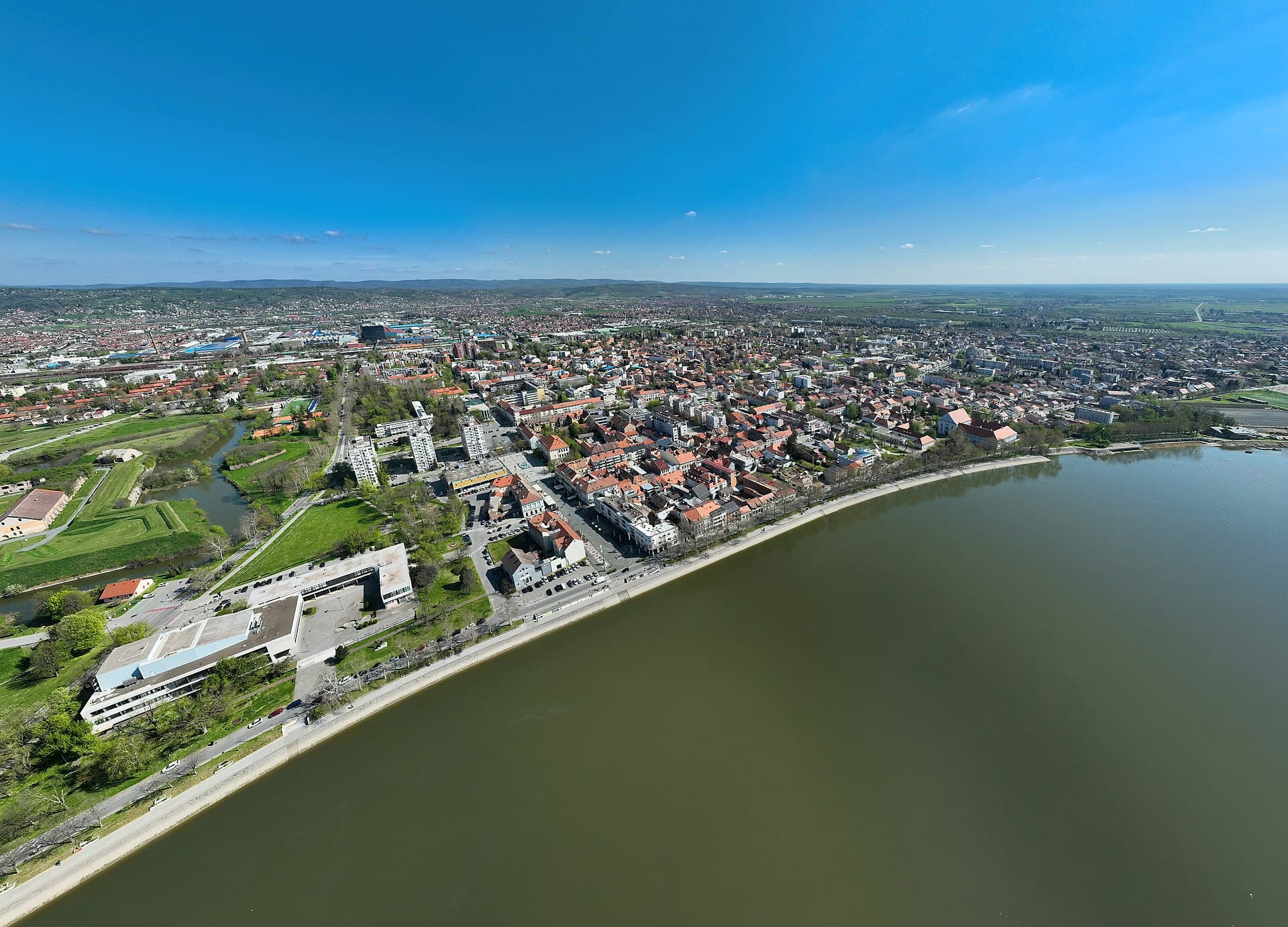
Slavonski Brod developed around one of the major crossings of the Sava, and that border and transport role left a strong mark on the city. Brod Fortress represents the eighteenth-century…
Read the guide
Know Kneževo, Popovac? Correct us
Tell us in your own words what is not accurate. We check right away.Do not enter personal data. Corrections are checked by the StayBravo AI assistant; changes to the description are approved by an editor. Use the form instead
Do you know Kneževo, Popovac?
Help the guests who come after you.
Help us complete
Nothing is published without an editor’s review.Report illegal content
Photo credits: Kneževo, Popovac — The original uploader was Belirac at Croatian Wikipedia. (CC BY-SA 3.0) · Popovac — Wéber György (CC BY-SA 3.0) · Branjina, Šećerana, Beli Manastir — Belirac (CC BY-SA 3.0) · Duboševica — Szajci (CC BY-SA 4.0) · Topolje — MirkoS18 (CC BY-SA 4.0) · Kotlina, Kneževi Vinogradi — Roland Puskaric (CC BY-SA 4.0) · Church of St. George — Wéber György (CC BY-SA 3.0) · Church of St. Nicholas, Church of St. Peter and Paul — Ljubomir Damjanovic (CC BY-SA 3.0) · Esterhazy castle in Darda — Biljanabekic (CC BY-SA 2.5) · Osijek — Rp031 (CC BY-SA 4.0) · Vukovar — Bybbisch94, Christian Gebhardt (CC BY-SA 4.0) · Stubičke Toplice — MOs810 (CC BY-SA 4.0) · Slavonski Brod — Petar Milošević (CC BY-SA 4.0)